

National Clinical Research Center for Orthopedics and Sports Rehabilitation Unveils Multiple Breakthrough Platforms, Reshaping the Industry Landscape
The importance of the orthopedic medical device sector is self-evident.
In the global medical device market, orthopedics represents a leading segment, accounting for 9% of the total. Even within China’s medical device market, orthopedic devices comprise 6%. Driven by population aging, the incidence of orthopedic disorders caused by degenerative diseases is expected to rise further. Additionally, the fitness boom among younger generations has led to an increase in sports injuries resulting from improper exercise techniques, thereby boosting demand for sports rehabilitation. Coupled with reduced surgical costs due to volume-based procurement (VBP) and the consequent release of pent-up demand, the orthopedic medical device market is poised for further expansion in the future.
Meanwhile, the field of orthopedic innovation has garnered significant attention, with capital flowing in steadily. Taking Legend Capital, a leading investment firm, as an example, Wang Junfeng, Co-Chief Investment Officer and Managing Director at Legend Capital, pointed out that the firm’s investment logic in the orthopedics sector rests on three pillars: first, investing in import substitution opportunities within emerging orthopedic segments; second, investing in intelligent medical upgrades aligned with high-quality development trends; and third, addressing unmet clinical needs, namely “Global New” opportunities.
However, we have also observed that the development of the orthopedics field has not been smooth sailing. The most critical issue is undoubtedly the lack of national-level basic scientific and technological infrastructure in orthopedics. A weak foundation will lead to catastrophic consequences. Nevertheless, we are fortunate to witness,The National Clinical Research Center for Orthopedics and Sports Rehabilitation, approved for construction in May 2019 as the sole clinical medical research center in the fields of orthopedics and sports rehabilitation, is making significant strides to fill the gaps in basic scientific and technological infrastructure within orthopedics.
On April 22, the “2023 Inaugural Conference on High-Quality Development Driven by an Integrated Innovation Ecosystem in Orthopedics,” hosted by the National Clinical Research Center for Orthopedics and Sports Rehabilitation, was held in Changzhou. During the conference, several major platforms for foundational scientific and technological infrastructure were unveiled. These initiatives are poised to not only foster the establishment of an integrated innovation ecosystem in orthopedics but also further advance the development of the orthopedics and sports rehabilitation fields. Furthermore, discussions centered on the themes presented by attending experts helped chart the future direction for development in orthopedics and sports rehabilitation.
Launch of Multiple “Foundational” Flagship Platforms Drives New Transformation in the Orthopedics Industry
Over the past three years, despite the impact of the pandemic, the National Clinical Research Center for Orthopedics, Sports Medicine and Rehabilitation has risen to the challenge. By making timely strategic adjustments and focusing on technological innovation, the translation of scientific achievements, and the development of education and promotion platforms, the Center has achieved steady progress, secured numerous breakthroughs in original research, and further promoted their translational application in clinical practice.Tang Peifu, Director of the National Clinical Research Center for Orthopedics, Sports Medicine and RehabilitationLed a team in collaboration with high-caliber domestic and international partners to conduct real-world studies, revealing for the first time that patients with osteoporosis treated with denosumab had a 32% lower risk of developing type 2 diabetes compared to the control group. These findings were published in The BMJ (British Medical Journal), one of the four leading international medical journals, providing theoretical guidance for the personalized treatment of osteoporosis.
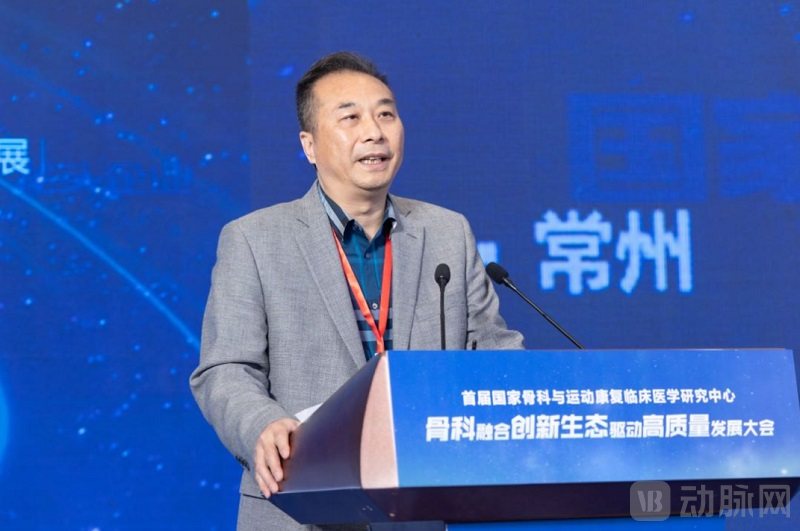
Wang Songjun, Executive Director of the National Clinical Research Center for Orthopedics and Sports Rehabilitation
Wang Songjun, Executive Director of the National Clinical Research Center for Orthopedics and Sports RehabilitationIt was pointed out that the National Clinical Research Center for Orthopedics and Sports Rehabilitation is striving to build a “highland” for clinical and translational medical research characterized by integrated innovation among healthcare, research, government, and industry in the fields of orthopedics and sports rehabilitation, as well as a “base” for technological innovation and the translation of research achievements, by strengthening the construction of a medical science and technology innovation system.
Guided by clinical needs and oriented toward translational applications, the National Clinical Research Center for Orthopedics, Sports Medicine, and Rehabilitation has established a full-cycle innovation ecosystem platform to support clinical research, collaborative innovation, achievement translation, promotion and application, academic exchange, and talent development.
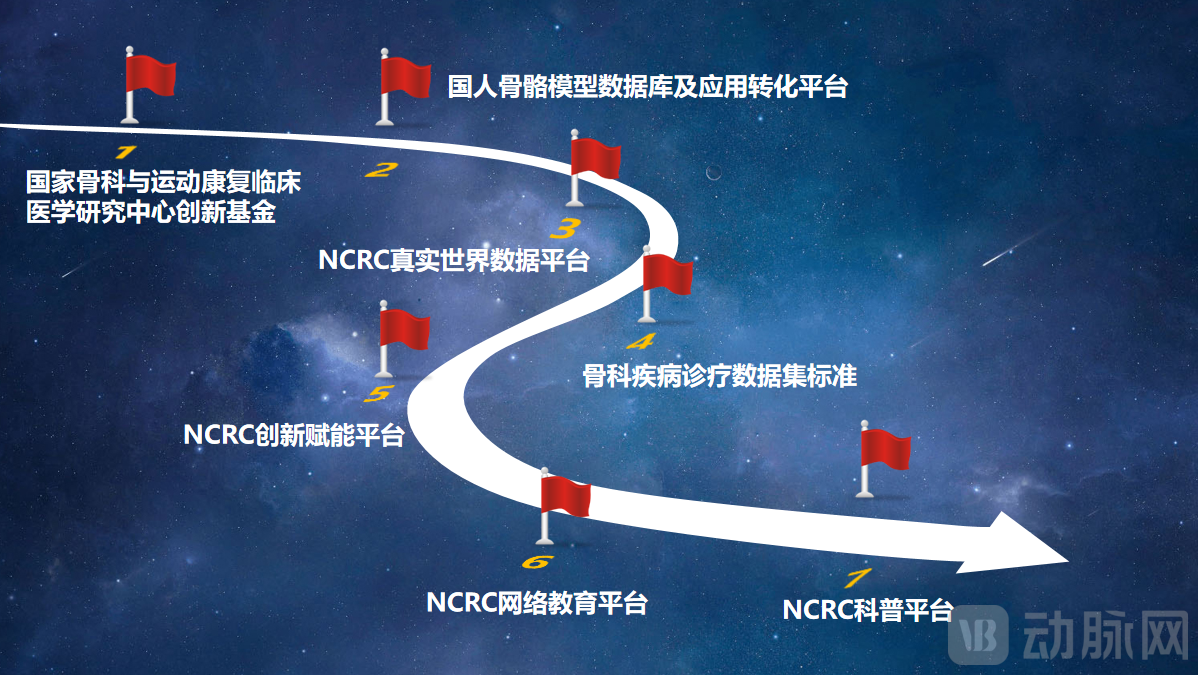
At this conference, the National Clinical Research Center for Orthopedics and Sports Rehabilitation targeted current gaps in infrastructure and launched several major “platforms” or standards to support clinical innovation across industry, academia, and research sectors.
NCRC Innovation Fund
For scientific research and innovation, the primary priorities are to attract innovative talent and ensure the implementation of innovation projects. In light of this, to better consolidate innovative strengths across China and promote innovation-led industry development, the National Clinical Research Center for Orthopedics, Sports Medicine, and Rehabilitation, in collaboration with the Jiangsu China-Israel Industrial Technology Research Institute, has jointly established the “National Clinical Center Innovation Fund.” This fund supports the research and development of medical devices as well as studies on their improvement, thereby achieving source-driven, standardized, and scaled technological innovation.
Chinese Bone Database and Translational Application Platform (CBD)
Historically, innovation and R&D in China’s orthopedic sector have faced numerous pain points, one of which was the lack of a bone database for the Chinese population, hindering the development of medical devices tailored to the skeletal characteristics of Chinese individuals. After more than a decade of research and development, the CBD platform has been officially launched.
Currently, the platform’s database of skeletal models for the Chinese population boasts the largest and most comprehensive data volume known to date, encompassing 4,858 individuals and 26,066 bones. The CBD platform addresses critical challenges in the research and development of orthopedic devices in China, such as limited data volume, anatomical mismatches, and inadequate coverage of regional and racial morphological variations. It is foreseeable that, with further expansion of the CBD platform’s database, it will provide common theoretical foundations and key technical support for the efficient R&D and application of intelligent orthopedic implants in China, thereby accelerating the industrial upgrading and transformation of China’s orthopedic medical device sector.
NCRC Real-World Data Platform
The NCRC Real-World Data Platform has been officially launched. It is a foundational data support platform designed for research, decision-making, regulation, registration, and review. Its primary purpose is to address the scarcity of data. As a critical support for scientific research and clinical trials in the fields of orthopedics and sports rehabilitation, it provides evidence sources on the benefits or risks of medical interventions, serves as an important basis for decision-making, facilitates same-variety comparisons of medical devices, and strengthens lifecycle management of medical devices. Currently, individuals or institutions conducting scientific research projects can apply for free access.
NCRC Standard Dataset for the Diagnosis and Treatment of Orthopedic Diseases
In the past, the establishment of platforms and databases often faced a lack of standardization. Common challenges included data sharing, data submission, and integrated analysis. To maximize the value of outputs, it is essential to control the costs associated with data cleaning. Through the development of the "Series of Standards for Orthopedic Disease Diagnosis and Treatment Datasets," which focuses on medical record items from case information, pre-diagnosis, intra-diagnosis, post-diagnosis, and follow-up stages, and uses data sources as identification units compiled in an abstract catalog format, standardized data elements will serve as the foundation for subsequent efficient and scientific data management.
NCRC Innovation Empowerment Platform
This platform is a project management system designed for clinical trials and post-marketing studies in the fields of orthopedics and sports rehabilitation. Its greatest advantage lies in its professional research team and abundant scientific resources, which enable efficient, scientifically rigorous management and high operational efficiency. By providing enterprises with comprehensive, end-to-end, and systematic services, the platform helps reduce costs, improve efficiency, and rapidly achieve value innovation. It is reported that the platform has currently initiated and conducted 96 clinical research projects, with 9 completed; it has also carried out 17 clinical trials, resulting in two medical device registration certificates.
NCRC Online Education Platform
To better disseminate and popularize the expertise of distinguished clinical specialists and physicians, facilitate the training of junior doctors, and promote the implementation of innovative projects, the National Clinical Research Center for Orthopedics, Sports Medicine, and Rehabilitation is leveraging its NCRC Online Education Platform to advance online education across China. To date, the platform has featured over 566 specialized lecturers, accumulating a total of 9.62 million views.
NCRC Science Popularization Platform
To better disseminate cutting-edge concepts in health and medicine, and to help the general public and patients understand innovative products, ideas, and approaches—thereby achieving the goal of “making academic resources accessible to the public and elevating popular science communication with academic rigor”—the NCRC Science Popularization Platform facilitates the widespread dissemination of technical knowledge, the promotion of scientific methods, and the spread of scientific thinking. It is reported that nearly 100 medical institutions are currently participating, cumulatively reaching over 16.8 million patients.
Currently, the National Clinical Research Center for Orthopedics, Sports Medicine and Rehabilitation is also actively inviting industry stakeholders and professionals to participate in building its ecosystem platform.
Moving Toward Intelligence and Integration: New Explorations in Orthopedics
While the National Clinical Research Center for Sports Rehabilitation strengthens its foundational infrastructure to facilitate the translation of scientific achievements, it is evident that the field of orthopedics is ushering in new development, progressively exploring pathways toward intelligence and digital integration.
From the perspective of intelligence in orthopedics, one direction of exploration lies in how to better integrate with technologies such as artificial intelligence.
Director Meng Qinghu of Southern University of Science and Technology noted that in the current era of artificial intelligence, innovation should focus on more vertical domains to achieve intelligent solutions for low-dimensional and ultra-low-dimensional scenarios. This approach aims to reduce the high costs associated with large models and further enhance efficiency. For instance, by restricting AI algorithms in capsule endoscopy to the gastrointestinal tract scenario, the ability to detect lesions and abnormalities can be improved. Similarly, limiting surgical robots to the specialized field of orthopedics can achieve a year-on-year improvement in cost-effectiveness.
Professor Sun Fuchun from the School of Computer Science and Technology at Tsinghua University also noted that domestic surgical robots currently face challenges in application paradigms, technological strategies, and core components. Surgical robots should be holistic solutions grounded in clinical concepts. The entire field of surgical robotics is currently transitioning from complex, bulky, and single-function systems toward miniaturization, modularization, and intelligence. Related explorations in intelligence are driving innovation in associated fields, such as enhancing visualization efficiency through intelligent technologies; modularizing navigation workflows to improve the reusability of algorithm modules; and enabling flexible surgical decision-making through collision-aware surgical trajectory planning.
From the perspective of digitalization in orthopedics, the direction of exploration lies in achieving an integrated digital solution for the entire process.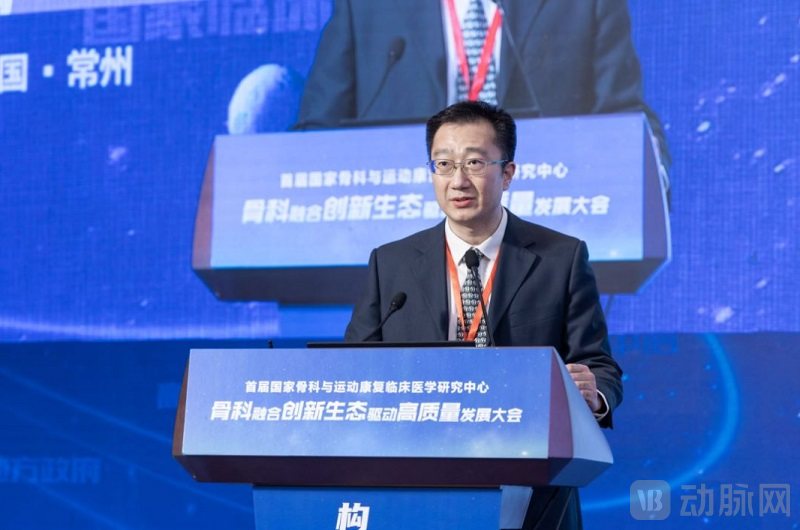
Zhang Wei, Deputy Director of the Department of Traumatic Orthopedics, Orthopedic Division, Chinese PLA General Hospital
Zhang Wei, Deputy Director of the Department of Traumatic Orthopedics under the Orthopedic Division of the Chinese PLA General Hospital, elaborated on the integrated smart orthopedics solution and the promotion of surgical navigation systems. He stated that intelligence represents the third major leap in the development of orthopedics. Intelligent orthopedic medical technologies can assist physicians in more precisely assessing patient conditions and treatment outcomes, thereby enhancing surgical efficiency and safety. He pointed out that by applying digital thinking to transform orthopedic issues into elements such as points, lines, planes, regions, and spatial relationships, surgical procedures can be standardized and digitized. He emphasized that an integrated solution should encompass preoperative planning, seamless integration and digitalization of various intraoperative medical devices, consumables, and surgical instruments, intraoperative visual navigation, and standardized surgical workflows. The ultimate goal is to standardize simple surgeries and simplify complex ones.
In fact, while various stakeholders explore directions for innovative development, the commercialization of scientific research achievements also relies on the support of all parties within the industry chain.
Zheng Chenggong of the World Chinese Society for Biomedical Engineering pointed out that the current medical device industry is plagued by widespread issues such as small-scale operations, high homogeneity, and weak competitiveness. Companies are underinvesting in R&D funding, paying insufficient attention to intellectual property rights, and operating within an incomplete industrial chain. There is an urgent need for high-quality incubators and accelerators to engage with the industry and help enterprises expedite the commercialization of their products. The conference also invited participation from firms such as Legend Capital, aiming to bring more innovative achievements to the forefront.
To better promote the translation of scientific research achievements, experts in related fields were invited to discuss the review and registration of orthopedic devices at the conference, further helping the industry clarify many issues faced during the review and registration process.
Perhaps, with the completion of foundational platforms in orthopedics, deepening industry exploration into integrated intelligent and digital solutions for orthopedics, and support from all stakeholders across the industrial chain, we will witness the faster emergence of an innovation ecosystem integrating “medicine, research, government, enterprise, and capital.” Leveraging these collective forces, while driving rapid transformation within the industry, we will see more innovative outcomes benefiting patients and contributing to the realization of a Healthy China.