

First-Ever Hepatocellular Carcinoma Ablation Using 'Micro-Nano Knife' Performed by Gastroenterologists Under Local Anesthesia with Ultrasound Guidance
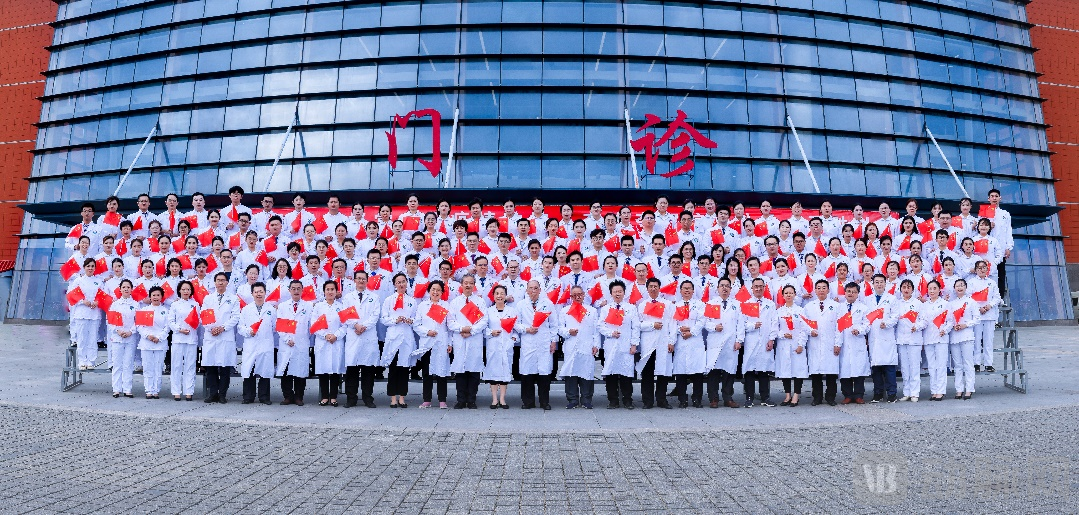
Recently, the First Affiliated Hospital of Nanchang University successfully performed its first case of "Micro-Nano Knife" liver cancer ablation under local anesthesia. The procedure was carried out by a team led by Dr. Chen Youxiang, Director of the Digestive Endoscopy Center at our hospital. This marks the first successful implementation of "Micro-Nano Knife" irreversible electroporation tumor ablation therapy by gastroenterologists within the Department of Gastroenterology, signifying a new milestone for "Micro-Nano Knife" technology in the field of minimally invasive tumor ablation.
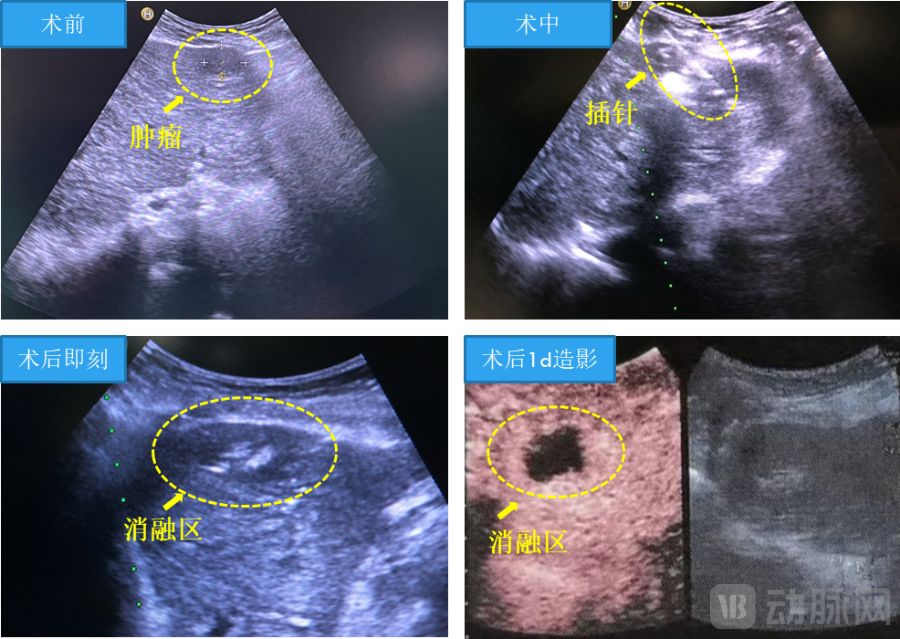
The patient is a 58-year-old female diagnosed with hepatocellular carcinoma. The lesion, measuring 2.2 cm × 1.7 cm, is located in the left hepatic lobe near the capsule. The patient has a multi-year history of decompensated schistosomal cirrhosis and Budd-Chiari syndrome, with a Child-Pugh class B liver function score of 7 points. Due to severe cirrhosis and compromised liver function, surgical resection carries significant risk. Furthermore, given the subcapsular location of the tumor close to the body surface, radiofrequency or microwave ablation under local anesthesia would be technically challenging. Following discussion by our hospital’s Multidisciplinary Team (MDT), it was decided to perform minimally invasive ablation using the “Nano-Knife” system, which offers unique advantages such as non-thermal selectivity and minimal impact on liver function.
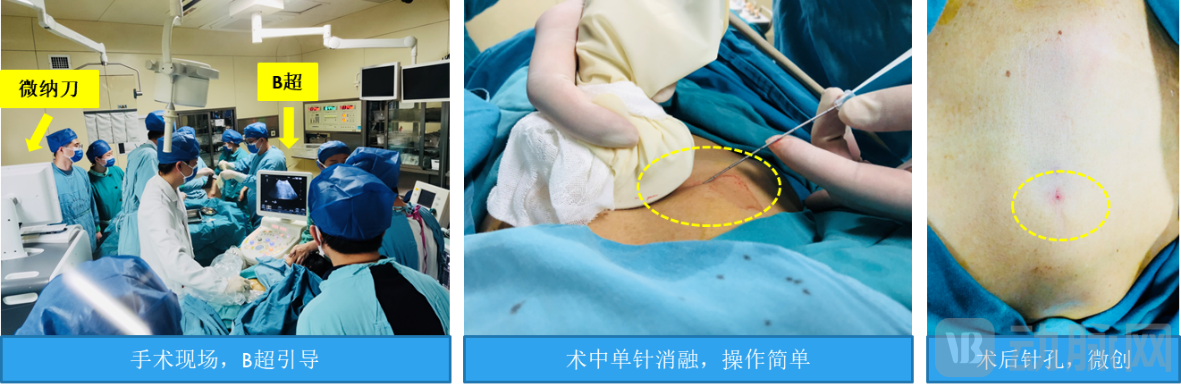
Throughout the procedure, the patient received local anesthesia, and a single-needle ablation of the lesion was performed using the "Micro-Nano Knife" under ultrasound guidance. The ablation process lasted 24 minutes. The patient remained conscious during the procedure, with no visible muscle contractions and no significant pain or discomfort. Immediate post-procedural ultrasound demonstrated hypoechoic changes in the ablation zone, which completely covered the lesion, with no evidence of injury to adjacent blood vessels. The patient was then safely returned to the ward. Contrast-enhanced ultrasound performed one day after the procedure showed no contrast enhancement in the ablation zone, confirming complete coverage of the lesion. Vital signs remained stable both intraoperatively and postoperatively, and no adverse reactions were observed.
The “Micro-Nano Knife” technology operates on the principle of inducing irreversible electroporation in cells via pulsed electric fields, thereby achieving tumor tissue ablation. As a non-thermal, selective physical ablation technique, it preserves the integrity of critical peritumoral structures—including blood vessels, bile ducts, and nerves—while avoiding the heat-sink effect. This enables complete ablation of tumor cells and makes it suitable for treating tumors in anatomically complex locations where conventional thermal (both heating and cooling) ablation methods are contraindicated. It is hailed as the next-generation tumor ablation technology.
The Department of Gastroenterology at the First Affiliated Hospital of Nanchang University is Jiangxi Province’s first clinical discipline to integrate multiple prestigious designations, including “National Key Clinical Specialty,” “Leading Medical Discipline,” “Key Laboratory,” “High-Level Engineering Technology Center,” and “Center for Diagnosis and Treatment of Digestive and Endoscopic Diseases.” In this procedure, a medical team led by Chen Youxiang, Director of the Department of Gastroenterology, along with Chief Physician Guo Guihai and Zhong Jiawei, successfully performed the first ultrasound-guided “Micro-Nano Knife” treatment for liver cancer using single-needle ablation technology. This marks the first time that gastroenterologists have conducted “Micro-Nano Knife” ablation therapy, demonstrating that they can safely and effectively provide non-thermal selective ablation treatment for liver cancer patients under local anesthesia and ultrasound guidance. This achievement represents an innovation in the clinical practice of internal medicine for liver cancer and may transform the models and standards of minimally invasive liver cancer treatment.
The “Micro-Nano Knife” technology was developed by Professor Yao Chenguo’s team at Chongqing University. Since 2000, Professor Yao has been dedicated to research on electroporation of tumor cells. In 2004, he published the first international academic paper in this field, sparking a surge of interest among scientists both domestically and abroad in studying pulsed electric fields for tumor treatment. Over the past two decades, Professor Yao’s team has consistently advanced the development of pulsed electric field tumor treatment systems, successively launching two generations of irreversible electroporation (IRE) technologies: microsecond pulse electroporation (traditional IRE) and high-frequency composite pulsed electric field electroporation (HF-IRE). However, as these first two generations of IRE technologies can cause intense muscle contractions in patients, their application requires administering muscle relaxants and performing tracheal anesthesia during treatment. Additionally, all electrodes used in the procedure must be inserted in parallel with multiple needles, posing significant challenges for physicians in terms of learning curve and operational mastery.
Building on the foundation of two previous generations of technology, Professor Yao’s team has developed the world’s most advanced third-generation irreversible electroporation (IRE) technology—the “Micro-Nano Knife.” This innovation addresses key limitations of existing IRE techniques, including stringent anesthesia requirements, intense muscle contractions, challenging electrode placement, and limited treatment coverage. The success of this procedure demonstrates that liver cancer ablation using the Micro-Nano Knife can be performed under internal medicine ultrasound guidance. This approach eliminates the risks associated with anesthesia complications and allows physicians to easily complete the treatment with ultrasound guidance alone.
The commercialization of the “Micro-Nano Knife” technology is undertaken by Hangzhou Weinai Anke Medical Technology Co., Ltd. The company has completed the development of its series of pulsed electric field medical devices, which have fully entered the clinical trial phase. Previously, the “Micro-Nano Knife” was successfully used in multiple cases of ablation for liver cancer in special anatomical locations under local anesthesia at Tsinghua Changgung Hospital, demonstrating its advantage of having no contraindicated zones for liver cancer ablation. More importantly, Weinai Anke has established a comprehensive portfolio of core patents in irreversible electroporation (IRE) technology, thoroughly breaking the previous passive situation where domestically produced IRE devices held only peripheral patents without core foundational patents. This lays a solid foundation for the technology to expand internationally and benefit more patients worldwide.