

Orchestra BioMed Secures $180M Through SPAC Listing, Backed by Medtronic and Terumo for Innovative Cardiovascular Therapies

RTW Investments
Biopharmaceutical Investment Institutions
Orchestra BioMed
Cardiovascular Disease Drug Developer
Orchestra BioMed is a U.S. medical device company dedicated to the research and development of cardiovascular disease treatments, founded in 2017. Currently, the company primarily has two major product lines: BackBeat CNT, developed through a strategic partnership with Medtronic for the treatment of hypertension; and Virtue SAB, developed under a collaboration agreement with Terumo for the treatment of arterial diseases. In addition, Orchestra BioMed has other candidate products and plans to expand its product portfolio through acquisitions, strategic partnerships, licensing, and organic development.
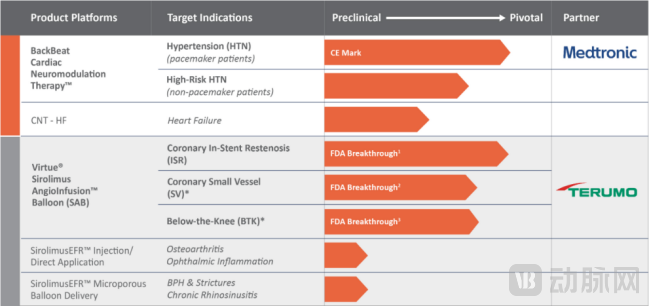
Flagship Product Line | Image Source: Company Official Website
Through strategic collaborations with Medtronic and Terumo, as well as support from other investors, Orchestra BioMed went public in January via a SPAC merger with Health Sciences Acquisitions Corporation 2, listing on the Nasdaq under the ticker symbol “OBIO.”
With this IPO, Orchestra BioMed raised a total of $70 million. Combined with the $110 million Series D financing completed in 2022, the total funding amounts to approximately $180 million. Orchestra BioMed stated that these funds will be sufficient to support its operations through 2026.
![_$$8`0JN(]SC_S6L8}`)X9S.png](http://cdn.vcbeat.top/upload/image/03/04/27/24/1682565853258143.png/dmw)
Orchestra BioMed Funding History Source: Crunchbase
As a startup, it won the favor of two medical device giants and successfully went public in less than six years. Now, it is developing at a rate of 550% annual total revenue growth and 70% R&D investment growth. What is the charm of its products? How far has it developed? Let’s find out with VCBeat.
Hypertension refers to elevated blood pressure, which increases the risk of major cardiovascular events such as heart attack and stroke, and may also lead to other serious conditions, including heart failure and kidney disease. According to statistics from the World Health Organization, hypertension is a leading global risk factor for death, with an estimated 1.13 billion adults worldwide affected by the condition.
According to estimates from the new ACC/AHA guidelines, approximately 1.1 million cardiac pacemakers are implanted worldwide each year, with over 70% of these patients also diagnosed with hypertension. Furthermore, this patient population is older, with a mean age of 73 years, and faces a very high risk of developing systolic hypertension—a more dangerous and difficult-to-treat form of hypertension—making them more susceptible to other complications such as atherosclerosis, hyperlipidemia, diabetes, and chronic kidney disease.
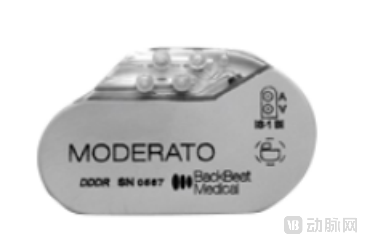
To this end, Orchestra BioMed developed BackBeat CNT to address this potential risk.BackBeat CNT is an implantable cardiac stimulation therapy device currently in clinical trials.
According to the introduction, BackBeat CNT can immediately, significantly, and sustainably lower blood pressure. Its implantation procedure is similar to that of traditional pacemakers, with the same lead placement position. It can be programmed to automatically regulate autonomic nervous system (ANS) responses to achieve the goal of lowering blood pressure. Furthermore, BackBeat CNT has been evaluated in pilot studies,It is compatible with standard pacemakers, can be directly integrated into the pacemaker, and is also suitable for hypertensive patients requiring pacemaker therapy.
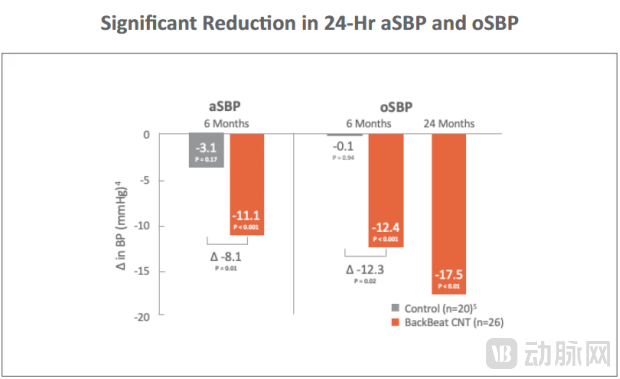
MODERATO II is a European, prospective, multicenter, double-blind study investigating the efficacy of BackBeat CNT in patients with sustained hypertension (ambulatory systolic blood pressure [aSBP] ≥130 mmHg and office systolic blood pressure [oSBP] ≥140 mmHg). According to recent peer-reviewed results published in 2022, among 26 patients treated with BackBeat CNT, there was a net reduction of 8.1 mmHg in 24-hour ambulatory systolic blood pressure (aSBP) and 12.3 mmHg in office systolic blood pressure (oSBP) over six months, compared with 20 untreated control patients.
Currently, BackBeat CNT has entered into a strategic partnership with medical device giant Medtronic to strengthen Medtronic’s product portfolio in the field of hypertension treatment.
Next, Medtronic and Orchestra BioMed will enroll and randomly assign 650–750 pacemaker-implanted patients with poorly controlled blood pressure despite pharmacological therapy across more than 80 study sites in the United States, Europe, and Japan in 2023. They will conduct a Phase II clinical trial of BackBeat CNT with control variables identical to those in MODERATO II, aiming to obtain positive results to facilitate early FDA approval and Investigational Device Exemption (IDE) clearance.
Medtronic will provide development, clinical, and regulatory support for Orchestra BioMed’s multinational pivotal study.
Upon obtaining regulatory approval, Medtronic will hold global commercialization rights for BackBeat CNT in the target population. Orchestra BioMed will share in the revenues generated from Medtronic’s sales of the BackBeat CNT pacing system.
Arterial disease, caused by the accumulation of fatty or calcified plaques in the arteries—also known as atherosclerotic lesions—is one of the leading causes of death in the United States and worldwide. According to data from the World Health Organization, coronary artery disease results in more than 17.8 million deaths globally each year.
Currently, the most common approach to treating arterial diseases is percutaneous catheter-based intervention using techniques such as balloon angioplasty and stenting. According to data from LSI and HRI Research, more than 6.3 million coronary and over 1.5 million peripheral vascular catheter-based interventions were performed worldwide in 2019.
Orchestra BioMed has keenly identified the unmet need for limited therapeutic options or inadequate improvement in patient prognosis in the treatment of certain arterial diseases, such as in-stent restenosis, coronary small vessel disease, lesions in patients at high bleeding risk, and below-the-knee peripheral vascular disease.
In response, Orchestra BioMed has developed Virtue SAB, a patented drug-device combination product under development that delivers a sustained-release formulation of sirolimus, SirolimusEFR™, to the vessel wall during balloon angioplasty to achieve therapeutic effects. Unlike conventional treatments involving coated balloons, stent implantation, or other permanent implants,This product can be removed immediately after balloon angioplasty, leaving no permanent residue.This new treatment method may offer better therapeutic options for patients with arterial diseases.
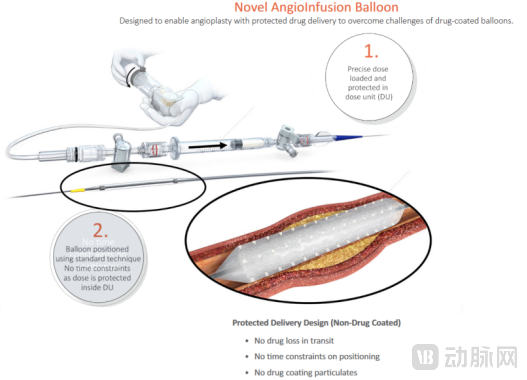
The SABRE trial is a prospective, multicenter study conducted at European centers, designed to evaluate the safety and efficacy of Virtue SAB in patients with coronary in-stent restenosis (ISR). In this study, 50 patients with ISR were treated with Virtue SAB.The final results showed that the probability of target lesion revascularization (TLR) due to restenosis among the 36 patients who had not undergone stent implantation was 0 at 1, 2, and 3 years.
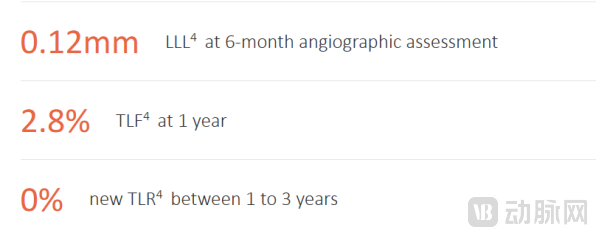
Virtue SEB is the first and only non-coated sirolimus-eluting balloon angioplasty system, which has received the “Breakthrough Device” designation from the U.S. Food and Drug Administration (FDA) for demonstrating favorable outcomes in patients with coronary in-stent restenosis (ISR).
This product has attracted the attention of Terumo, a Japanese medical device giant, and a collaboration agreement has been reached. Next, Terumo and Orchestra BioMed plan to conduct Phase I clinical trials of Virtue SAB for patients with in-stent restenosis (ISR) of coronary arteries in the United States in 2023 (and in Japan in 2024), in an effort to obtain regulatory approval for the commercial sale of Virtue SAB in multiple markets and indications.
Terumo has paid Orchestra BioMed a $30 million upfront payment, with potential additional clinical and regulatory milestone payments in the future. Meanwhile, Terumo will be responsible for the manufacturing, commercial sales, marketing, and distribution of Virtue SAB globally for coronary and peripheral vascular indications.
As the exclusive supplier of Sirolimus EFR, Orchestra BioMed will share in Virtue SAB’s future commercial revenues through royalties and separate payments. Orchestra BioMed may retain the development and licensing rights for clinical applications of Virtue SAB technology beyond coronary and peripheral vascular interventions.
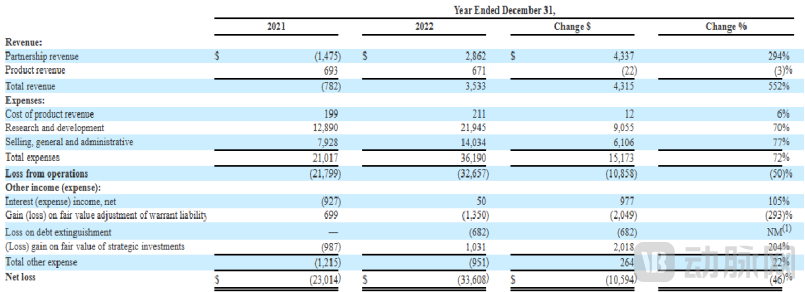
Orchestra BioMed’s Financial Data | Source: Company SEC Filings
According to the latest submitted 2022 annual report, Orchestra BioMed’s R&D expenditures were approximately $12.89 million in 2021 and approximately $21.94 million in 2022, representing an increase of approximately $9.05 million, or 70%.
While maintaining rapid R&D growth, Orchestra BioMed’s total revenue increased rather than declined. Total revenue was $782,000 in 2021 and $3.533 million in 2022, representing an increase of $4.315 million, or 552%.
Notably, the primary driver of total revenue growth was investment income from partners, which surged by 294%. Orchestra BioMed’s two flagship products hold substantial potential.
Medtronic has certainly not neglected the hypertension market, which is valued at over $10 billion; the company devoted more than a decade to developing its renal denervation (RDN) therapy for hypertension. The BackBeat CNT, an interventional hypertension treatment device launched by Orchestra BioMed that is compatible with Medtronic’s pacemakers, has further captured Medtronic’s attention. This explains why Medtronic has been steadily increasing its collaboration and investment efforts.
Virtue SEB also holds significant promise. If it secures FDA approval in subsequent reviews, the product will not only provide a novel treatment option with no permanent implant residue for patients with certain arterial diseases, but also carve out a niche within the more than 200,000 minimally invasive arterial procedures performed globally each year. Terumo intends to position Virtue SEB as its flagship therapeutic product, complementing its portfolio of “other endovascular interventions and access products.”