

Convergent Dental Submits IPO Filing Following $50 Million Growth Funding for Its Painless, Bloodless CO2 Laser Dental Platform Solea®

Convergent Dental
Dental Equipment Developer

Trinity Capital
Equity Investment Firm
The World Health Organization’s 2022 Global Oral Health Status Report reveals that 3.5 billion people worldwide suffer from oral diseases, accounting for nearly half of the global population. However, the solitary dental chair and the glaring overhead lights have become the start of a nightmare for every dental patient, and this negative impact has evolved into a recognized condition known as dental anxiety (DA).
Therefore, how to accelerate the advancement of comfortable dental care has become a key focus for both the market and dentists. A breakthrough carbon dioxide laser therapeutic device from the innovative U.S. dental equipment company Convergent Dental (hereinafter referred to as “Convergent”)—Solea®Improving dental anxiety for dental patients and providers worldwide.
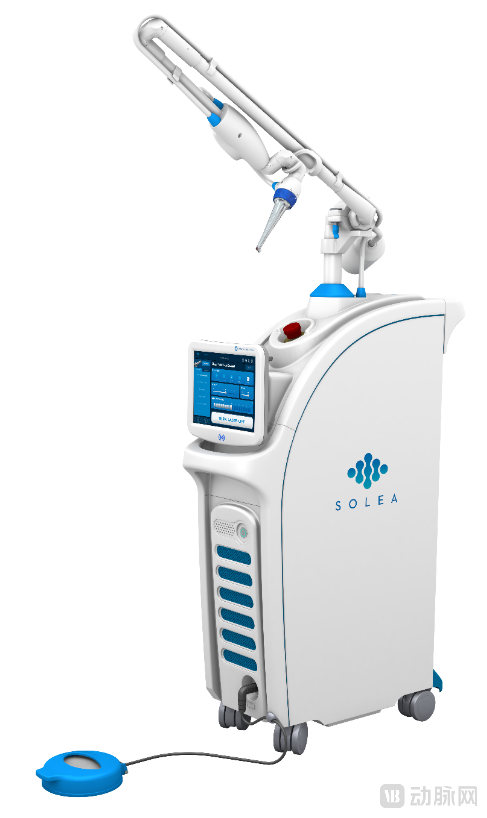
Solea®Oral Laser Therapy Device
Image source: Convergent Dental official website
Convergent Dental was founded in 2011. According to data from Crunchbase, Convergent had raised a total of $112 million by its Series C financing round in 2021. In April this year, Convergent entered into a $40 million credit facility agreement with Trinity Capital. Additionally, Convergent secured a $10 million equity financing round led by existing investors Arboretum Ventures, Gund Investment, and LLC.
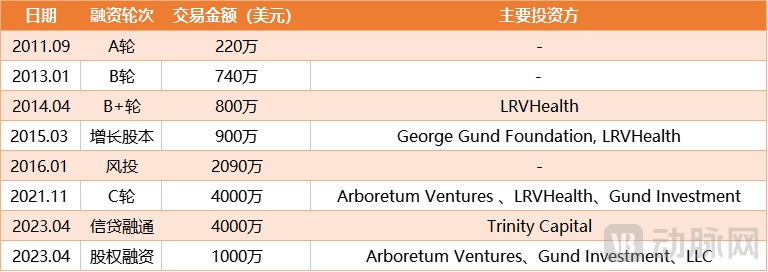
Convergent Dental Financing History
VCBeat
With the support of multiple rounds of financing and research from the University of California School of Dentistry, Solea was launched in 2013.®Following FDA approval, the device was officially registered and launched on the market; it has now been iterated to its third generation.Michael Cataldo, former CEO and founder of Convergent Dental, stated that Solea®Following its IPO, the company's revenue grew nearly 20-fold from 2013 to 2016.
Lasers have been applied in dentistry since the 1960s. Compared with earlier and existing laser treatment devices, what unique advantages does Solea®, the CO2 laser dental treatment system developed by Convergent Dental, offer that have earned it sustained market favor?
In 1905, Einstein proposed the photon hypothesis and successfully explained the photoelectric effect, thereby unveiling the mysteries of the laser (LASER). Today, clinical applications of lasers have a history spanning more than sixty years, with over ten types of lasers currently used in dentistry alone.
Different types of lasers have different wavelengths, and the energy absorption efficiency of various components in target tissues varies with laser wavelength. This results in differences in the application scope of medical devices equipped with different lasers. The most common lasers used in clinical dentistry include diode lasers, Nd:YAG lasers, erbium lasers, and Solea.®Carbon dioxide laser used.
Semiconductor LaserwithHigh Efficiency and Low Energycharacteristics, primarily used for periodontal therapy and the treatment of oral soft tissues, such as oral mucosal diseases;Neodymium LaserofLow surface absorption and deep penetration depth in tissue, which is unfavorable for application in dentistry;Erbium LaserSimilar to the mechanism of action of carbon dioxide lasers, but erbium lasers inLower efficiency in enamel removal. Carbon dioxide lasers belong to the mid-infrared spectrum. Due to the specificity of their wavelength,Carbon dioxide lasers are absorbed by water molecules in the human body, thereby inducing changes in the target tissue.。
When focused, the carbon dioxide laser beam forms a highly concentrated spot of light. The high temperature and pressure at this spot exert cutting and vaporization effects on target tissues, making it suitable for precision cutting treatments. The predominant wavelength of carbon dioxide lasers is 10.6 μm, which limits their application to soft tissue treatments.And Solea®Utilizes a unique carbon dioxide laser with a wavelength of 9.3 μm, capable of simultaneous application to both soft and hard tissues.
Solea®The 9.3 μm wavelength used is close to the peak absorption wavelength of hydroxyapatite, which is the main component of tooth enamel. Therefore, for bone tissue, Solea®The working principle does not involve using a carbon dioxide laser to slowly cut the teeth, but rather “evaporating” the enamel.
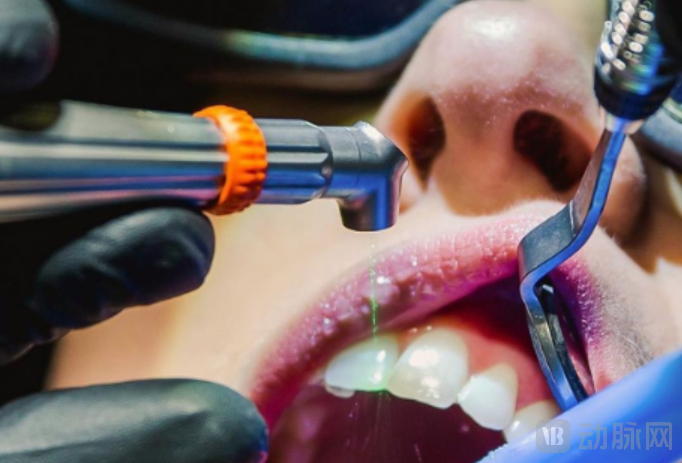
Solea®
Image source: Convergent Dental official website
Solea®CO2 lasers have a wide range of applications. Whether treating caries in primary teeth, restoring and replacing tooth structure, or performing soft tissue or bone tissue surgeries, dentists can leverage Solea®to facilitate efficient treatment of any tissue in the oral cavity from any angle.
To further enhance the precision of laser beam usage, Convergent has also equipped Solea®Equipped with a computer-controlled beam delivery system—Galvos (laser galvanometer scanners).By controlling the mirror inside the dental handpiece at a high frequency of tens of thousands of times per second, Galvos can precisely and rapidly direct the laser beam to the target tissue.
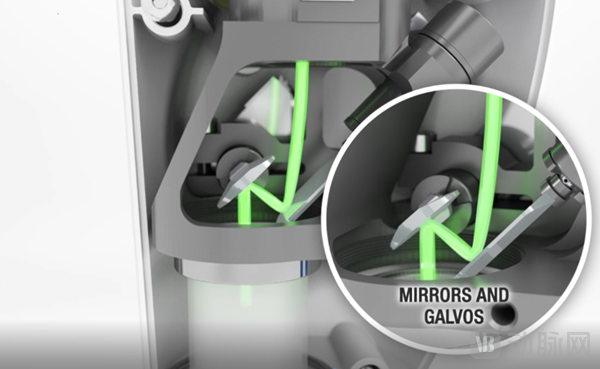
Galvos
Image source: Convergent Dental official website
Galvos not only improves the efficiency of energy delivery but also enhances physicians’ control over the laser beam. This is why Solea®The Key to Precise and Efficient Anesthesia-Free Dental Treatment.
Pain-free care is one of the emerging trends in clinical treatment; however, nearly all dental diagnostic and therapeutic procedures currently require prior anesthetic administration. When the sharp, slender needle of the anesthetic syringe penetrates the patient’s gingiva, although pain is temporarily alleviated by the anesthetic effect, the associated fear often persists long after the procedure has concluded.
Therefore, minimizing traditional treatment steps such as anesthesia, bleeding, and suturing during surgery is a key direction for enhancing comfort-oriented dental care.
Solea®During patient treatment, the handpiece does not vibrate, nor does it produce the buzzing sound of a traditional dental drill, significantly improving the patient’s surgical experience. Furthermore, due to the strong absorption of carbon dioxide laser by water, Solea®Minimizes heat generation from soft tissue cutting. Solea®During the cutting of hard bone tissue, a water mist is also sprayed from the tip of the handpiece to provide real-time cooling for the surgery.
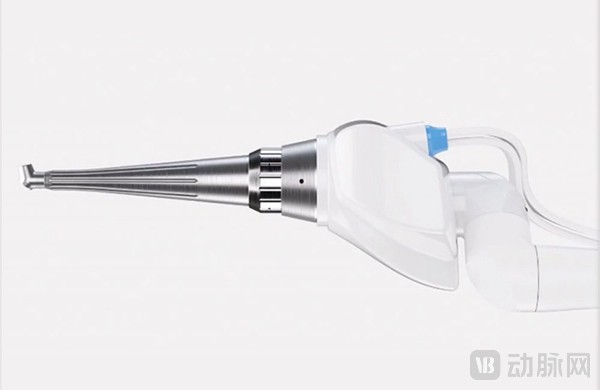
Solea® Handpiece
Image source: Convergent Dental official website
The high absorption of water and enamel by the laser results in shallow penetration depth for each pulse of the carbon dioxide laser, and Solea®It can deliver tens of thousands of pulse signals per second. The high-repetition-rate pulses actually vibrate the target tissue rather than cutting it. This mode of action, in which the laser spot “taps” the target tissue, can inhibit neuronal activity, thereby blocking the brain’s pain control centers and alleviating patient pain.
While cutting tissue, the carbon dioxide laser forms a carbonized hemostatic layer on the surface of soft tissue, and Solea®It uses just enough heat to seal blood vessels without charring tissue, eliminating the need for further suturing or pain management. As a result, patients can undergo multiple treatments in a single dental appointment, with no postoperative oral numbness or recovery period involving difficulty eating.
Convergent at Solea®received positive feedback in the pre-market clinical testing involving 1,000 cases. Among them, 100% of patients reported that Solea®Significantly quieter than a drill; 99.2% of procedures were performed without anesthesia and caused no patient discomfort; 98% of patients reported using Solea®There is almost no sensation during treatment.
Solea®Equipped with Computer-Aided Planning (CAP) for intelligent and personalized control of the CO2 laser. This intelligent system allows for button-controlled adjustment of the CO2 laser beam energy, thereby regulating the spot size on the target tissue to prevent adverse effects such as beam focusing or defocusing, which could compromise surgical efficiency and therapeutic outcomes. The physician need only select the desired spot size on the main unit, and the computer automatically handles the remaining tasks.
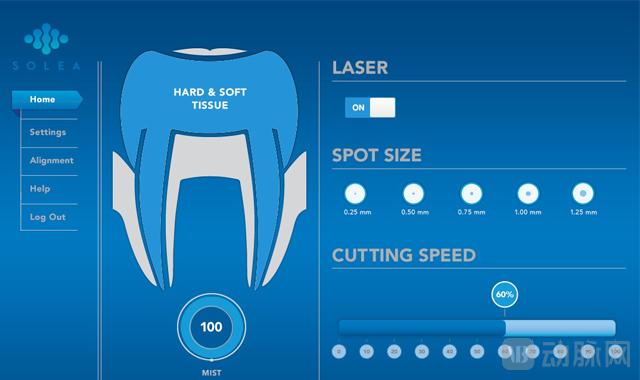
Solea®Computer-Aided System
Image source: Convergent Dental official website
Solea®The computer-aided planning system can also distribute the beam by controlling the Galvos laser galvanometer, with a cutting precision ranging from 0.25 mm to 1.25 mm.Dentists can predefine the required cutting diameter in the intelligent system in advance. During surgery, by simply clicking on images of various cutting diameters displayed on the screen, the laser beam can automatically generate a cutting pattern on the target tissue that is nearly identical to that produced by conventional drills.
While enhancing treatment speed, precision, and convenience, Solea®To align with dentists’ existing habits, the system is equipped with a variable-speed foot pedal similar to those found on traditional dental units. When holding the handpiece, the dentist can adjust the laser’s pulse rate via foot control. Convergent Dental also provides one-day training sessions, with professional service engineers available on-site to help dentists quickly get up to speed with the new Solea device.®provide continuous technical support throughout the entire lifecycle.
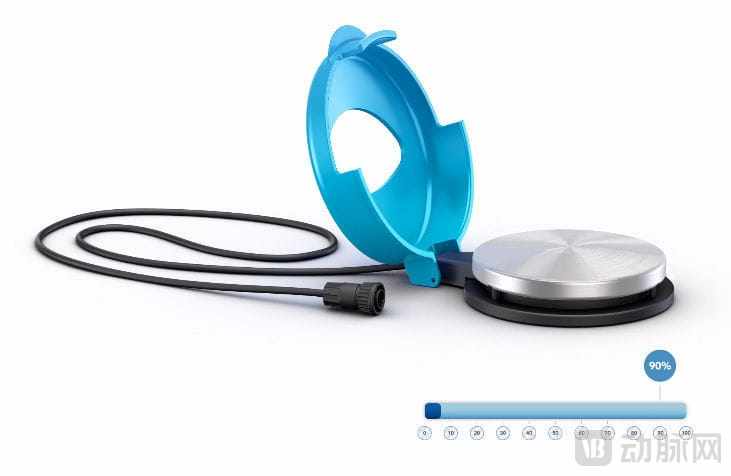
Solea®Variable-speed pedal
Image source: Convergent Dental official website
According to the official website of Convergent Dental, since receiving FDA approval for market launch in 2013, Solea®It has received numerous awards, including the 2014 Technology Innovation Award established by Frost & Sullivan and the 2016 Gold Medal of the Edison Awards, known as the "Oscars of the technology world."
Solea®Successfully applied in over 100,000 dental procedures, serving more than 1,000 general dentists, pediatric dentists, periodontists, and oral surgeons. Solea®"Providing comprehensive comfort care treatment plans for patients of all age groups."
In addition to the aforementioned application scenarios, Convergent has also been actively promoting Solea in recent years.®Therapeutic applications for other conditions, such as the common issue of snoring in daily life, also known as obstructive sleep apnea (OSA).
Snoring is caused by mouth breathing resulting from airflow obstruction in the upper respiratory tract, including the nasal and pharyngeal cavities. When air flows past the relaxed soft palate tissue, vibrations of the soft palate may occur, leading to snoring. In this regard, Solea®Sleep adopts a non-surgical, painless treatment protocol that utilizes ultra-low-energy carbon dioxide laser to tighten and stiffen the collagen in the soft palate, thereby reducing vibration of the soft palate during snoring.
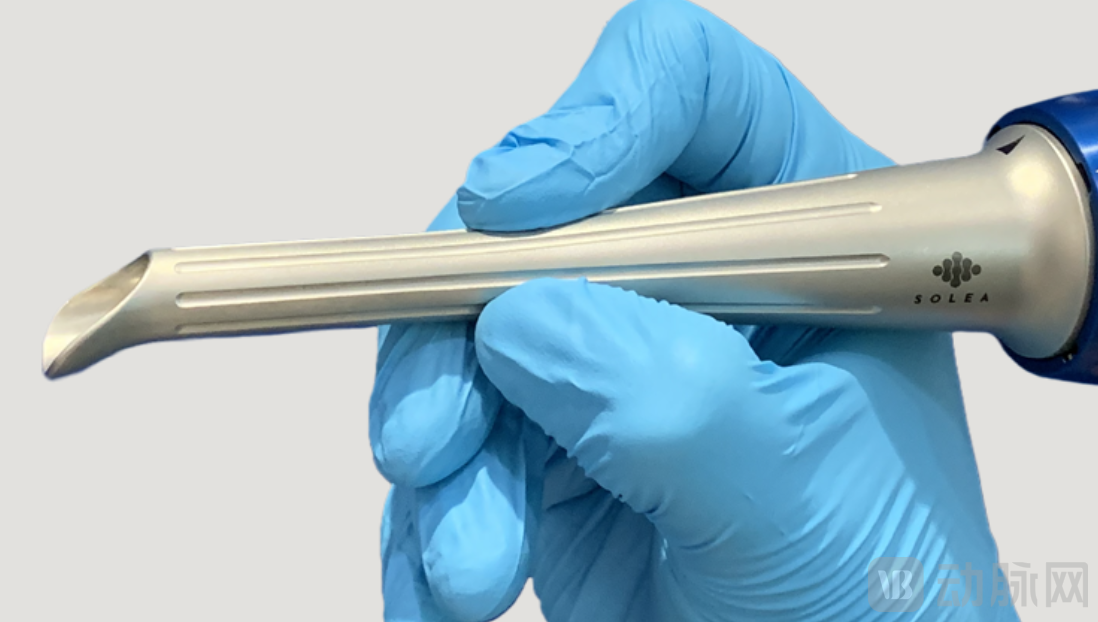
Dedicated Mobile Phone for OSA Treatment
Image source: Convergent Dental official website
Solea®Sleep effectively delivers laser energy to the deep tissue layers rich in collagen, without affecting the superficial tissue layers. By disrupting the cross-links of collagen fibers within the patient's soft palate tissue, it causes collagen fiber contraction, thereby increasing the stiffness of the soft palate. Solea®Sleep can rapidly complete treatment within 5 minutes, alleviating symptoms in most patients with OSA.
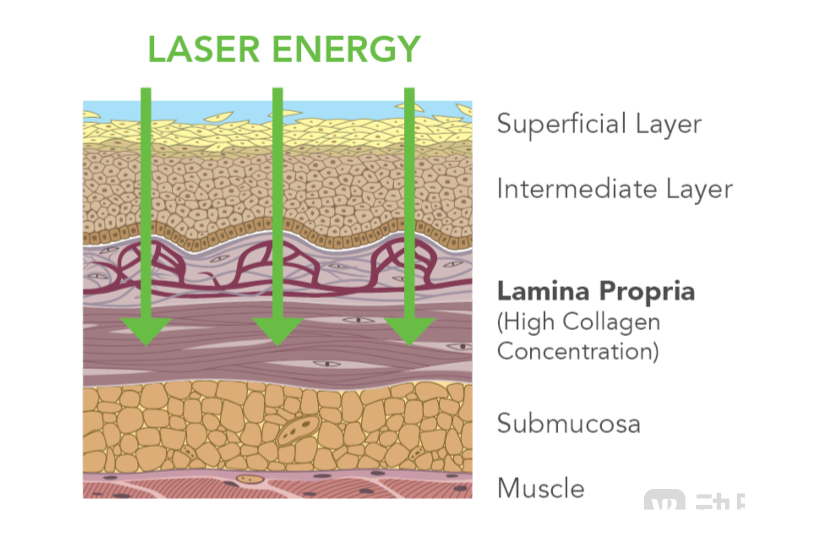
Laser Disruption of Collagen Fiber Connections in the Soft Palate Tissue Layer
Image source: Convergent Dental official website
Anthony Bolamperti, a dentist at Omaha Laser Dentistry, refers to Solea®Sleep can gently tighten soft palate tissue in a single 5-minute treatment, reducing the palatal vibrations that cause snoring and sleep disruption. Its therapeutic efficacy is equivalent to three to four sessions of traditional therapy, each lasting 30 minutes.