

Mochip Technologies Files IPO Prospectus: Revolutionizing Assisted Reproduction with Microfluidic Embryo Lab-on-a-Chip
As“Assisted Reproduction: The Last Resort for Families Who Want but Cannot Have Children” Has Long Been in the Spotlight and Held in High Expectation.
Assisted reproductive technology (ART) laboratory techniques encompass dozens of procedures, including oocyte and sperm retrieval, fertilization, embryo culture, embryo screening, cryopreservation/thawing, and embryo transfer. Each of these techniques significantly influences pregnancy rates. However, current operations across various technical platforms are performed manually by embryologists, leading to issues such as cumbersome and repetitive workflows, difficulties in controlling operational quality, and human errors.
Additionally, the training period for embryologists is relatively long. The general training period for embryologists is 2–3 years, while those qualified to perform ICSI (intracytoplasmic sperm injection) treatment require 3–5 years of training.
Industry experts have pointed out that manual handling increases the probability of embryo implantation failure, making it one of the primary causes of in vitro fertilization (IVF) cycle failure. Furthermore, reliance on manual procedures significantly contributes to the variability observed in clinical IVF outcomes.
Replacing manual operational procedures with intelligent platforms for assisted reproduction has become the development trend for future assisted reproduction laboratories.
Microfluidic technology offers unique advantages in the manipulation of precious single cells, particularly in fields such as assisted reproduction. Leveraging flexible micron-scale channel designs and precise fluidic control, it better mimics physiological environments, enabling efficient fine-scale cell manipulation, observation, and detection. Microfluidic chips consume minimal reagents and consumables, significantly reducing associated costs. Furthermore, microfluidic technology allows for the integration of multiple experimental steps, offering a high degree of integration.
From the perspective of microfluidics technology, compared with traditional IVD microfluidics technology, assisted reproduction microfluidics technology imposes higher requirements on cell friendliness and operational effectiveness in its design. Consequently, it has established systematic barriers ranging from product design to manufacturing processes. These significant challenges have resulted in only a handful of enterprises in China capable of leveraging microfluidics technology to empower assisted reproduction.
Secured within three months of establishmentMFund Magic CapitalandYuanzhan Capital Angel RoundInvestmentMochang Technologyhas caught the attention of VCBeat.
Founded in 2021, Mochang Technology leverages microfluidics technology to automate key processes in embryology laboratories, including gamete selection, embryo testing, oocyte cryopreservation, and embryo cryopreservation. By replacing the cumbersome, inefficient, and costly manual steps inherent in traditional workflows, the company provides an integrated, end-to-end solution that is stable, reliable, standardized, and automated, thereby improving pregnancy success rates in IVF (in vitro fertilization).

Proprietary Microfluidic Chips and Integrated Systems,
Revolutionizing Traditional Manual Procedures to Improve Pregnancy Rates
MoChang Tech’s Microfluidic Intelligent Platform aims to streamline the tedious and complex manual steps in embryologists’ overall IVF workflow through intelligent automation, modernizing IVF treatment with standardized, process-driven solutions.
It is reported that the company’s first embryo/oocyte media exchange and vitrification/warming chip and system has initiated the application and approval process for a medical device registration certificate.
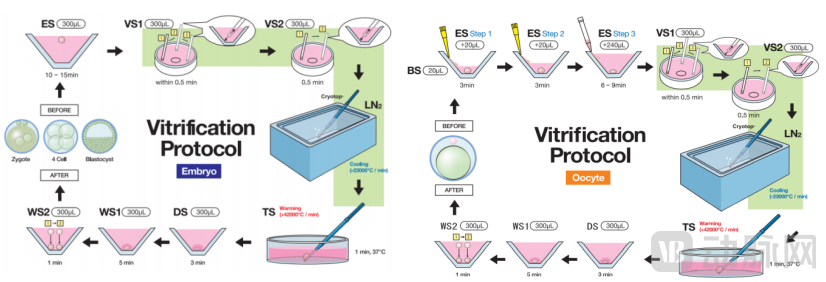
Manual Procedure for Embryo Cryopreservation (Left) and Manual Procedure for Oocyte Cryopreservation (Right),
The procedure is intricate and places extremely high demands on the embryologist’s technical skills.
The automated cryopreservation carrier chip developed by the company, in conjunction with its supporting intelligent system, enables digital control over reagent volume and concentration, as well as precise flow regulation within the chip. Unlike the cumbersome operations of traditional manual procedures, embryologists need only place embryos or oocytes into the carrier chip, which features microfluidic channels and cell sieve designs; the system then automates the solution exchange process for freezing and thawing. Furthermore, the system precisely controls reagent usage, reducing vitrification and thawing solution consumption by approximately 75%, thereby significantly lowering reagent costs associated with the freeze-thaw process. Additionally, the chip itself can be stored in liquid nitrogen at -196°C, fulfilling the role of a traditional carrier as a cryopreservation substrate.
The entire operational workflow is performed in an integrated manner within a closed system, eliminating the need for any micromanipulation-based cell transfer. This approach minimizes cellular damage caused by manual handling and reduces the risk of procedural errors such as embryo loss, thereby preserving oocyte/embryo viability and developmental potential, and ultimately improving post-thaw survival rates. According to Mochang Technology, the current embryo post-thaw survival rate in mouse embryo experiments approaches 100%.
Meanwhile, personnel can monitor cell status in real time online and flexibly manage the automated operational processes at each stage. Furthermore, all data are automatically recorded throughout the process, facilitating physicians in predicting pregnancy rates and conducting status analysis. In addition, this platform is compatible with all reagents available on the market, and the second-generation product will be upgradable to feature pre-loaded reagents integrated into the chip.
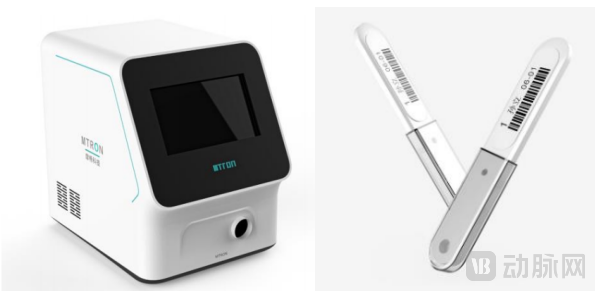
Mochang Technology's Self-Developed Microfluidic Intelligent System and Automated Cryopreservation Carrier Chip
To ensure the security of precious samples, Mochang Technology has implemented a series of innovations in both chip system design and manufacturing processes.
Chip Design: Integrated design for precise fluid control, reducing reagent consumption by 75%
Mochang Technology has independently developed the Digital Microfluidic Liquid Exchange Technology (MID) and the Digital Droplet Ultra-High-Speed Precise Quantitative Manipulation Technology (DMC).
Digital Microfluidic Medium Exchange Technology (MID) enables the integration of cell medium exchange and cryogenic carrier functions, while achieving digital manipulation of liquid concentrations and precise flow control within the chip. This significantly improves operational efficiency and reduces reagent costs by 75%. Furthermore, the optimized cell sieve design within the microfluidic chip facilitates precise positioning during cell aspiration and smooth control during cell release.
Digital Microfluidic Chip (DMC) technology for picoliter-scale ultra-high-speed precise quantitative liquid manipulation enables microfluidic chips with readable and embeddable continuous-flow discretization and quantitative liquid handling, successfully achieving built-in high-precision, ultra-high-speed flow measurement.
Production Process: Achieving Automatic Alignment and Seamless Bonding
The monolayer angstrom-scale biochip packaging technology (UNIBond) is another technological highlight of Mochang Technology.
To overcome the most challenging process of heterogeneous material bonding in microfluidic chips, the Mochang team developed a monolayer angstrom-scale adhesive. This novel adhesive enables the formation of bondable molecular layers on any material surface. By subsequently applying external energy to activate the surfaces, seamless bonding is achieved across various heterogeneous chip materials, thereby resolving the bonding challenge.
To address the most challenging self-alignment step in microfluidic chip packaging, the Mochang team has developed Capillary Action-driven Packaging (CAP) technology for microfluidic chips, which is compatible with various chip substrates. This technology achieves high-precision alignment (<10 μm) and excellent bonding strength (>1000 kPa), and has passed reliability validation, laying a solid foundation for the automation of microfluidic packaging processes.
Leveraging this combination of innovative technologies, Mochang Technology’s microfluidic chips can withstand rapid temperature fluctuations from ambient conditions to liquid nitrogen at -196°C without cracking, ensuring that chip performance remains intact and sample integrity is preserved. This approach also addresses the stringent requirements for single-micron-level microfabrication in cell sieve structural design and overcomes the challenges associated with mass production.
Assisted reproductive technology scenarios are just the first step,
The ultimate goal is to achieve the application of high-end core biochips.
Mochang Technology’s ability to conquer one technical stronghold after another in just two years is inseparable from a team that is both enterprising and steadfast.
Qiu Honghua, Founder of Mochang Technology, holds a bachelor’s and master’s degree in Management Engineering from Tsinghua University, has served as a senior executive at the vice president level or above at IBM and multiple startups, and has over two decades of deep expertise in the technology, healthcare, and broader health industries.

Qiu Honghua, Founder of Mochang Technology
The company’s team possesses interdisciplinary expertise in biochemistry, fluid physics, mechanics, new materials, and automation—key fields required for microfluidic chip development. It boasts extensive management experience as well as comprehensive capabilities in product research and development, manufacturing, and sales, with multiple core products currently under patent examination.
Meanwhile, Mochang Technology has established a Joint R&D Engineering Center and Laboratory for Biochips with the Suzhou Institute for Advanced Research of the University of Science and Technology of China, and entered into a strategic partnership with Sichuan University to jointly build an off-campus practical teaching base, thereby integrating and strengthening all stages of industry-academia-research collaboration.
Additionally,Mochang Technology is also exploring new opportunities in the livestock sector.
China currently faces a shortage of high-quality cattle resources, and there remains a significant gap between domestic and advanced international levels in terms of carcass yield per animal and milk production efficiency. Moreover, among all animal-derived food products, beef and milk production are the primary sources of carbon dioxide emissions in the livestock sector, accounting for 41% and 20% of total livestock emissions, respectively. How to reduce greenhouse gas emissions from cattle farming while simultaneously enhancing bovine productivity has become an intriguing yet challenging endeavor.
The advent of embryo transplantation can significantly accelerate the propagation of superior cattle breeds, facilitating genetic improvement in herd stock. Furthermore, the intelligentization of embryo engineering empowers farms to enhance productivity and efficiency, addressing current challenges such as low efficiency in livestock embryo transplantation techniques and a scarcity of skilled technicians. At present, Mochang Technology is advancing the development of a microfluidic intelligent platform to support the modernization of the livestock industry, replacing traditional, cumbersome processes with automated, high-throughput embryo handling.Replacement of Manual Operations, thereby reducing costs and improving efficiency while accelerating industrial transformation and upgrading.
“The core competencies of the Mochang team lie in microfluidic chip design, mass production expertise, and automated microfluidic sensing technologies. We adapt advanced microfluidic chip technology to specific contexts, thereby reducing costs and enhancing efficiency in targeted applications,” said Qiu Honghua. He noted that entering the assisted reproductive technology (ART) sector is merely the first step in Mochang Technology’s long-term journey. The company’s ultimate goal is to provide customized design and manufacturing services for high-end microfluidic chips across a broader range of biomedical applications, achieving independent intellectual property rights and practical implementation of core high-end biochips.