

China's Innovative Drug Industry at a Crossroads: Insights from Four Senior Executives on Past Gains, Current Strategies, and Future Directions
In recent years, the low-hanging fruit in China’s biopharmaceutical industry has been exhausted, prompting industry professionals to continually reflect on the trajectory of industrial development. Visions for the future have diverged into various scenarios in response to shifting market conditions, leaving stakeholders with a blurred sense of direction and path forward in the short term.
We keep discussing the future, but in factWhen discussing the future, we might as well seek answers from the past and then raise new questions:
What Have We Gained from China’s Innovative Drug Reform to Date? And How Should We Leverage the Capabilities Accumulated Over the Past Decade?
In the past, we witnessed how multinational corporations (MNCs) marketed their pharmaceutical products in China. Now, as Chinese companies aim to export drugs overseas, what strategic layouts and considerations should they adopt?
License-in Was Once Even More Popular: Can We Draw Insights for License-out from the Evolution of License-in Over the Past Few Years?
How have we historically viewed corporate development, and with what mindset have we approached business growth? Which principles should we continue to uphold, and which constraints need to be broken?
Recently, the Shanghai Alumni Annual Meeting of China Pharmaceutical University returned to an in-person format, bringing together pharmaceutical professionals from diverse backgrounds who share a common mission. Several alumni guests from pharmaceutical companies, biotech firms, and investment institutions held a roundtable discussion titled “Opportunities for Development and Investment Trends in the Pharmaceutical Industry Under the New Landscape,” reflecting on the past decade-plus to jointly explore the industry’s path forward. The following is a transcript of the discussion, edited and compiled by VCBeat New Medicine:
Moderator:Ma Yan, Head of Business Development, Abbott Pharmaceuticals China
Guest:
Lin Liang, Partner at Lilly Asia Ventures
Yang Dazhou, Vice President of Strategy and Business Development at Aikobai Biopharmaceuticals
Yang Shujun, Investment Director, Legend Capital Healthcare Fund
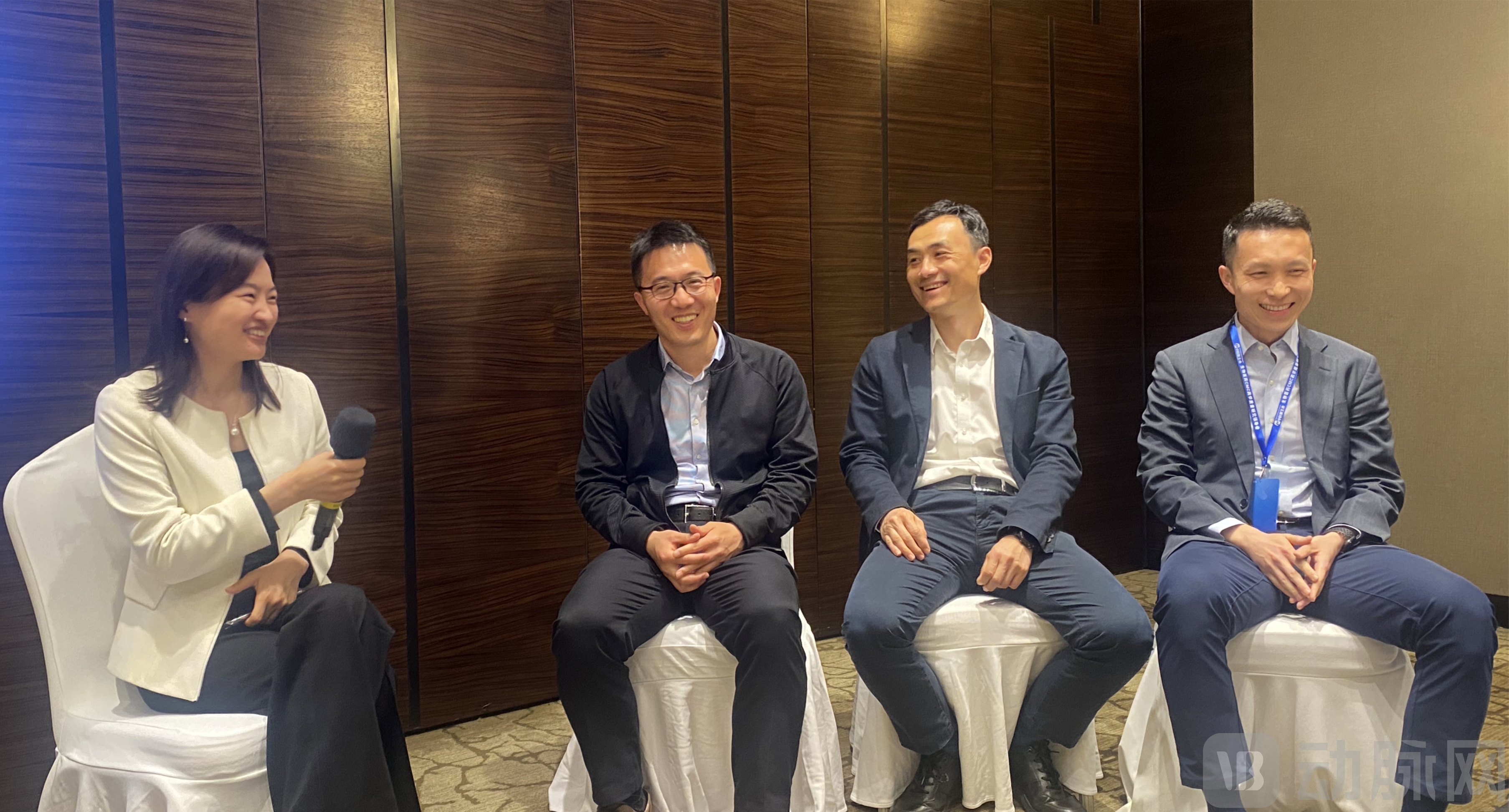
Roundtable Discussion: From left to right: Ma Yan, Yang Shujun, Lin Liang, Yang Dazhou
Ma Yan (Abbott Pharmaceuticals China):Today’s guests include representatives from the investment community and industry players, encompassing both pharmaceutical and biotech companies, with the aim of offering diverse perspectives on today’s discussion. Our industry has experienced all four seasons; everyone has felt the chill of winter. As the sector currently undergoes adjustment and upgrading, with significant geopolitical influences at play, many are concerned about the future trajectory of China’s pharmaceutical industry. How will the relationship between China’s pharmaceutical industry and the global pharmaceutical sector evolve?
Yang Shujun (Legend Capital):I believe that to discuss the future, we must first look back at the past.Since 2003, the greatest dividend for China’s biopharmaceutical industry has been the engineer dividend.Just like MediciBio, a CXO company represented by our Shanghai Alumni Association at each session, others include Pharmaron, WuXi AppTec, etc. These companies were all established around 2003, and the combined market capitalization of CXO companies in this field in China is the highest.
What are the benefits of the engineer dividend? Next, we turn to matters concerning the future.The industry has cultivated many professionals engaged in new drug development., prior to this, we will neither develop new drugs nor conduct reviews. After more than a decade of development, China has established CXO services with leading global efficiency, laying the foundation for the industry’s talent and supply chains. However, a key weakness remains that most talents in original innovation still come from overseas.The innovation chain is not yet complete., given future geopolitical factors, the state has also recognized the need to attract talent back home.
The shifting dynamics in China-US relations are an established fact; how should this issue be addressed? One approach is to continue favoring outbound licensing from a technology export perspective (excluding basic science). By transferring IP and rights to major Western companies for development in accordance with local clinical and market regulations, we can focus on technology export, akin to Legend Biotech’s CAR-T model. In recent years, significant capital has flooded into the industry. With such substantial inflows, investors, shareholders, and founders alike face considerable pressure. Nevertheless, from an industrial standpoint, this aggressive investment has indeed yielded substantial outcomes.Last year, financing hit a low point, but license-out deals entered a peak period."In the past, it was about bringing in; now, we are gradually entering a phase of going global."
Second, regarding product exports to non-European and American markets, such as Southeast Asia and other regions along the Belt and Road Initiative, Chinese companies are well-positioned to develop these local markets given the geopolitical landscape and market maturity. Third, concerning service exports, China’s overall manufacturing capability serves as a natural advantage we can leverage and remains our foundational strength.
Lin Liang (Eli Lilly Asia):I strongly agree that China’s innovative drug sector has strong long-term prospects and immense development potential. Over the past decade, China has significantly enhanced its capabilities in innovative drug development, as evidenced by the increasing number and improved quality of domestically developed innovative drugs approved for market entry. Moreover, the time gap between the approval of domestic innovative drugs and the global first-in-class products targeting the same mechanism has been narrowing steadily.
Without the approval and market launch of domestically developed innovative drugs in China, it is often difficult to bring down the prices of imported medicines. The improved price accessibility driven by the rise of Chinese-made innovative drugs is a source of pride and satisfaction for every professional in the pharmaceutical industry. However, this is only the beginning, as innovative drugs currently account for only about 10% of China’s pharmaceutical market. While it may not be possible to immediately achieve an 80/20 split akin to the U.S. market, a 50/50 distribution is highly probable in the future. Moreover, the overseas market is even larger, and the global expansion of domestically developed innovative drugs is still in its early stages, holding significant promise for future growth.
Amid the influence of China-U.S. relations, decoupling in the biopharmaceutical sector remains difficult. From the R&D perspective,China's CROs and CDMOs Have Fully Integrated into the Global R&D Ecosystem, is a significant force within it; andClinical Resources in ChinaProvides strong support for the global clinical development and approval of a drug; in the upstream segment of the industry chain, we are capable of delivering end-to-end solutions, from bioreactors to purification.Domestic Substitution, with no obvious chokepoints; on the sales front, China is the world’s second-largest pharmaceutical market, which no pharmaceutical company would abandon. The better we develop, the higher the external dependence on us becomes.
We are witnessing a surge in high-profile license-out deals. The global top 20 pharmaceutical companies have remained largely unchanged over the years, with their robust clinical development capabilities and marketing prowess serving as key moats for these oligopolies. To maximize the overseas market value of their innovative drugs, domestic biopharmaceutical companies must build strong capabilities in international clinical development and marketing.This necessitates that the company prioritize its overseas operations, with domestic activities serving as a secondary focus.. Currently, the management strategies and resource allocation of domestic innovative drug companies are often primarily focused on the domestic market, with overseas markets playing a secondary role.
Furthermore, expanding overseas requires careful consideration of how to attract top international talent to the company, which places high demands on the organization in terms of culture, mindset, and management. Over the next 20 to 30 years, we are unlikely to witness transformative changes in this regard. For now, a more pragmatic approach is to focus on what we do best and, when going global, seek partners who can help us unlock greater value.
Ma Yan (AbbVie Pharmaceuticals China):Having just discussed industry development from a macro perspective, let us now turn to the specific evolution of domestic investment and business development (BD). What stages have investment and BD gone through in the past? Will a resurgence be on the horizon?
Yang Dazhou (AiKe BaiFa):After completing my PhD, I initially worked in the private sector. Around 2011, it was quite lucrative to make a living by selling antibiotics. By around 2014, Chinese companies began seeking products overseas. At that time, this activity was not referred to as “asset acquisition,” but rather as “sourcing product varieties”—meaning that companies would first bring the products back to China and determine their market value later. However, the mindset and internal teams of domestic companies were ill-equipped to handle overseas products, often resulting in futile efforts and numerous failures.
In 2015, we organized matchmaking events for domestic and overseas enterprises, enabling one-on-one discussions. Many Chinese entrepreneurs and investors truly broadened their horizons, as there was previously a mutual lack of awareness between the international and domestic sectors regarding each other’s activities. In 2017, China joined the ICH, sparking a wave of returnee entrepreneurs joining startups.I personally feel that the cycle length is becoming shorter and shorter, and the uncertainty increases as the company moves forward.
Around 2020, I still believed that if domestic innovative drug companies were measured by international standards, few would dare to call themselves Biotechs, as they lacked any distinctive core competencies. By 2022 and early this year, however, we have witnessed the remarkable creativity, resilience, and adaptability of Chinese entrepreneurs and scientists.
As for whether China will be able to achieve original innovative R&D in the future, I believe this may happen faster than we imagine. I would like to hand this question back to Senior Sister Ma Yan, as she examined many global products and technologies in her early years. At that time, when she was engaged in research and evaluation abroad, we were not yet familiar with the concept of Business Development (BD).
Ma Yan (Abbott Pharmaceuticals China):I entered the industry in 2008,I Clearly Feel That My Career Has Gone Through Four Stages. Initially, it was a phase of exploration and learning; when introducing myself externally, peers in the same industry did not understand what BD (Business Development) entailed. Even though the company I worked for at the time was among the earliest domestically funded companies to list overseas, initial BD activities were actually led by executives with R&D or marketing backgrounds.
Fortunately, we soon entered the second phase of systematic learning and practice. Under the guidance of experts from consulting firms and large multinational corporations introduced in 2009, we underwent systematic screening and process-driven project advancement, while engaging in various types of transactions. At that time, few were involved in international collaborations or new drug partnerships. Our team rapidly expanded its scope from licensing products from Chinese companies to importing those from overseas biotech firms and Big Pharma. During this period, domestic enterprises gradually gained confidence, moving away from a cost-focused mindset or blind reverence for foreign companies. They also seized collaboration opportunities in China for high-quality products, even at a time when the overseas launch of new drugs significantly lagged behind their approval in China.
Next comes the third phase, marked by intense competition. Driven by an influx of capital, increasingly clear industry demand for new products, and insights from a growing number of deals, numerous players have entered the business development (BD) arena, propelling China to become the second-largest market globally in terms of transaction volume. Behind this surge in deal count is a more meticulous evaluation of products by enterprises, focusing on clinical advantages, market potential, and profit margins, with chairpersons personally overseeing clinical data and other key metrics. While a large number of new drugs have been introduced, it is somewhat regrettable that some came at such a high cost that achieving profitability in commercialization has proven difficult.
The fourth phase is the struggle following the cooldown. As some projects fail to materialize, stakeholders are forced to confront the reality that in-licensed projects are just as prone to failure as in-house R&D efforts, and that deals appearing attractive due to polished marketing campaigns may ultimately prove uneconomical. Meanwhile, the onset of winter has reduced buyers’ cash reserves, while the IPO window for companies relying solely on in-licensed pipelines is narrowing, making everyone highly risk-averse.Numerous manufacturers are eyeing the limited number of late-stage products in hopes of extending their viability or facilitating transformation, while developers of these late-stage assets are all aiming for independent IPOs; biotech firms are aggressively recruiting talent with expertise in license-out transactions.。
BD’s role in Phases III and IV has been somewhat overstated.Collaboration hinges on scientists’ evaluation and innovation, as well as on systematic validation and implementation. In the future, business development (BD) will revert to being one component of value creation; it is an indispensable function for corporate growth, but not the sole function required for collaboration.
Ma Yan (Abbott Pharmaceuticals China):This leads to the next question: companies across different business sectors are all seeking new growth drivers and opportunities for transformation and upgrading in pursuit of better development. However, with declining return on investment, limited innovation assets, scarce transformation opportunities, lower success rates for startups and innovations, and a cooling financing environment, how can enterprises secure their survival and future growth?
Yang Shujun (Legend Capital):Let me briefly highlight two points. First, the transformation of biotech companies requires abandoning the unrealistic expectation that every company must go public through an IPO. Instead, each entity should find its proper position and specialize in its respective role. Second, internal transformation is essential. Venture capital firms have invested heavily in early-stage scientists who possess highly specialized expertise, which inherently means they are not generalists. Moving from early-stage R&D to clinical development demands a significant shift in both skills and mindset. Moreover, each discipline has its own language system; while scientists can communicate seamlessly among themselves, their communication framework differs markedly from that of clinical medical experts and principal investigators (PIs). At Legend Capital, we have implemented numerous management empowerment initiatives, achieving commendable results.
Lin Liang (Eli Lilly Asia):From the perspective of each therapeutic target, the innovative drug market is an oligopoly, with the three to four most competitive products capturing nearly the entire market share.Therefore, the goal of innovative drug development is to strive for a top-three global ranking.。
Drug development can be broadly divided into four stages: preclinical candidate discovery, IND-enabling studies leading to IND submission, clinical development, and finally, commercialization. This process is akin to an exciting 4x400-meter relay race, requiring both speed and endurance.If each leg of the relay is run by the strongest athlete, the value generated will undoubtedly be maximized. Every enterprise needs to consider which leg of the race it is best suited to run., after completing this leg of the relay, the next stage requires deciding whether to run it oneself or pass the baton to someone more capable. It is dangerous to take for granted that one can run all four legs from start to finish.
Meanwhile, venture capital firms should approach resource allocation from an efficiency perspective, directing appropriate resources to companies with genuine potential to become top-three market leaders. Investing in fifth- or sixth-ranked players should be avoided. Moreover, allocating excessive resources to a single enterprise either results in idle capital or encourages the company to engage in activities outside its core competencies, both of which reduce resource utilization efficiency and are detrimental to both the company and its investors.
Yang Dazhou (Aikobai):Investors focus on macroeconomic trends, while I discuss management within our small company, covering how to allocate spending from strategy to pipeline development.For a small company to survive, there are five key factors: people, capital, operations, communication, and drive.Before the company is established, assemble the right team and clarify your strategy; funding will naturally follow. After incorporation, if you have enough cash on hand to sustain operations for five to ten years, you can pursue high-risk initiatives; otherwise, you need to devise a more prudent plan."The most terrifying thing is not failing to develop a promising product, but running out of funds while there is still hope for its success."