

Taiyi Care Files IPO Prospectus: Pioneering Accessible Healthcare Through a Family Doctor-Centric Managed Care Model
Against the backdrop of the “Healthy China” initiative, insurance companies, as key participants, are also actively advancing their “big health” strategies.
In 2020, China Pacific Insurance and Sequoia China jointly established Shanghai Shantai Health Technology Co., Ltd. On September 30, 2021, the company launched its medical and healthcare service brand, “Taiyi Guanjia,” dedicated to integrating health management services into a wider range of user scenarios and truly achieving universal access to high-quality medical resources.
Xu Jing, CEO of Taiyi Guanjia, stated: “Taiyi Guanjia enters the health management sector through family doctor services, linking commercial insurance and pharmaceutical resources to provide patients with a comprehensive solution covering medical care, medications, and insurance.”
After joining Taiyi Steward, Xu Jing leveraged her cross-industry and diversified enterprise management experience to continuously promote multi-party collaboration, integrate the upstream and downstream of the industry, improve the big health ecosystem, and achieve China Pacific Insurance's strategic positioning and expectations for Taiyi Steward.
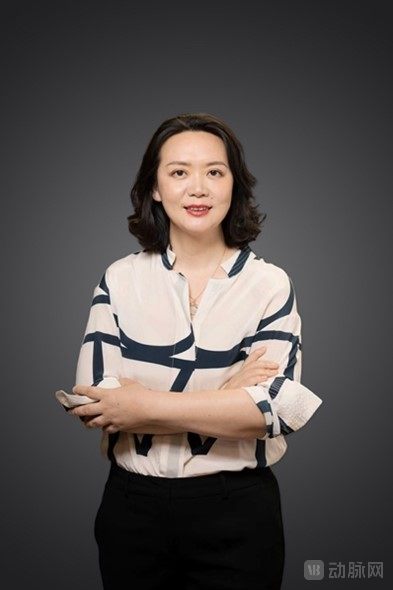
Ms. Xu Jing previously held senior management positions and served as the Head of Information Technology at Microsoft China, Redbaby Group, and Procter & Gamble China. She later served as Vice President of AstraZeneca China, where she was fully responsible for leveraging digitalization to optimize, innovate, reform, and transform the company’s business model, operational systems, and management frameworks in China. During this period, she successfully established two major innovation platforms: the China Center of Innovation for Healthcare (CCIC) and the International Life Science Innovation Park (iCampus), driving AstraZeneca China’s digital healthcare transformation and successfully launching the flagship Internet Hospital (iHospital) project.
The integrated development of health insurance and health management is a trend shaped by the combined effects of multiple factors, including China’s demographic structure, healthcare payment systems, and socioeconomic environment.
First, as China’s population ages and disease patterns and dietary structures shift, chronic diseases are becoming more prevalent and affecting younger populations, driving increased demand for health management. On the payment side, rising medical costs are placing significant pressure on basic medical insurance, while patients with serious or critical illnesses still bear a substantial financial burden, creating an objective need for supplementary commercial health insurance.
Therefore, the state has intensively rolled out policies to encourage the development of health insurance and elevated “improving health management standards” to the level of national strategy, providing robust policy support for the integrated development of health insurance and health management.
Meanwhile, insurance companies are placing greater emphasis on user health management. On one hand, they aim to reduce morbidity and claims rates during the coverage period through precise health management for policyholders. On the other hand, they seek to collaborate with enterprises in the health management sector to design insurance products that meet market demands, thereby improving and innovating health insurance offerings and related services to satisfy the growing and evolving needs of corporate, family, and individual clients.
In recent years, domestic insurance companies have actively laid out their health ecosystems, and several health management service models have gained market recognition. For instance, insurers provide comprehensive high-end health management services to customers by cooperating with, acquiring or holding controlling stakes in, or self-establishing medical institutions. Alternatively, they build online platforms to promote internet-based healthcare, which not only alleviates the service pressure on offline medical resources but also meets the diagnostic and treatment needs for minor and chronic diseases.
Taiyi Guanjia was established against this backdrop. Taiyi Guanjia positions itself as a “professional one-stop family doctor and managed care service platform.”
Xu Jing pointed out that the uneven distribution of medical resources in China prevents patients from quickly finding appropriate hospitals and specialists for their specific conditions, often resulting in the disorderly phenomenon of seeking specialized care for minor ailments and the helpless reality of receiving inadequate treatment for serious illnesses. Managed care helps patients strike a balance between different disease states and medical expenditures: it enables minor illnesses to be addressed at the primary care level, fully leverages tertiary hospitals’ capacity to tackle complex and refractory cases, and further implements the tiered diagnosis and treatment system.
Building on this foundation, Taiyi Steward initiates its services with family physicians, adhering to the managed care philosophy of “proactively intervening in individuals’ health status.” By integrating medical care, pharmaceuticals, and insurance services, it actively engages in various healthcare scenarios—including early preventive screening, sub-health management, disease management, and rehabilitation—thereby establishing a closed-loop health management system encompassing preventive intervention, treatment, and recovery.
Specifically, Taiyi Guanjia segments its user base into four groups based on disease risk levels: the healthy population, those with stable chronic conditions, those with complex chronic conditions, and patients with serious illnesses, so as to provide differentiated health management services. For the healthy population and those with stable chronic conditions, Taiyi Guanjia focuses on providing scientific guidance to help them adopt healthy lifestyles and control disease progression. For individuals with complex chronic conditions and serious illnesses, the company prioritizes their disease treatment and health improvement outcomes.
This strategy shifts user health risk management to a proactive stage, guiding health insurance from post-claim reimbursement to pre-event prevention, thereby reducing overall healthcare expenditures.
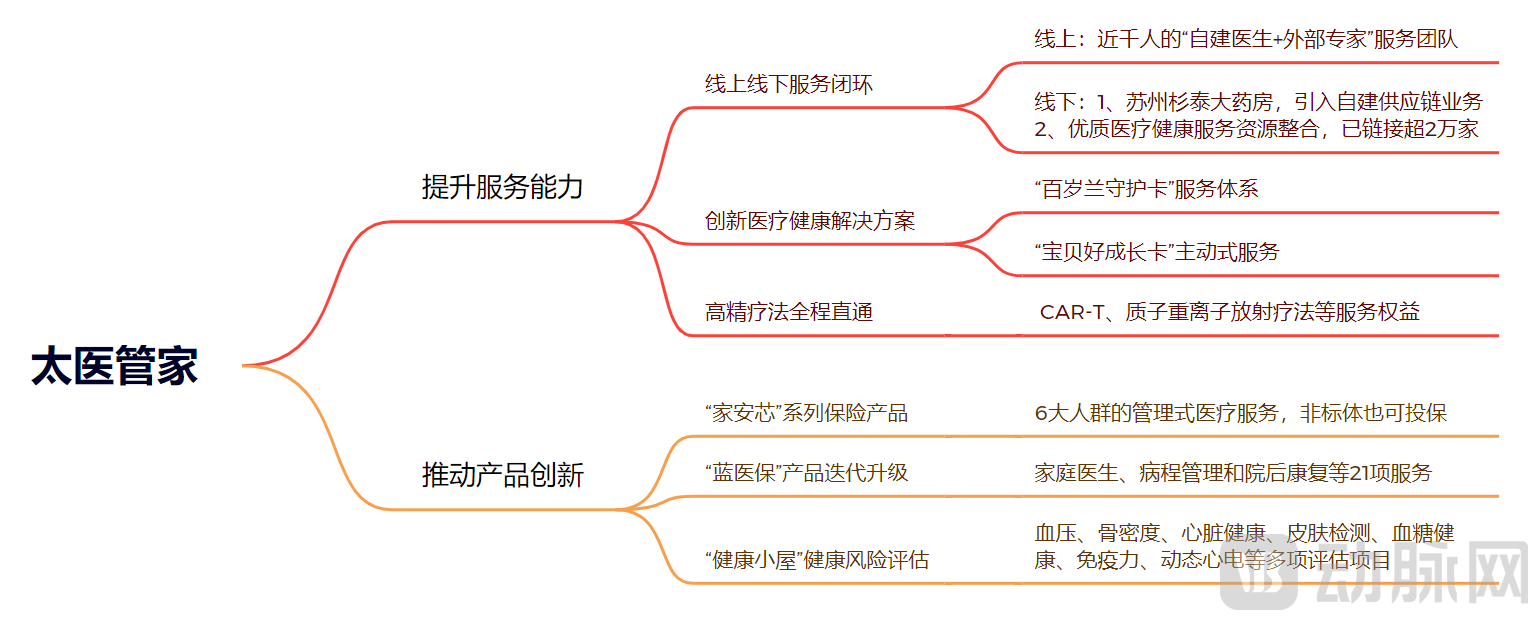
Guided by the aforementioned development strategy, Taiyi Guanjia continues to optimize its strategic layout of “Family Doctor + Managed Care,” enhancing efficient synergy with insurance services, inEnhancing Service Capabilities and Driving Product Innovationsignificant achievements in fields such as these, it has grown into a solid pillar of CPIC Group’s big health strategy in just two years.
Establish a More Robust Family Doctor System to Significantly Enhance Service Capacity
Xu Jing noted that Taiyi Guanjia, built upon a family doctor framework, has actively integrated high-quality medical service resources and connected with over 20,000 offline healthcare providers. This network includes more than 1,300 Grade A tertiary hospitals, over 17,000 partner pharmacies, 600 health examination institutions, and more than 1,500 consumer healthcare institutions such as medical aesthetics and dental clinics. While continuously strengthening its professional pharmaceutical service capabilities, the platform ensures the integrity of “online follow-up + online prescription” services, accelerating the closure of the supply-demand loop for “medical care and pharmaceuticals” within the healthcare service process.
Building on an increasingly robust family doctor system, Taiyi Guanjia continues to launch personalized health solutions tailored to different population groups, strengthening proactive, long-term health management for its users.Focusing on the healthcare needs of the elderly and children, representative products include the “Centenarian Orchid Guardian Card” and the “Baby’s Healthy Growth Card.”. Specifically, for brain health management, the “Welwitschia Guardian Card” incorporates a Class II-certified digital therapeutic for cognitive function, providing users with digital early screening and intervention services for Alzheimer’s disease.
As of the end of 2022, Taiyi Guanjia had provided nearly 5 million medical services and over 60,000 pharmaceutical services, delivering professional and convenient healthcare solutions to approximately 4 million users. In 2023, Taiyi Guanjia will continue to strengthen the competitive barriers of its family doctor system by introducing dynamic health records, upgrading to Family Doctor 2.0 services, and accelerating the development of a one-stop service platform and a professional bridge between doctors and patients.
Diversified Product Innovation: Pooling Strength for the Grand Health Strategy
Taiyi Guanjia is a proactive driver in forming an effective closed loop within the healthcare ecosystem, undertaking the mission of promoting the “deep integration of insurance products and services.” Therefore, Taiyi Guanjia is also committed to the innovative research, development, and implementation of insurance product services, helping insurance companies enhance product competitiveness and customer stickiness, and exploring long-term pathways for value growth.
In 2022, Taiyi Guanjia participated in the research and development of CPIC’s “Jia An Xin” series of insurance products, enabling individuals with more than 20 types of chronic conditions to gain access to coverage. It also customized managed care services for six key populations: healthy individuals, and those with breast nodules, thyroid nodules, pulmonary nodules, diabetes, or hypertension. Notably,“Jia An Xin” is a million-yuan medical insurance product that allows individuals with non-standard health conditions to obtain coverage., truly ensuring that patients with chronic diseases can also enjoy insurance coverage. This product also provides a reference model for market exploration of insurance for individuals with pre-existing conditions.
In addition, Taiyi Guanjia has provided family doctor services, disease course management, and post-discharge rehabilitation and care to support the iteration of the “Lan Yibao” product. These efforts have facilitated the service upgrade of “Lan Yibao,” driven product innovation, and thereby promoted transformation within the health insurance industry. This also reflects Taiyi Guanjia’s business philosophy of “Product as a Service.”
In addition to its individual-focused service products, Taiyi Guanjia has also launched the “Health Hut,” an intelligent terminal for health risk assessment, tailored for B2B clients. This initiative aims to deliver employee health management and care while serving corporate customers. By the end of 2022, the “Health Hut” had been deployed in nearly 1,000 institutions, providing health assessments to over 300,000 users, with more than 1.2 million assessments conducted.
Xu Jing stated that Taiyi Guanjia will continue to leverage its initiative, focusing on the integration of medicine, pharmaceuticals, and insurance. It will further develop its “hardware + software + services” model, monitor users’ health throughout their entire lifecycle, and provide comprehensive medical and healthcare services across various stages, including wellness, sub-health, chronic disease management, and rehabilitation.
Taiyi Steward, through its strategic layout of managed products and services, integrates the closed loop of healthcare, pharmaceuticals, and insurance. It provides users with cost-effective, full-lifecycle health and medical services, while enhancing the innovation capacity of insurance products. By generating innovative claims settlement models during the compensation process, it reduces the payout risk of health insurance and reinforces its core financial business.
In serving CPIC, Taiyi Guanjia has continuously deepened its integration into insurance scenarios to refine its health management capabilities. By leveraging its advantages in “dual-physician” teams, technology, and product R&D, it has achieved the productization and scalable replication of medical and health services, ultimately meeting user needs.
With the widespread adoption of health management concepts and the maturation of both software and hardware, Xu Jing believes that new incremental demands will continue to emerge in the health management sector. For instance, corporate employee care programs integrate the individual health management needs of each employee, indicating substantial business potential within the enterprise health management scenario.
Taiyi Guanjia has launched the “Taiyi Clinic” service solution for enterprise clients, integrating software and hardware resources across medical services, health initiatives, and intelligent monitoring to build an intelligent corporate health management platform. This solution supports business operations by achieving a multi-party win-win scenario that enhances employees’ access to medical care and health management, while improving operational efficiency and strengthening the company’s management reputation.
For instance, rapid online consultations enable employees to efficiently address inquiries regarding chronic diseases and general health. Offline health seminars can heighten employees’ awareness of their own well-being, empowering them to take primary responsibility for their health. Early intervention helps mitigate potential risks for the substantial population in a sub-health state. Furthermore, managed care holds significant promise at key touchpoints, such as interpreting and following up on employee medical examination reports, and conducting targeted follow-ups and interventions for individuals categorized by specific health profiles.
Xu Jing concluded by sharing Taiyi Guanjia’s two key priorities for the next five years. First, guided by the core principles of managed care, expand the scope of innovative vertical insurance services (such as insurance for individuals with pre-existing conditions) from specific populations to a broader customer base. Second, collaborate with corporate clients to safeguard employee health, enabling them to maintain high levels of productivity and full engagement at work.
“Delve deeply into business scenarios, hone our core capabilities, and keep moving forward at full speed, guided by our original aspiration to help customers live healthier lives.” This is how Xu Jing summarizes the past two years of Taiyi Guanjia and outlines its strategic direction for the future.