

Professor Wu Jian of Fudan University: Bridging the NASH Field as a Vital Connector
When Professor Wu Jian from the School of Basic Medical Sciences at Fudan University began focusing on NASH, clinical observations in this field were just getting underway in China.
After graduating from university in 1983, Wu Jian served as a clinician at Zhongda Hospital of Southeast University for seven and a half years, engaging in clinical practice during the day and conducting scientific research at night. In 1990, Wu Jian chose to pursue advanced studies abroad, earning a Ph.D. in Medicine from Umeå University in Sweden and completing postdoctoral research at Thomas Jefferson University in the United States. Subsequently, he spent 15 years at the Division of Gastroenterology and Hepatology, Department of Internal Medicine, within the School of Medicine and Medical Center at the University of California, Davis, where he successively held the positions of Assistant Professor, Associate Professor, and Professor.
His advanced studies abroad enabled Wu Jian to accumulate extensive research experience in the field of liver disease. He witnessed the shift in new drug development focus from viral hepatitis to NASH, observed the growing enthusiasm for academic research and drug development in the NASH field, and clearly perceived the failures, difficulties, and challenges inherent to this area.
Upon returning to China, Wu Jian became acutely aware of the gaps in the NASH field domestically, spanning from basic research to new drug development.In his view, compared with other liver diseases such as viral hepatitis, NASH is a relatively recent concern. The onset of the disease among the Chinese population occurred later than in foreign countries. It was not until rising affluence and lifestyle changes took hold that awareness of NASH prevalence gradually emerged in China around 2010.
“I know there is a significant unmet clinical need for NASH. The prevalence among the Chinese population was initially around 15%, but it currently stands at approximately 20%, with some regions reaching nearly 30%. However, research in the field of NASH remains relatively limited, and public awareness of this disease is low. Many people believe it does not affect their daily work and life, so they do not take it seriously.”
Wu Jian is deeply concerned, believing that people must remain vigilant and attach greater importance to this disease. Therefore, he has chosen to leverage his own influence to rally broader support, raise public awareness of NASH, and accelerate the research and development of new drugs for the condition.
Wu Jian said, “I hope to become a bridge in the field of NASH.”
To serve as a vital link, Wu Jian developed reliable animal models of non-alcoholic steatohepatitis (NASH) after joining the School of Basic Medical Sciences at Fudan University. He investigated the pathogenic mechanisms underlying the progression of NASH to cancer and explored novel therapeutic targets for NASH treatment. In 2019, he co-founded the China NASH New Drug Alliance with like-minded scientific experts; this organization was renamed the China Liver Disease New Drug Alliance in 2022.
Today, the China New Drug Alliance for Liver Diseases has held the Non-Alcoholic Steatohepatitis (NASH) Conference for two consecutive years, bringing together numerous experts from academia, the medical community, and the industry. The alliance has also strengthened professionals’ understanding of NASH by publishing specialized articles.
Wu Jian’s work in the field of NASH remains a long and arduous journey. Achievements in the industry over the past two years have given him greater hope, yet he believes he can do more by fostering collaboration among enterprises, academic institutions, research organizations, and medical practitioners to address the many challenges posed by NASH.
The following is Professor Wu Jian's personal account:
My FollowsNASHAt that time, domestic basic research in this field was still largely a blank slate.
Reports on NASH first emerged in the 1990s. My collaborator in the United States, Professor Anna Mae Diehl, Director of the Duke Center for Gastroenterology and Hepatology, together with a pathologist, published reports on NASH. Since then, this condition has gradually garnered attention.
In 1997, I began attending the annual meeting of the American Association for the Study of Liver Diseases.For the past decade, this conference has primarily focused on viral hepatitis, such as HCV and HBV., whether in posters, published studies, or oral presentations, viral hepatitis accounted for approximately 70% or more of the conference communications, with the remainder covering hepatocellular carcinoma, liver transplantation, and other topics.
Since 2015, new treatment options for hepatitis C have emerged, while vaccines and novel drugs have become available for hepatitis B; consequently, interest in these two diseases has begun to wane, whereas attention toward non-alcoholic steatohepatitis (NASH) has risen significantly.It was from that point on that all major pharmaceutical companies researching viral hepatitis shifted their focus entirely to NASH. When I returned to China in 2013, I already recognized that NASH would become a highly significant therapeutic area in the future.
We conduct basic research and pay close attention to advances in clinical research.When I first returned to China, the animal models for NASH or hepatitis were not standardized. Although there were many animal models available, none could withstand rigorous validation, particularly in terms of aligning with clinical endpoints.
We were well aware of the primary endpoints for NASH clinical trials. The first endpoint is steatohepatitis, encompassing the severity of steatosis, inflammatory cell infiltration, and hepatocellular ballooning—collectively referred to as the NAFLD Activity Score (NAS). If an animal model fails to exhibit these pathological features, it is certainly unsuitable. The second endpoint is liver fibrosis. It takes a considerable amount of time for animal models to develop NASH accompanied by liver fibrosis. Only when the animal models reach stage F2 fibrosis are they considered appropriate for drug testing and efficacy evaluation. However, at that time, virtually no animal models met these requirements.
Therefore, we initially focused on animal models, comparing different diets and methods to induce NASH.After more than a year of repeated experiments, we have established a robust animal model, and our related publications have gained widespread recognition.
Currently, researchers around us are all using this animal model. I recall that in 2019, when the China Liver Disease New Drug Alliance was still known as the NASH New Drug Alliance, a question arose during a lecture: which animal model might be the best? One attendee responded that Professor Wu’s model was the best, stating, “We have not only used it, but also achieved high reproducibility.” Although I did not know him at the time, his initiative to stand up and answer the question deeply inspired me.
In addition to developing animal models, we are also investigating the mechanisms by which NASH progresses to liver cancer.Both high-quality basic research and epidemiological surveys in this area are largely lacking in China, as previous efforts have predominantly focused on the progression from viral hepatitis or liver cirrhosis to hepatocellular carcinoma, with scant attention paid to the mechanisms by which non-alcoholic steatohepatitis (NASH) progresses to liver cancer.
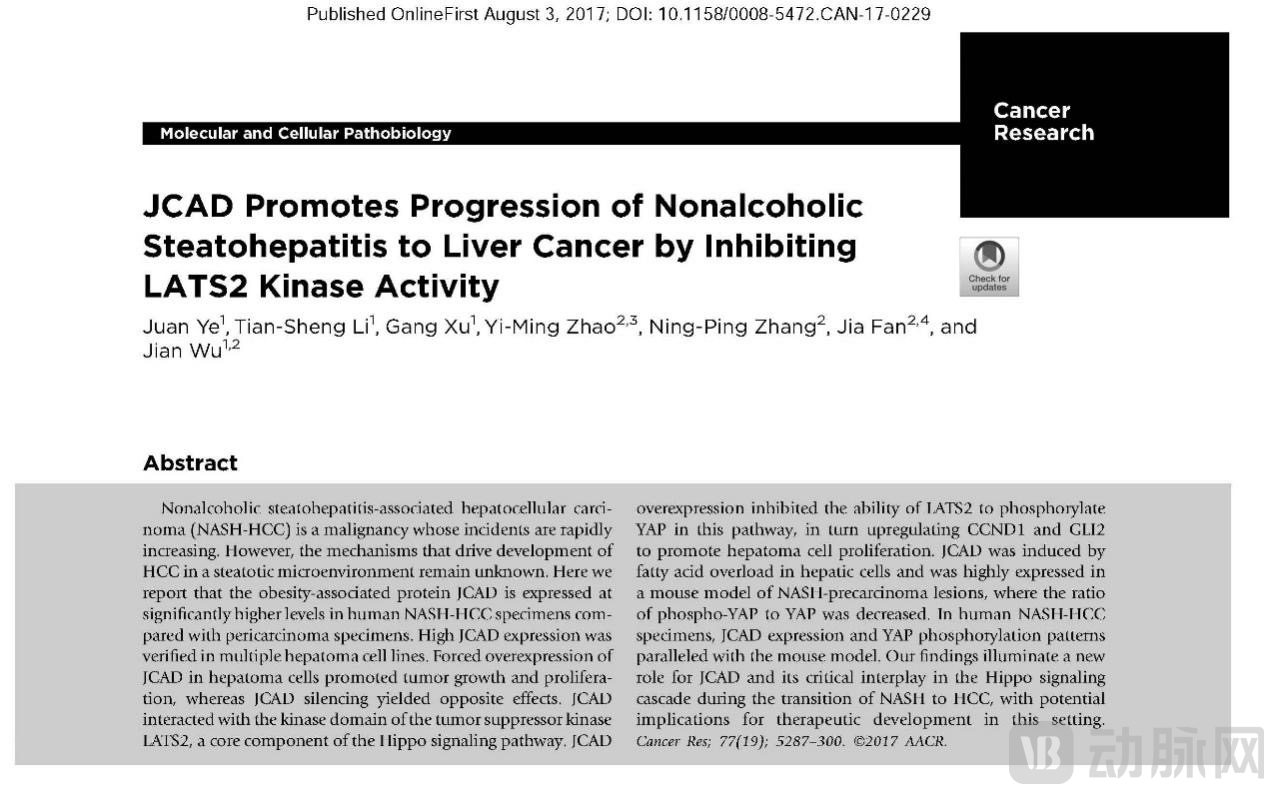
In collaboration with the team of Academician Fan Jia, we conducted screening of clinical specimens and experimental validation,In 2017, we published an article in Cancer Research that specifically elucidated how NASH progresses to liver cancer under the influence of the Hippo signaling pathway.Our team should be at the forefront in this field.
For NASH intervention, we are exploring new targets.After years of accumulated research, we have identified a NASH target known as the GPR91 receptor. These findings were made possible because we started with basic research, established animal models, and elucidated the pathogenesis, thereby laying the foundation for the subsequent discovery of new targets and intervention strategies. This approach represents a full-chain research model.
I hope to becomeNASHFieldofA Bond
NASH actually faces numerous challenges in disease diagnosis, clinical trials, and even public health education.
Currently, public awareness of NASH remains insufficient. Why is the consultation rate for viral hepatitis high, while many people dismiss NASH? The reason is that individuals were originally healthy, but after contracting a virus, they experience symptoms such as loss of appetite, abdominal bloating, fatigue, jaundice, and dark urine. These noticeable changes in their physical condition prompt them to seek medical attention and treatment.
When NASH develops, most individuals are still young, physically robust, and energetic, with fatty liver disease typically presenting no symptoms. At this stage, physicians often advise patients to implement self-directed interventions by modifying their lifestyle—specifically, adhering to a controlled diet and increasing physical activity. However, many people fail to take this advice seriously; office workers continue to stay up late and rely on food delivery services, lacking the awareness necessary to manage NASH effectively.
Public awareness of NASH is low, which is only one aspect; clinical trials also face considerable pressure.From a professional perspective, magnetic resonance imaging (MRI) can be used for quantitative assessment of hepatic steatosis in the clinical diagnosis of non-alcoholic steatohepatitis (NASH). However, this capability is not available in all hospitals; it is generally not offered by most medical institutions. While tertiary Grade A hospitals have the necessary infrastructure to perform such assessments, their clinical services are heavily overloaded, making it difficult even for pharmaceutical companies to schedule these procedures for clinical trials.
Additionally,The issue of liver fibrosis is also significant., during clinical trials, patients need to be stratified into F1, F2, and F3 stages, but there is a lack of non-invasive indicators that can reflect the degree of liver fibrosis,Current examinations can provide a rough assessment of the degree of fibrosis, but they cannot serve as endpoint indicators in clinical trials.
Therefore, liver biopsy has become an important tool. However, many pharmaceutical companies find the topic of liver biopsy challenging, as numerous hospitals are unable to perform it. In well-equipped hospitals that have accumulated sufficient experience and maintain rigorous procedural standards, liver biopsies can still be performed; this ultimately depends on physicians' confidence and patients' acceptance.
In addition to the need for greater cooperation from hospitals, not all physicians have a clear understanding of clinical endpoint indicators.Pharmaceutical companies often encounter communication barriers with clinicians. When asked whether their drugs can be evaluated using specific clinical endpoints, clinicians may respond that these standards are set by regulatory authorities such as the U.S. Food and Drug Administration (FDA), the European Medicines Agency (EMA), or China’s National Medical Products Administration (NMPA), and that they must adhere to these established guidelines.
These objective factors, the reference rates of clinical endpoint indicators, and the design of clinical trials have all exerted a crucial influence on clinical trials of new drugs for NASH.
In the face of these numerous challenges, we established the NASH New Drug Alliance in 2019., with numerous pharmaceutical industry experts from across China joining. In total, there were approximately 30 to 40 members involved throughout the process, with around 10 founding committee members, of which I was one. Other notable members included Professor Fu Wei from the School of Pharmacy at Fudan University, Professor Wei Lai, Director of the Hepatobiliary and Pancreatic Center at Beijing Tsinghua Changgung Hospital, and Professor Niu Junqi, Director of the Department of Hepatology at the First Hospital of Jilin University, among others.
Later, we also brought in Professor Fan Jiangao, Director of the Department of Gastroenterology at Shanghai Xinhua Hospital; Professor Sun Jian, Vice President of Nanfang Hospital, Southern Medical University in Guangzhou; and Professor You Hong, Vice President of Beijing Friendship Hospital, Capital Medical University. As clinicians, they focus not only on NASH but also on new drug development in other areas of liver disease. Consequently, we renamed the NASH New Drug Alliance as the China Liver Disease New Drug Alliance.
The alliance has brought together numerous domestic pharmaceutical companies focused on the field of liver disease. Enterprises such as Junshengtai, Xianweida, Ascletis Pharma, and Zhongsheng Ruichuang have all contributed to and supported the alliance’s growth and development.
It is a great honor for me to serve concurrently as the Vice Chairman of the Alliance, which has provided me with more opportunities to engage in its work. We aim to bring together experts from both the industry and clinical sectors to discuss key issues. Our goal is to act as a nexus and bridge linking enterprises, academia, research institutions, and healthcare providers, thereby accelerating the entry of promising drugs into clinical trials, smoothing this pathway, and reducing barriers across all sectors.
Meanwhile, the Alliance will also strengthen communication with regulatory authorities.For the evaluation of new NASH drugs, liver fibrosis and NAFLD scores are currently used as the standards. The industry has long had concerns about this, but these criteria have been established by the FDA, the European Medicines Agency, and China’s National Medical Products Administration, leaving pharmaceutical companies unable to change them. We hope to increase dialogue with regulatory authorities through alliances, convey our perspectives, and help them understand the rationale behind these concerns, as well as explore the possibility of revising certain standards.
NASHThe Industry Needs to Welcome a Milestone Event
Currently, Madrigal’s resmetirom has received FDA Breakthrough Therapy Designation and will begin its marketing application submission this quarter. Previously, Intercept also re-submitted its New Drug Application for obeticholic acid to the FDA. The approval of new NASH therapeutics will provide a significant boost to the industry.
"In my view, the approval of Resmetirom would be a milestone event."This milestone is primarily reflected in two aspects. First, NASH was previously untreatable with approved medications; this approval will end the history of having no drugs sanctioned by regulatory authorities for market launch. Second, Madrigal did not disclose clinical endpoint data at last year’s European Association for the Study of the Liver (EASL) Congress or the American Association for the Study of Liver Diseases (AASLD) Conference, only formally releasing the Phase III clinical trial endpoints at the end of last year. At previous EASL and AASLD conferences, many assessments of efficacy were based on metabolic indicators, leading to a general perception that the drug was indeed quite effective. The efficacy of Resmetirom lies in its achievement of two key endpoints: it can improve steatohepatitis and alleviate liver fibrosis. More importantly, Resmetirom has a favorable safety profile with low side effects.
From this perspective, obeticholic acid meets only one endpoint and is associated with significant adverse effects, with pruritus occurring in approximately half of patients. Another concern is that obeticholic acid can elevate low-density lipoprotein (LDL) cholesterol levels, thereby increasing the risk of cardiovascular events and coronary heart disease. Given that many patients with non-alcoholic steatohepatitis (NASH) already present with hyperlipidemia or cardiovascular comorbidities, further elevation of LDL cholesterol may be unacceptable for a subset of these patients.
Obeticholic acid’s resubmission of its marketing application is based on robust clinical data. Whether it will ultimately gain approval remains to be seen.
However, the NASH field is in need of a therapeutic agent. The industry requires a bellwether to instill confidence within the sector.
Certainly, in addition to these two drugs, many other new NASH therapies show promise. For instance, the PPAR agonist lanifibranor and semaglutide both warrant continued attention.
In China, some new pharmaceutical companies are also conducting research on NASH.For instance, Dr. Liu Liping founded Ascletis Pharma. What impressed me most was that at the 2019 AASLD (American Association for the Study of Liver Diseases) conference, Ascletis Pharma was the only Chinese company selected to present in the main forum chaired by the conference president. The probability of being selected was approximately 2/1000 to 4/1000, and the presentation was highly successful. Ascletis Pharma combined ursodeoxycholic acid (UDCA) with berberine to create a new molecular entity. Originally developed for the treatment of sclerosing cholangitis, it was subsequently found to be effective in treating non-alcoholic steatohepatitis (NASH). Phase IIa clinical trials have been conducted simultaneously in the United States and China with favorable results, and preparations are currently underway to initiate Phase IIb and Phase III clinical trials.
There is also Dr. Chen Xiaoxin’s Zhongsheng Ruichuang, which is developing obeticholic acid derivatives, giving us similar hope. Although domestic companies started later than their foreign counterparts, they are making continuous efforts in this direction.