

2023 Pharmaceutical Digital Marketing Industry Report: Leading Companies Have Gone Public En Masse, Data Challenges Hamper Cost Reduction and Efficiency Gains
The pharmaceutical digital marketing industry is rapidly evolving in response to market demands. Digital marketing firms are continuously exploring new models and enhancing marketing precision, striving to identify effective ways to reduce costs and improve efficiency for pharmaceutical companies, provide comprehensive academic solutions for physicians, and help patients achieve better overall health outcomes.
What are the major marketing models in the industry at present?
What are the key technical barriers and core business logic in each model?
What is the current level of industry acceptance for each model?
How can we further optimize to achieve better marketing results?
This report, based on surveys and interviews with over ten innovative enterprises, three investment institutions, and several clinical experts, outlines the industry’s primary marketing models, provides an in-depth analysis of their core commercial principles and underlying logic, identifies current challenges and corresponding future solutions, and fosters collaborative discussion among industry peers.
Key Perspectives
Digital marketing models are diverse, primarily centered around physicians and patients.Digital marketing targeting physicians aims to provide comprehensive academic solutions, thereby enhancing recognition of pharmaceutical products; digital marketing targeting patients aims to improve accessibility to services and payment options, thus helping patients complete their course of treatment.
Omni-channel Digital Marketing: Data Infrastructure Outweighs Algorithm Training.Digital marketing is not narrowly understood as online marketing activities, but rather a personalized combination of all marketing channels driven by data for specific marketing targets. Currently, the key to promoting the digitalization process in the industry lies in accelerating data construction and collecting and governing sufficient and effective marketing target data to train algorithms.
Digital marketing driven by doctor-patient engagement is an inevitable trend, accelerating the development of incremental markets.Pharmaceutical digital marketing centered on both physicians and patients is showing a trend of continuous integration and synergy. By establishing a closed-loop marketing system, it helps continuously upgrade marketing strategies, improve the predictability of marketing outcomes, and achieve a synergistic effect where the combined impact exceeds the sum of its parts.
Under Multi-Dimensional Policies, the “Essential” Status of Digital Marketing Becomes Prominent
Selling prices "slashed in half," squeezing drug profit margins.In March 2016, the former China Food and Drug Administration (CFDA) issued the “Opinions on Carrying Out Quality and Efficacy Consistency Evaluation of Generic Drugs,” marking the official launch of the consistency evaluation program. According to data from PharmCube, the average cost for completing a consistency evaluation for a single drug is approximately RMB 5 million.
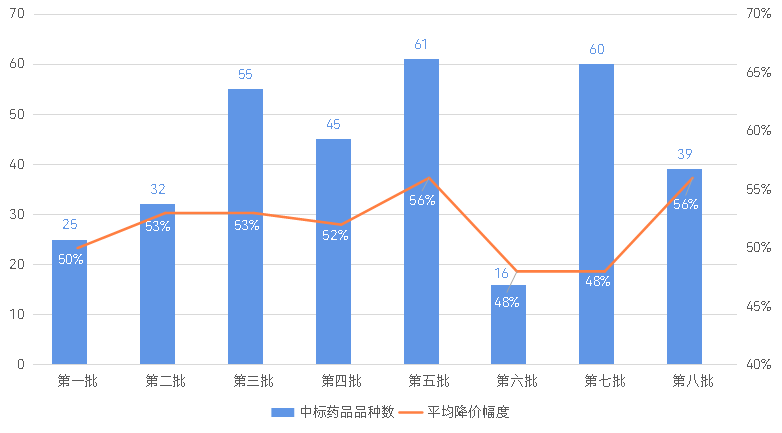
Three years later, the centralized procurement of pharmaceuticals kicked off, further eroding the profit margins of generic drugs. As of April 2023, China had conducted eight rounds of national centralized drug procurement, covering a total of 333 drugs, with an average price reduction exceeding 50%. The substantial savings in medical insurance expenditures corresponded to significantly compressed profit margins for enterprises.
Number of Winning Bid Varieties and Average Price Reduction Rate for Each Batch of National Centralized Drug Procurement
Source: VBInsight
Meanwhile, innovative drugs are facing a similar situation. Among the 34 innovative drugs launched between 2016 and 2020, 26 have been included in the National Reimbursement Drug List (NRDL), with average price reductions comparable to those seen in volume-based procurement (VBP). Moreover, the time lag for innovative drugs to be included in the NRDL has been shortening: from 2017 to 2021, the inclusion cycles were 54.2 months, 44.0 months, 28.4 months, 21.2 months, and 14 months, respectively. The “halving” of terminal prices has correspondingly compressed the profit margins of innovative drugs.
Code of Conduct for Medical Representatives: Returning Responsibilities to Academic Communication.The 2020 "Measures for the Record-filing Administration of Medical Representatives (Trial)" clarified that the functions of medical representatives include formulating promotion plans and strategies for pharmaceutical products, while explicitly prohibiting them from undertaking sales targets, engaging in prescription data collection ("tongfang"), or performing other activities that may interfere with rational clinical drug use. This regulation has raised the academic and professional standards required of medical representatives, undoubtedly indirectly diminishing their impact on sales outcomes.
Therefore, more cost-effective sales models have gradually shifted from “innovative exploration” to an “essential requirement” for enterprises, becoming an inevitable path for corporate development.
Policy and the pandemic have jointly driven changes in clinical practice.Policies such as “Internet + Healthcare” and tiered diagnosis and treatment are not only transforming the delivery of medical services but also reshaping the work habits of clinicians. Accelerated by the three-year pandemic, an increasing number of physicians have grown accustomed to, or even prefer, obtaining information via the internet. Furthermore, overarching initiatives to strengthen primary care, along with policies such as the single-invoice system, have prompted more enterprises to prioritize the efficient dissemination of academic information.
Internal and External Drivers for Pharmaceutical Companies to Launch Digital Marketing
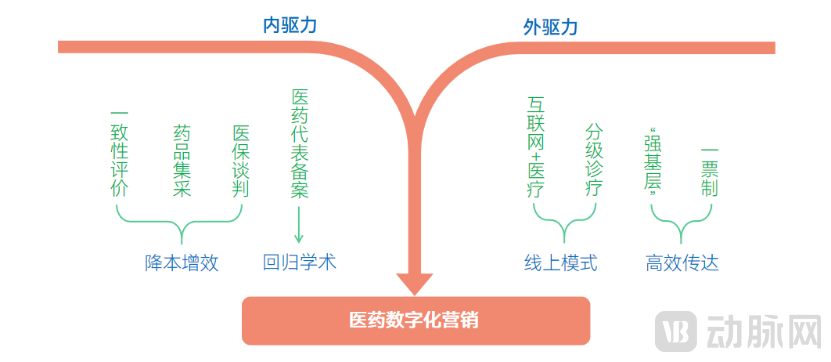
Driven by the internal imperatives of “cost reduction and efficiency enhancement” and a sales shift back to “academic engagement,” along with numerous external forces, digital marketing has taken center stage and achieved rapid growth, leveraging its advantages of low cost, broad reach, and efficient communication.
Digital Marketing Demonstrates Strong Revenue-Generating Power, with Diverse Formats Converging on the Same Goal
Compared horizontally with digital enterprises in other niche segments of the healthcare sector, digital marketing firms command higher average funding amounts per round, with deals in the tens and hundreds of millions occurring frequently. This undoubtedly serves as direct recognition of the sector’s future prospects and its value to the development of the healthcare industry.
Financing Status of Companies Engaged in Digital Pharmaceutical Marketing

Source: VBInsight
(Sorted by financing round, with rounds of the same stage sorted chronologically; only the most recent financing round is displayed)
Various sub-sectors have also seen the emergence of companies in later-stage financing rounds, beginning to establish themselves as industry leaders. For instance, leading listed healthcare internet companies such as JD Health and Medlive are leveraging their existing user bases and data assets to expand into pharmaceutical digital marketing. Among enterprises that entered the digital marketing space by providing professional academic content tailored to physicians, MedSci Health completed a substantial RMB 100 million pre-IPO financing round in 2020 and subsequently went public in April 2023. Meanwhile, in the rapidly growing field of virtual representatives, digital health companies such as Qingyun Technology have advanced to Series C financing, demonstrating strong growth momentum.
This industry study begins with marketing target audiences, categorizing digital pharmaceutical marketing into two major segments—"physician-centric" and "patient-centric"—to explore their current development status and future trends, respectively.
Comparison of Digital Marketing Dimensions Centered on Physicians vs. Patients

Precise Delivery of Academic Content: Digital Marketing Empowers Physicians to Enhance Diagnostic and Treatment Capabilities
The core elements of digital marketing for physicians are precise services and personalized content.
Differences Between Traditional Pharmaceutical Marketing and Digital Marketing in Academic Content and Service Formats

Academic content can be categorized into medical content and product-related content. In digital marketing, technological advancements enable the seamless integration of these two elements to produce highly readable academic materials. Furthermore, personalized academic content can be tailored to physicians’ diverse learning preferences and specific service scenarios, ensuring that information is not merely “delivered to” physicians but truly “resonates with” them.
In terms of academic services, traditional models have been predominantly offline. Due to their labor-intensive nature and high time costs, resource allocation has largely been confined to large hospitals in central urban areas to improve efficiency. In digital marketing, precise service plans can be developed based on the different promotional cycles of products and physicians’ learning habits. By adopting an internet-primary, human-support approach, resource allocation efficiency is multiplied, enabling more precise academic services while simultaneously expanding service coverage.
In industry research, digital marketing firms have repeatedly emphasized that digital marketing is not merely an online marketing service, but a closed-loop service ecosystem spanning online and offline channels as well as in-hospital and out-of-hospital settings. Digitalization enables channel diversification, precise service delivery, and personalized content. This shift has transformed marketing outcomes from the traditional model of casting a wide net and filtering results through successive funnel stages to one where marketing performance can be predicted early on based on data, thereby helping companies optimize the allocation of their limited marketing resources.
Four Key Digitalization Stages Achieve a Closed-Loop Marketing Service System.In the outreach phase, digital marketing companies leverage their respective platforms and entry points to invite physicians into their marketing traffic pools. The number of registered physicians has become a consensus metric for evaluating performance in this phase.
Objectives and Key Performance Indicators of the Four Critical Stages in Digital Marketing
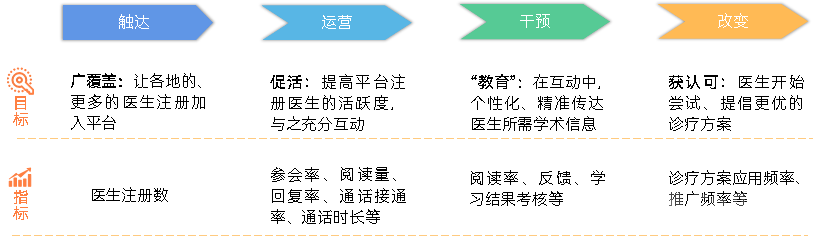
Next, we focus on physician operations to ensure their engagement after joining the platform, converting static traffic acquired during the outreach phase into effective traffic capable of driving meaningful interventions. Our research indicates that more cutting-edge academic content, more practical diagnosis and treatment-related activities, and services closely aligned with patient management are more effective in attracting physician participation, thereby achieving strong outreach and operational metrics.
For instance, owing to strong academic and professional recognition within the industry, MedSci maintains an average monthly active user base of 2.7 million. Furthermore, leveraging its highly engaged private-domain physician communities focused on specific diseases, the company has created breakthrough opportunities for identifying patients with rare diseases. In one year of operations, it helped CanHelp Genomics identify 89 suspected cases of Mucopolysaccharidosis Type II (MPS II).
Building on the solid foundation established in the first two stages, digital marketing firms have earned the trust of pharmaceutical companies and forged partnerships, thereby enabling the intervention and transformation phase. In the next subsection, we will provide a detailed analysis from the three dimensions of marketing strategy.
Intelligent Marketing Strategies Aid in Outcome Prediction and Improve Marketing Success Rates
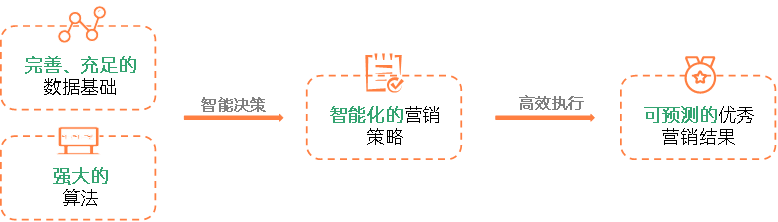
Marketing strategies primarily address three key issues: target audience, marketing content, and marketing activities. In the process of digitalization, these three aspects are gradually shifting from “experience-based” to “data-driven.” This intelligent transformation enhances marketing success rates and improves the predictability of marketing outcomes.
“Marketing targets” have been intelligently optimized.To identify target physicians for marketing, basic information such as their department, areas of expertise, and fields of interest is required. In addressing the issue of “marketing targets,” companies possess a relatively robust data foundation; by applying appropriate algorithms, this challenge can be resolved through digital means, thereby achieving a basic level of intelligent automation.
A Sufficient Number of Effective Tags Facilitates the Intelligent Generation of Personalized “Marketing Content”.In digital marketing, academic content delivered across various scenarios is presented with varying emphasis, information density, and formats, tailored to physicians’ distinct learning preferences, product promotion cycles, marketing channels, and even timing. For instance, physicians at large tertiary Grade A hospitals are more eager to access cutting-edge research findings and academic insights, whereas primary-care physicians tend to prefer practical case shares and surgical demonstrations.
However, categorizing physicians by “large tertiary Grade A hospitals” versus “primary care hospitals,” and classifying academic content into “cutting-edge academic information” and “clinical case examples,” represents only the earliest, experience-based approach to segmentation. More precise marketing tailors differentiation to each physician’s preferences, seeking effective tags at the finest granularity; meanwhile, the variety of academic content types also expands. This is one of the key advantages of digital marketing, with sufficient and effective tags being the critical factor.
As digital marketing advances, the pool of effective tags is gradually becoming more comprehensive through continuous testing and validation. At that point, automatically generated academic content will become more personalized, significantly boosting the success rate of marketing strategies.
The intelligentization process makes the outcomes of every “marketing action” predictable.Marketing activities encompass three dimensions: channel, frequency, and timing. Similar to marketing targets and content, marketing activities have become increasingly diversified and personalized in the wave of digitalization. Physician tags are also applied in the combination of various marketing activities.
Moreover, various marketing initiatives continuously establish reliable dimensions during implementation to predict their corresponding outcomes. Through iterative validation, these models refine proportional weights and enhance success rates, ultimately achieving intelligent formulation of marketing strategies and making the outcomes of “marketing activities” predictable.
Intelligent Marketing Strategies Improve Success Rates and Enhance Outcome Predictability
Strengthen Data Infrastructure and Leverage Intelligence to Reduce Reliance on Manual Labor
The primary ways digital marketing helps reduce costs are: first, by expanding the reach of physician coverage; and second, by leveraging technology to replace manual labor in handling large volumes of repetitive tasks.
For the first approach, the extensive reach among primary care physicians in digital marketing represents a significant “cost reduction.” Physicians in central urban hospitals are more densely concentrated and serve a larger patient volume, so traditional marketing models centered on pharmaceutical sales representative visits tend to focus on these areas. In contrast, many primary care hospitals, due to their remote locations, lower physician density, and smaller overall patient populations, often remain uncovered because of the limited time and energy available to pharmaceutical sales representatives.
In reality, physicians at primary care institutions are generally more eager to receive academic promotion and dissemination due to their limited diagnostic and treatment capabilities. Furthermore, driven by policies guiding the decentralization of medical resources and the localization of patient care, a trend is emerging wherein academic high grounds and sales high grounds are becoming decoupled. The sales high ground, which previously overlapped with the academic high ground at large tertiary Grade A hospitals, is gradually separating and shifting toward the primary care level. Consequently, achieving broad coverage among primary care physicians has become particularly crucial for pharmaceutical companies to drive incremental sales growth, naturally making it a key focus area for digital marketing strategies.
Among the various approaches to replacing human labor with technology, virtual representatives have emerged as the most prominent area, with digital marketing companies actively establishing their presence. By leveraging artificial intelligence, technology can handle a large volume of repetitive tasks in pharmaceutical marketing, such as routine visits, invitations to academic conferences, and the dissemination of standard academic content.
Virtual representatives, with their significantly low-cost and wide-coverage attributes, can greatly reduce reliance on human labor. With the collaboration of virtual representatives, pharmaceutical sales representatives can reach a larger group of physicians within the same amount of time and effort, while more reasonably allocating their energy to high-value activities.
Furthermore, driven by the impact of the internet and accelerated by the pandemic, an increasing number of physicians have developed the habit of online learning, with younger doctors in particular showing a stronger preference for communication via digital platforms. In response to the needs and recognition of pharmaceutical representatives, pharmaceutical companies, and physicians alike, virtual representatives have rapidly gained traction, demonstrating significant effectiveness.
For instance, Qingyun Technology, one of the earliest companies in the industry to deploy virtual representatives, now has mature marketing data demonstrating their value. According to company data, due to the broad coverage characteristic of virtual representatives, they can achieve excellent marketing results in maintaining and growing sales of mature products, even with labor costs at only 20% of those for traditional field representatives.
Comparison of Select Dimensions Between Field Representatives and Virtual Representatives

Source: Qingyun Technology (HCP refers to physicians)
Strengthen data infrastructure to maximize cost reduction and efficiency gains.Cost reduction and efficiency enhancement—achieved by reducing reliance on manual labor and expanding coverage—are built upon a robust data foundation, encompassing both data volume and data security. According to research, data volume is currently the primary bottleneck hindering the intelligent transformation of the digital marketing industry. On one hand, existing data is fragmented across various platforms with low interoperability; diverse data formats complicate governance and result in low utilization rates. On the other hand, achieving full intelligence requires the accumulation of more physician behavioral data to support advanced analytics.
Especially with the rapid advancement of AI technology, there is an urgent need for foundational data to train algorithms, aiming to achieve rapid breakthroughs in areas such as academic content generation, communication scripts for virtual representatives, formulation of marketing strategies, and analysis of drivers behind physician behavior. This will accelerate digital transformation at double speed, maximizing cost reduction and efficiency improvement. In the future, the ability to acquire and apply data will be the key factor ensuring that companies stand out in the digital marketing landscape.
Patient-Centric: Digital Marketing Enhances Service Accessibility
Inconvenient services and restricted payment options are the primary factors hindering patient medication adherence. Patient-centric digital marketing enhances access to services and payment solutions, thereby improving patient adherence and facilitating completion of course-based treatments, which ultimately helps pharmaceutical companies increase sales volume.
Internet Hospitals Enhance the Accessibility of Health Management Services.The widespread adoption of internet hospitals has made physicians more accessible, providing patients with great convenience in medication adjustment and the issuance of regular continuation prescriptions.
Digital marketing services centered on patients: To better fulfill the mission of improving patient health, internet hospitals typically assign not only physicians but also dietitians, health managers, and physician assistants to patients, delivering comprehensive health management services that encompass online consultations, lifestyle interventions, and psychological support.
Therefore, this service goes far beyond merely connecting doctors with patients; it links professional health management teams with patients. With the aid of digital tools, professional health management services are also striving to become more personalized and precise.
Leveraging robust supply chain capabilities, pharmaceutical e-commerce enhances the accessibility of pharmaceutical products.In addition to services, corresponding pharmaceutical products are also crucial for patients to complete course-based diagnosis and treatment. Patient-centric digital marketing also prioritizes convenient access to pharmaceutical products as a key service component, thereby completing the service loop.
Taking diabetes as an example, online pharmacies not only offer a comprehensive range of diabetes medications but also provide a full selection of devices and consumables required for diabetes management, such as blood glucose meters, test strips, continuous glucose monitors (CGMs), and urine ketone test strips. This one-stop solution meets all of patients’ pharmaceutical product needs. Furthermore, based on prescription details and guideline-recommended monitoring intervals, these platforms regularly remind patients to repurchase supplies. For certain products with fixed management cycles, such as blood glucose test strips, patients can even schedule periodic deliveries in advance, thereby eliminating the need for repeated orders.
Furthermore, O2O pharmaceutical e-commerce services enhance patient convenience through “medicine delivery” models by integrating offline pharmacy resources, allowing patients to place orders directly via the platform. This places significant demands on enterprises’ supply chain capabilities. Robust supply chain management is not only the cornerstone of improving patient convenience but also a critical link in ensuring the successful execution of final sales outcomes in pharmaceutical marketing.
Enhancing Payment Accessibility to Support Patients in Completing Course-Based Treatment
Improving payment accessibility is another critical component of patient-centric digital marketing. As companies continue to integrate with insurance providers and capital markets through innovative initiatives, numerous viable payment solutions have emerged that effectively help patients alleviate both their current out-of-pocket medical expenses and their long-term total healthcare burden.
Enable online settlement for basic medical insurance and deepen the diversified integration of commercial health insurance.While online consultation services and home delivery of medications have significantly enhanced convenience, most are not yet integrated with medical insurance accounts. This means patients cannot use their medical insurance balances and must pay out-of-pocket from their savings, which is one of the reasons why some individuals, particularly the elderly, forgo these convenient services.
As internet-based healthcare continues to mature, an increasing number of online hospitals have integrated follow-up consultations and medication purchases with medical insurance reimbursement systems. Notably, internet hospitals led by public physical hospitals are advancing more rapidly. Currently, many provinces and cities in China, such as Beijing, Zhejiang, and Guangzhou, are witnessing a rapid increase in the number of internet hospitals connected to medical insurance payment systems.
Meanwhile, digital marketing companies specializing in pharmaceutical services are progressively expanding into individual cities and various health consumption channels, striving to integrate with the national medical insurance system. As the disparity between online and offline medical insurance reimbursement gradually narrows, the true value of online healthcare services will be fully realized. An increasing number of patients participating in online consultations will, in turn, provide digital marketing firms with richer patient-related data, facilitating more precise and personalized digital marketing strategies.
For pharmaceutical products and services not covered by basic medical insurance, digital marketing companies are also alleviating patients’ financial burden by strengthening collaboration with commercial health insurers. In addition to traditional reimbursement for treatment costs, many commercial insurance plans now include critical illness insurance coverage for related diseases.
Patient-Centric Digital Marketing Enhances Access to Services and Payment
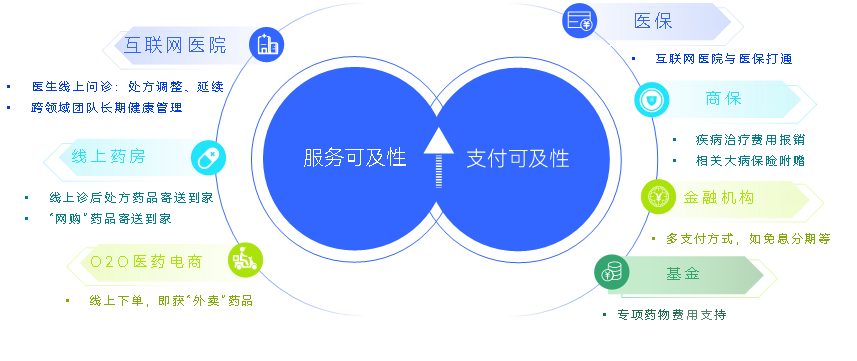
Integrating with capital to enhance payment accessibility.Beyond insurance, innovative integrations with capital are continuously emerging in patient-centric digital marketing. Common consumer payment models, such as installment plans and tiered discounts, are gradually appearing in the pharmaceutical payment sector. Furthermore, deep collaborations with various funds to provide medication cost support for eligible patients are becoming increasingly frequent.
Doctor-Patient Collaboration: Completing the Digital Marketing Closed Loop
Digital marketing is gradually expanding its reach to both healthcare providers and patients.With the advancement of precision diagnosis and treatment, physicians are increasingly valuing real-world evidence (RWE) data from post-marketing studies. Consequently, digital marketing strategies targeting physicians are progressively incorporating patient management into their service offerings, primarily to assist physicians in managing patients within their private domains.
On the one hand, physicians can observe the real-world performance of drugs, thereby continuously enhancing their trust in these medications. This facilitates the transition from “trial use” to “advocated use,” ultimately deepening market penetration within hospitals.
On the other hand, with the diversification of information access channels and heightened health awareness among patients, there is a growing demand for more comprehensive information and evidence of treatment efficacy during the formulation of therapeutic plans. Furthermore, in treatment regimens involving long-term physician follow-up, issues encountered can be addressed more promptly and effectively. Coupled with continuous professional education provided by physicians, which targets the enhancement of patients’ health management concepts, treatment adherence is expected to improve significantly.
Digital Marketing Driven by Doctor-Patient Collaboration Enhances Mutual Satisfaction
·
Meanwhile, digital marketing companies that entered the market with a competitive advantage in consumer-facing (C-end) traffic have also begun to expand their coverage of physicians. On one hand, the involvement of physicians makes the online medication purchasing experience smoother and safer; on the other hand, it enhances the professionalism of services, thereby boosting patients’ willingness to pay in the short term. In long-term management, physician-led multidisciplinary health management—involving experts such as dietitians, health managers, and rehabilitation therapists—improves treatment outcomes, which in turn increases patient adherence and loyalty to the platform.
Doctor-Patient Collaboration: Innovative Marketing Strategies.It is worth noting that such synergy has made possible the emergence of innovative marketing approaches. The conventional mindset for prescription drug marketing traditionally begins with in-hospital promotion to gain physician endorsement, then deepens its presence within hospitals before gradually expanding into the out-of-hospital market and progressively enhancing consumer-side recognition.
Digital marketing driven by doctor-patient engagement has also yielded successful new models. For instance, the collaboration between JD Health and BeiGene on oncology products bypassed the protracted offline sales processes characteristic of traditional marketing, enabling the online launch just three days after regulatory approval. Similarly, Hua Medicine’s new diabetes drug, Huatangning (dorzagliatin), also chose JD Health for its online debut, achieving sales exceeding RMB 1 million on the first day.
Digital marketing closed-loop: Simultaneously optimize marketing strategies and outputs both internally and externally.From the perspective of marketing strategy itself, digital marketing driven by doctor-patient interaction not only enables precise academic promotion for physicians but also facilitates the precise identification and management of patients.
As the service chain extends, companies are able to tag a wider range of physician and patient behaviors. This results in a larger volume of high-quality data for training algorithms through associative analysis, which will undoubtedly accelerate the optimization of marketing strategies and enhance their intelligence and precision.
For digital marketing service providers, a broader array of service tools grants greater flexibility and customization capabilities, enabling them to serve a wider range of pharmaceutical product categories. For instance, by integrating patient-centric elements into physician-focused digital marketing, services can encompass prescription drugs, over-the-counter (OTC) medications, health supplements, as well as various medical devices and consumables. A more comprehensive marketing product portfolio also allows for the offering of more complete combinations of pharmaceuticals and medical devices within patient-centric services, thereby delivering superior digital marketing outcomes.
Finally, for pharmaceutical companies leveraging digital marketing services, simultaneous efforts at both ends of the marketing closed loop have accelerated marketing efficiency, enhanced the controllability of processes and outcomes, and further helped companies reduce costs and increase efficiency.
The above is an excerpt of the main content of the report. The complete framework of the report is as follows:
Chapter 1 Policy Support and Capital Boost Drive Diversified Development of Digital Marketing
1.1 Digital Pharmaceutical Marketing: Transforming Sales Outcomes with Technology
1.2 Under Multi-Dimensional Policies, the “Essential” Status of Digital Marketing Becomes Prominent
1.3 Digital Marketing Demonstrates Strong Revenue-Generating Power, with Various Marketing Forms Converging on the Same Goal
Chapter 2: Accelerating Data Infrastructure Development Around Physicians, Advancing from Digitalization to Intelligence
2.1 Accurately Conveying Academic Content: Digital Marketing Helps Physicians Enhance Diagnostic and Treatment Capabilities
2.2 Intelligent Marketing Strategies Facilitate Outcome Prediction and Enhance Marketing Success Rates
2.3 Strengthen Data Infrastructure and Leverage Intelligence to Reduce Reliance on Manual Labor
Chapter 3: Innovating Marketing Strategies Around Patients and Completing the Marketing Loop
3.1 Patient-Centric Digital Marketing Enhances Service Accessibility
3.2 Enhancing Payment Accessibility to Support Patients in Completing Course-of-Treatment Therapies
3.3 Doctor-Patient Collaboration to Complete the Digital Marketing Loop
Chapter 4 Future Trends: Doctor-Patient Collaboration and Omnichannel Marketing to Tap into Incremental Markets
4.1 Deepen the Existing Market and Explore the Incremental Market through Diversified Digital Marketing
4.2 Omnichannel Digital Pharmaceutical Marketing Helps Enterprises Reduce Costs and Improve Efficiency
4.3 Digital Marketing Driven by Doctor-Patient Collaboration Is the Prevailing Trend
Chapter 5 Corporate Case Studies
5.1 Qingyun Technology—China’s Leading AI-Powered Digital Physician Interaction Platform
5.2 MedSci—Leveraging the Excellence Doctor Platform, with Academic and Data-Driven Digital Marketing
5.3 JD Health: Dual-Core Digital Marketing for Doctors and Patients, Building the Premier Entry Point for Omnichannel Health Consumption
Please scan the QR code to add the assistant and obtain the full report. If you have already added the assistant, please initiate contact proactively.

Special Acknowledgments (in order of survey):
Mr. Yan Guowei, Founder of Qingyun Technology; Mr. Fan Jie, Co-CEO of MedSci Health; and Ms. Fan Jing, Head of the Digital Marketing Department of the Pharmaceutical Business Unit at JD Health.