

United Imaging Reports Nearly 30% Revenue Growth, Nearing RMB 10 Billion Milestone

United Imaging
High-end Medical Device Developer
On the Road to Becoming a Global Leader in Medical Technology, United Imaging Has Never Lost Momentum.
Recently, United Imaging released its first financial report since listing on the STAR Market. With a profit of RMB 1.5 billion, it achieved a revenue of RMB 9.2 billion, representing a year-on-year growth of 27.36%, bringing it within striking distance of the RMB 10 billion mark.
Alongside soaring revenue, United Imaging’s R&D investment surpassed the RMB 1 billion mark last year. With more than 90 products launched on the market, United Imaging secured the industry’s top position in 2022 across its four major product lines—CT, PET/CT, PET/MR, and XR—while ranking third in the MR and RT segments.
Yet United Imaging’s potential extends far beyond this. The dream of independently developing and manufacturing high-end medical imaging equipment in China, held by millions, is steadily becoming a reality under United Imaging’s efforts.
High-End Manufacturing: Technology Is King. The sluggish development of China’s large-scale medical equipment is fundamentally due to a lack of core proprietary technologies, which prevents the industry from breaking free from its dependence on upstream core components and achieving breakthrough innovations.
United Imaging was born against the backdrop of multinational corporations monopolizing high-end medical imaging equipment. Although domestically produced products had already been approved for market launch in China, they were generally skewed toward the low-end segment. Acutely aware of the pain of being “strangled” by technological dependencies, United Imaging clearly understood that when core technologies are entirely controlled by others, independent research and development is the only viable path forward.
Judging by today’s performance, United Imaging has indeed stood out from the competition.
Annual report data shows that United Imaging has achieved in-house research, development, and manufacturing of the four core MRI components: magnets, gradient systems, radiofrequency (RF) systems, and spectrometers. Notably, its capabilities in magnet and gradient technologies are now on par with those of Siemens and GE. The company is capable of manufacturing high-field human superconducting magnets at 5.0T and above. Its gradient systems offer strengths ranging from 33 mT/m to 120 mT/m, slew rates from 125 T/m/s to 220 T/m/s, and RF amplifier power levels spanning 0.7 MW to 3.5 MW.
United Imaging is also at the forefront of independent R&D for the three most vulnerable CT components: the X-ray tube, detector, and high-voltage generator. Its “Space-Time Detector” has been deployed across its entire CT product line, offering multiple configurations that support a minimum slice thickness of 0.5 mm. The company’s in-house development of X-ray tubes and high-voltage generators was disclosed for the first time in its annual report. Leveraging United Imaging’s absolute scale advantage in the CT sector, these two core components are expected to be rapidly integrated into various product series after mass production, gradually reducing reliance on imports.
It is important to note that the significance of in-house R&D for core components lies not only in cost control and profit generation, but also in enabling companies to build a more diverse product portfolio better aligned with national needs. Furthermore, achieving self-reliance in core technologies empowers industry leaders to drive industrial advancement, thereby fostering the upgrading and development of the entire supply chain.
For instance, the independent research and development of core components such as “spatiotemporal detectors” not only meets the customized demands for domestically produced CT scanners but also promotes the import substitution of related sectors like CBCT. Through breakthroughs in core technologies including magnets, gradients, and radiofrequency systems, United Imaging has addressed the limitation of ultra-high-field magnetic resonance imaging (MRI) being suitable only for single-part imaging by creating the world’s unique 5.0T MRI system, thereby expanding the application scenarios of ultra-high-field MRI to whole-body imaging. Additionally, it can develop high-end research-oriented MRI systems to meet the needs of frontier scientific projects such as national brain science initiatives and major disease research. Furthermore, United Imaging has developed China’s first 9.4T preclinical ultra-high-field MRI system, facilitating animal model studies to explore the mechanisms, diagnosis, and treatment of major diseases. Innovations in core technologies can also be applied to the R&D and iteration of PET/MR systems, accelerating leapfrog development in the field of molecular imaging.
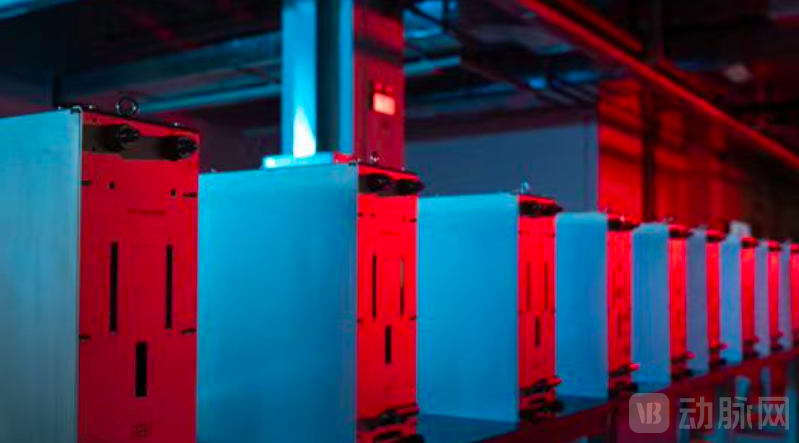
United Imaging's Self-Developed MR Gradient Power Amplifier
Revisiting Empowerment of the Industrial Chain. Large-scale medical equipment is often highly complex, with an extensive upstream supply chain. A single PET/MR system involves 21 subsystems and core components, as well as tens of thousands of materials and electronic components. United Imaging collaborates with hundreds of suppliers to jointly push the boundaries of process technology and drive the upgrading and development of the entire industrial chain.
A Glimpse into the Value of Industrial Chain Upgrading from the Recently Concluded China Medical Equipment ConferenceBeyond the continuous emergence of numerous emerging domestic brands that persistently deliver innovative, clinically practical products, both upstream and downstream segments of the industry have gradually upgraded and achieved “domestic substitution,” progressively shedding the label of “China’s lack of high-end manufacturing.”
As a typical capital- and technology-intensive industry, medical technology companies face the imperative of “innovate or perish.” To achieve breakthroughs, United Imaging has not only maintained its strategy of high R&D investment since going public, expanding into new product lines while ensuring the competitiveness of existing ones, but also accelerated industry-academia-research-clinical collaborations with top international hospitals, universities, and research institutes. By aligning with the actual needs of clinical research, the company seeks agile innovation at the source.
To advance R&D, United Imaging increased its R&D personnel from 2,147 in 2021 to 3,088; R&D expenditure accounted for 15.87% of revenue, an increase of 1.42 percentage points year-on-year. The annual report lists 47 ongoing R&D projects, with a total estimated investment reaching RMB 5.7 billion.
Driven by massive R&D investment, United Imaging has rapidly expanded the breadth and depth of its product portfolio. Currently, United Imaging’s offerings span high-end medical imaging diagnostic systems and radiotherapy products, with its low-, mid-, and high-end portfolios reaching parity with those of GE HealthCare, Siemens Healthineers, and Philips Healthcare, far surpassing the domestic competitors’ market presence.
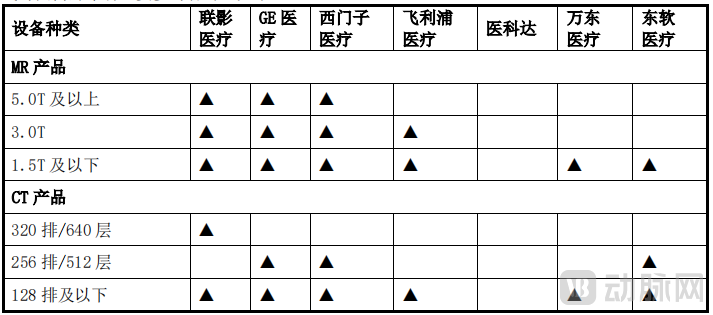
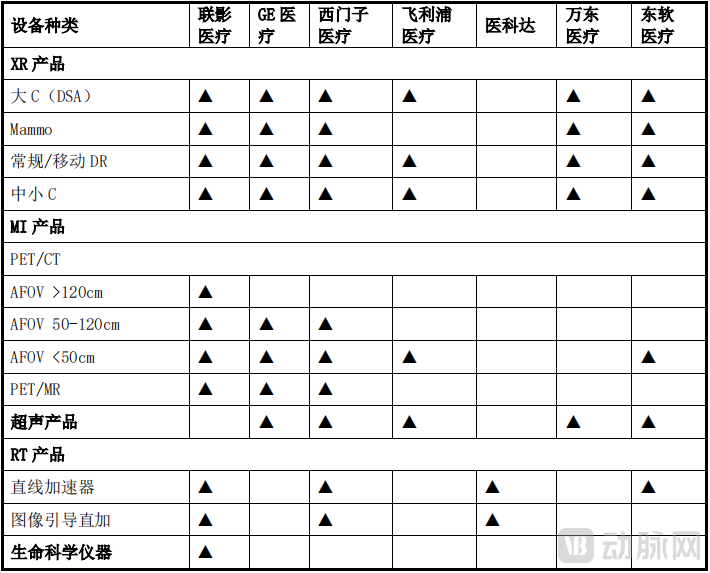
Product Portfolio of United Imaging and Its Competitors (Source: United Imaging Annual Report)
In terms of integrating industry, academia, research, and clinical practice, United Imaging leverages its product portfolio spanning “preclinical, diagnostic, and therapeutic” fields. On one hand, it collaborates with top-tier domestic hospitals such as Peking Union Medical College Hospital, West China Hospital, Zhongshan Hospital, and Ruijin Hospital to establish medical excellence hubs, tackle major diseases, and participate in national scientific research programs, leading multiple key national projects. On the other hand, it partners with globally renowned universities and research institutions, including Yale University, the University of California, Davis, Washington University School of Medicine, Fujita Health University Hospital, and Southern Tohoku General Hospital, to explore frontier medicine and build a global community of innovation.
In the past, researchers in China often had to wait years to access cutting-edge imaging equipment for clinical studies. Today, United Imaging’s breakthroughs in ultra-high-end medical devices have provided local researchers with a new option. Through the integration of industry, academia, research, and healthcare, they now have the opportunity to conduct prospective studies and pursue original innovations using the most advanced equipment at the earliest stage. Moreover, they can deeply engage in the product development and iterative upgrade processes. This efficient interaction and timely iteration foster more groundbreaking innovations, accelerating the advancement of modern medicine in China.
In addition to its numerous achievements in equipment R&D and extensive innovations in the integration of industry, academia, research, and healthcare, another key highlight of United Imaging lies in its revenue.
According to data from the renowned institution IPSOS, based on the value of newly added domestic market in 2022, United Imaging’s CT, MR, PET/CT, PET/MR, and DR products all ranked among the industry leaders. Overall, its four major product lines—CT, PET/CT, PET/MR, and XR—each ranked first in the industry.
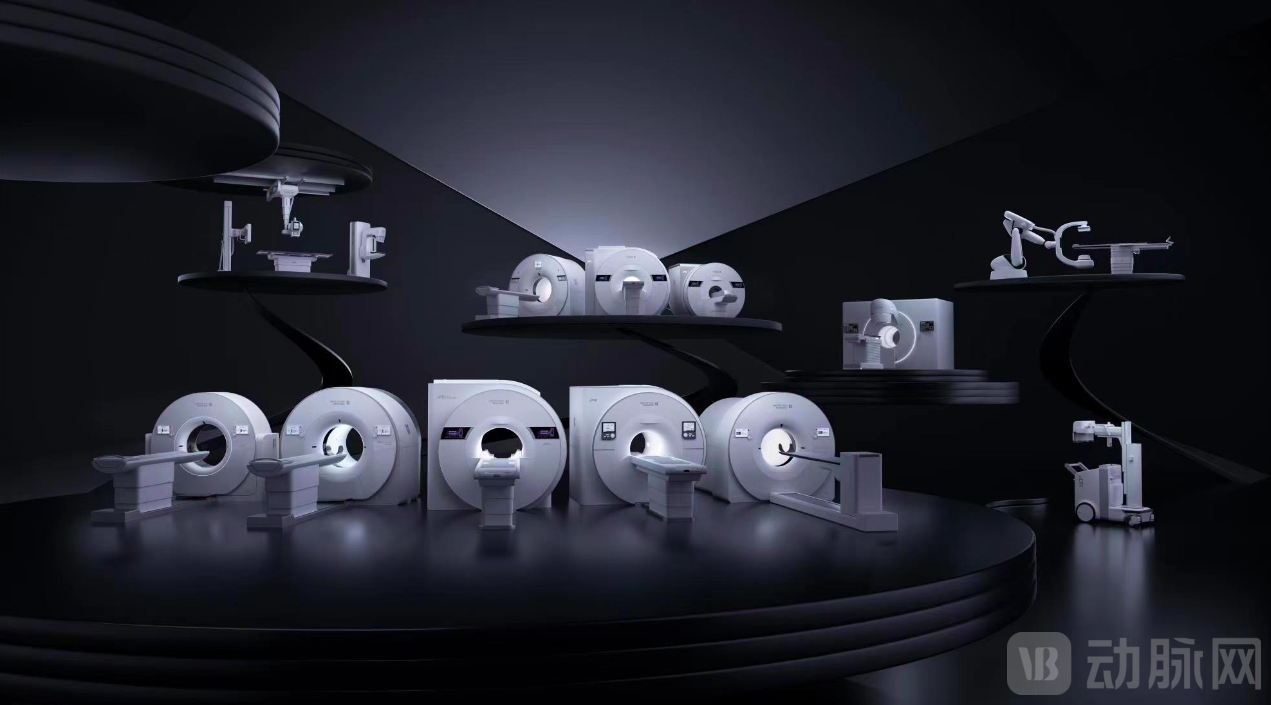
United Imaging Product Portfolio
In particular, MR and MI are two distinct sectors that have not only surpassed the 1 billion yuan mark in scale but also achieved year-on-year growth rates of 35.33% and 47.23%, respectively. While underpinning United Imaging’s revenue, they have effectively diversified various risks.
This is precisely where United Imaging holds an advantage over its domestic competitors. In 2022, as the CT market cooled down and growth in United Imaging’s CT segment slowed, the company still achieved a 27.36% increase in total revenue, driven by rapid growth in its MR (Magnetic Resonance), MI (Molecular Imaging), and equipment maintenance service sectors.
As for the heights that United Imaging can reach in the future, focus on the following four points in the short term:
1. High-End Domestically Produced Imaging Equipment
In 2020, the emergence of the COVID-19 pandemic disrupted the steady growth trajectory of large-scale medical equipment. Particularly in the CT sector, over 7,000 new units were installed in hospitals within a single year due to their utility in diagnosing COVID-19, representing a near doubling compared to the same period in the previous year.
Robust demand has significantly accelerated the adoption of economy-class CT scanners, but it has also to some extent overdrawn the market. By the end of the COVID-19 pandemic, the mid-to-low-end CT segment had entered an adjustment period, with declines in both total sales volume and total sales revenue, indicating slight weakness in this sector.
For United Imaging, CT has long accounted for over 30% of its revenue. Although the market trend suggests a pullback, actual data show that while United Imaging’s CT unit sales declined by 2.48%, its total CT sales revenue increased instead, achieving a year-on-year growth of 10.26%.
At its core, beyond meeting the growing clinical demand, the replacement of outdated equipment and the increasing emphasis on scientific research by medical institutions at all levels have jointly influenced the demand for high-end CT scanners. This has prevented drastic changes due to the pandemic, with the overall trend remaining upward. Sales data further reveal that United Imaging broke through the dominance of multinational corporations last year, firmly capturing the expanding high-end CT market.
Greater benefits are yet to come. In March this year, the "Notice on the Catalogue for Configuration Licensing Management of Large Medical Equipment (2023)" removed purchase restrictions on CT scanners with 64 slices or more and MR systems with 1.5T or higher, while reclassifying PET/MR from "Category A" to "Category B" configuration management. In other words, the demand for mid-to-high-end imaging equipment at some secondary and tertiary hospitals, previously unmet due to configuration license constraints, will be released in the coming years.
For United Imaging, which has long secured its market position, the relaxation of equipment allocation policies will open up new market opportunities for its MI, high-end MR, and high-end CT product lines. Amid this trend, United Imaging is poised to achieve scale growth across its MR and CT business segments in the coming year, propelling its revenue to a new level.
II. Volume Expansion at the Primary Care Level
High-end manufacturing not only means being able to produce the most cutting-edge equipment, but also lies in being able to match the clinical needs of medical scenarios and making products at a given price point as good as possible.
With the introduction of a series of policies, including the “13th Five-Year Plan for the Establishment of National Medical Centers and National Regional Medical Centers” and the “Work Plan for Enhancing the Comprehensive Capabilities of County Hospitals under the ‘Thousand Counties Project’ (2021–2025),” China’s healthcare system is undergoing a transformation toward high-quality development. Supported by financial incentives such as interest-subsidized loans and special-purpose bonds, as well as improved accessibility resulting from the recent relaxation of licensing requirements for the allocation of large-scale medical equipment, the domestic medical imaging market is poised to enter a window period of rapid growth.
In this regard, United Imaging is committed to continuously enhancing the comprehensive healthcare capabilities at the county level, promoting the expansion and downward distribution of high-quality medical resources as well as their balanced regional allocation, strengthening specialized department development at the grassroots level, improving diagnosis and treatment capabilities for major diseases, and boosting regional coordination capacity, thereby supporting the construction of new healthcare systems such as county-level medical consortia and county-level sub-centers.
To address the challenges of insufficient diagnostic and treatment capabilities at the primary care level and the scarcity of medical resources, United Imaging focuses on the entire disease diagnosis and treatment process. By integrating imaging, interventional procedures, radiotherapy, artificial intelligence, and information technology at the source, it creates integrated solutions for specific diseases. These include digital-intelligent integrated solutions for stroke, chest pain, and trauma centers to support emergency care for critical conditions; a digital-intelligent integrated oncology center solution to enhance precise tumor diagnosis and treatment; a multimodal one-stop solution for diagnosing and treating various major brain disorders; and a maternal and child health care solution focused on health management for key populations. Furthermore, through regional digital-intelligent interconnected solutions, United Imaging comprehensively supports the accelerated expansion of high-quality medical resources and their balanced regional distribution.
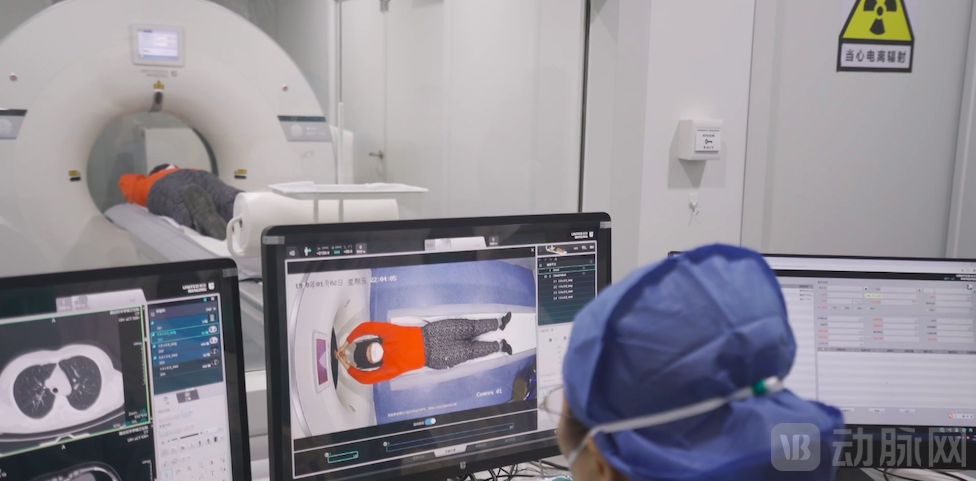
A technician at the Anting Town Community Health Service Center in Jiading District, Shanghai, is performing a CT scan on a patient.
Currently, United Imaging’s CT, MR, and XR product series have firmly established their market presence in county-level healthcare settings, helping the company secure the largest share of new equipment installations across multiple segments. This competitive advantage will provide sustained support for United Imaging’s growth in the coming years.
3. Maintenance Costs Driven by Increased Installed Base
Maintenance and service fees, characterized by their sustainability and high gross margins, have long served as a premium revenue stream for multinational corporations. Data shows that at one point, maintenance and service fees accounted for nearly 50% of a certain multinational corporation’s total revenue, surpassing the revenue contribution from equipment sales.
In contrast, although United Imaging’s revenue from maintenance services grew by 70.44% to reach RMB 750 million, it accounted for only 8% of total revenue. This rapid growth was primarily driven by the continuous accumulation of installed equipment base. As the number of deployed devices continues to increase, maintenance service revenue is expected to become a more significant contributor in future financial reports.
However, in terms of the ratio of maintenance service revenue to total revenue, United Imaging may soon hit its ceiling. After all, as a growing company, United Imaging will continue to boost its operating revenue through equipment sales, rather than relying on steady but limited income for long-term stability.
IV: Overseas Markets
As one of the few Chinese enterprises to enter the mainstream international market, United Imaging focuses on the market strategy of “one core, multiple wings; high-profile, high-impact approach; and comprehensive breakthroughs,” and has established a presence in more than 50 countries across Asia, the Americas, Europe, Oceania, and Africa.
This is reflected in the annual report, which shows overseas main business revenue of RMB 1.078 billion and a year-on-year growth of 110.83%.
In light of the goal to “become a world-class leader in medical technology innovation,” annual revenue just surpassing RMB 1 billion still appears somewhat nascent. Nevertheless, United Imaging has made significant headway in taking the arduous yet unavoidable step of penetrating the high-end markets of developed countries.
Annual report data shows that a series of high-end equipment from United Imaging has been installed at numerous world-leading clinical and research institutions, including Washington University School of Medicine, the Innovation Center at Michigan State University, Carrollton Regional Medical Center (CRMC), Stony Brook University of the State University of New York, and the Huntsman Cancer Institute at the University of Utah in Salt Lake City, thereby winning the competition for cutting-edge equipment in the U.S. market.
These implementations will help United Imaging enter the global healthcare market, working collaboratively to address worldwide health challenges such as population aging, chronic disease management, scarcity of high-quality medical resources, deficiencies in public health systems, and insufficient digitalization and intelligence of diagnostic and treatment equipment, thereby competing with top global enterprises for a $600 billion market.
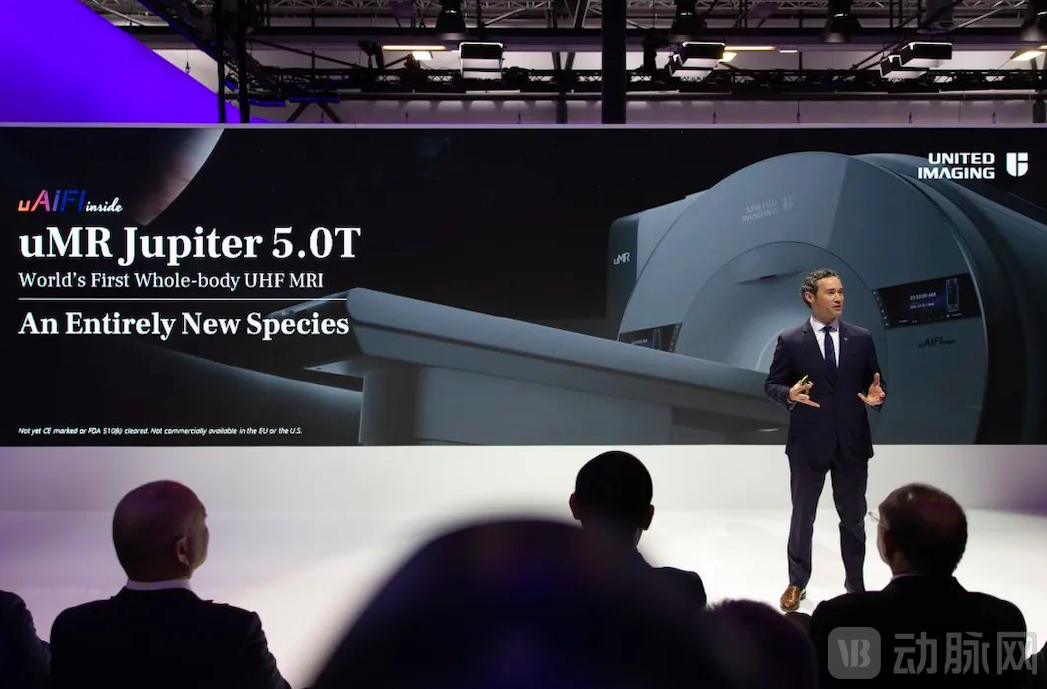
United Imaging Unveils uMR Jupiter, the Industry’s First 5.0T Whole-Body MRI System, at the 2023 European Congress of Radiology
Xue Min, Chairman of United Imaging Group, once stated, “In the high-end medical equipment market, long dominated by foreign brands, our goal is not merely to survive, but to triumph. We are not content with carving out a niche in the mid-to-low-end market with low-quality, low-priced products; instead, we possess the conviction and courage to aspire to stand alongside the world’s leading players.”
China’s High-End Medical Manufacturing Has Finally Gained a Firm Foothold on the Global Stage.