

Where Is the Future of Socially Operated Healthcare? The 3rd GE Healthcare Boao Greater Health Leadership Summit Provides the Answer

GE Hangwei
Medical Device R&D and Manufacturer
On the morning of April 22, the Boao Forum for Asia International Conference Center was already packed to capacity. As Zhang Yihao, President and CEO of GE Healthcare China, took center stage, the 3rd GE Healthcare Boao Health Leadership Summit and the Thousand-Person Conference of China’s Health Industry Leaders officially commenced.
This was the first major conference held by GE HealthCare following its spin-off and official listing on the Nasdaq under the ticker symbol “GEHC.” Compared with previous years, this year’s conference placed less emphasis on exploring cutting-edge technology and greater emphasis on patient care and reflections on healthcare services.
At the conference, Cai Jiangnan, Founder and Executive Chairman of the Shanghai Chuangqi Health Development Institute, discussed the development path of diversified private healthcare, injecting numerous innovative ideas into the industry; Wu Qinan, Co-founder and CEO of New Frontier Health Group and CEO of United Family Healthcare, shared his insights on the strategic layout and practical implementation of the evolution of private healthcare from high-end services to diversified offerings; Fang Yixin, Founder, Chairman, and President of Rich Healthcare Group, elaborated on his twenty years of experience in building a high-quality private health checkup brand; Guo Hui, Founder and Dean of Shanghai Deji Hospital and Dean of the Shanghai Clinical Medical College of Qingdao University, provided an overview of the pathway toward specialized neurological care in private healthcare institutions.
Each expert is striving to explore the optimal pathway for the development of privately-run healthcare from their respective perspectives, thereby boosting the growth of the non-public medical sector, optimizing services provided by non-public medical institutions, and further addressing the shortage of high-quality medical resources. This conference serves as an amplifier, continuously magnifying experts’ voices and disseminating the latest industry explorations to a broader range of participants, so as to drive industry advancement and achieve collaborative innovation.
As non-public healthcare has become an important component of China’s medical and health service system, gradually forming specialized and distinctive service models. How to seize new development opportunities, create a diagnosis and treatment model that combines specialization with full-lifecycle health management, and achieve sustainable development remains an urgent issue that requires attention.
RuiCi Medical Group is one of the earliest private healthcare institutions established in China. Over the past two decades, it has continuously pursued strategic upgrades centered on talent development and medical quality, ultimately emerging as a leader in its sector. Fang Yixin shared his insights on the path to sustainable development for privately run healthcare institutions.
Fang Yixin believes that,The Development of Private Healthcare Is a Long-Distance Marathon: Only Medical Institutions That Sustain Growth Amidst Changing Times Are Truly Excellent, with Talent and Disciplines Serving as Two Indispensable Key Pillars, they are like the engine of a car. The group must not only have personnel who master core technologies, including management, nursing, and technical talents, but also build disciplines based on these talents. Only in this way can private healthcare go further and ultimately achieve high-quality development.
Li Wei, Chairman of Yiling Hospital Management Group, summarized the key to differentiated competition between public hospitals and private medical institutions, as well as the sustainable development of private healthcare, in six words: collaboration, complementarity, and differentiation. Collaboration focuses on pre-illness screening and examinations, management of chronic diseases and sub-health conditions, and disease prevention. The keys to complementarity and differentiation lie in leveraging the strengths of non-public healthcare—including service quality, operational mechanisms, and innovation—to pursue a differentiated development path alongside the strengths of public healthcare in managing critical illnesses, emergency care, and other life-saving services.
Rather than viewing competition as a threat, Li Wei sees it as revealing the opportunities within the non-public healthcare sector. Li Wei believes that the areas where public healthcare institutions lack the capacity to excel are precisely where the state, society, and non-public medical institutions can and should focus their efforts on delivering high-quality services. This strategy of differentiated positioning entails excelling in health services to meet multi-tiered demands, offering a broader range of disease treatments, integrated medical and elderly care, as well as specialized services such as medical aesthetics, otolaryngology, and sports medicine. With the ongoing advancement of high-quality development in the healthcare sector, significant growth potential is certain to emerge. Non-public medical institutions must prioritize collaboration, complementarity, and differentiated positioning to ensure sustainable long-term development.
In summary, achieving the sustainable development of privately run medical institutions requires not only seizing new development opportunities, enhancing technical capabilities and service levels, and establishing specialized and distinctive diagnosis and treatment models, but also fostering synergistic complementarity with public healthcare, fulfilling social responsibilities, standardizing medical quality, and building a strong reputation. These insights not only help privately run medical institutions accurately define their positioning and development direction, but also provide valuable implications for promoting the high-quality development of China’s healthcare sector.
Amidst the macro environment characterized by accelerating population aging, the rise of the middle class, and improved quality of economic development, patients’ diverse demands for medical services continue to intensify. Private hospitals have gained patient favor by leveraging their advantages in specialization, differentiation, flexibility, and comprehensive pre- and post-hospital care services.
With the convening of the 20th National Congress of the Communist Party of China, the development orientation of non-public healthcare has become even clearer. Efforts are being made to optimize the business environment for private enterprises, protect their property rights and entrepreneurs’ legitimate interests in accordance with the law, and promote the growth and strengthening of the private sector. Meanwhile, the demand for high-quality, personalized medical and health services has become increasingly prominent, creating broad development opportunities for non-public healthcare providers that emphasize refined management and consumer experience. Private hospitals are now regarded as indispensable contributors to meeting the public’s needs for health and medical services.
Data can illustrate this trend. According to the "Statistical Bulletin on National Economic and Social Development in 2022," from January to September 2022, the total number of outpatient and emergency visits at public hospitals reached 2.5 billion, a year-on-year decrease of 3.6%; meanwhile, private hospitals recorded 480 million visits, representing a year-on-year increase of 3.1%.
However, to seize the development momentum of the non-public healthcare sector, industry participants must clearly understand the increasingly complex and volatile development environment, gain clear insights into future industry trends, and consider how to leverage their own advantages to cope with future competition.
At the conference, Cai Jiangnan stated: “China’s aging population is intensifying, leading to a surge in medical demand. In the post-pandemic era,”Enterprises should align with the direction of tiered diagnosis and treatment, decentralize medical resources, and strengthen primary healthcare infrastructure. By integrating online and offline approaches, they should provide continuous services to patients. Seamless coordination between in-hospital and out-of-hospital services must be achieved to expand the scope of care. Meanwhile, a “talent development” mechanism should be established to alleviate the shortage of high-quality doctors and nurses in China and ensure a steady supply of qualified professionals."Faced with a landscape where risks and opportunities coexist, private medical institutions must prioritize innovation, build their core competitive advantages, deliver high-quality and efficient products and services, strengthen their capabilities, and adapt to a complex and ever-changing development environment."
Drawing on his own experience and integrating United Family Healthcare’s strategies and practical cases in diversified, multi-tiered, and innovative development, as well as its development approaches across different levels and regions, Wu Qinan further elaborated on his perspectives regarding the development path of private healthcare institutions.
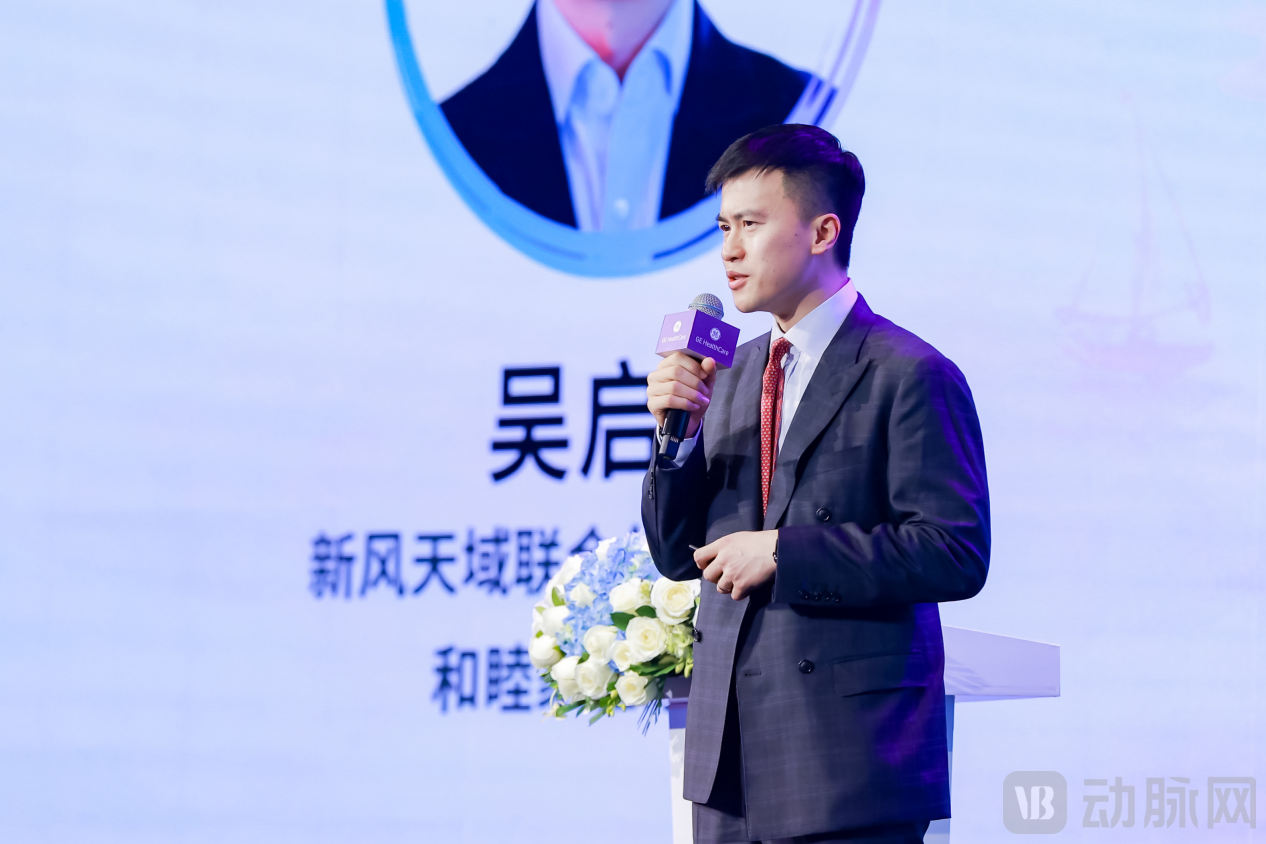
Wu Qinan, Co-founder and CEO of New Frontier Health Group and CEO of United Family Healthcare
Wu Qinan believes: "Private healthcare providers must adapt to the diversified characteristics of China’s medical market, not only meeting the personalized and comprehensive healthcare needs of high-end consumers but also addressing the basic and inclusive healthcare needs of mid- and low-end consumers. Among these,"Primary care, payment innovation, home-based healthcare, and rehabilitation systems are key initiatives for private medical institutions to align with development trends such as tiered diagnosis and treatment and the decentralization of medical resources.”
In practice, New Frontier Health has implemented numerous strategic optimizations based on this foundation. These include strengthening the role of general practitioners to increase the proportion of outpatient revenue; promoting minimally invasive surgery to enhance surgical efficiency and quality; advancing an integrated online-offline healthcare model; enabling direct billing by health insurance service companies to streamline the medical care process; launching health insurance services and family physician programs, and establishing Accountable Care Organization (ACO) models with partners such as GE to achieve a tripartite integration of medical value, thereby providing patients with more payment options; promoting home-based elderly care and home treatment by providing basic nursing services and diagnostic testing tools for the elderly to narrow the urban-rural healthcare gap; establishing modern rehabilitation hospitals to provide professional rehabilitative therapy and training, helping patients restore function and improve their quality of life; developing diverse training systems in collaboration with multiple medical schools to cultivate its own medical staff and elevate healthcare standards and service quality; and deepening cooperation with domestic and international institutions to build core competitiveness, thereby delivering high-quality, efficient products and services to consumers across different segments and regions.
New Frontier Healthcare’s innovative practices offer valuable insights for the development of private hospitals. In summary,Private hospitals must not only provide differentiated and diversified services in response to the diverse needs of the market and consumers, but also enhance their competitiveness by leveraging internet technologies and smart devices to create an integrated online-offline medical experience, promoting payment reform, and expanding into international markets and the health tourism sector.
In addition, the management and improvement of medical service quality are also key.In the “Opinions on Further Improving the Healthcare Service System” issued this year by the General Office of the Central Committee of the Communist Party of China and the General Office of the State Council, it is pointed out that efforts should be made to shift the development model of healthcare toward greater emphasis on connotative development, transform service models to prioritize systematic continuity, and transition management approaches toward more scientific governance. It is necessary to improve management systems, innovate management methods, implement management responsibilities, and enhance the operational efficiency and service effectiveness of hospitals, specialized public health institutions, and primary healthcare institutions.
In this regard, Zhang Dan, Associate Professor at the Institute of Hospital Management, Tsinghua University; Deputy Director of the Medical Governance Service Center; and Secretary-General of the Hospital Quality Management Branch of the Chinese Research Hospital Association, offered recommendations for the high-quality development of private medical institutions from the perspective of medical service quality management.
Zhang Dan stated, “Medical quality and safety are enduring themes and key factors for private medical institutions to standardize the market, promote development, and enhance competitiveness.Private medical institutions should actively participate in the certification and development of relevant standards, widely apply quality management tools for continuous quality improvement, establish collaborative partnerships with public medical institutions, and integrate basic medical services into the systems of both public and primary healthcare institutions.At the same time, explore opportunities for international expansion, emphasize the humanistic dimensions of service delivery, and further meet the diverse health needs of a society with deep aging.
It is evident that in the process of enhancing the service quality of private medical institutions, system integration, service excellence, and refined, scientific management are all indispensable key elements.
Nevertheless, apart from these factors, non-public medical institutions face numerous challenges in the procurement and use of medical devices compared to public healthcare institutions. These challenges include weak bargaining power, a shortage of procurement talent, insufficient scientific rigor in procurement processes, and relatively limited procurement channels. To further achieve precise diagnosis and treatment of diseases and enhance service quality and efficiency, non-public medical institutions need to deepen their collaboration with medical device manufacturers. In this regard, GE Healthcare, as a “new entrant” in the non-public healthcare sector, has brought fresh perspectives to the industry through its exploratory efforts.
In 2022, GE HealthCare launched comprehensively upgraded solutions for five major centers: Heart Center, Oncology Center, Neurology Center, Women’s and Children’s Health Center, and Geriatric Health Center, covering the entire patient journey from screening, diagnosis, and treatment to rehabilitation. This year, building on last year’s solutions, GE HealthCare has introduced innovative upgrades, with a focus on enhancing the capabilities of non-public healthcare institutions in the management of critical diseases, complex and refractory conditions, and precision geriatric health management. This strategy aims to create strong complementarity with public hospitals and expand the supply of medical service resources.
Leveraging its cutting-edge equipment and diagnostic and treatment protocols, GE Healthcare can rapidly empower the precise diagnosis and management of critical illnesses.Its Five Centers solution not only provides advanced medical equipment and digital platforms, but also offers professional clinical training and operational consulting, helping private healthcare institutions improve service quality and efficiency, thereby increasing patient satisfaction and loyalty. For example, in the field of breast cancer, GE Healthcare’s innovative Senographe Crystal Nova AI image quality control system for full-process mammography enables a one-stop precise diagnosis and treatment solution for breast care, ranging from screening population management to diagnostic therapy. In the area of liver cancer, targeting Yttrium-90 (Y-90) microsphere therapy—the latest hotspot in domestic liver cancer treatment—GE Healthcare has developed the Y-90 Precision Dosimetry exclusive platform. This platform assists physicians in accurately selecting patients, precisely defining target volumes and prescription doses, thereby achieving precise selective internal radiation therapy with Y-90.
Moreover, by integrating with surgical treatments for various conditions, the Five Major Health Centers can also provide patients with comprehensive medical solutions."Expand from screening to treatment, facilitating precise diagnosis and therapy for complex and refractory diseases."For example, targeting Parkinson’s disease, a neurodegenerative disorder, GE Healthcare, in collaboration with its partners, has launched MRI-guided focused ultrasound surgery for treatment. This technology is a therapeutic approach based on high-intensity focused ultrasound (HIFU), which accurately delivers focused ultrasound energy to the patient’s lesion through rapid, high-frequency vibrations, enabling non-invasive treatment of Parkinson’s disease.
Based on the Five Centers Solution, GE Healthcare can alsoFurther evolve and combine solutions based on the needs of different medical institutions to help solve more health problems.For example, in the field of elderly health, solutions from multiple domains—including cardiovascular, neurological, and bone health—can be integrated to establish a Geriatric Medicine Center. In the cardiovascular domain, this enables early detection and intervention for advanced interventional diseases. In the neurological domain, the identification and intervention of neurodegenerative changes can serve as a key approach to safeguarding the health of older adults. In the realm of bone health, establishing a Bone Health and Chronic Bone Disease Diagnosis and Treatment Center, leveraging GE Healthcare’s innovative dual-energy X-ray absorptiometry (DXA) system with its precise database specific to the Chinese population, allows for combined three-site bone mineral density scanning in a single positioning. This model enhances diagnostic efficiency for osteoporosis and related metabolic disorders, improves medical productivity, and helps prevent falls and fractures among the elderly.
At this critical juncture in the development of non-public healthcare, the key to its further advancement lies in how effectively it can “fill the gaps.” Non-public medical institutions need to pursue differentiated development in relation to public medical institutions, carving out a unique path characterized by distinct specialties. Meanwhile, the non-public healthcare sector is gradually transitioning toward a precision diagnosis and treatment model focused on “specialized disciplines and specific diseases.” Therefore, empowering the development of non-public healthcare through innovative equipment and solutions to achieve precise diagnosis and treatment is an indispensable and crucial factor.
GE Healthcare’s Five-Center Solution represents its profound insights into and innovative exploration of the development of the non-public healthcare sector, as well as a significant outcome of its in-depth collaboration with non-public healthcare institutions.
Dai Hongdong, Vice President of GE Hangwei and General Manager of its Non-Public Healthcare Business, stated, “The 14th Five-Year Plan explicitly emphasizes the need to expand the supply of medical service resources, with public medical institutions as the mainstay and non-public medical institutions as a supplement. Meanwhile, the opportunities and challenges brought by healthcare reform, DRG, DRP, and population aging, along with the transformative impact of the pandemic on public health awareness and the awakening of patient-centered service consciousness, all signal that the time is ripe and opportunities are at hand. Amidst such vast development prospects, GE Hangwei will continue to collaborate with non-public medical institutions and industry partners, providing innovative solutions that offer precise, full-lifecycle health management to support and facilitate the sustainable development of the non-public healthcare sector.”

Dai Hongdong, Vice President of GE Hangwei and General Manager of Non-Public Healthcare Business
"Observing the autumn wind reveals the falling leaves; testing the spring water discerns its warmth and chill."
Despite the challenges facing private healthcare provision, someone must take the first step, someone must explore, and someone must forge ahead with difficulty through a thorny predicament. Each escape from desperation and every bit of perseverance will spur the emergence of batches of highly capable medical institutions, leading disciplinary development and elevating the standard of medical services in China across various sectors of the broader health industry.
At this critical juncture in the development of non-public healthcare, if we maintain such a mindset, we can surely turn a single spark into a prairie fire, no matter what difficulties we face.
At this conference, explorers from various industries undoubtedly provided the best answers regarding the “future development path of private healthcare” through practical applications, achievements, and experience sharing, charting a course for the industry and injecting it with continuous momentum. As the event draws to a close, it may well mark the moment when non-public healthcare is “fully prepared” to embark on its journey once again.