

Neurovalens Files IPO Prospectus: Pioneering Non-Invasive Neurostimulation Headsets for Obesity, Insomnia, and Beyond

Neurovalens
Neuroscience Medical Device Developer
Chronic diseases often stem from dysfunction of the brainstem or hypothalamus. For instance, hypothalamic dysfunction can cause insulin resistance, leading to type 2 diabetes and obesity, while impaired hypothalamic regulation of circadian rhythms can result in insomnia.
Although medications can affect hypothalamic neurons, they also cause cross-activation of similar receptors in other brain regions, leading to side effects that increase the risk of mental health disorders or cardiovascular diseases. Compared with pharmacological treatment, direct electrical stimulation of the targeted neurons can achieve superior therapeutic efficacy while significantly reducing the incidence of side effects.
Neurovalens is such a company that develops non-invasive neuromodulation medical devices based on neuroscience research. Its devices, leveraging cranial nerve stimulation technology, can non-invasively activate brainstem neurons, offering innovative, drug-free treatment solutions for conditions such as obesity, insomnia, type 2 diabetes, and anxiety disorders.
Neurovalens was founded in 2015, with its headquarters in Belfast. Its founders are Jason McKeown and Paul McGeoch.
Jason is a Master’s researcher at Queen’s University Belfast. He had a strong interest in computers from a young age, but during his teenage years, he suddenly realized that the rapid advancement of computer science was an inevitable trend, and he did not wish to follow such a predetermined path. He decided to pursue medicine instead, shifting his focus to exploring the most advanced “computer” known to humanity—the brain and nervous system.
Paul is a neuroscientist who holds a medical degree and a Ph.D. from the University of Aberdeen, and has published approximately 20 academic papers on neuroscience.

Left: Jason McKeown; Right: Paul McGeoch
Image source: Neurovalens official website
The inspiration for the design of the first product stemmed from Paul’s experimental research, in which he discovered that electrical stimulation of the brain could reduce body weight. Paul shared his findings with Jason, who was working in neurosurgery in Edinburgh at the time. They immediately hit it off and rapidly developed a preliminary product prototype based on neuromodulation.
Jason tested the device on himself. Over time, he noticed a significant decrease in appetite and an increased sense of fullness. After one year, he successfully reduced his body fat by 44% and gained 2 kilograms of muscle mass. Through several validation tests, it was determined that neuromodulation has a little-known weight-loss effect.
With funding from the European Regional Development Fund, Jason and Paul engaged a professional team to develop the device, leading to the official launch of Modius SLIM in 2017. Marketed as a high-tech wearable headset, Modius SLIM is now sold in over 80 countries and regions, helping thousands of people worldwide lose weight.
●Modius SLIM Healthy Weight Loss Device
Modius SLIM is the first device developed by Neurovalens, a non-invasive wearable headset. Users enable Bluetooth to connect the device with the app, place the electrode pads on the skin surface over the bone behind the ears, and generate low-level pulses by activating the vestibular nerve. These signals are transmitted from the skin surface behind the ears to the hypothalamus, which can reduce body fat, alter metabolic rate, and suppress appetite, ultimately aiding in weight loss.
Modius SLIM is not a medical device, but a general wellness device. Users should wear it for one hour per day while seated, at least five times a week. Of course, relying solely on the device will not achieve weight loss goals; it must be combined with a healthy diet and appropriate exercise. The purpose of Modius SLIM is simply to maximize weight loss results. Typically, users can noticeably experience a reduced appetite for carbohydrates and sugary foods within about a week.
●Modius SLEEP Sleep Quality Improvement Device
A study published in Current Biology indicates that continuous rocking helps synchronize neural activity within the thalamocortical network, enabling the brain to enter a distinct oscillatory state characteristic of non-rapid eye movement (NREM) sleep. The impact of rocking on sleep is associated with rhythmic stimulation of the vestibular system.
Modius SLEEP is a new type of neuroscience-driven headset that stimulates the vestibular nerve via electrical pulses, influencing the hypothalamus and brainstem regions to modulate the body’s circadian rhythms and sleep patterns. Without the aid of sedatives or hypnotic medications, wearing the headset for just 30 minutes before bedtime can reduce sleep onset latency, extend sleep duration, and thereby improve sleep quality.
Some users experience improved sleep after using the SLEEP device for approximately two nights, while others may require a longer adaptation period due to external disturbances.
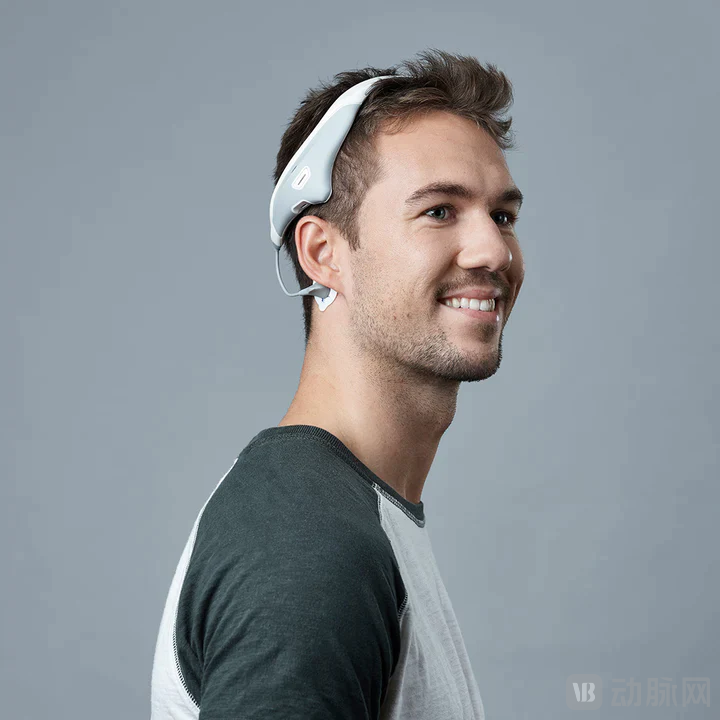
Modius SLEEP Device. Image source: Neurovalens official website
The Modius SLEEP and Modius SLIM devices share technological similarities, as both indirectly influence the hypothalamus by stimulating the vestibular nerve. In a sense, because these two devices stimulate the same region of the brain, their functions overlap. For example, the SLIM device may produce sleep-improving “side effects,” while some users experience decreased appetite after using the SLEEP device.
However, their electrical stimulation frequencies differ. SLEEP is specifically optimized to target key sleep neurons in the brain’s sleep centers, with settings designed for sleep management that generally do not affect users’ body weight; whereas SLIM’s settings are designed for weight management.
Neurovalens is developing additional devices in the Modius series, including Modius Spero and Modius Stress, as well as the new Vestal DM series.
Modius Spero is a non-invasive device for treating post-traumatic stress disorder (PTSD). By placing electrodes on the skin behind both ears, it delivers electrical pulses to stimulate brain regions associated with PTSD, thereby alleviating symptoms in patients.
Modius Stress is a device for treating anxiety disorders, primarily by stimulating the brain's locus coeruleus (LC) and paraventricular nucleus of the hypothalamus (PVN) to regulate the parasympathetic and sympathetic pathways of the autonomic nervous system in response to stress.
Currently, Neurovalens is collaborating with the University of California, San Diego (UCSD) and Ulster University (UU) to conduct clinical trials for these two devices, respectively, aiming to evaluate the Modius Spero device’s ability to reduce the severity of PTSD symptoms and the efficacy of vestibular electrical stimulation delivered by the Modius Stress device.
A pilot study of the new Vestal DM device series was conducted in collaboration with University College Dublin (UCD). The device works by delivering low-level electrical pulses to specific brain regions to detect and regulate blood glucose levels, thereby helping to prevent type 2 diabetes mellitus (T2DM) and obesity.
Current treatment options for diabetes include insulin injections, oral medications, and deep brain stimulation (DBS), which aim to increase cellular sensitivity to insulin. However, pharmacological treatments often cause side effects, while DBS is highly invasive and involves high surgical costs. Vestal DM offers diabetic patients a non-invasive, low-risk therapeutic alternative.
Neuromodulation is a technique that uses stimulation to directionally alter neural activity, thereby regulating the function of neural tissue. Based on the mode of action, it is categorized into invasive and non-invasive types.
Invasive neuromodulation involves surgical procedures that require implanting electrodes within the cranial cavity to deliver electrical stimulation, thereby mitigating the severity of brain injury. In contrast, non-invasive neuromodulation is non-traumatic, convenient, and offers better patient compliance, holding the potential to capture a larger market share.
Clinically, non-invasive neuromodulation offers therapeutic solutions for three categories of disorders: neurodegenerative diseases, brain injury-related conditions, and psychiatric and psychological disorders. Numerous companies worldwide have conducted in-depth exploration in this field. For instance, CogTx-001, developed by Cognito Therapeutics in the United States, is designed to treat neurodegenerative diseases, while Nexalin ADI, developed by Nexalin Technology, has received FDA approval for clinical treatment of anxiety, depression, insomnia, and other conditions.
Non-invasive neuromodulation primarily includes vagus nerve stimulation and cranial nerve stimulation. Currently, an increasing number of companies in China are entering the field of non-invasive brain stimulation. For instance, CMS Pharmaceuticals focuses on cranial nerve stimulation; ZhiLian Brain Control specializes in transauricular vagus nerve stimulation; and PINS Medical has a broad portfolio covering vagus nerve, sacral nerve, and spinal cord stimulation. These companies have conducted in-depth exploration in this field and possess extensive industry experience.