

Vedanta Biosciences Secures $106.5M Series E Financing to Advance VE303 into Pivotal Phase 3 Trial for Recurrent C. difficile Infection

Vedanta Biosciences
Immunotherapy Developer
Microbiome Therapies Have Seen Two Drug Launches in Just the Past Six Months, Marking Major Milestones for the Industry
Last November, the FDA approved Rebiotix’s fecal microbiota therapy, Rebyota (RBX2660), for marketing. This marked the first microbiome therapy approved by the FDA. In late April this year, the U.S. FDA announced the approval of Seres Therapeutics’ oral microbiome therapy, Vowst (SER-109), for marketing. As the first oral fecal microbiota therapy approved by the FDA, this development has once again bolstered confidence in the broader microbiome therapeutics sector.
Seres has long been one of the leading developers of microbiome therapeutics. Founded by Flagship Pioneering more than a decade ago, this biotechnology company was the first public listing in the sector. Since its IPO in 2015, the company has been striving to bring a microbiome-based drug to market, but the journey has been fraught with challenges. After adjusting its clinical trial plans post-2016, it has finally received the good news of product approval.
Hot on the heels of Seres, other companies, including Finch and Vedanta Biosciences, are also developing microbiome-based drugs for inflammatory bowel disease.
Vedanta Biosciences recently completed a $106.5 million Series E financing round. The proceeds will be used to support clinical trials for two drug candidates in development: VE303, for the prevention of recurrent Clostridioides difficile infection (CDI), which is about to enter pivotal Phase 3 trials; and VE202, for the treatment of ulcerative colitis, which is poised to begin Phase 2 clinical trials. The investment was led by 18 investors, including new investors AXA IM Alts and The AMR Action Fund, as well as existing investors such as the Bill & Melinda Gates Foundation, Skyviews Life Science, co-founder PureTech Health, and Pfizer Inc.
The human body is an ecosystem, with trillions of microorganisms coexisting within us. They constitute the human microbiome, which safeguards health by modulating the immune system and resistance to infectious diseases. Alterations in the human microbiome are increasingly recognized as a key factor in the development of immune-related conditions and infectious diseases.
Vedanta Biosciences is an immunotherapy developer dedicated to treating immune-mediated and infectious diseases. The company leverages technical principles such as microbial ecology and mucosal immunology to design drugs and therapies based on human commensal bacterial consortia for disease treatment. Its history of breakthrough research dates back to 1985.
In 1985, Dan Littman initiated the identification and cloning of the CD4 and CD8 molecules. These molecules are critical for immune recognition and response. Dr. Littman is a member of the U.S. National Academy of Sciences, the U.S. National Academy of Medicine, and the American Academy of Arts and Sciences; he also served as President of the American Association of Immunologists. He has received the Ross Prize in Molecular Medicine and the Vilcek Prize in Biomedical Science. Additionally, he serves on the Board of Directors of Pfizer Inc.
In 1997, Ruslan Medzhitov discovered the role of human Toll-like receptors in sensing microbial infections, laying the foundation for the field of innate immunity. He identified the first mammalian Toll receptor and demonstrated the critical role of innate immune recognition in controlling adaptive immune responses, which has become one of the fundamental paradigms of modern immunology. In 2004, Ruslan Medzhitov proved that the microbiota influences intestinal immune homeostasis through TLR signaling. This established that the microbiota can regulate intestinal inflammation. He is currently a Sterling Professor at Yale School of Medicine and an investigator at the Howard Hughes Medical Institute, as well as a member of the National Academy of Sciences and the National Academy of Medicine.
Alexander Rudensky’s laboratory demonstrated the role of the transcription factor FOXP3 as a lineage-defining factor for regulatory T (Treg) cells. His research has provided critical insights into the fundamental role of regulatory T cells in immune tolerance and various pathological processes. Alexander Rudensky currently serves as Chair of the Immunology Program, Director of the Ludwig Center for Cancer Immunotherapy at Memorial Sloan Kettering Cancer Center (MSKCC), an Investigator of the Howard Hughes Medical Institute, and a Tri-Institutional Professor affiliated with MSKCC, Rockefeller University, and Cornell University.
Brett Finlay is an investigator at the Howard Hughes Medical Institute and a professor at the University of British Columbia. His research primarily focuses on host–pathogen interactions at the molecular level, and he has published more than 500 papers. In recognition of his work, he has been elected as a Fellow of the Royal Society of Canada and the Canadian Academy of Health Sciences, appointed as an Officer of the Order of Canada, and awarded the Order of British Columbia. He also serves as the Director of the SARS Accelerated Vaccine Initiative.
Kenya Honda is the principal inventor of multiple proprietary patented technologies at Vedanta Biosciences. His research focuses on the immunological properties of the gut microbiota, aiming to identify its functional composition and derived factors. He is a Professor in the Department of Microbiology and Immunology at Keio University School of Medicine in Tokyo, Japan, and serves as Team Leader of the Gut Homeostasis Laboratory at the Yokohama City University Medical Center’s Institute of Medical Science (IMS). He received the Gottfried Wagner Prize in 2014 and the Balz Award in 2016.
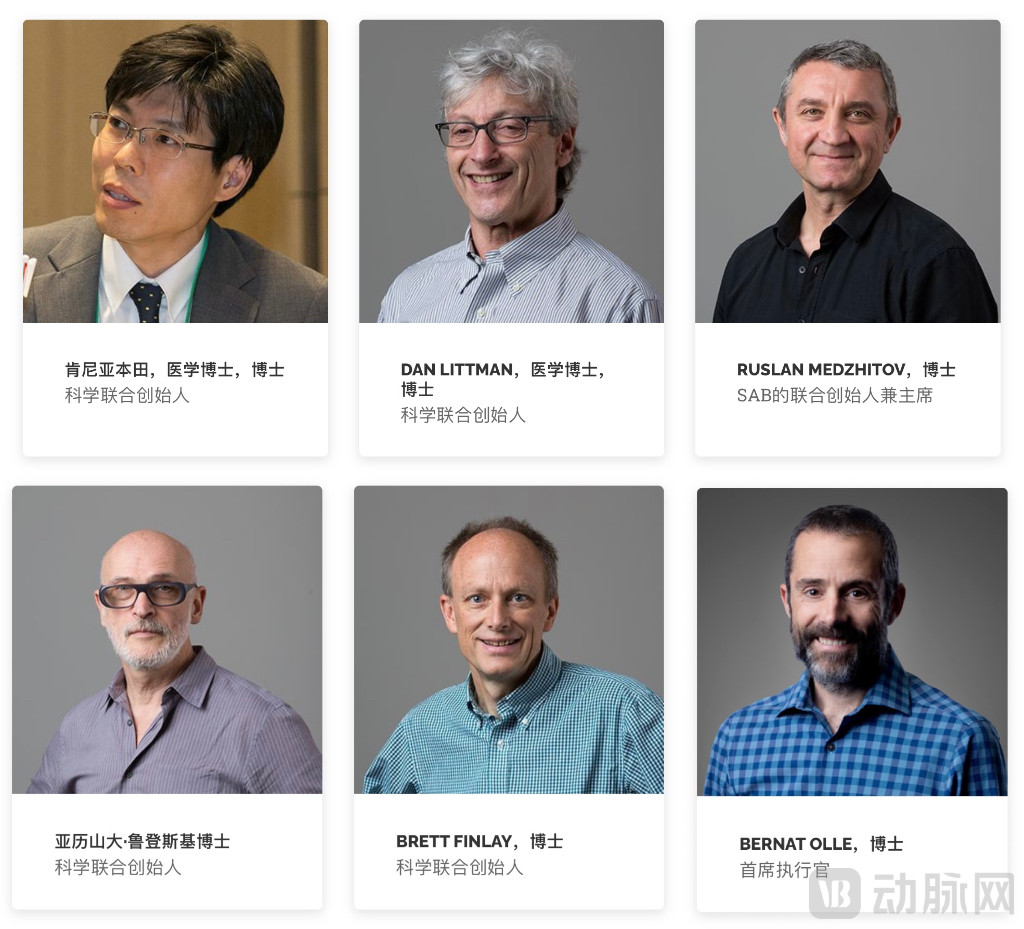
Co-founder of Vedanta Biosciences
Image source: Vedanta Biosciences
In 2010, studies by Dan Littman and Kenya Honda demonstrated that human-associated bacteria can induce intestinal Th17 cells. This finding suggested that autoimmune diseases could be treated by manipulating the microbiome. In the same year, with support from the biotechnology company PureTech Health, Dr. Bernat Olle (current CEO) co-founded Vedanta Biosciences together with five scientific co-founders.
Currently, Vedanta Biosciences has identified various human commensal bacteria capable of inducing distinct immune responses, including the induction of regulatory T cells, CD8+ T cells, and Th17 cells. These findings have been published in top-tier journals such as Science, Nature, Cell, and Nature Immunology.
Years of research by the scientific founders have provided a robust scientific foundation, establishing a solid theoretical basis and strong development momentum for Vedanta Biosciences. At its core are transformative isolation cloning methods and bacterial community design.
Vedanta Biosciences’ microbiome therapy is based on clonal production of microbial consortia. The manufacturing process begins with isolating specific bacterial communities from human specimens, which are then added to Vedanta’s strain library. Individual bacterial strains are subsequently cultured through cloning, followed by fermentation and lyophilization. These defined strains are blended into a standardized consortium, formulated as a powder, and finally administered in the form of oral capsules.
Vedanta has built a proprietary discovery platform capable of identifying bacterial strains with drug-like properties and manufacturing them in accordance with Good Manufacturing Practice (GMP) standards. Currently, Vedanta has established a proprietary strain library comprising dozens of gut bacterial strains.
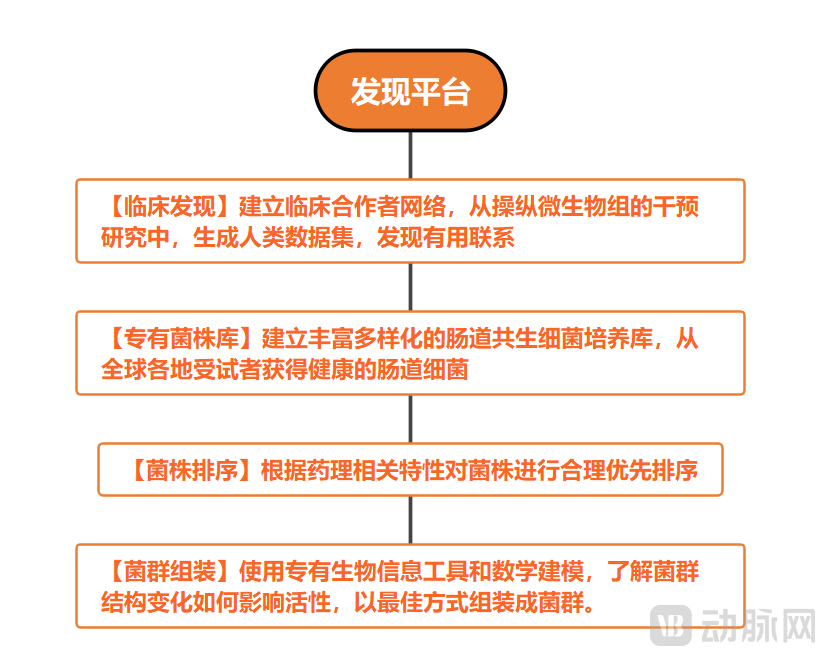
Vedanta Biosciences' Strain Discovery Platform
Content: Vedanta Biosciences
Graphic: VCBeat
Taking Clostridioides difficile infection (CDI) as an example, traditional fecal microbiota transplantation requires biological specimens from donors. These samples may contain derived microbes or pathogens, posing a risk of transmitting other infections. In contrast, the establishment of a cloned bacterial library eliminates the need for donor fecal material by directly using clonally isolated bacterial consortia, thereby removing the risk of pathogen transmission associated with donor specimens.
Secondly, the cloning and isolation of specific bacterial consortia have significantly enhanced the selectivity of therapies, marking a leap from traditional non-targeted approaches to targeted treatments. Customized bacterial consortia enable precise adjustment and blending of each strain during the drug manufacturing process, ensuring consistent dosage and active ingredients. This eliminates the variability in dosage and effective bacterial components associated with donor-dependent fecal microbiota transplantation.
To achieve this level of precise customization, Vedanta has built a large-scale cGMP (Current Good Manufacturing Practice) manufacturing platform. Leveraging its CMC expertise in the microbiome field, the cGMP platform enables highly scalable and cost-effective production of specific bacterial consortia, supporting the global clinical expansion of its pipeline. This manufacturing platform provides Vedanta with end-to-end cGMP capabilities, spanning from clinical development to commercial production.
The viable bacterial consortia in the drug enter the human body, travel along the gastrointestinal tract, and colonize the intestine. The colonized microbiota alter the composition of the gut microbiome, provide colonization resistance against a range of intestinal infectious pathogens, and stimulate targeted immune responses, thereby improving the gut ecosystem.
Based on this immunotherapy platform, Vedanta Biosciences first developed the VE303 pipeline. VE303 is primarily indicated for the treatment of high-risk Clostridioides difficile infection (CDI) and is administered as an oral therapeutic. VE303 consists of eight defined strains of clonal human commensal bacteria. These strains were selected for their ability to confer colonization resistance against C. difficile.
*Clostridioides difficile* is a bacterium that can exist as part of the normal gut microbiota. However, extensive use of broad-spectrum antibiotics, immunosuppressants, or chemotherapeutic agents may disrupt the intestinal microbiota, leading to overgrowth of *C. difficile* and toxin production, which subsequently causes *Clostridioides difficile* infection (CDI). The main clinical manifestations of CDI include diarrhea, abdominal pain, and fever. In severe cases, it can lead to pseudomembranous colitis, complicated by toxic megacolon, intestinal perforation, septic shock, and even death.
According to the “Guidelines for Prevention and Control of Clostridioides difficile Healthcare-Associated Infections in China,” *Clostridioides difficile* has become one of the most common pathogens causing infectious diarrhea in healthcare settings in recent years. CDI significantly increases patients’ economic burden and case fatality rate. In its 2019 Antibiotic Resistance Threats Report, the U.S. Centers for Disease Control and Prevention classified *Clostridioides difficile* as an “Urgent” threat—the highest level of public health concern—surpassing the “Serious” threat level assigned to “superbugs.”
In a randomized, double-blind Phase 2 trial, patients at high risk of recurrence received VE303 to prevent CDI recurrence after completing a prior course of antibiotics for CDI. The trial met its primary efficacy endpoint within eight weeks and evaluated the safety, tolerability, pharmacokinetics/pharmacodynamics, and efficacy of VE303. Results demonstrated that VE303 was generally well tolerated. Vedanta plans to initiate Phase 3 clinical trials of VE303 in 2023.
Beyond the treatment of Clostridioides difficile infection (CDI), the therapeutic principle of leveraging the microbiota to stimulate immune responses has been extended to a broader range of autoimmune and inflammatory diseases, encompassing immunomodulatory effects in autoimmune and allergic conditions, as well as immune-enhancing effects in cancer therapy and vaccination.
The company currently has five drug candidates in development. Among them, VE800, an immuno-oncology agent, has entered into a clinical trial collaboration agreement with Bristol-Myers Squibb Company to be evaluated in combination with its checkpoint inhibitor OPDIVO in first-in-human clinical trials. VE800 consists of 11 cloned strains of human commensal bacteria. These strains were selected for their ability to induce CD8+ T cells, enhance the immune system’s attack on tumors, and potentiate the effects of checkpoint inhibitors.
Vedanta has also received two grants from CARB-X, totaling $11.2 million. The funding is being used to support clinical testing of VE303 and accelerate the development of VE707. VE707 is designed to prevent colonization and recurrence of infections caused by various multidrug-resistant organisms (MDROs), including intestinal carriage of some of the most common healthcare-associated pathogens—carbapenem-resistant Enterobacteriaceae (CRE), extended-spectrum beta-lactamase (ESBL)-producing bacteria, and vancomycin-resistant enterococci (VRE). These healthcare-associated infections can lead to delayed treatment or death in patients, representing a significant unmet medical need.
VE202 is an oral medication for the treatment of inflammatory bowel disease (IBD). The bacterial strain was selected for its ability to modulate the number and activity of regulatory T cells in the intestinal mucosa. Phase I study data demonstrated that VE202 was generally safe and well-tolerated across all dose levels, exhibiting durable and dose-dependent colonization. Supported by this round of funding, the drug will proceed to Phase II clinical trials.
VE416 is a therapeutic agent for the treatment of food allergies. In preclinical studies, VE416 stimulated protective immunomodulatory responses and reduced allergic reactions and symptoms in murine models of allergy. The drug entered Phase 1/2 clinical trials in 2019, with trial data expected to be released in 2023.
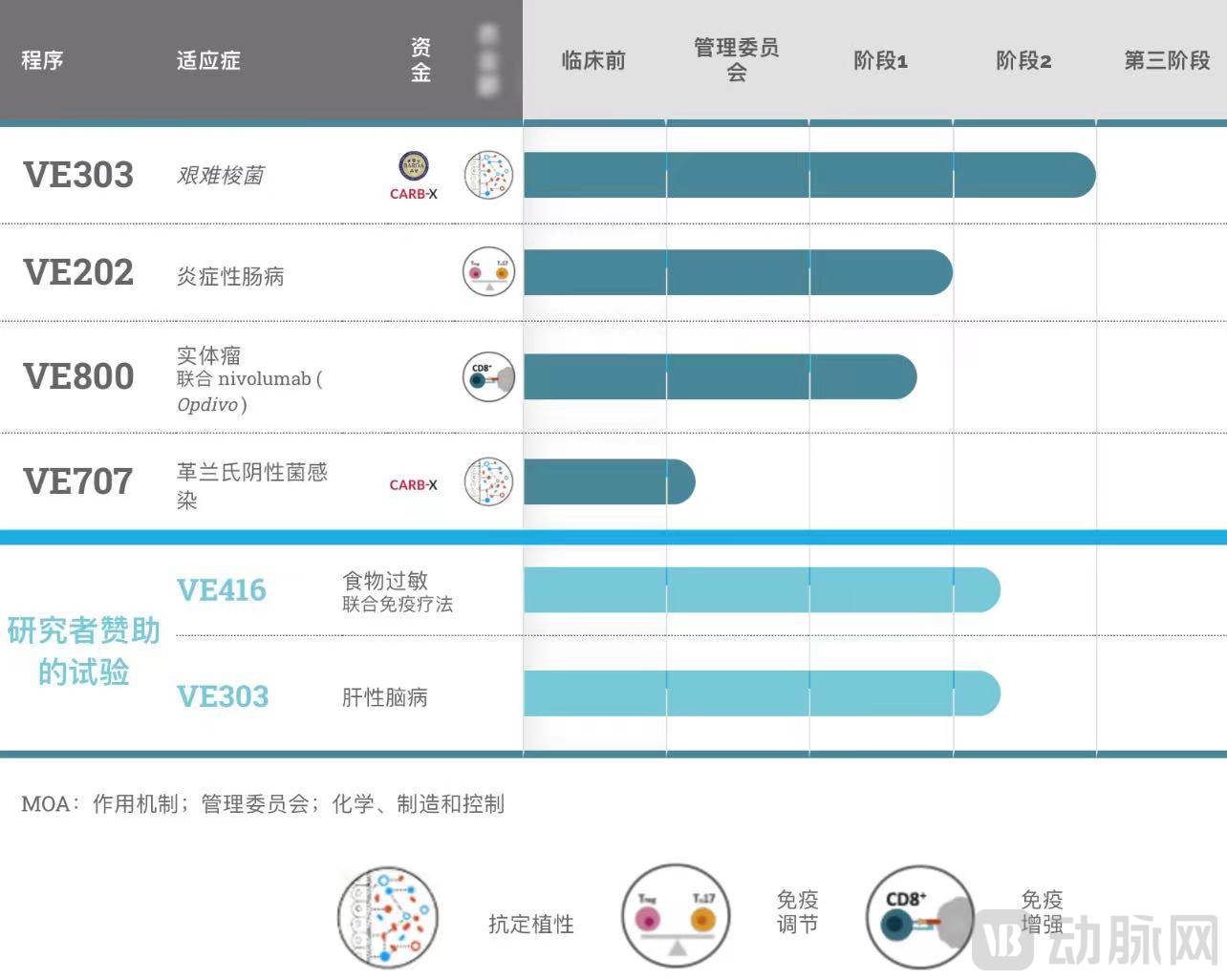
Vedanta Biosciences Pipeline Overview
Image source: Vedanta Biosciences official website
In the field of microbial therapeutics, the broad treatment demand for Clostridioides difficile infection (CDI) has created a blue-ocean market for drug development.
In November last year, the FDA approved Rebyota, the first fecal microbiota drug, which is a single-dose enema made from intestinal bacterial samples extracted from donor feces. In late April this year, the FDA approved Vowst, the first oral microbiota drug, for treating recurrent Clostridioides difficile infections in adult patients aged 18 and older. The live human gut microbiota in this medication also comes from donated donors, screened, purified, and processed into oral capsules.
The live bacteria contained in both aforementioned drugs are derived from fecal donations by qualified donors. Although a series of tests for transmissible pathogens are conducted during the manufacturing process, the FDA states that there remains a risk of transmitting infectious agents, as well as potential adverse reactions caused by food allergens. In contrast, Vedanta’s isolated clone approach, which does not directly utilize donor bacteria, fundamentally eliminates the risk of pathogen transmission, offering new possibilities for live biotherapeutic products.
Microbiome-based therapeutics have entered clinical practice, and purely clonally manufactured microbiome drugs are also on the horizon. Starting from the human microbiome and returning to the human ecosystem through pharmaceutical interventions, what further surprises microbiome therapy will bring remains to be seen with great anticipation.
In 2017, the Chinese Academy of Sciences launched the Human Microbiome Project, sparking a new wave of research and development in microbiome technologies. Microecological therapy entered a phase of rapid growth, and a number of microbiome R&D companies emerged in China, including Xbiome, Muen Biotech, Zhiyi Biopharma, and Yijing Biotech.