

Yunnan Otolaryngology Specialty Alliance Addresses Grassroots Healthcare Challenges Amid Over 100 Million Patients Nationwide
From patient data on chronic sinusitis, we can gain a glimpse into the current state of otorhinolaryngological disorders—
According to the Chinese Guidelines for the Diagnosis and Treatment of Chronic Rhinosinusitis (2018), there are over 100 million patients with chronic rhinosinusitis in China, including 7 million severe cases urgently requiring surgical treatment and more than 30 million moderate cases needing medical intervention. However, even in 2021, the actual number of patients who underwent surgical intervention remained below one-third, with an estimated 2 million procedures performed in otolaryngology and head and neck surgery.
On one hand, the prevalence of otorhinolaryngological disorders is high, supported by a large patient population; however, these conditions are predominantly non-life-threatening inflammatory diseases, such as sinusitis, otitis media, and tonsillitis. On the other hand, minimally invasive procedures in otorhinolaryngology typically require operation under an endoscope or surgical microscope. The implementation of such surgeries is constrained by factors including limited accessibility to specialized equipment and the prolonged training period required for specialists in this field.
Behind the vast patient demand lies a different reality: there is still a scarcity of professional and high-quality otolaryngologists. In particular, primary care physicians, constrained by multiple factors and lacking opportunities for professional exchange, face limitations in enhancing their competencies, resulting in a significant gap in medical service capabilities and technical proficiency compared to their counterparts at provincial and municipal levels. However, given that a large proportion of patients in China reside in primary care settings, how to effectively improve the capacity of primary healthcare services has become a pressing challenge.
And this is precisely the direction in which the Yunnan Otorhinolaryngology and Head and Neck Surgery Specialty Alliance (hereinafter referred to as the “Yunnan ENT Specialty Alliance”) is focusing its efforts.
Unlike “loose” affiliations, the Yunnan ENT Specialist Alliance provides comprehensive support to grassroots institutions
To further enhance the capabilities of the entire healthcare service system, the state has successively introduced various policies in recent years to drive this progress.
The “Outline of the ‘Healthy China 2030’ Planning” issued in 2016 pointed out that it is necessary to innovate the supply model of medical services, one of which is to “improve various models of division of labor and collaboration such as medical consortia and hospital groups, so as to enhance the overall performance of the service system.”
In 2017, the Guiding Opinions on Promoting the Construction and Development of Medical Consortia pointed out that “localities shall, in light of the actual conditions of their hierarchical diagnosis and treatment system, adopt measures tailored to local circumstances and provide categorized guidance. They shall fully consider factors such as the geographical distribution, functional positioning, service capacity, operational relationships, and willingness to cooperate of medical institutions; leverage the roles of various medical resources from central, local, military, and social sectors; respect the pioneering spirit at the grassroots level; explore the formation of diverse models of medical consortia by region and tier; and promote the flow of high-quality medical resources to grassroots levels and remote, impoverished areas. Private medical institutions may be included in medical consortia based on their willingness.”
The establishment of “medical consortia” and similar initiatives has further promoted the enhancement of medical capabilities across different healthcare institutions, thereby strengthening primary care services. However, several challenges have emerged during their development: some medical institutions often enter into collaborations with primary care facilities primarily to comply with policy requirements. Consequently, these partnerships tend to be loosely structured, making it difficult to provide substantial and effective support for the development of specific departments within primary care institutions.
“In the past, some medical alliances and medical consortia were heavily influenced by administrative factors, causing cooperation between medical institutions to become merely formalistic. A likely scenario is that experts from leading hospitals and primary care facilities actively participate in joint annual meetings and other events at the outset, but then leading hospitals gradually reduce the frequency of their visits to primary care settings. One underlying reason is that leading hospitals themselves have a large patient load requiring physicians’ services.” Chen Tao, Executive Secretary-General of the Yunnan ENT Specialist Alliance, added, “In collaborative models such as expert workstations, specialists typically travel to primary care facilities to perform surgeries when patients meeting surgical indications are identified locally. However, after the procedures are completed, the specialists return to their home institutions, making it difficult to sustain activities such as teaching rounds, academic development, and mentoring.”
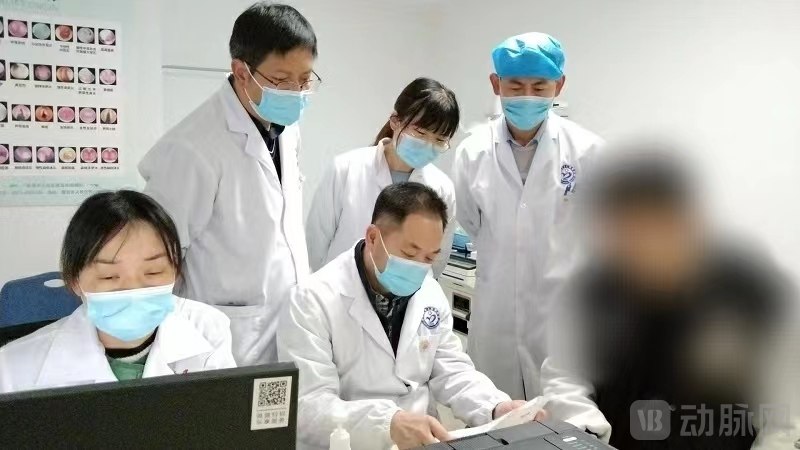
To address this situation, the Yunnan Province Otolaryngology-Head and Neck Surgery Specialist Alliance was established, moving beyond one-off services to primary care institutions and focusing instead on comprehensively enhancing the capacity building of primary care departments. Unlike typical “specialist alliances” that are spontaneously formed among hospitals, the Yunnan Province Otolaryngology Specialist Alliance operates more like a self-sustaining physician group responsible for its own profits and losses.
According to Chen Tao, the Yunnan Province Otorhinolaryngology Specialist Alliance is one of four such alliances in Southwest China, with the other three located in Sichuan, Chongqing, and Guizhou. The Yunnan Province Otorhinolaryngology Specialist Alliance was initiated by several former chairpersons of the Otorhinolaryngology-Head and Neck Surgery Committee of the Yunnan Medical Association, along with numerous experts from provincial and municipal hospitals, including the First Affiliated Hospital of Kunming Medical University, the Second Affiliated Hospital of Kunming Medical University, Yunnan Provincial People's Hospital, Yunnan Provincial Hospital of Traditional Chinese Medicine, Yunnan Cancer Hospital, the Third People's Hospital of Yunnan Province, the 920th Hospital of the Joint Logistics Support Force, Yunnan Provincial Maternal and Child Health Hospital, the First People's Hospital of Kunming, the Second People's Hospital of Qujing, the Third People's Hospital of Honghe Prefecture, and Kunming Tongren Hospital. More than 30 senior specialists have joined the team. Currently, the alliance comprises eight specialist groups: Otology, Rhinology, Laryngology, Head and Neck Surgery, Traditional Chinese Medicine Otorhinolaryngology, Pediatric Otorhinolaryngology, Nursing, and Discipline Construction.
The establishment of the Yunnan Province Otolaryngology Specialist Alliance, distinct from “loose” affiliations, can better help cultivate core medical personnel at the primary care level, reduce the risk of healthcare gaps, and further improve the quality of primary healthcare services.
Partnering with Mengzi People's Hospital to Rapidly Enhance Primary Healthcare Capabilities
The Yunnan Otolaryngology Specialist Alliance’s support for primary healthcare institutions extends beyond conventional technical assistance and academic exchanges to include the standardization of outpatient and inpatient clinical pathways at grassroots hospitals.
“Our specialty alliance aims to transform the administrative linkage model of medical consortia and further enhance the departmental support capabilities of our workstations. For the hospitals we support, we will dispatch specialist physicians with extensive clinical experience to be stationed at primary healthcare institutions for three months, providing round-the-clock assistance to local physicians in patient intake and supporting the diagnosis and treatment of inpatients. For more complex surgical cases, elective surgeries can be scheduled and performed by the visiting specialists. Additionally, our nurses will visit these institutions to engage and collaborate with existing hospital nursing staff, helping primary care nurses better coordinate with physicians in their clinical work.”
Chen Tao added, “We will also deploy professional operations personnel to assist the department in brand promotion and development, as well as in building physicians’ personal brands. We will even help the hospital establish an external integrated media platform and conduct certain public welfare-oriented popular science education for patients.”
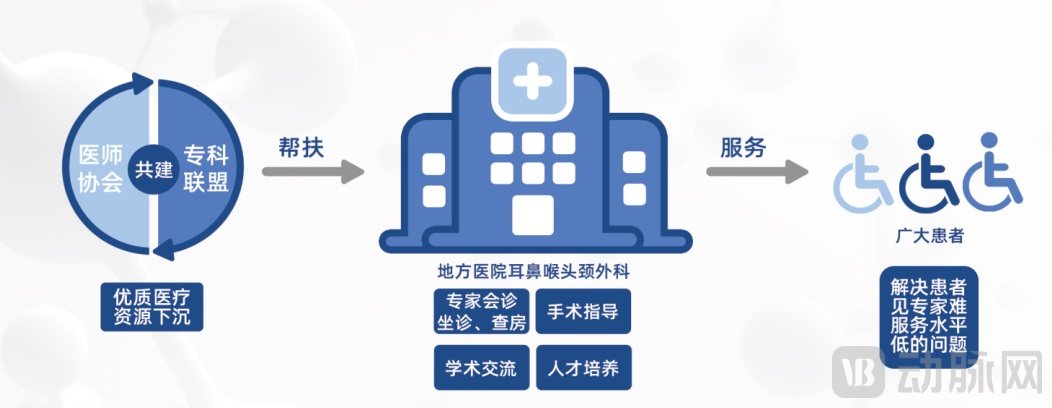
Through the Yunnan ENT Specialist Alliance, they are helping grassroots institutions achieve comprehensive enhancements in patient diagnosis and treatment, training and mentorship of young physicians, and discipline development. A case in point is the collaboration between the Yunnan ENT Specialist Alliance and Mengzi People’s Hospital in Yunnan Province.
Prior to the collaboration, the Yunnan ENT Specialist Alliance conducted a comprehensive assessment of the People's Hospital of Mengzi City, Yunnan Province, covering areas such as the progress of in-hospital discipline development, physicians' initiative, and the competitive landscape of the local healthcare environment.
At that time, the Otorhinolaryngology (ENT) ward of Mengzi City People’s Hospital had 40 beds, with a relatively low volume of Level III and IV surgical procedures. After one and a half years of participation in the Yunnan ENT Specialist Alliance, the number of departmental beds increased to 52, and the volume of inpatients ranked among the highest in Honghe Hani and Yi Autonomous Prefecture. With the support of the Specialist Alliance, more than ten new surgical techniques and projects were introduced. As of the publication date, under the leadership of Dr. Sun Zewu, the Department Director, many of these new techniques and projects have been independently implemented, achieving a 30% year-on-year increase in annual surgical volume. In terms of departmental development, the former unified ENT department has been subdivided into specialized groups led by different physicians, including Otology, Rhinology, Laryngology, Head and Neck Surgery, and Pediatric ENT. Currently, the department is also advancing the construction of Traditional Chinese Medicine (TCM) ENT diagnosis and treatment services.
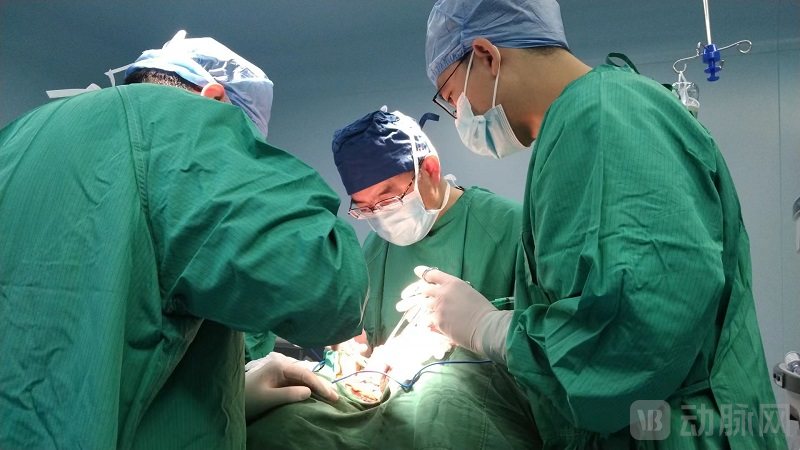
The results are evident. Both Mengzi City People’s Hospital and the Yunnan Province Otorhinolaryngology Specialist Alliance aim to collaboratively elevate the Department of Otorhinolaryngology at Mengzi City People’s Hospital to a provincial-level key discipline in Yunnan Province through targeted assistance and joint efforts.
In fact, in addition to providing daily clinical support, the Yunnan ENT Specialist Alliance places significant emphasis on summarizing and synthesizing clinical experience to help primary-care physicians better differentiate related diseases. Furthermore, it strengthens communication and exchange among primary-care physicians through academic conferences and other means.
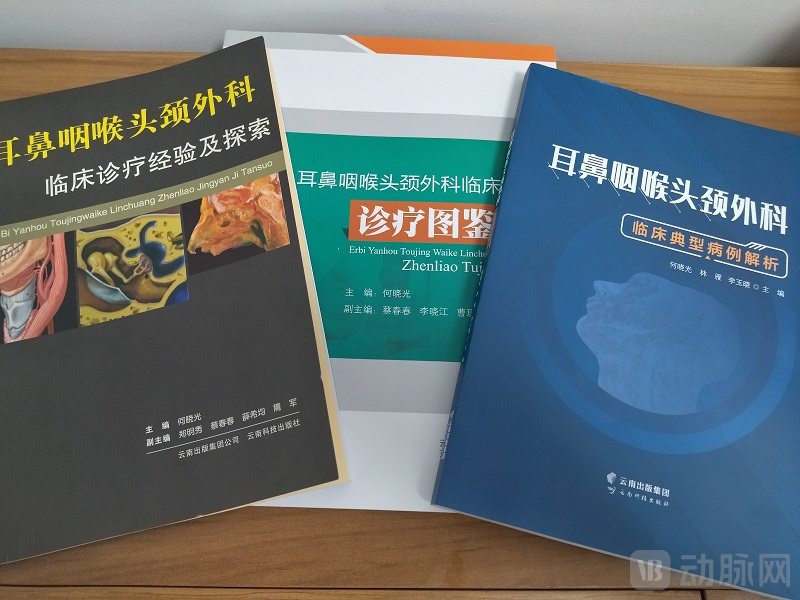
In terms of departmental development, the Yunnan Otorhinolaryngology Specialist Alliance assisted Mengzi City People’s Hospital in completing its disciplinary subgrouping with the guidance of its academic group leaders. In October 2022, led by Director He Xiaoguang and involving numerous experts from the Specialist Alliance as well as physicians from Mengzi City People’s Hospital—including President Li Xiahua ng and Department Head Sun Zewu—the book *Analysis of Typical Clinical Cases in Otorhinolaryngology-Head and Neck Surgery* was published. The book compiles typical cases encountered by Specialist Alliance experts in their daily clinical practice, along with summaries of their diagnosis and treatment approaches. Presented in a text-and-image format, it provides guidance to more primary-care physicians, helping them further accumulate relevant diagnostic and therapeutic experience.
It is reported that the number of public hospitals currently interested in collaborating with the Yunnan Otorhinolaryngology Specialist Alliance has reached approximately 10. It is expected that the number of hospitals receiving its support will exceed five in 2023. The fact that multiple hospitals have chosen to partner with the alliance is also attributable to its fundamental stance. Indeed, one of the standards it adheres to is “assisting departments in optimizing professional diagnosis and treatment management processes without disrupting their existing operational rhythms,” thereby facilitating the orderly achievement of various departmental performance evaluation indicators.
Enhancing Primary Healthcare Capabilities and Exploring New Development Models
"In fact, for the Yunnan ENT Specialist Alliance, one of the key issues they are currently considering is how to achieve better subsequent development after improving primary healthcare services."
According to Chen Tao, the Yunnan Otolaryngology Specialist Alliance has a clear development plan: First, it aims to help grassroots medical institutions within the province train more qualified physicians through the alliance. Meanwhile, in response to the issue of inadequate clinical competence among some current practitioners, the alliance arranges for resident physicians to rotate across different hospitals under the mentorship of specialist alliance members. This approach enables them to gain a better understanding of the medical profession and enhance their professional skills. In this way, the Yunnan Otolaryngology Specialist Alliance fosters the training of young doctors at grassroots hospitals, thereby preventing gaps in grassroots healthcare delivery. Second, while improving the capabilities of grassroots physicians, the alliance does not rule out the future establishment of specialized outpatient clinics to further enhance the quality of medical services.
It is reported that Yunnan Province is currently prioritizing the decentralization of high-quality medical services to the grassroots level, with some regions even introducing policies to attract healthcare talent. The Yunnan Otolaryngology Specialist Alliance, which focuses on enhancing the capabilities of grassroots healthcare professionals, aligns precisely with this governmental strategic direction.
“We are aware that we continue to face significant challenges. However, we believe that over time, we will gain a deeper sense of pride in our work within the healthcare industry, and more people will recognize the social benefits brought about by our specialty alliance,” said Chen Tao.