

Zhang Yu of Tencent Health: Building a High-Speed R&D Iteration Flywheel to Accelerate Networked and Intelligent Healthcare Services
In recent years, the digital transformation of the healthcare industry has entered a deep-water zone, bringing not only technologies and tools but also a new paradigm for research and development. This is reflected in rapid responses to major public health emergencies, stable operations under high-density and high-concurrency traffic, continuous and uninterrupted rapid iteration of digital applications, seamless integration and efficient collaboration in development processes, as well as lawful and compliant data management that fully unlocks data value.
How to Enhance Efficiency and Meet High-Frequency, High-Efficiency, and Sustainable R&D Demands? Zhang Yu, Vice President of Tencent Health and Head of the Tencent Cloud R&D Efficiency Improvement Working Group, has accumulated extensive expertise in this area. He aims to drive the overall digital transformation of the healthcare sector through conceptual innovation and model innovation. His presentation at the 2023 Techo TVP Developer Summit can be regarded as a reflection of the experience and insights on R&D digitalization from frontline R&D experts and Tencent Cloud.

Zhang Yu, Vice President of Tencent Health
“R&D Efficiency” emerged as the concept gained prominence because industrial innovation and development are increasingly reliant on digital capabilities, which in turn depend on the R&D efficiency of IT products. In simple terms, it refers to the sustained and efficient development of valuable products.
In the healthcare industry, it has become evident that since the advent of internet-based medical services, the pace of application iteration and updates has accelerated significantly. Users can now access services 24/7, leading to a sharp increase in the intensity of demand for information and services. The traditional, relatively “static” R&D model is clearly unable to meet these demands.
For instance, the lack of unified standards and specifications in the development process leads to inconsistent efficiency across various stages and potential disarray in their integration, thereby affecting overall delivery speed. Although a multitude of tools have emerged during the digitalization process, they suffer from severe homogenization, poor stability and user experience, insufficient automation capabilities, and an inability to accurately reflect application value. Furthermore, the absence of a unified platform and standardized protocols has resulted in fragmented R&D efforts characterized by siloed operations, rigid adherence to routine procedures, and decentralized management—a model that is unsustainable in the long run.
It has been proposed within the industry that a cloud-native DevOps (Development and Operations integration) model can automate the entire development workflow, including compilation, testing, version release, deployment, operations, and monitoring. This allows development teams to focus solely on coding, while leaving other tasks to be automatically executed by the platform. Such a model enables iterative development in short cycles and, to some extent, addresses R&D efficiency issues. However, as codebases grow larger, insufficiently streamlined and intelligent tooling support can still lead to a decline in R&D quality.
To better address common industry challenges in R&D efficiency, Zhang Yu presented Tencent Cloud’s philosophy and approach to building an R&D efficiency platform at the Techo TVP Developer Summit. The strategy is grounded in automated tooling capabilities, integrating one-stop portal tools with DevOps information to automate the R&D process. This establishes a unified standard for measuring application R&D value, creating a one-stop DevOps platform that ultimately achieves a closed-loop workflow encompassing requirements, development, build, deployment, operations, and business operations.
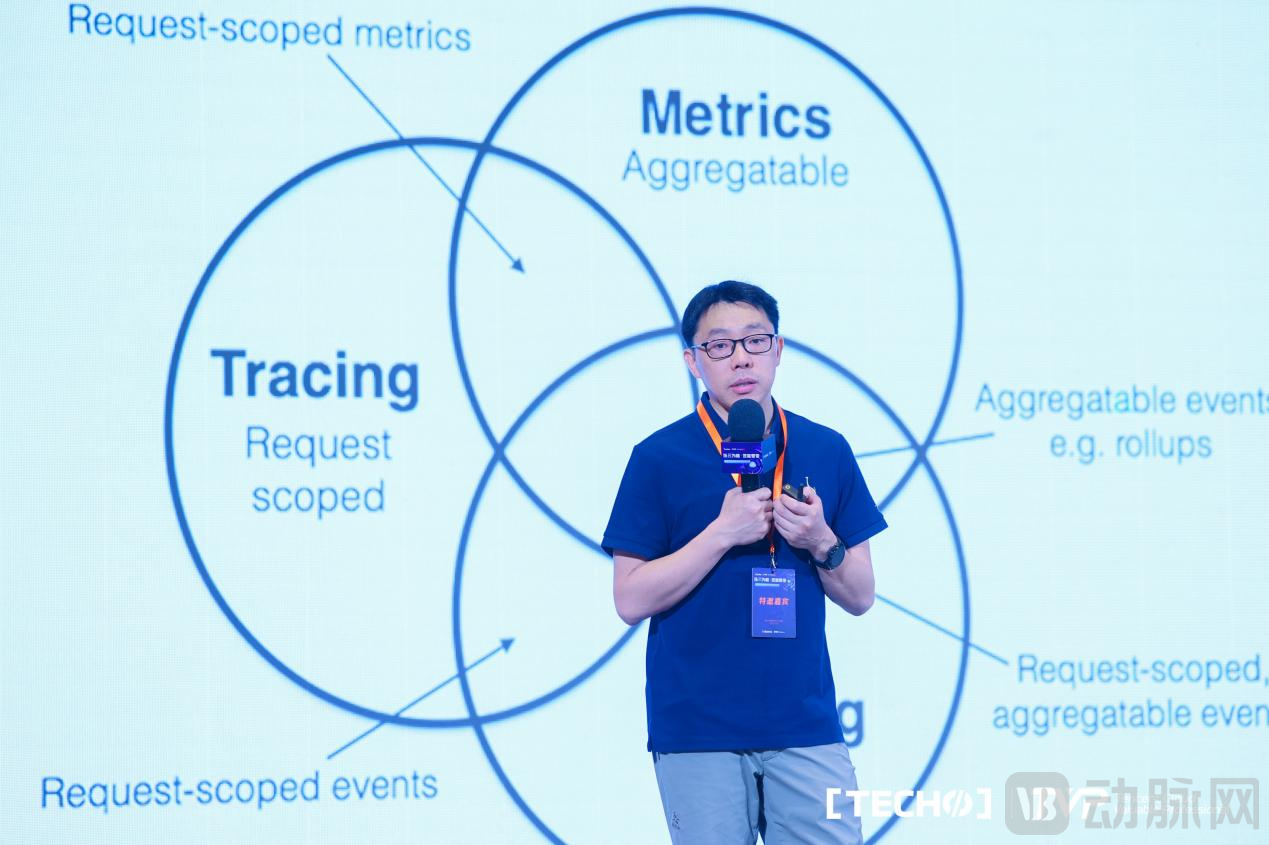 Zhang Yu Delivers Keynote Address at Techo TVP Developer Summit
Specifically, the Tencent Cloud R&D Efficiency Platform integrates a wide array of development tools. It not only connects Tencent Cloud storage, account permissions, and cost settlement, but also achieves integration and collaboration among modules such as monitoring and logging, laying the foundation for efficient research and development. At the information integration level, it consolidates and organizes DevOps information by application dimension, facilitating cloud migration and private deployment of applications. At the workflow level, it implements dynamic automation across development, testing, and deployment stages, creating standardized interfaces to enhance R&D efficiency. At the value stream level, it drives continuous improvement in R&D delivery capabilities and processes based on customer and business value metrics.
In Zhang Yu’s view, Tencent Cloud places greater emphasis on defining the metrics for R&D value. Traditional value indicators are often abstract and distorted—for instance, how many new users and how much revenue growth a specific requirement can generate, how long a service outage caused by a code change will last and what losses it will incur, or what risks a zero-day vulnerability may pose to business operations and customers. Only by integrating information, streamlining processes, and connecting modules can the actual delivered value be accurately defined, helping R&D teams identify areas for improvement and achieve “continuous delivery and continuous optimization.”
This approach offers the industry a new pathway for enhancing R&D efficiency: highly integrated and automated platform capabilities not only optimize the R&D experience and significantly boost the job satisfaction of frontline R&D and operations personnel, but also foster a collaborative model characterized by high-level synergy, standardized norms, and closed-loop processes, thereby driving up R&D efficiency. Furthermore, clearer and more intuitive visual interfaces and value metrics have strengthened business teams’ willingness to pursue improvements and optimizations, enabling sustainable development.
Tencent Cloud’s R&D efficiency philosophy is deeply embodied in Tencent’s healthcare business. In the early stages, Tencent Health’s microservices architecture also suffered from issues such as insufficient R&D efficiency and slow online issue identification and resolution. To address these challenges, Zhang Yu proposed the approach of “domain-based partitioning and domain-specific resolution.”
For instance, in the development domain, we unify development patterns and implement standardized service design, requiring traceable code changes and supporting parallel development of multiple requirements to reduce communication costs, facilitate multi-person collaboration and rapid iteration, and improve development and coding efficiency. In the build domain, we ensure code quality and enhance service stability through merged pipelines. In the testing domain, we introduce automated detection capabilities, transition from full-scale to incremental testing, optimize the service mesh, and conserve resources while lowering operational barriers. In the deployment domain, we achieve automated pipeline deployment while ensuring security, thereby enhancing continuous delivery capabilities. In the operations domain, we strengthen observability to enable developers to promptly detect and pinpoint faults.
At this point, Tencent Health has completed a phase of R&D efficiency infrastructure construction, effectively improving business R&D efficiency. Taking the national-level application “Tencent Health” Mini Program as an example, it was entrusted with critical tasks during the outbreak of the COVID-19 pandemic. On January 20, 2020, product and R&D discussions were held, officially launching the project; by 6:00 AM on January 22, the first H5 version was developed; by 8:00 AM on January 22, the first version was officially launched; on January 26, WeChat Pay’s page officially went live with medical health services, featuring a comprehensive suite of pandemic tools including epidemic situation updates, authoritative science popularization, and a map of fever clinics. Within a week, the daily active users for “Medical Health” exceeded 30 million.
Under traditional R&D thinking and processes, a large-scale application might be updated only a handful of times per year. However, for products with tens of millions of users in sectors such as healthcare, which demand high timeliness and responsiveness, updating three to five times a day is commonplace, with records reaching seven version releases in a single day. This sets a typical benchmark for R&D efficiency concepts within the industry.
A high-performance R&D system also enables Zhang Yu and his team to continuously integrate cutting-edge digital technologies, such as cloud computing, artificial intelligence, and big data, into the healthcare industry, driving the ongoing development of innovative products that serve physicians, patients, and pharmaceutical manufacturers.
In the “AI + Healthcare” sector, Zhang Yu led his team in leveraging artificial intelligence technologies such as speech recognition and natural language understanding to build an AI-powered triage and consultation platform. This platform has shortened triage time, improved triage accuracy, and covered 31 medical specialties and 98% of disease types. To date, it has provided over 2 million intelligent triage and consultation services to 1.5 million patients, achieving an accuracy rate of 91.7%. The platform helps alleviate the regional imbalance of medical resources in China and enhances the accessibility of healthcare services. Currently, the system is adopted by more than 900 medical institutions, maintaining an accuracy rate above 90% and significantly improving physicians’ work efficiency.
Based on the construction of large-scale knowledge graphs for key diseases such as psoriasis, heart failure, chest pain, and stroke, Zhang Yu’s team has also developed an intelligent diagnostic and treatment recommendation system along with a clinical decision support system. This system assists physicians in interpreting medical images, suggesting diagnostic outcomes and treatment plans, and facilitating rapid retrieval of required medical information. The accuracy of the decision support exceeds 90%, with the assessment of psoriasis severity demonstrating higher accuracy than that of clinicians.
In the development of “Hu Xin Xiao Ai,” China’s first AI-based disease management platform for heart failure patients, Zhang Yu and his team creatively employed explainable AI technology to analyze and issue early warnings for disease deterioration, utilized AI-based temporal gait analysis to stratify the severity of heart failure, and leveraged big data technologies to provide accurate and intuitive analyses of clinical outcomes. As a product of the strategic partnership between Novartis and Tencent, the platform integrates interfaces for physicians, nurses, and patients, and supports AI capabilities such as voice and image recognition and human-computer interaction. It delivers core functionalities including routine indicator monitoring, health status assessment, and personalized information recommendations. Since its official launch in July 2020, “Hu Xin Xiao Ai” has been adopted by more than 3,000 healthcare professionals across over 500 hospitals, helping nearly 80,000 heart failure patients achieve out-of-hospital self-management, enhancing their disease awareness and management capabilities, and alleviating the substantial burden associated with recurrent hospitalizations.
Tencent Healthcare Big Data Middle Platform is a big data software product with core intellectual property rights, developed by Zhang Yu and his team. It boasts prominent technical advantages, including high computational capacity, timely response, and low hardware resource consumption. The platform features high-performance medical big data query services and a data collection and processing framework, storing over 100 billion records, with daily incremental data reaching 1 billion entries, more than 3,000 calculation rules, and over 10,000 computing tasks.
The medical digital twin platform within it employs cutting-edge game rendering engines to achieve cinema-grade visual effects. The software analyzes critical data such as outpatient registration volumes, physician workloads, and pharmaceutical consumption, providing outputs that assist healthcare institution administrators in formulating work plans and offering decision-making support for drug inventory management. It monitors and issues alerts for hospital floor status, departmental load, and patient condition data, while visually presenting bed distribution and occupancy. Additionally, it calculates key performance indicators including bed utilization rates, bed turnover rates, and average length of stay. Zhang Yu also facilitated the implementation of projects such as the Big Data Middle Platform for the Guangdong Provincial Healthcare Security Administration and the Jiangsu Provincial Health Commission, providing the industry with valuable experience in building medical big data middle platforms from scratch. He participated in the successful delivery of the Guangdong Provincial Healthcare Security Administration’s Big Data Middle Platform project. Furthermore, the national first public cloud FHIR Service platform, developed under his leadership, became the first SaaS-based application for medical big data middle platforms.
During the research process, the team successfully secured multiple patents, published numerous papers, and won several awards in international competitions. Zhang Yu personally obtained six invention patents, registered four software copyrights, and authored multiple academic papers.
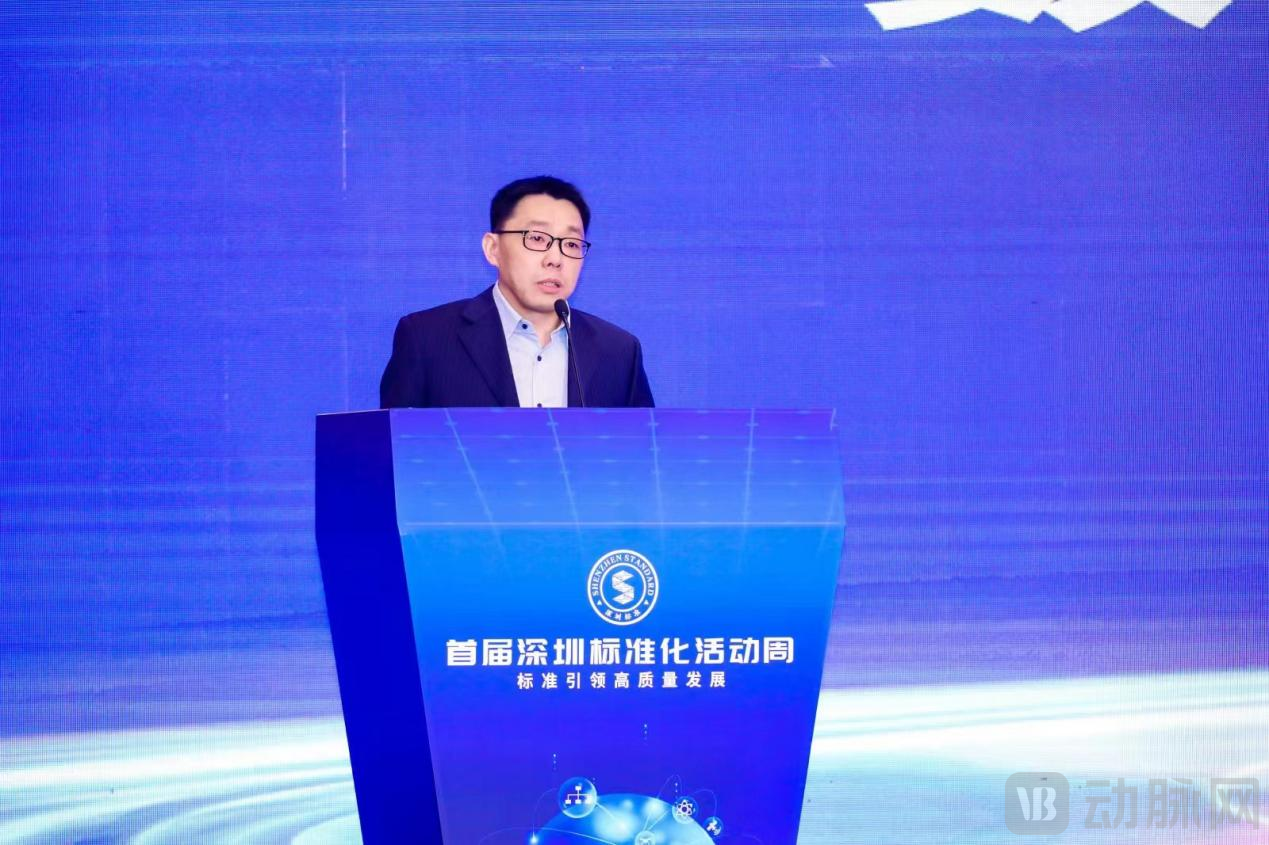 Zhang Yu Delivers Speech on Synergy Between Technological Innovation and Standardization at the Launch Ceremony of the First Shenzhen Standardization Week
Zhang Yu believes that the next stage of enhancing R&D efficiency should be a positive cycle among practice, platform, and metrics, jointly forming a growth flywheel for efficiency improvement. The DevOps model still has significant room for enhancement, such as further strengthening end-to-end connectivity to improve collaboration efficiency, and optimizing multi-perspective, multi-scenario solutions to boost the core workflow efficiency of various roles.
As can be seen, Tencent Cloud is not only continuously building benchmark products internally but also extending its expertise to the healthcare industry, helping practitioners understand how to conduct product development from scratch by leveraging advanced R&D efficiency concepts and tools, thereby driving technological innovation, application innovation, and collaborative model innovation.
From an industry perspective, the overall enhancement of R&D efficiency has not only made digital transformation more efficient but also tightened the integration between upstream and downstream segments of the industrial chain. Most importantly, the establishment of an efficiency-first R&D mindset has enabled digitalization to truly cover the entire application lifecycle. This holds core significance for improving digital service quality and driving enterprises to reduce costs and increase efficiency, thereby accelerating the rapid advancement of diverse industries toward a digital future.