

Rise of Photonic Aesthetic Medicine: Two Major Trends Emerge as Industry Leader Files IPO

Fumeilei Medical
R&D Developer of Medical Aesthetic Devices
Photoelectric Medical Aesthetics Is Becoming a Hot Sector Sought After by Capital: Since 2021, photoelectric medical aesthetics has been one of the key sectors heavily backed by investors among more than 30 upstream companies in the medical aesthetics industry that have secured financing.
As a sector with certain high-speed growth over the next decade, the field of medical aesthetic optoelectronic devices presents triple opportunities in compliance upgrades, domestic substitution, and source innovation. It is currently in a rare market window period, poised to give rise to industry giants.
Against this backdrop, on May 6, at the 7th Future Healthcare Top 100 Conference, VCBeat VB100 and Fumeilei Medical jointly hosted the “Forum on Innovative Development of Photoelectric Medical Aesthetics and the Launch of the White Paper on Energy-Based Devices in Medical Aesthetics,” creating a premier platform for industry exchange.
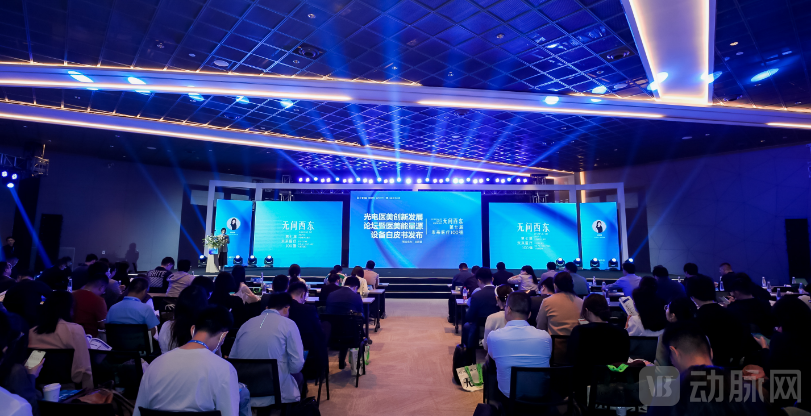 (On-site Photo of the Forum)
In terms of design,This forum was both highly focused and demonstrated exceptional professionalism.
For instance, in terms of focus, the forum centered on the field of photoelectric medical aesthetic devices, with guest presentations closely aligned to this theme. Topics included “Principles and Discussion of New Technologies in Photoacoustic Skin Imaging,” “Novel Medical Laser Technologies,” and “The Past and Present of Photoaging.” The forum also explored the “Challenges and Opportunities for Photoelectric Medical Aesthetics under the Trend of Domestic Substitution.”
In terms of professional expertise, the guest lineup is exceptionally strong, bringing together top industry experts and leaders such as Li Changhui, Deputy Director of the Department of Biomedical Engineering at Peking University; Dr. Zhang Huanian, Professor at Shandong University of Technology and Founder of Linkcare Medical; Xia Yuqing, Founder of Fumeilei Medical; Liu Fei, Founder and General Manager of Minovision; Zhou Shuyang, CEO and Brand Founder of Yimu Vision; Liu Di, Founder of Gengmei; Zhou Xinling, Investment Director at Warburg Pincus; Ma Chenglong, Partner at Zhihe Law Firm; Chen Long, Managing Director at Zhouling Capital; Xue Ke, Plastic Surgeon at Shanghai Ninth People’s Hospital and Jointly Trained Ph.D. from Yale University; and Yao Yuanyuan, Investment Manager at Yuanyi Capital.
Amid rapid development, what is the underlying logic supporting optoelectronic medical aesthetics? What new possibilities lie ahead for the industry? Drawing on insights from forum guests and the content of the White Paper on Energy-Based Devices in Medical Aesthetics, this article attempts to shed light on these questions.
An increasing number of aesthetic seekers are embracing and falling in love with energy-based medical aesthetics.
According to the recently released “2022 Report on Consumer Trends in the Photoelectric Medical Aesthetics Industry,” among the medical aesthetic procedures that consumers favored most or were most eager to try in 2022, 47.34% of surveyed respondents indicated photoelectric treatments as their top choice.
The underlying reason is that,Photoelectric-based treatments are leading the medical aesthetics industry into an era of universal accessibility.
On one hand, the prices of photoelectric medical aesthetic procedures are generally affordable. According to the "2022 Report on Consumption Trends in the Photoelectric Medical Aesthetics Industry," the average transaction value per customer for photoelectric medical aesthetic procedures was the lowest in 2022, significantly lower than the overall average for all medical aesthetic procedures, positioning them as "affordable options" within the medical aesthetics market.
On the other hand, photoelectric medical aesthetic procedures have a low entry barrier and minimal risk, possessing an inherent quality of accessibility. As non-invasive treatments, they face a relatively lower acceptance threshold among users. Furthermore, with technological advancements and the iterative upgrading of photoelectric devices, the efficacy of these procedures continues to improve, making consumers more inclined to choose them.
“The photoelectric medical aesthetics industry presents significant growth opportunities. First, the market is vast, with rapid expansion underway in second- and third-tier cities; second, there remains substantial unmet demand; and third, new technological breakthroughs are being achieved,” stated Zhou Xinling, Investment Director at Warburg Pincus, at the event.
In this process,Photoelectric medical aesthetics also reflects the development trend of “two highs and two lows,” namely “high technological barriers,” “high treatment precision,” “low safety risks,” and “low operational thresholds,” which is driving the rapid growth of this sector.
Specifically, “high technological barriers” refer to the establishment of a scientific system covering the entire process of photoelectric therapy, thereby forming clinical gold-standard systems represented by integrated diagnosis and treatment and photoelectric-combined drug therapies.
“With regard to areas characterized by high technological barriers, I am particularly optimistic about the fields of integrated diagnosis and therapy, as well as the combination of pharmaceuticals and medical devices,” said Xia Yuqing, founder of Fumeilei Medical, during her on-site presentation. She noted that if simple yet effective methods could be employed to significantly reduce the incidence of postoperative adverse reactions, photoelectric therapies would truly break through existing bottlenecks, thereby better unleashing their consumer-oriented potential. To this end, Fumeilei Medical is collaborating with Minuowei to conduct systematic exploration in the area of “photoaging.”
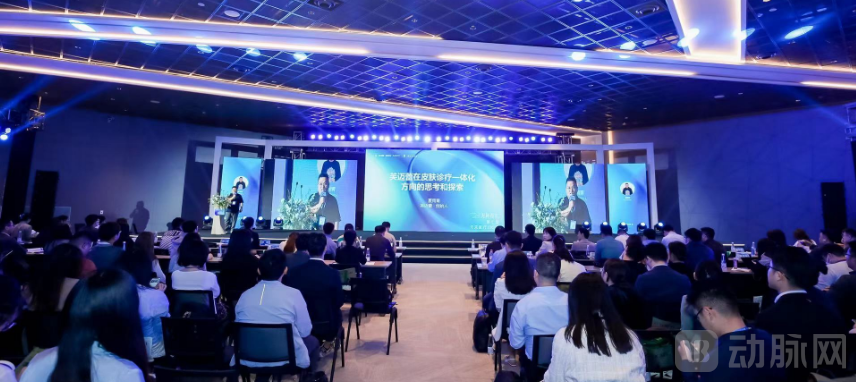 (Shared on-site by Xia Yuqing, Founder of Fumeilei Medical)
“High Therapeutic Precision” refers to exploring the “precision medicine” paradigm in the field of photoelectric therapy, integrating advanced technological achievements from interdisciplinary fields to achieve substantial improvements in clinical outcomes.
“High treatment precision will become a highly valuable aspect in the field of optoelectronic therapy in the future. Fumeilei Medical has already made substantial strategic moves in this area, such as collaborating with top-tier medical institutions to drive innovative exploration in the management of complex vascular and pigmented lesions,” said Xia Yuqing.
“Low safety risk” refers to reducing the safety risks of optoelectronic therapies through multi-dimensional technical means, bringing the risk level close to that of consumer-grade products. Currently, Fumeilei Medical has been exploring a multi-sensor protection system.
“Low operational threshold” refers to leveraging medical robotic systems to transform the majority of steps in photoelectric skin treatments into standardized procedures, thereby reducing irregularities and errors caused by human factors. In line with this direction, Fumeilei Medical has collaborated with leading research institutions to explore and develop innovative operating systems for laser treatment robots.
It is not difficult to see that photoelectric medical aesthetics has reached a pivotal point of rapid growth.
In addition to the widespread demand from aesthetic seekers and the trend toward inclusive access to energy-based medical aesthetics characterized by “two highs and two lows,” policy support is also continuously driving industry development.
Taking Shenzhen as an example, in July 2022, the Shenzhen Municipal Development and Reform Commission issued the "Several Measures to Promote the High-Quality Development of the Big Health Industry Cluster in Shenzhen." The document states that support should be provided for electronic medical aesthetic products, and medical devices such as medical lasers, photon, radiofrequency, and ultrasound equipment used for skin aesthetics, oral aesthetics, and traditional Chinese medicine (TCM) aesthetics should be actively developed.The release of this information is beneficial to the development of the optoelectronic medical aesthetics industry.
Not only that, but an era of stringent regulation is dawning for the medical aesthetics industry. Data offers a glimpse into the intensity of this regulatory oversight: according to China Judgements Online, the number of administrative penalties imposed on the medical aesthetics industry increased by 247% year-on-year from 2017 to 2020. During the same period, the number of judicial decisions related to the medical aesthetics industry rose by 104% year-on-year.
“Currently, regulation of the medical aesthetics industry primarily focuses on three areas. First, illegal practice of medicine, whereby institutions engage in medical aesthetic activities without proper qualifications. Second, the use of unregistered medical aesthetic devices and products. Third, medical aesthetic advertising, including advertisements published without approval and those making exaggerated claims about efficacy,” stated Ma Chenglong, a partner at Zhide Law Firm, at the event.
As can be seen above, enhancing compliance has become the core focus of medium- to long-term policy regulation in China’s medical aesthetics industry.
Whether targeting upstream manufacturers, downstream medical aesthetics institutions, or promotional platforms, legislative and law enforcement authorities have gradually shifted from passive governance to proactive intervention. The regulatory framework has been continuously improved, evolving from addressing past chaos and purifying the industry environment to establishing sound standards and systems.
This signifies the end of the era of unregulated, rampant growth in China’s medical aesthetics industry. It is important to note that the sector was previously plagued by widespread use of counterfeit goods, knockoff products, and devices employed off-label. Furthermore, off-label promotion was prevalent within the medical aesthetics device industry, often manifesting as Class I and II devices being marketed and used as Class III devices. Additionally, some domestically manufactured Class II devices were promoted by medical aesthetics institutions for off-label indications, resulting in significant market chaos.
Under stringent regulatory oversight, the industry has accelerated its consolidation and clearance, paving the way for the rise of domestic innovative enterprises.VCBeat has observed that a growing number of companies in China are opting for independent research and development, continuously breaking through technical barriers, striving for innovation, and highlighting their cost advantages. For instance, Fumeilei Medical, as a new entrant in the field of medical aesthetic optoelectronic devices, focuses on the research, development, and manufacturing of high-end optoelectronic equipment, with the ambition to become a global leader in medical aesthetic optoelectronic devices, and is currently experiencing rapid growth.
Undoubtedly, China's photoelectric medical aesthetics industry has entered a golden age of development.
At the forum, Jiang Tianjiao, Dean of VCBeat Institute, officially released the White Paper on Energy-Based Devices in Medical Aesthetics (hereinafter referred to as the “White Paper”). He stated that the White Paper, compiled over six months through extensive visits to enterprises and experts, is not only comprehensive and information-dense but also places particular emphasis on the latest literature in clinical practice and academic frontiers.
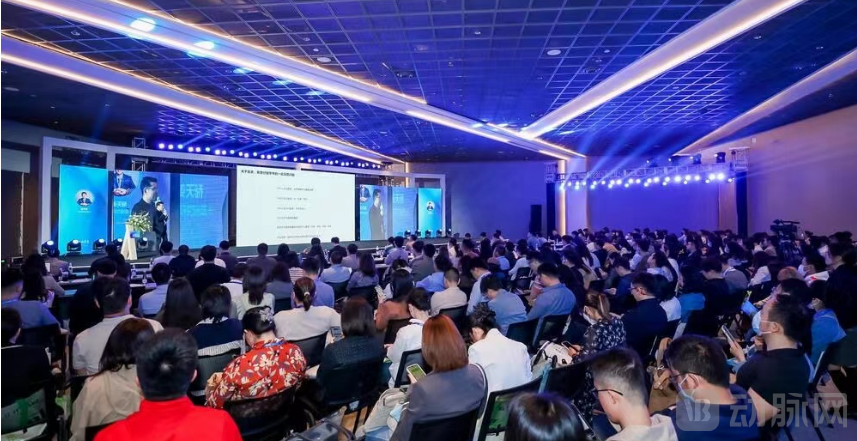 (Jiang Tianjiao, Dean of VCBeat Research Institute, officially released the "White Paper on Energy-Based Devices in Medical Aesthetics")
It is reported that the white paper was advised by four senior industry experts—Xia Yuqing, Wang Guohe, Liu Fei, and Feng Qingyu. From multiple dimensions including demand, supply, regulation, technology, business models, and talent, it provides a comprehensive overview of the industry landscape, identifies key variables within the sector, and outlines current challenges as well as future possibilities.
The white paper shows,Two major trends are emerging in the photoelectric medical aesthetics industry.
First, driven by stringent regulation and standardization in the medical aesthetics industry, the integration of diagnosis and treatment has become imperative.For the medical aesthetics industry, the vast majority of consumers’ skin conditions have not progressed to severe pathological stages but remain in relatively early phases.
Meanwhile, this segment of consumers exhibits a strong demand for aesthetic medical services and places greater emphasis on treatment efficacy. Without precise diagnosis as the foundation, suboptimal therapeutic outcomes and poor consumer experiences are likely to occur; for certain procedures, it may also elevate operational risks. Therefore, skin diagnosis holds particular significance in the medical aesthetics industry, serving as a prerequisite for effective treatment.
Furthermore, from a developmental perspective, increasingly stringent regulation and tighter policies are driving the medical aesthetics industry closer to serious medical practice, thereby standardizing the entire patient care process. As a critical step bridging clinical practice and pathology, diagnosis will become an indispensable component of future patient journeys, making the integration of diagnosis and treatment in the medical aesthetics industry an imperative trend.
Second, the integration of pharmaceuticals and medical devices strongly empowers the energy-based device sector.The Single Business Model Limits the Market Size of Photoelectric Devices; Business Model Innovation Is Key to Breaking Through. At present, the biggest issue with photoelectric devices is that their commercialization scenarios are too narrow, relying solely on hospital-based treatment as the only delivery method. This approach lacks continuous management of end-users, significantly constraining market size.
An analysis of the current market capitalizations of listed companies reveals that, compared to the ophthalmology and dentistry sectors within consumer healthcare, the energy-based device industry is currently undervalued, with leading overseas listed companies valued at less than RMB 10 billion. To address this challenge, a full-process business model may be the key to breaking through the bottleneck by effectively raising the ceiling for industry expansion.
The full-process model refers to providing an integrated solution spanning diagnosis, treatment, and postoperative recovery, while leveraging internet and digital platforms to deliver comprehensive guidance and management for patients throughout their care journey, thereby effectively expanding the application scenarios of energy-based medical aesthetics. Within this new closed-loop system, a digital management platform serves as the essential foundation, and combination drug therapy is key to postoperative recovery and terminal-stage management.
Overall, the combined drug-device model is an inevitable path for photoelectric equipment to break through its current market capitalization scale, but it is still in its early stages. For device manufacturers, proactively entering the pharmaceutical sector and exploring drug-device combination approaches can effectively strengthen competitive barriers, offering companies greater growth potential.
It is foreseeable that, with the growing popularity of minimally invasive aesthetic procedures represented by photoelectric-based medical aesthetics and the continuous standardization of regulatory policies, compliant domestic enterprises will enjoy a favorable industry development environment in the future.