

Three Decades in the Making: Tianjin University's Prof. Wang Yan and Team Found Tianjin Zhipu to Deliver Fully Automated, Intelligent Clinical Mass Spectrometry Solutions
“China’s mass spectrometry instruments have made remarkable progress, and their specifications have reached international standards. However, I believe their overall quality still falls far short of the world’s most advanced levels. Admittedly, some issues can be addressed through production quality control systems, but I maintain that many technical challenges remain,” said Wang Yan, Professor at Tianjin University and Chief Scientific Advisor at Tianjin Zhipu.
In Professor Wang Yan’s view,Improving the Quality of Mass Spectrometry Instruments: The Next Critical Challenge for China’s R&D Efforts“I refer to this as secondary development in the field of mass spectrometry, not merely for production quality control, but”To master the know-how, it is essential to understand the core technical challenges and key control points, thereby identifying critical solutions for technological breakthroughs.“Only after several iterations and a period of development can we truly launch mass spectrometry instruments that rival international advanced performance levels and world-class quality standards. This is our next goal.”
Developing domestically produced alternatives and creating mass spectrometry instruments at a world-leading level have been the steadfast goals of Professor Wang Yan and his team. In 2021, Dr. Han Wennian, who leads Professor Wang’s mass spectrometry R&D team, founded Tianjin Zhipu Instrument Co., Ltd. (hereinafter referred to as “Tianjin Zhipu”). Leveraging years of accumulated expertise in the research and development of mass spectrometry analytical instruments at Tianjin University, Tianjin Zhipu has focused on the clinical mass spectrometry segment, one of the specialized fields within the mass spectrometry industry. The company has taken the lead in integrating fully automated sample processing, intelligent platforms, and high-end mass spectrometry detection products. Additionally, it provides comprehensive solutions for mass spectrometry instruments tailored to various application scenarios, along with OEM/ODM services.
 Wang Yan
Professor Wang Yan, Doctoral Supervisor, Major in Analytical Testing Technology and Instruments, Tianjin University
Chief Scientific Advisor, Tianjin Zhipu Instrument Co., Ltd.
When it comes to launching a startup focused on mass spectrometry instruments, Professor Wang Yan’s team was not acting on a whim.
China’s first gridless reflectron time-of-flight mass spectrometer was introduced to China and developed in 1989 by Professor Wang Yan of Tianjin University, who brought the technology back from the Second Institute of Physics at the University of Giessen in Germany—one of the birthplaces of mass spectrometry—while serving as a visiting scholar. Subsequently, Tianjin University’s analytical instrumentation program began to develop the academic discipline focused on mass spectrometry testing techniques and instrument design and manufacturing. However, due to the impact of imported instruments on the domestic instrument industry at that time, the development of this discipline remained constrained and stayed in a trough.
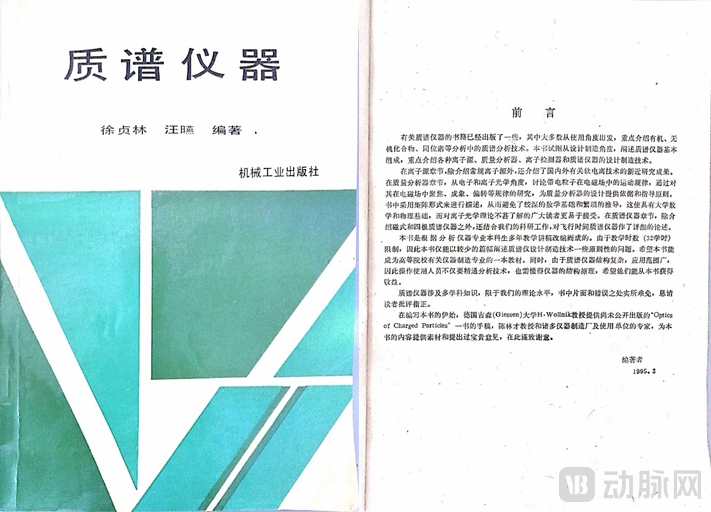 The book *Mass Spectrometry Instruments*, co-authored by Professor Wang Yan, was published in the 1990s and remains the only work in China to systematically focus on the design and manufacturing technology of mass spectrometry instruments.
In 2006, against the backdrop of the Chinese government’s intensified efforts to address the “hollowing out” of scientific instruments and equipment, Tianjin University reinstated its research direction in mass spectrometry instrumentation, collaborating with other renowned domestic universities and enterprises on the research and development of mass spectrometers. Three years later, the founding team of Tianjin Zhipu was established, comprising technical core members and professional managers with doctoral degrees, including Professor Zhao Xuehong, Dr. Han Wennian, and Dr. Du Kang from Tianjin University. Subsequently, this research team undertook multiple projects under the National Key R&D Program and the Special Project for Scientific Instruments.
By 2014, the founding team decided to take an initial step by establishing Tianjin Boshuo Technology Co., Ltd., providing customized services and product development solutions for various analytical testing technologies, including mass spectrometry. The Tianjin Boshuo mass spectrometry instrument R&D team joined the Tianjin Industrial Technology Research Institute of the Suzhou Institute of Biomedical Engineering and Technology, Chinese Academy of Sciences. Led by Professor Wang Yan, the team initiated a project for the independent domestic development of medical triple quadrupole mass spectrometers and was responsible for overcoming key technical challenges. After four years of effort, the project achieved complete success, and in 2021, it obtained the Class II Medical Device Registration Certificate from the China Food and Drug Administration (CFDA).
Following the conclusion of the project, Professor Wang Yan, Dr. Han Wennian, and other core team members began to contemplate their next steps. “We unanimously agreed that mass spectrometry instruments should be made accessible to a broader user base. After conducting research for a period, we identified numerous pain points associated with the integration of mass spectrometry technology into the healthcare sector,” said Dr. Han Wennian.
 Han Wennian, Ph.D. from Tianjin University, Researcher
Tianjin Zhipu Instrument Co., Ltd. Co-founder & Chairman & CEO
The pain points associated with clinical mass spectrometry have become a near-universal consensus within the industry. Due to the differences between clinical laboratories and research institutions, there is a significant gap in the accurate mastery of the entire workflow of mass spectrometry instruments in clinical laboratories, including steps such as sample pretreatment and data processing. This gap has hindered the widespread adoption of mass spectrometry instruments in clinical diagnostics and has further driven demands for automation, standardization, normalization, and intelligence in these instruments. “Only by addressing fully automated and standardized biological sample pretreatment processes and leveraging artificial intelligence to interpret mass spectrometry results—thereby truly achieving an intelligent end-to-end process from sample to result—can mass spectrometry instruments be more widely adopted in healthcare settings such as hospitals,” said Dr. Han Wennian.
From developing China’s first gridless reflectron time-of-flight mass spectrometer in 1989 to forming the initial startup team in 2009, Tianjin Zhipu was established in 2021. Leveraging three decades of mass spectrometry research and nearly 15 years of entrepreneurial preparation, the company aims to industrialize fully automated, intelligent medical mass spectrometers and diagnostic reagents, providing clinical mass spectrometry solutions.
Clinical mass spectrometry automation is generally divided into two phases: the early phase, which focuses on automating sample pre-processing; and the later phase, which aims to achieve fully automated clinical mass spectrometry workflows. In Professor Wang Yan’s view, “automation in clinical mass spectrometry is reflected in three aspects: pre-processing, automated sample injection, and data processing.” Automated sample injection and data processing are the two main components of an automated clinical mass spectrometry workflow.
Biological samples cannot be directly introduced into a mass spectrometer for analysis; they must undergo a series of sample preparation steps to purify the samples, reduce matrix interference, and enhance sensitivity and accuracy. This process represents a bottleneck that constrains improvements in the efficiency of mass spectrometry instruments.
To address sample pretreatment challenges, Tianjin Zhipu has developed an automated biological sample pretreatment system based on magnetic solid-phase extraction (MSPE). Magnetic solid-phase extraction is a novel sample pretreatment technique that employs magnetic or magnetizable materials as adsorbents. It offers advantages such as ease of operation, short extraction times, strong resistance to interference from impurities, and good biocompatibility. Currently, Tianjin Zhipu is developing an automated online MSPE pretreatment system capable of supporting pretreatment processes for various sample types and analytical methods.
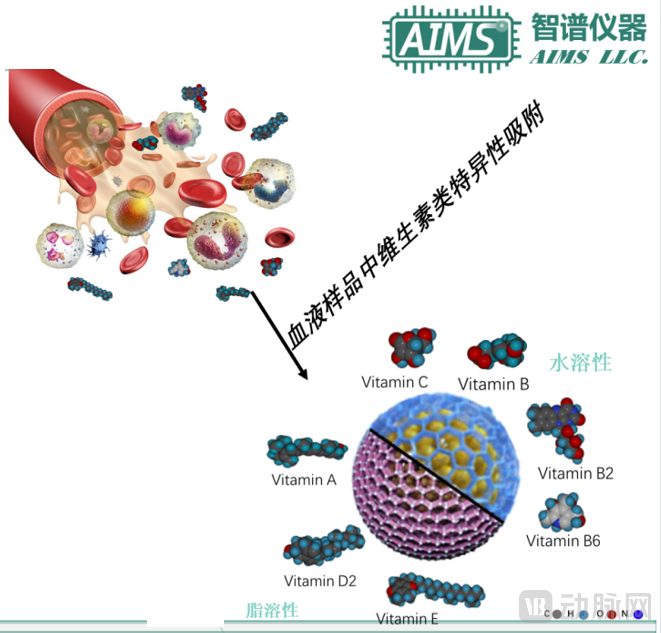 Magnetic Solid-Phase Extraction (MSPE) Image provided by the interviewee
The value of automated platforms in the pre-analytical phase is limited; total laboratory automation (TLA) represents the ultimate solution for clinical mass spectrometry. Regarding the implementation of such automated workflows, Professor Wang Yan advocates a phased approach, achieving modular automation first and then integrating these modules flexibly. Currently, Tianjin Zhipu has developed an intelligent post-processing and reporting information system for mass spectrometry data to automate information processing.
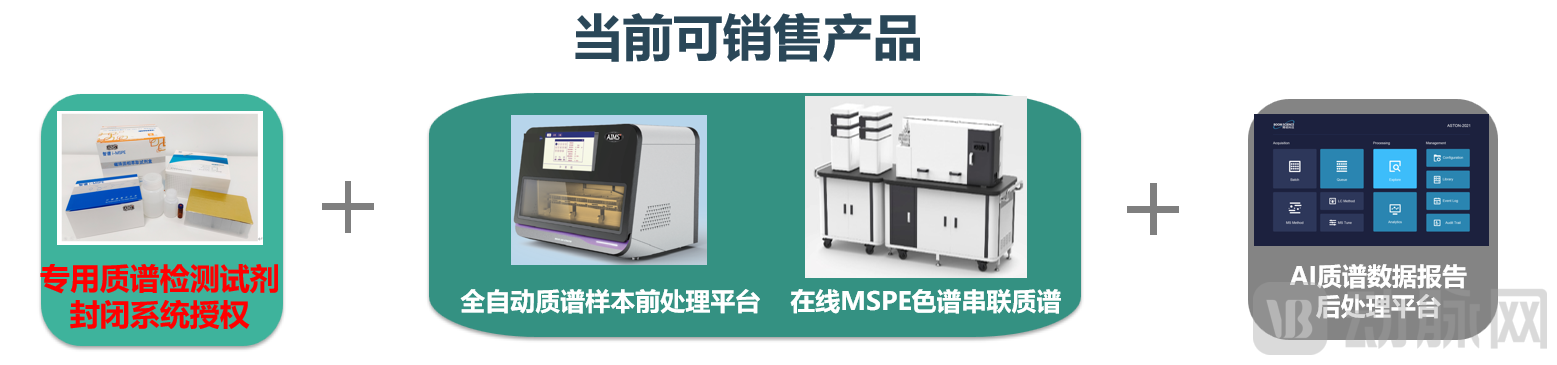 Tianjin Zhipu Fully Automated Intelligent Clinical Mass Spectrometry Integrated Solution
The unique characteristics of clinical applications impose more stringent requirements on mass spectrometry. The fixed nature of test panels and the high volume of testing demands necessitate that clinical mass spectrometry achieve both accuracy and stability. Furthermore, leveraging automation to simplify mass spectrometry workflows is a prerequisite for expanding the adoption of clinical mass spectrometry across broader scenarios. As Professor Wang Yan stated, “Clinical mass spectrometry instruments are more specialized, with higher demands for accuracy and stability.”
Following a roadmap that begins with automating implementation modules and progressively achieves automation of the entire clinical mass spectrometry workflow, Tianjin Zhipu has planned multiple pipelines for reagents, sample preparation equipment, and mass spectrometry analysis instruments to “accelerate domestic substitution.”
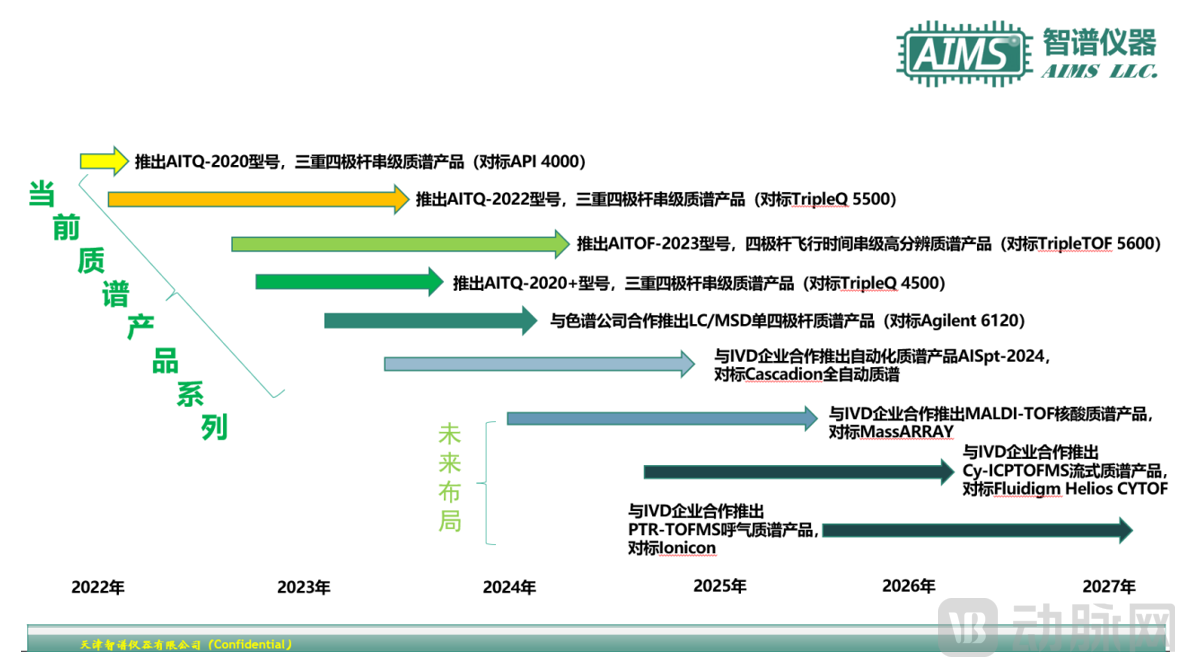
Behind these pipelines, in addition to the Tianjin Zhipu team’s robust product engineering expertise, lies the technical reserves and engineering experience accumulated over the past 30 years.
First is the direct dilution method (ICP-MS), which is used for the detection of multi-trace elements in the human body. The levels of trace elements are associated with many diseases, such as diabetes, liver cirrhosis, and breast cancer. However, the low concentration of elements in biological samples makes accurate measurement very challenging. Multi-trace element analysis can be categorized into serum testing and urine testing based on sample type, each having its own advantages and disadvantages. Currently, research on methods for detecting human trace elements both domestically and internationally continues to deepen, with greater emphasis on approaches that are simple, high-throughput, and require minimal sample consumption. The Tianjin Zhipu team has conducted in-depth research on both types of sample testing.
Next is mass spectrometry for breath analysis. Breath testing offers a non-invasive, convenient, and precise new approach to medical diagnostics. In fields such as cancer, infectious diseases, critical care, and chronic diseases, it holds promise to become a novel IVD-assisted diagnostic modality with widespread application comparable to imaging and blood tests. The Tianjin Zhipu team has long been conducting research on one of the breath-testing technologies, Proton Transfer Reaction Mass Spectrometry (PTR-MS). PTR-MS enables rapid detection of volatile organic compounds (VOCs) in human exhaled breath, offering the advantages of being non-invasive, non-destructive, and easy to sample.
Furthermore, the Tianjin Zhipu team has also accumulated expertise in various mass spectrometry technologies, including microbial identification MS, nucleic acid MS, and flow cytometry MS. Looking ahead, Tianjin Zhipu is poised to leverage multiple technological solutions to continuously enhance the quality of domestically produced mass spectrometers and build automated clinical mass spectrometry workflows.