

Trillion-Dollar Health Market Attracts Giants: How OPPO Carves Its Path with 'Tech for Good'

OPPO
Intelligent Terminal and Mobile Internet Service Provider
In recent years, driven by the trend of an aging society and rising economic standards and health awareness among the public, the long-term growth potential of the healthcare sector has been widely recognized. Many well-known enterprises are exploring ways to enter this field. In line with this trend, the 7th Future Healthcare 100 Conference introduced a new award category, “2023 Future Healthcare 100 · Pengcheng Award: Enterprise of the Year for Cross-Industry Innovation,” to honor outstanding companies, with OPPO being one of the recipients.
As a globally leading technology company, OPPO’s performance in the field of smart terminals is widely recognized. According to the latest data released by the international research firm IDC, smartphone shipments in the Chinese market reached approximately 65.44 million units in the first quarter of 2023, with OPPO ranking first in the domestic mobile phone market with a 19.6% market share. What unique approaches has OPPO taken in its exploration of cross-industry health initiatives? VCBeat (WeChat ID: VCBeat) conducted interviews with Dr. Zeng Zijing, President of OPPO’s Health Business, and Dr. Peng Xiao, Technical Director of OPPO’s Health Business, at the conference venue.
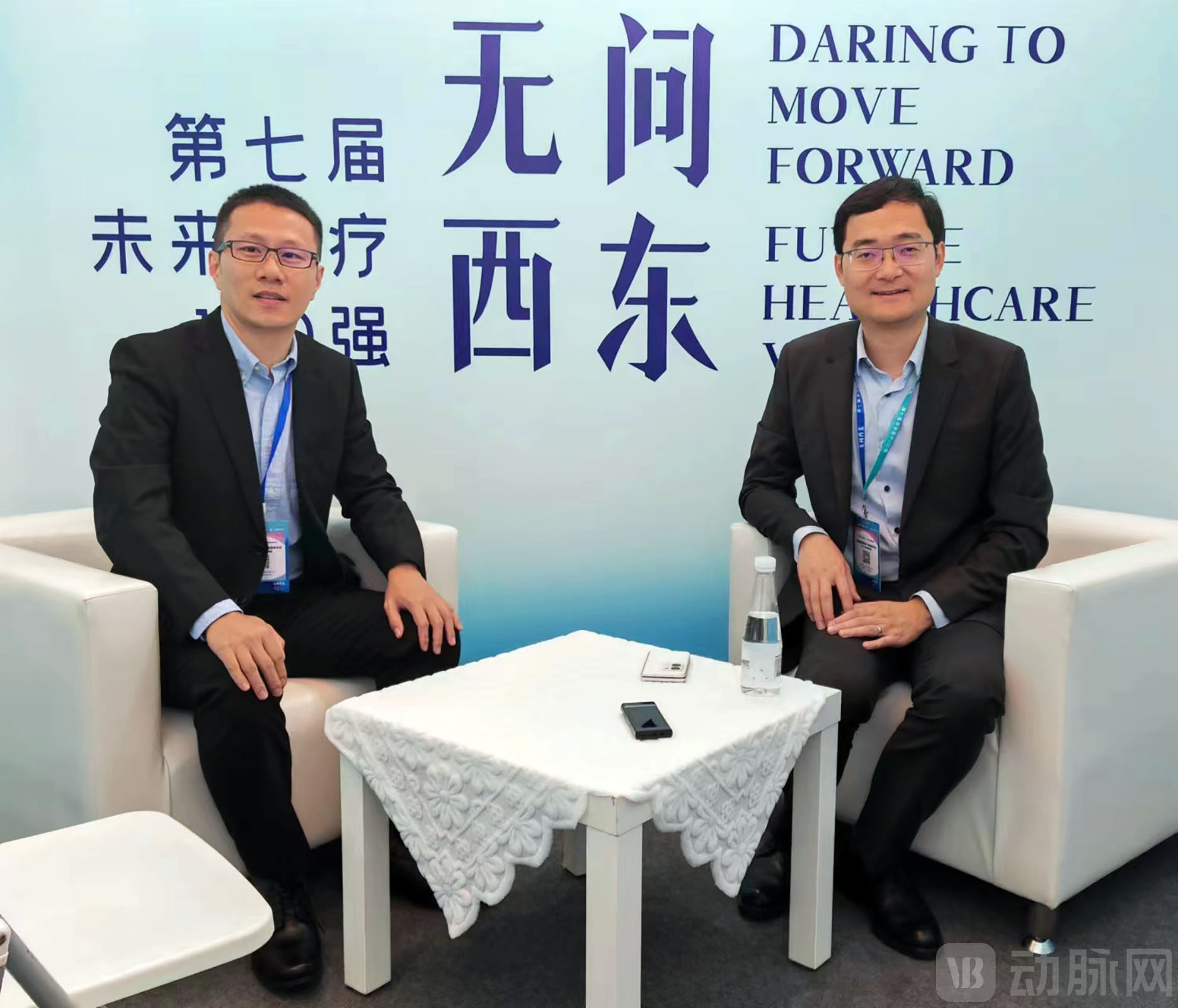
Dr. Zeng Zijing, President of OPPO Health (right), and Dr. Peng Xiao, Technical Director of OPPO Health (left)
It is not surprising that large enterprises, upon reaching a certain stage of development, formulate plans for cross-industry expansion. Interestingly, when selecting target sectors for such diversification, many industry giants have independently converged on the healthcare sector as their primary choice.
Take the world’s most renowned consumer electronics exhibition, CES, as an example. In recent years, CES has increasingly focused on advancements in digital health and tentatively introduced a dedicated health section. This section has garnered growing attention and become more specialized, evolving from the broad “Health & Wellness” category into a more focused “Digital Health” segment, which better aligns with CES’s overall character. The presence of industry-leading brands such as Abbott and Omron at CES has further intensified its medical focus.
In China, industry giants across various sectors are increasingly crossing over into the healthcare space. E-commerce leaders such as JD.com and Alibaba have long made significant investments in health, making it a crucial component of their business ecosystems. Internet giants like Baidu and Tencent are leveraging their respective strengths in artificial intelligence (AI), serving as major drivers for the rapid development of medical AI. Even emerging platforms such as Meituan and Douyin are actively entering the healthcare field through approaches tailored to their unique capabilities.
Home appliances and medical devices share significant commonalities, which is why it is not uncommon for home appliance manufacturers to venture into the healthcare sector. Globally, giants such as GE, Siemens, Philips, Panasonic, and Toshiba have been actively expanding their presence in the health and medical industry. Over the past decade, several leading Chinese home appliance companies, including Haier, Midea, Gree, and Hisense, have also entered the medical field.
Home appliance companies primarily invest in or acquire businesses in the health sector by leveraging their substantial financial strength, and they also enter the market directly when the timing is right. Taking Haier and Gree, representatives of China’s home appliance giants, as examples, both have been actively engaging in the health sector over the past two years, investing in a total of 17 medical enterprises. Furthermore, as home appliance companies deepen their understanding of the healthcare industry, their investment trends are shifting from areas closely related to their existing business operations toward more core medical fields, such as in vitro diagnostics (IVD) and AI-driven drug discovery.
Even more surprisingly, the real estate sector, once considered unrelated to healthcare, has also ventured into the health industry in recent years. Beyond integrating elderly care and rehabilitation with property projects to develop wellness-oriented real estate, real estate giants have frequently invested in the health sector, with their initiatives increasingly penetrating the core of medical services—a development that has come as quite a surprise.
Take Country Garden Ventures, the venture capital arm of real estate giant Country Garden, as an example. In recent years, both the frequency and proportion of its investments in healthcare projects have risen year by year. Among the 32 projects publicly disclosed in 2021, seven were healthcare-related. In 2022, when many investment firms scaled back their activities, it completed five investments within just three months, surpassing many healthcare-focused investors in both transaction volume and frequency. Meanwhile, the range of niche sectors it has entered continues to broaden, spanning from cardiovascular devices and microfluidics to synthetic biology and AI-driven drug discovery, with its portfolio covering the most cutting-edge medical technologies.
So, why have giants from various industries chosen to establish a foothold and diversify into the healthcare sector? The enormous market demand is undoubtedly the key factor attracting these major players. China’s aging population is deepening, giving rise to significant unmet medical needs. In 2020, the number of elderly people in China reached 264 million, and it is projected to surpass 300 million by 2025. This has indirectly increased the disease burden. Currently, the total societal disease burden in China stands at 70%, with 20% of the population suffering from chronic diseases.
On the other hand, China’s economic level has grown rapidly in recent years, making it the world’s second-largest economy. In 2022, China’s total economic output reached RMB 120 trillion when calculated at the annual average exchange rate, equivalent to as high as USD 18 trillion, firmly maintaining its position as the second largest in the world. Coupled with improvements in education and heightened health awareness, an increasing number of people are more willing to spend on healthcare and medical services.
It is precisely for this reason that China’s health market has experienced rapid growth over the past decade, with an average annual growth rate of 12.2%. In 2020, it became the world’s second-largest health market, reaching a scale of $6.5 trillion—nearly equivalent to one-third of China’s total economic output in 2022. This represents a massive market that no enterprise can afford to ignore.
“‘Technology for Humanity, Kindness for the World’ is the philosophy of Mr. Tony Chen, founder of OPPO, and also the corporate mission of OPPO. In addition to providing consumers with daily productivity tools such as smartphones and consumer entertainment devices, we also hope to deliver value to users in the health sector. Health is a vital part of life. OPPO believes that leveraging technological capabilities, including software and hardware technologies, to advance health solutions is highly meaningful.” Dr. Zeng Zijing stated this when asked why OPPO entered the health track.
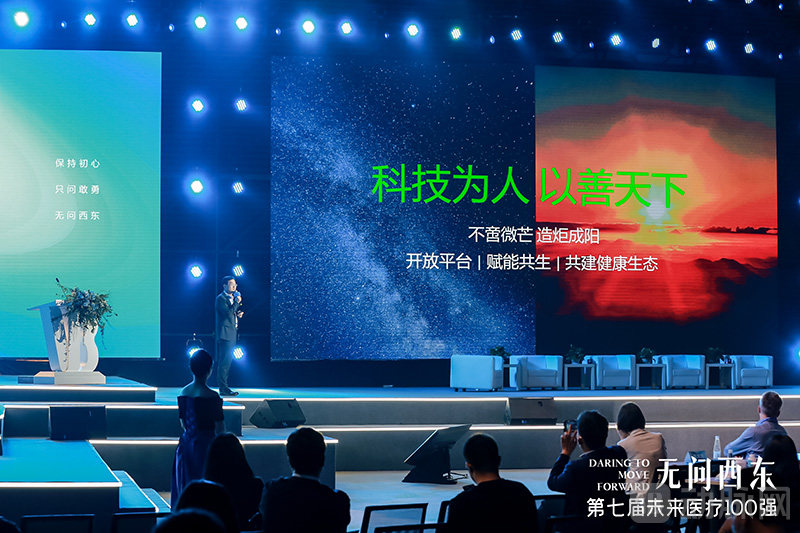
Dr. Zijing Zeng, President of OPPO Health, Delivers Speech at the Top 100 Conference
In 2020, OPPO, one of the top five global smartphone vendors by shipment volume, launched its first wearable health smart device, the OPPO Watch, which enables 24-hour heart rate monitoring, abnormal heart rate alerts, and activity tracking. Since Apple’s entry into the sector, wearable devices have become a key point of market entry for many technology companies into the health industry; thus, OPPO’s timing cannot be considered early.
However, differences in operational capabilities and strategic investments have become a watershed moment determining the fate of health-related businesses across different enterprises. OPPO regards health as “a lifelong endeavor,” approaching it with seriousness from the outset and integrating this commitment throughout its entire business planning. This may also be one of the reasons why OPPO’s wearable products did not reach the market earlier. Nevertheless, once the direction was set, OPPO’s actions became remarkably swift.
Just six months later, the OPPO Watch ECG Edition, supporting professional electrocardiogram (ECG) monitoring, became the first standalone cellular smartwatch in China to obtain Class II medical device registration certification. In 2022, the ECG analysis alert software equipped on the OPPO Watch 3 Pro was approved by the National Medical Products Administration (NMPA) as a Class II medical device in the form of a software medical device, capable of indicating adult sinus rhythm and atrial fibrillation within 30 seconds.
Dr. Peng Xiao stated that, with a serious and committed approach to its health business, OPPO has mobilized and deployed the full extent of its software and hardware development capabilities and supply chain management expertise accumulated from its previous mobile phone operations.
“Furthermore, OPPO has always maintained high quality standards for its products, with our quality benchmarks meeting the requirements of medical device standards in many aspects. Therefore, once we shift our product development toward medical devices, we can rapidly comply with the relevant regulations,” added Dr. Peng Xiao.
OPPO’s early forays into wearable devices helped it pinpoint its market positioning and identify its core strengths. By leveraging these advantages in alignment with its strategic planning, OPPO promptly embarked on a more differentiated path in the health sector.
“We aim to conduct rigorous health technology research, advancing step by step with foundational R&D and products as our cornerstone. Our original intention is to address consumer problems and deliver health-related value to users. As a comprehensive technology enterprise, OPPO can integrate software, hardware, and cloud services to build a holistic ecosystem, forge its own unique path, and provide users with multidimensional services and value,” Dr. Zeng Zijing explained to VCBeat.
In early 2021, OPPO began establishing its Health Lab and appointed Dr. Zijing Zeng, who previously led sensor product design and R&D for the Apple Watch at Apple and brings 15 years of experience in the health sector, as the head of the lab. He assembled a multidisciplinary health team comprising experts in health algorithms, sensors, data science, and biomedicine, and built a product and technology platform for the health sector based on these core disciplines: algorithms, sensors, data science, and biomedical engineering.
Currently, the OPPO Health Lab is divided into three major sections: the Sports Lab, the Clinical Lab, and the Sleep Lab. The specific implementation pathways consist of two main components: software applications and hardware platforms.
In terms of software, the OPPO Health APP will serve as the primary application platform. Additionally, OPPO has developed OPPO Health Research, a software platform designed to support clinical research. OPPO provides standardized health management components and has built various foundational capabilities, including a library of health IoT devices, a repository of health behavior tasks, and a collection of questionnaires and professional scales. This enables health researchers and practitioners to combine these elements—such as devices and tasks—according to their specific objectives, thereby creating unique health research studies.
In terms of hardware, OPPO is continuously expanding its range of wearable health devices, from smartwatches to fitness trackers, and even TWS earbuds—the newly launched Buds Pro 2 from OPPO’s sub-brand OnePlus already includes cervical spine health features. Furthermore, OPPO has integrated functionalities such as heart rate measurement and seamless sleep monitoring into its core smartphone products, with plans to introduce more health-focused features for smartphones in the future.
This dual-engine combination grants OPPO a high degree of flexibility in its health business, with the self-developed OPPO Sense featured on the OPPO Watch 3.®The sports and health algorithm is one of the outcomes of this system. It includes OPPO Sense®Cardiovascular Health Assessment, OPPO Sense®Fitness Exercise Algorithm Engine and OPPO Sense®Sleep Health Technology System. It provides users with a range of differentiated health monitoring features, including adult ECG analysis, 24/7 heart rate monitoring, timely alerts for irregular heart rhythms, vascular health assessment, continuous blood oxygen monitoring, high-altitude hypoxemia warnings, and multidimensional risk assessment for snoring disorders.
This foundation has also facilitated OPPO’s subsequent journey in carving out a unique path in the health sector.
Through the empowerment of both hardware and software, the core focus of OPPO Health was established at this time: centering on a “healthy lifestyle,” it delves deeply into specific areas such as cardiovascular health, exercise, sleep, and telemedicine, transforming home-based health management from passive, reactive care to proactive, preventive healthcare.
By the end of 2022, recognizing that existing devices were inadequate for “preventive healthcare,” OPPO embarked on an innovation journey and launched the OHealth H1, a smart home health monitoring device. This conceptual product combines the advantages of wearable devices and home medical equipment, resulting in a solution that is both minimalist and powerful, while meeting medical-grade accuracy standards.
Compared to wearable devices such as smartwatches, the H1 can accommodate more powerful sensors to achieve medical-grade precision. In contrast to various home-use medical devices, it enables the integration and management of multi-vital-sign monitoring data, thereby delivering intelligent and diversified healthcare services.
Among these, the robust sensor hardware capabilities are the core enabler for the H1 to achieve medical-grade precision in monitoring six key health vital signs: cardiopulmonary auscultation, electrocardiogram (ECG), heart rate, blood oxygen saturation, body temperature, and sleep.
Taking the H1’s signature cardiopulmonary auscultation measurement as an example, it utilizes a proprietary electronic stethoscope that employs piezoelectric ceramic sensors as the sound-pickup component. With its wide audio frequency response range, coupled with unique noise reduction and dynamic adjustment algorithms, it delivers cardiopulmonary sound signals that meet the requirements of medical auscultation.
The various modules of the OPPO Health Laboratory are built upon this robust hardware system, undergoing iterative evolution of software algorithms tailored to their specific requirements, thereby endowing the H1 with a diverse range of functionalities.
Currently, the H1 enables physicians to diagnose certain respiratory and cardiac conditions through remote auscultation. The integration of algorithms continuously expands its capabilities. For instance, by incorporating software algorithms designed for sleep monitoring, the H1 acquires snoring disorder monitoring functionality. It leverages high-precision inertial measurement units (IMUs) to detect ballistocardiogram (BCG) signals, body movement signals, and respiratory signals. AI algorithms are then employed to monitor sleep states, provide snoring alerts, and classify snoring severity, ultimately achieving contactless, non-intrusive sleep monitoring.
With algorithmic advancements, it holds greater potential, such as leveraging artificial intelligence algorithms to automatically analyze cardiopulmonary sounds, thereby enabling preliminary screening or risk alerts for certain respiratory and cardiac diseases.
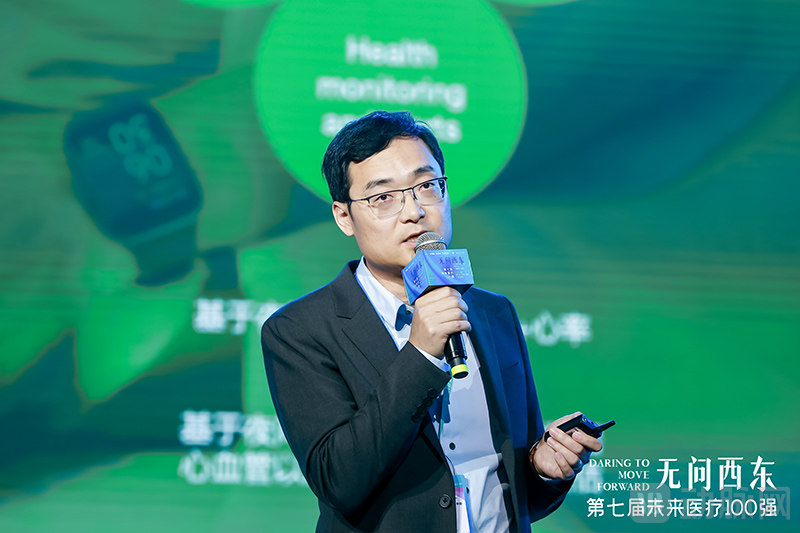
Dr. Zeng Zijing, President of OPPO Health, Delivers Speech at the Top 100 Conference
Dr. Zeng Zijing stated that the OPPO Health Lab possesses robust R&D capabilities. Taking sensor development as an example, OPPO has conducted extensive foundational research, including large-scale human data simulation and data model establishment, with a focus on studying fundamental physiological data and characteristics. Hardware design is then carried out from this perspective.
“During this process, software and hardware development proceed in parallel. It begins with the development of foundational algorithms, which are largely complementary to the hardware. The algorithms may impose certain requirements on the hardware from the perspective of user needs, while the boundaries of hardware capabilities provide feedback on the feasibility of the software algorithms.”
“OPPO has always prioritized user product experience. From a health perspective, the accuracy of data is critical to user experience. Ensuring that consumers can correctly use and understand these health data requires continuous iteration and systematic integration tailored to different application software across various scenarios. Such efforts would be impossible without capabilities akin to those of a health laboratory,” added Zeng Zijing.
Building on these capabilities, OPPO has corresponding plans for its health business. Dr. Zeng Zijing stated that OPPO is conducting research on the feasibility of integrating health sensors into smartphones, as well as exploring ways to empower health management by leveraging algorithms to harness the powerful imaging capabilities of existing devices.
Undeniably, these explorations are far from easy. The extent to which physical components, sensor hardware, and software algorithms need to surpass current capabilities is evident. It has been revealed that OPPO has also been collaborating with universities on corresponding exploratory research and development. This clearly demonstrates that OPPO is approaching the healthcare sector with a serious attitude and a long-term perspective—a valuable trait rarely seen among companies currently entering the health industry.
Many companies across various industries have attempted to make a mark in the health sector, but the outcomes have clearly fallen short of expectations. The underlying reason is that they underestimated the complexity and seriousness of healthcare, failing to effectively address the critical pain points of the medical and health industry. From the outset, OPPO fully recognized the high barriers, significant responsibilities, and long-term nature inherent to the health sector. With a rigorous approach, it has solidly advanced foundational R&D, while leveraging its consumer electronics expertise to prioritize user experience and service. True to its corporate mission, “Technology for Humanity, Goodness for the World,” OPPO continues to expand the boundaries of exploration in the health domain through its robust technological innovation capabilities and open ecosystem strategy, delivering superior service and experiential value to users and transforming lives.
This is undoubtedly the right path.