

Eli Lilly Bets Over $2 Billion on Gene Therapy with Profluent Partnership

Profluent
Protein Designer
Recently, global pharmaceutical giant Eli Lilly is accelerating its strategic layout in the gene therapy field.

Leveraging Strong Cash Flow from Popular Weight-Loss Drug Business, Eli Lilly Invests Heavily and Partners to Secure Next-Gen Biomedical Technologies. Recently, Eli Lilly announced a major strategic collaboration with Profluent, an AI protein design company. The two parties will jointly develop novel gene therapies for hereditary diseases.

According to the agreement, the total value of this collaboration could reach up to $2.25 billion. Profluent will leverage its proprietary AI platform to design customized recombinases capable of precisely cutting, inserting, or modifying DNA at specific genomic targets, enabling large-scale, high-precision DNA editing that traditional gene-editing systems struggle to achieve. Lilly will obtain exclusive rights and take full responsibility for subsequent preclinical research, clinical trials, and eventual commercialization. In return, Profluent will receive an upfront payment and R&D funding support, with the potential for substantial milestone payments and future sales royalties based on the progress of development.

The core goal of this collaboration is to break through the bottlenecks of current mainstream gene-editing technologies. Most conventional tools today can only make small, localized "fine-tuning" adjustments to genomic DNA segments, struggling to address genetic disorders involving a variety of complex mutations. The root causes of many hereditary diseases are not single mutations but rather the presence of multiple different mutation sites within patient populations. This high level of heterogeneity makes it extremely challenging to develop universal targeted therapies. Additionally, recombinases have an extremely complex structure, making artificial modifications difficult. Each new application requires development from scratch, presenting a very high barrier. Ali Madani, founder of Profluent, stated that the future of biology will inevitably move toward digitization and programmability. Based on this vision, Profluent has not followed the traditional biological discovery route. Instead, it leverages recombinase data from nature, combined with AI model training, to attempt designing customized recombinases tailored to the human genome on demand.
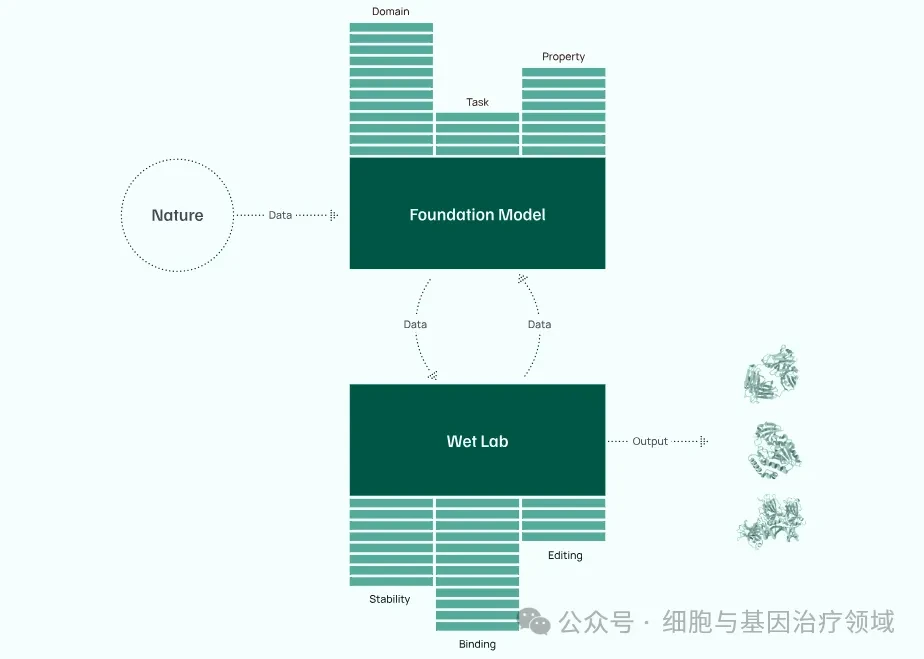
Source: Profluent Bio
Profluent, founded in 2022 by the former head of Salesforce's AI Research Institute, has garnered attention from Bezos' investment firm. Its core advantage lies in using large language models to design functional proteins from scratch that do not exist in nature.

In fact, this is already Lilly's another major bet on the gene editing track in recent times. With the substantial profits brought by weight-loss drugs, Lilly has established gene therapy as a key long-term growth engine. Just in January this year, Lilly reached a collaboration worth over $1.1 billion with German company Seamless Therapeutics, also focusing on developing therapies for hearing loss using recombinase technology. Additionally, Lilly has comprehensively built its presence in the genetic medicine field by acquiring companies such as Verve Therapeutics and Kelonia Therapeutics, and establishing strategic partnerships with enterprises like MeiraGTx and South Korea’s Rznomics. From gene rewriting at the DNA level to sequence replacement at the RNA level, Lilly is attempting to seize the high ground in future biopharmaceutical competition through intensive capital operations.
E.N.D

World's First Gene Therapy for Hereditary Deafness Approved for Marketing
ForPromote Cooperation and Technical Exchange in the Cell and Gene Therapy IndustryThe team of the WeChat Official Account "Cell and Gene Therapy Field" has established a Cell and Gene Therapy Exchange Group. Press and hold the QR code below to add the editor's WeChat and join the group. Due to the large number of applicants, please include the following information when adding WeChat: Institution/Enterprise—Major/Position—Name. If you are a PI/Professor/Manager or above, please also indicate.

Statement:ReferenceInVolumeComeSource: Official Media/Online News, This PublicProfluentAiming atKnowledge sharing, remaining neutral on the content, statements, and viewpoints of reprinted or shared materials, without guaranteeing their accuracy.Accuracy, reliability, or completeness, no express or implied warranty is made, and the relevant content is for reference only.