

Beyond 'Starving' Cancer Cells: Prof. Cao Yihai on the Expanding Horizons of Angiogenesis Research
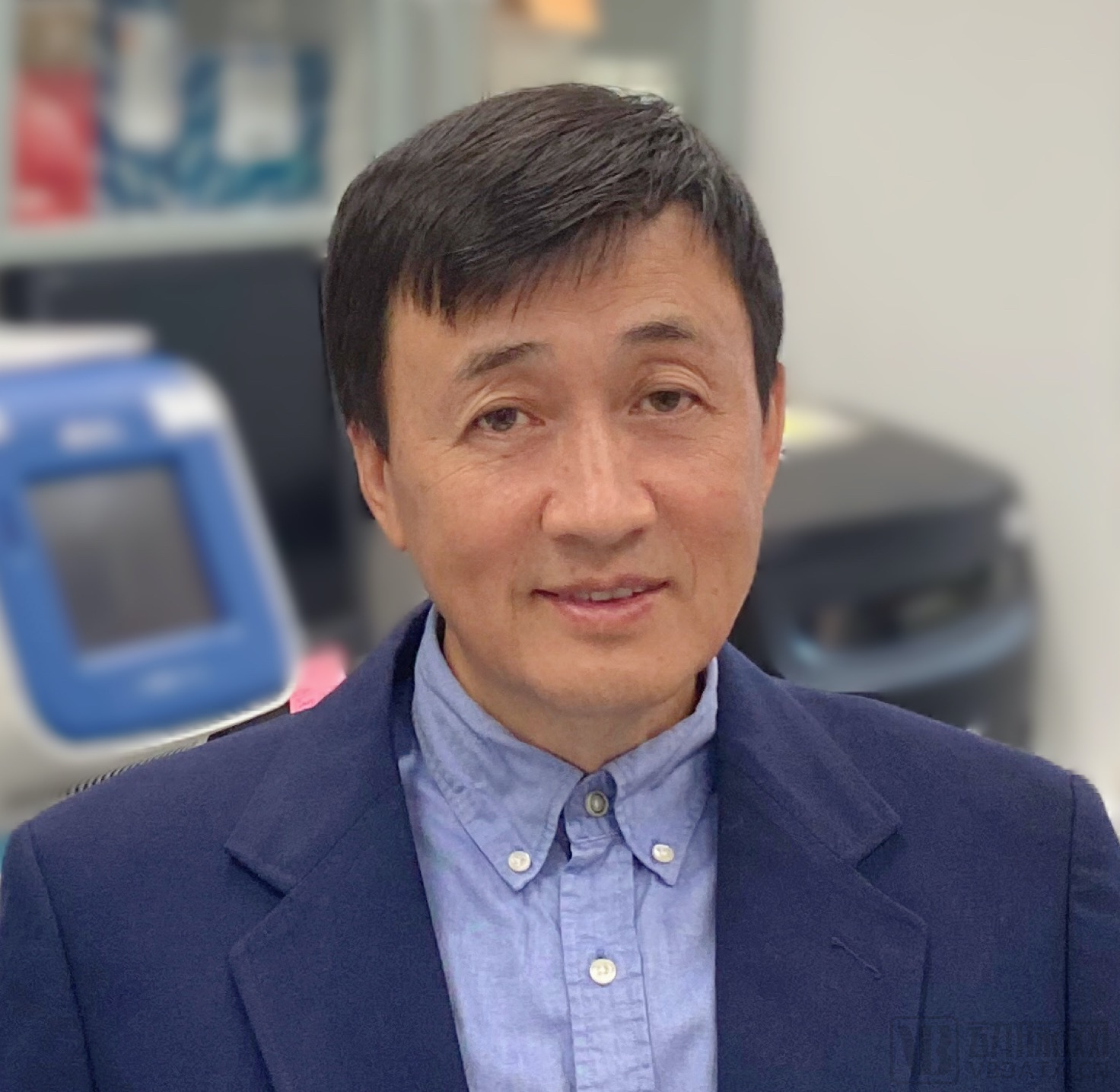
Professor Cao Yihai is currently a Tenured Professor at the Karolinska Institutet in Sweden. Professor Cao Yihai isWorld-Recognized Leading Scientist in Angiogenesis, alsoThe First Asian to Be Promoted to Tenured Professor of Medicine in SwedenProfessor Cao Yihai Elected as a Member of the European Academy of Sciences and Arts (2017), Fellow of Academia Europaea (2018), Fellow of the National Academy of Inventors, USA (2018), and was elected as a Foreign Member of the Chinese Academy of Engineering in 2019.
Professor Cao Yihai has made numerous pioneering contributions to the field of angiogenesis, focusing onCancer, Metabolism, diseases such as ophthalmic and cardiovascular conditionshas conducted extensive original work on the diagnosis and treatment of [condition/disease], and has proposed new theories and concepts, Advancing the clinical application and translational medicine of neovascularization. ObtainedOver 60 international patents for disease treatment. The research achievements of Professor Cao Yihai’s laboratory are at the forefront globally, with his team’s findings published in top-tier international academic journals, including《“Science”, “Nature”, and “Cell”and published papers in a series of journals,These include Papers Published in Science, Nature, Cell, and Their Associated Journals55+ articlesPNASPNAS Paper51 articles. A total of papers published292 articles, cited by Google> 45,470+ times,With an H-index as high as 107, Professor Cao has advanced the clinical application and translational medicine of neovascularization, securing over 60 international patents for disease treatments.
He was awarded the title of Distinguished Professor by Karolinska Institutet in 2010 and the title of Distinguished Scientist by Karolinska Institutet in 2014. He has successively received the Axel Hirsch Medical Prize, the Novo Nordisk Research Breakthrough Award, the Fernström Research Prize, the Human Frontier Science Program Award conferred by France, and the U.S. Fulbright Scholar Award. He has served as Honorary Professor at Shinshu University in Japan, Visiting Professor at the University of Leicester in the United Kingdom, Visiting Professor at Linköping University in Sweden, and Honorary Professor at the University of Copenhagen in Denmark.
I. A Half-Century of Twists and Turns, Finally Gaining Recognition
Q: What is the current state of research in the field of neovascularization?
Academician Cao Yihai:In the 1970s, my postdoctoral mentor, Professor Folkman of Harvard Medical School, proposed the concept of treating cancer by inhibiting angiogenesis, namely“Tumors generate their own blood vessels to absorb oxygen and nutrients. Inhibiting tumor angiogenesis can starve the tumor, thereby slowing or halting its growth and spread.”Initially, this concept was not accepted by most scientists. Later, as experimental evidence accumulated, the signals and proteins that induce neovascularization were gradually discovered, and the idea gained widespread acceptance among researchers. After a tortuous journey spanning half a century, research on neovascularization has become an important field in medical research.
Currently, drug development across various fields basically includes projects targeting the regulation of neovascularization. Anti-angiogenic drugs have been listed as part of cancer treatmentThe Fourth Major Therapy, and is considered on par with surgery, chemotherapy, and radiotherapy. Furthermore, anti-angiogenic agents have a broader therapeutic scope; unlike cancer-targeted therapies that are specific to a single type of cancer, they can be applied to the treatment of multiple tumor types and have gained widespread clinical acceptance.
In addition to anti-tumor therapy, anti-angiogenic drugs have shown particularly encouraging results in the field of ophthalmology, including conditions such as age-related macular degeneration and diabetic eye disease, where they have been established as first-line treatments. Furthermore, by modulating vasculature, these agents offer potential therapeutic benefits for a variety of other conditions, including metabolic disorders, cardiovascular diseases, and cerebrovascular diseases. These therapeutic concepts have gained recognition among medical experts. To enhance efficacy,Currently, researchers are focusing on drug resistance, combination therapy with other drugs, and reducing adverse drug reactions.
If I were to sum up my views on this field in one sentence, it would be:“If I were a young person, I would definitely choose to pursue research in this direction.”
II. How Neovascularization Research in China Sets Sail
Q: Are there any differences in the current state of scientific research between China and other countries?
Academician Cao Yihai:As far as I know, many researchers in China are also conducting studies on neovascularization, with clinical research garnering particular attention. However, compared to overseas counterparts, China still needs more source innovation in the field of neovascularization.
Currently, research on neovascularization in China is only30+ Years, and over these past 30-plus years, we have nearly caught up with overseas research progress. Therefore, from a personal perspective, I am highly satisfied and greatly encouraged by the abundant achievements made in China in this field.
We also need to strengthen basic research. The prerequisite for translation is innovative results from basic research projects; therefore, only by excelling in fundamental scientific research can we advance translational efforts and achieve groundbreaking breakthroughs.
Q: What support is most needed to advance neovascularization research in China?
Academician Cao Yihai:No innovative scientific research can succeed without talent support.What we need most now is to attract more young scientists to join the research on neovascularization.
Furthermore, it is essential to cultivate a strong interest in neovascularization research among young scientists, helping them recognize that scientific inquiry is not merely for personal career advancement but also entails a responsibility to drive innovation and safeguard public health. To achieve this goal, it is necessary to organize more academic conferences to broaden young researchers’ horizons and provide them with opportunities for innovative learning.
At the same time, we must also create an environment through policies that allows young people to engage in scientific research with peace of mind. It is not only about cultivating talent, but also about ensuring that they have no worries after committing to scientific research. The strength of talent determines the height of scientific research, so I think we need toCultivating Talent, Retaining Talent, and Leveraging Talent"Focus efforts and make significant improvements."
III. Please Give Innovative Drugs a Chance
Q: What new findings can you share with us?
Academician Cao Yihai:Currently, I am engaged in the development of anti-angiogenic drugs and basic research on neovascularization, while also conducting some disruptive original research. For instance, my team and I have discovered a novel mechanism by which cold exposure inhibits the growth of solid tumors, proposing"Cold Suppresses Tumor Growth by Activating Brown Adipose Tissue"a novel concept and provides corresponding therapeutic strategies. Preclinical animal model data suggest that this therapeutic approach holds promising potential.
Q: What are your views on the translation of scientific and technological achievements?
Academician Cao Yihai:In addition to the aforementioned projects, I have been involved in basic research across ophthalmology, oncology, and cardiovascular fields, with a strong focus on translational outcomes.
I have always hoped that the market would give China’s innovative drugs a chance.For pharmaceutical companies, developing generic drugs is indeed a low-risk project with high return efficiency. In contrast, innovative drugs require more than 10 to even 20 years from research and development to market entry, involving high-risk investments without any guaranteed market returns. Therefore, many enterprises favor generic drugs for profitability. However, in the long run, failing to control the source of innovation may lead to the risk of being "strangled." When original patent holders withdraw their patents or modify certain regulations, our drug development could reach an impasse.
Amid the pandemic, many overseas economies have faced severe challenges, while China’s economy has remained relatively stable. Coupled with the Chinese government’s strong emphasis on technological innovation, I believe this presents a prime opportunity to advance innovation.Many innovative projects abroad struggle with funding constraints, while China’s economy remains relatively stable but sees fewer innovative initiatives.If introduced and developed, it would effectively complement the strengths of both parties, fostering mutual growth.
Q: What are the emerging trends in the field of neovascularization?
Academician Cao Yihai:With the advancement of technology, an increasing number of new technologies are emerging, which are facilitating the development of neovascularization research. For example,Artificial Intelligence, Protein Plasticization, Single-Cell Sequencingand so on. Each innovation in biotechnology brings more opportunities for innovative research on neovascularization. Based on these technological advancements, I believe that future research on neovascularization will achieve greater breakthroughs in both diagnosis and treatment.
From my personal perspective, I will continue to advance the iterative development of therapeutic agents in ophthalmology, oncology, and cardiovascular and cerebrovascular diseases, aiming to create second- and third-generation drugs with enhanced efficacy and reduced adverse effects. Furthermore, I will deepen my basic research into underlying mechanisms, with a particular focus on: the mechanistic role of vasculature in systemic tumor-related diseases; the signaling mechanisms of angiogenesis in ocular diseases; and the mechanisms by which angiogenesis modulation can treat metabolic disorders. Additionally, leveraging advancements in nanomaterials, I intend to design medical devices for the prevention and treatment of cancer.
Overall, the field of neovascularization research still holds abundant opportunities for innovation and discovery, calling for more outstanding young scientists to join in exploration. Although China’s history in this field is relatively short, it has already achieved remarkable results. Anti-angiogenic drugs independently developed by Chinese pharmaceutical companies have demonstrated excellent clinical efficacy, with domestically produced anti-angiogenic agents widely used in oncology and ophthalmology. Moreover, numerous new drugs are currently at various stages of development. As an expert in this field, I feel immense pride and honor.
We hope that domestic experts and pharmaceutical companies will continue their efforts to develop more and better drugs for the health of the people, thereby benefiting human health.I also look forward to serving as a bridge, enabling more outstanding scientists to understand and enter this field, and jointly contributing to our country’s biotechnology industry.