

Neitray's Chairman Qu Yi: Realizing ChatGPT Applications in Healthcare Requires Full-Scale Investment in Digital Health Infrastructure
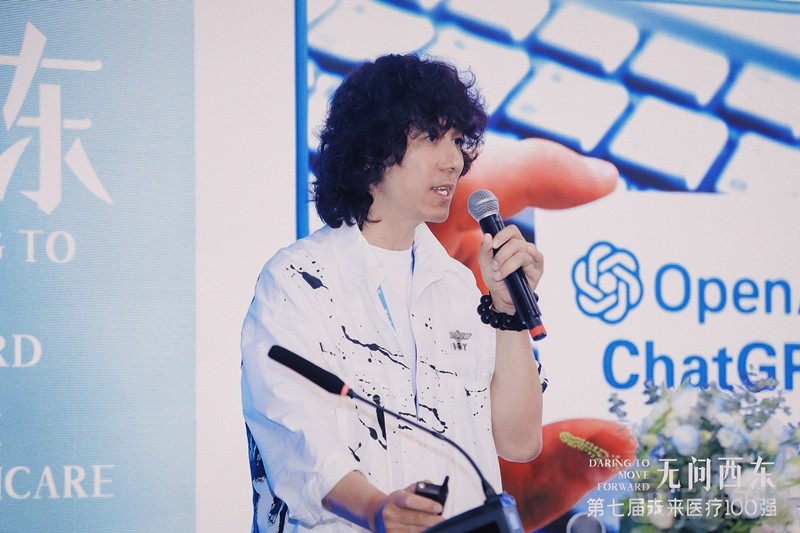
At the 7th Future Healthcare Top 100 Conference, co-hosted by VB100, VCBeat, and Eggshell Research Institute, with strategic partnership support from Shanghai Zhangjiang Group, Qu Yi, Chairman and CEO of Naiterui, was invited as a keynote speaker to participate in the Forum on Innovative Development of Internet Hospitals and Smart Hospitals. He delivered a speech titled “Building a Full-Link Ecosystem for Pharmaceutical Enterprises through Internet Healthcare,” sharing his insights on the development of internet healthcare from the unique perspective of an IT entrepreneur crossing over into the medical industry.
Following the conference, VCBeat held an interview with Qu Yi, Chairman of Nightree, to discuss how advancements in technologies such as artificial intelligence are reshaping the industry. Unlike some current observers who hold a pessimistic view on the development of internet healthcare, Qu Yi remains optimistic about its prospects. This optimism is well-founded.
Market Size Exceeds 100 Billion: Internet Healthcare Builds a Full-Link Ecosystem for Pharmaceutical Companies
Currently, practitioners across all segments of the entire healthcare industry chain are striving to achieve digital transformation in healthcare. In this context, internet healthcare plays a pivotal role in building the full-link ecosystem for pharmaceutical companies.
On one hand, as of February 2023, more than 180 policies related to internet hospitals had been issued nationwide in China, with the policy framework becoming increasingly comprehensive. “Internet healthcare” has transformed from a scarce resource in the past to a widely accessible resource today. As of February 2023, the number of internet hospitals across China had exceeded 2,000.
On the other hand, driven by factors such as the pandemic, the number of online healthcare users has experienced leapfrog growth, further contributing to the expansion of the internet healthcare market size. As of December 2022, the number of internet healthcare users had reached 363 million. According to data from China Business Industry Research Institute, the market size of China's internet healthcare industry reached RMB 223 billion in 2021 and is projected to reach RMB 364.7 billion in 2023.
In addition to the influence of policies and the social environment, Qu Yi also pointed out that against the backdrop of accelerating population aging and consumption upgrading, people will place greater emphasis on maintaining health, and internet healthcare will inevitably reach households across the nation.
Naiterui targets the substantial demand for digital transformation across the entire healthcare industry chain. Leveraging years of accumulated experience in the internet healthcare sector, it empowers physical medical institutions, biotechnology firms, chain pharmacies, health checkup centers, insurance companies, elderly care facilities, and pharmaceutical enterprises with technology, facilitating their digital transformation. Currently, it offers a comprehensive suite of solutions to clients, including internet hospital solutions, medical research platform solutions, physician education solutions, and prescription circulation platform solutions.
By building an integrated online-offline platform, reshaping medical services, optimizing resource allocation, and driving quality improvement and efficiency gains on the healthcare supply side, as well as providing practitioners with an open ecosystem and co-building a digital healthcare community, Naitrui is solidifying the foundation of smart healthcare. Leveraging its newly launched comprehensive low-code PaaS platform, the company now serves nearly 300 leading enterprise clients with a team of just over ten people.
Further Empowering Digital Healthcare: Metaverse Technologies May Disrupt the Medical Industry
While meeting existing demands and helping the industrial chain build new digital healthcare infrastructure, Qu Yi, who has many years of background in internet IT, has also recognized the significant impact that technologies such as the metaverse are having on the healthcare industry.
He pointed out that the medical metaverse is a healthcare-oriented metaverse built upon technologies such as digital twins, virtual reality (VR), augmented reality (AR), artificial intelligence (AI), virtual humans, blockchain, and brain-computer interfaces. Patients can consult at virtual hospitals using avatars, enabling both patients and healthcare providers to communicate and interact through their respective virtual representations.
Although the relevant concepts have not yet been fully implemented, he also pointed out some ongoing trend-driven changes—
First, metaverse-related technologies are being comprehensively applied in the healthcare sector. For instance, virtual reality (VR) technology has already been utilized in medical education and other areas. Furthermore, digital content is prone to unauthorized copying, making copyright verification difficult; this has hindered digital content in the healthcare field from realizing its due value. In the future, blockchain and similar technologies can be employed to establish clear ownership rights, thereby maximizing the value of physicians who develop superior solutions for specific diseases.
Secondly, the emergence of generative AI has enhanced efficiency within the industry. For instance, in patient care, ChatGPT can introduce improvements in areas such as nutrition and exercise tailored to patients’ rehabilitation needs. Furthermore, such applications can be extended to various other domains, including clinical documentation, medical research, and medical education.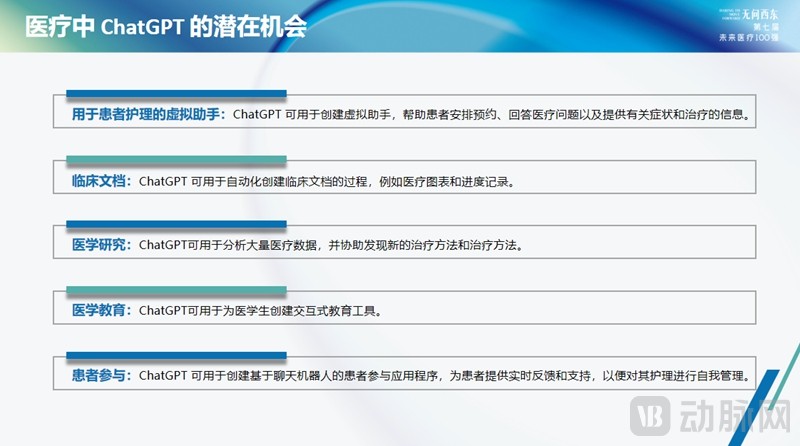
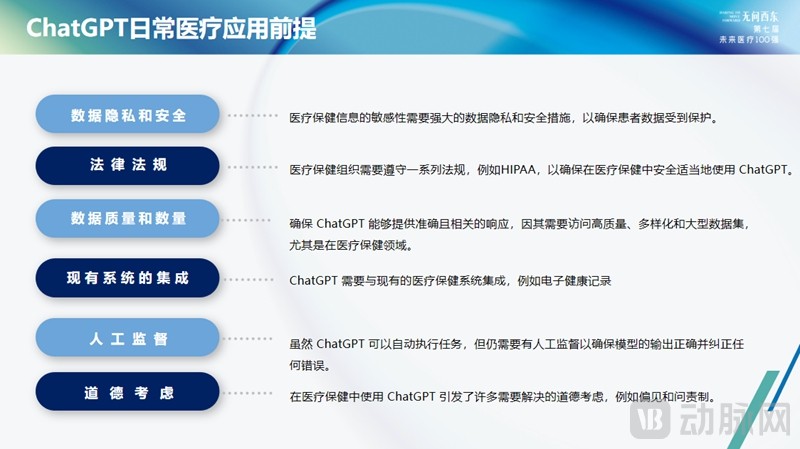
Qu Yi also emphasized that while it is commonly believed that the larger the volume of data fed into large language models, the stronger their capabilities become, this is not the case. For instance, “we do not judge a person’s competence by their appetite.” Training on a heap of ineffective, low-quality data may lead to conclusions that are “correctly wrong.”
“Training itself involves data privacy and security concerns; enterprises are unwilling to contribute their accumulated data over the years to open-source models, as they also seek to monetize their proprietary data capabilities.” To better assist enterprises, Naiterui is currently exploring relevant solutions, including lowering the barriers to AI adoption. By providing in-system model training capabilities, the company allows businesses to feed their valuable data into specific models for training, thereby meeting their needs for building proprietary AI systems and maximizing corporate value. He added that, much like the ethical dilemma in autonomous driving—“whether to prioritize the safety of occupants inside the vehicle or pedestrians outside in emergency situations”—the question of who should be held liable for AI-generated content is not merely a technical issue, but also an ethical and legal one.
The healthcare sector is demonstrating its development potential. “When we have sufficiently advanced technology to enable all elements of treatment to be intelligent, IT-enabled, and even embedded, medical technology will achieve maximum efficacy,” said Qu Yi. “As a technology company, Naiterui hopes to become a partner to these great companies, empowering them to ultimately realize our vision of ‘serving thousands of enterprises and safeguarding the health of hundreds of millions of households.’”
VCBeat: Your speech is titled “Building a Full-Link Ecosystem for Pharmaceutical Companies through Internet Healthcare.” What are Knightry’s goals in terms of ecosystem building?
Qu Yi:Currently, many internet hospitals operate as standalone entities. In the process of helping to build internet hospital systems, Naiterui aims to achieve collaboration between different internet hospitals. Through our digital middle platform, we can facilitate the linkage of diverse medical resources. For instance, we can transform the home-based nursing services provided by a specific enterprise into a plugin, allowing other enterprises to access these services. Naiterui serves as a B2B platform connector in this ecosystem. For enterprises on the platform, other companies can function as part of their supply chain, enabling them to leverage relevant resources to the fullest extent.
VCBeat: It has been a year since the financing round last February. Could you briefly share Natrai’s latest progress?
Qu Yi:On one hand, we are collaborating with government-led industrial parks across multiple regions. These partnerships range from our engagements with the Greater Bay Area and Tianfu New Area starting last year, to our recent collaborations with Xixian New Area and Xuanwu District this year. In total, we have established cooperative relationships with more than ten industrial parks. We primarily serve as a connector for digital infrastructure, helping these parks and local governments attract leading high-quality enterprises and leveraging our digital capabilities to facilitate their digital industrial layout. Over the past two to three decades, China’s physical industrial layout has been largely completed, whereas the layout of its information-based industries is just beginning. We are playing a key role in facilitating the implementation of this entire information-based industrial ecosystem. On the other hand, regarding the development of Netra’s digital systems, we launched two major products starting last year. One is the release of Netra’s NetWoods, an open platform for digital healthcare application tools, and the other is the introduction of our low-code PaaS platform for internet hospitals.
VCBeat: You mentioned that the internet healthcare market has grown to a scale of hundreds of billions. However, there have been reports of leading companies’ valuations being halved, and some industry observers hold a pessimistic view on the development of internet healthcare. What is your perspective on this?
Qu Yi:These are, in fact, two entirely different perspectives. When leading enterprises engage in internet healthcare and digital healthcare, they are often seeking new business growth drivers, with part of their aim being to address corporate valuation concerns. However, from the viewpoint of industry practitioners, there are genuine problems and needs within the sector. For instance, chain pharmacies seek to improve the efficiency of offline drug sales, while internet hospitals aim to enhance the convenience of patient follow-up visits. These issues are not related to valuation.
Fluctuations in stock prices are common in the capital markets. For the healthcare sector, what matters more is the value proposition: the ability to provide targeted therapies for specific patient populations with particular diseases.
The internet healthcare market is large and offers vast growth potential. However, it is undeniable that many enterprises in the current medical sector have genuine demands for building private-domain ecosystems. Industry players along the value chain seek to obtain licenses to develop internet hospital systems and establish private-domain internet hospital platforms. For instance, a company with strong advantages in traditional Chinese medicine (TCM) can, after securing an internet hospital license, expand its functional offerings, leverage the unique strengths of TCM, and create an online TCM diagnosis and treatment platform to serve patients across China. From this perspective, I remain optimistic about the future development of the internet healthcare sector.
VCBeat: How should we understand the relationship between internet healthcare, the metaverse, and ChatGPT as mentioned in your speech?
Qu Yi:The metaverse and ChatGPT have been hot topics in the past two years. Take ChatGPT as an example; you cannot fully resolve issues related to chips, data, and other aspects. ChatGPT must also adhere to the laws of physics. Currently, there is a tendency to overly “worship” AI models trained on massive datasets. In reality, even if the training logic is correct, if the input data is flawed, the output will still be a “correct error.” Furthermore, even if today’s training methodology is sound, the results may become obsolete or incorrect in a few years as knowledge (data) is updated.
Nevertheless, this process has also accelerated the widespread adoption of AI. In areas such as nutrition, exercise, and follow-up care, ChatGPT has already demonstrated considerable value in organizing, collecting, and disseminating text-based information. For instance, within Naiterui’s internet hospital system, AI is already playing a role in follow-up consultations, patient triage, and diagnostic assistance. It can significantly reduce labor and resource costs by handling tasks that previously required manual documentation by doctors and nurses, such as post-consultation chronic disease management and medication reminders. However, challenges remain in other areas. What we typically refer to as new digital health infrastructure and internet-based healthcare constitute foundational layers. While AI can deliver value at the application level, robust infrastructure remains the cornerstone for every enterprise. Companies should leverage high-quality AI applications much like plug-ins, rather than devoting themselves entirely to AI research and development. From another perspective, investing heavily in AI R&D is often impractical: there is already a shortage of programmers, and those with deep expertise in AI are even scarcer.
VCBeat: Previously, the Cyberspace Administration of China issued the "Notice on Soliciting Public Comments on the 'Administrative Measures for Generative Artificial Intelligence Services (Draft for Comment)'," which addressed the regulation of generative AI. What is your perspective on this?
Qu Yi:I believe this is a highly positive development. Without oversight, we would face the predicament we see today: an inability to find the information we truly need on websites, which are instead saturated with advertisements and false content. Generative AI has the capacity to produce content indefinitely; if left unregulated, it will generate misinformation and disinformation at a scale many times greater than human capability. Should generative AI be exploited by malicious actors, the knowledge we acquire in the future could be tampered with, leading to catastrophic consequences.