

From Code to Nutrition: Ex-Programmer Shao Wei Files IPO for Meal Replacement Brand 'Ruo Fan'
Eight years ago, Linux engineer Shao Wei looked at his medical checkup report with a sense of resignation: although there were no major health issues, and his condition could be improved through a healthy lifestyle and balanced diet, this proved quite challenging for a programmer.
Being busy is the norm for programmers; meals are often hastily handled by casually ordering takeout via delivery apps, leaving no energy to consider dietary balance.However, health is an issue that cannot be ignored.One day, as Shao Wei was once again agonizing over “what to eat,” it suddenly occurred to him:Foods that provide rapid satiety while ensuring dietary nutritional balance,Wouldn’t that solve the problem?—Perhaps this was when the idea of founding Ruofan first took root.
Cross-Disciplinary “Nutritionists” Develop Future Foods
In 2014, in a movie, Shao Wei discovered the “superfood” he had been searching for:Astronauts can meet their daily nutritional needs with just one bag of liquid food.Shao Wei was highly interested, but after conducting market research, he discovered that no such quick and nutritious meal replacement products were yet available on the market.
He immediately contacted a close friend who works in the field of nutrition.Jane ChenJane Chen holds a Master’s degree in Public Health Nutrition from the University of Queensland and has been a member of Dietitians Australia since 2011, working continuously in clinical nutrition. After hearing Shao Wei’s concept, Jane recognized its potential to address the meal challenges faced by “white-collar workers.” Drawing on similar products in the U.S. market, she determined the types and proportions of ingredients to develop a prototype product.
While Jane Chen was working on the formula, Shao Wei leveraged his strengths as a “programmer” to conduct online research. He compiled his proposals and ideas into posts on Zhihu, which unexpectedly resonated with a large number of people struggling with eating difficulties. Some even sent him direct messages:“When will ‘Ruofan’ be launched on the market?”This gave Shao Wei tremendous courage to advance the research and development of Ruofan. The reactions from netizens at least prove that “eating” has indeed become a common challenge for urban white-collar workers.
In 2015, the first version of Ruofan was launched. This initial iteration differed from the Ruofan products available today, as it was not a food product per se, but rather a set of formulations:Users must purchase raw materials themselves and mix them in specific proportions to “DIY” a nutritional food product.
Initially, Shao Wei did not intend to generate profit through Ruofan, but rather positioned “Ruofan” as a“Open Source Food Company”, offering solutions for those who struggle with eating. Clearly, users were not convinced: on one hand, preparing DIY meals still consumed significant time; on the other, raw materials in the recipes—such as oat flour, protein powder, and various vitamin tablets—were poorly distributed through retail channels and inconvenient to purchase. Consequently, most users provided feedback expressing a desire for Ruofan to be directly produced as ready-to-eat food products for greater convenience.
After gathering user requirements, Shao Wei contacted the food company and upgraded Ruofan into an instant, ready-to-eat meal replacement. As the first user of Ruofan, Shao Wei conducted a “human trial” on himself for several consecutive weeks and stated:“Convenience and satiety issues have been resolved, but the taste still needs improvement.”To address the issue of taste, Shao Wei invited multiple nutrition experts and food technology experts to participate in the improvement.In 2015, the first-generation Ruofan Powder was officially launched, and in the same year, “Ruofan” was established as a food company.
After the launch of the first-generation Ruofan Powder, Shao Wei’s programmer friends tried it out. They showed considerable interest in this minimalist dietary approach, with some even becoming loyal fans of Ruofan, relying on it for one to two meals a day.
2023 marked the journey of “Ruofan”Year 8, in response to user demands, Ruofan has launched liquid and solid versions, even eliminating the steps of mixing powder and washing cups, making it more convenient and efficient. Additionally, Ruofan has made adjustments to its formula39 iterations, dedicated to designing meal replacement foods that are more readily absorbed by the human body, provide greater satiety, and offer more balanced nutrition.
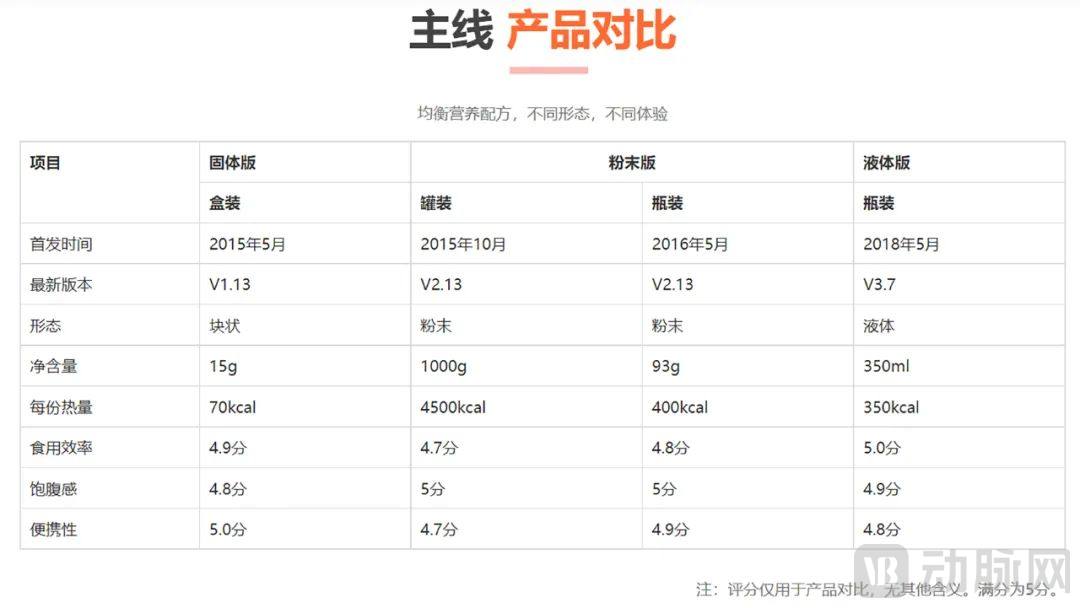
To achieve personalized health management and enable individuals of different genders, ages, heights, weights, and needs to experience more scientifically grounded precision nutrition, “Ruofan” has also developedDietary Intake Calculator, simply by entering basic information, you can receive specific portion recommendations for each meal, enabling a more scientific approach to diet.
Shao Wei told VCBeat’s Orange Bureau, “Although I have entered the nutrition sector, I still retain the habits of a programmer. I frequently send out surveys to users and release ‘patches’ for Ruofan every few months to ensure that Ruofan remains closely aligned with user needs.”
Full Disclosure of Formulas Can Also Build a “Moat”
To this day, Shao Wei has not forgotten his original vision for an “open-source food company,” and the Ruofan website still publicly discloses the formulation for each version. Nevertheless, Ruofan maintains a technological moat that cannot be replicated.
Among all versions of Soylent Meal, the liquid formulation represents the product with the highest technical barriers. While it may appear straightforward—seemingly just a matter of adding water to the powder version and shaking it well—Shao Wei revealed, “Maintaining ingredient stability in the liquid version of Soylent Meal is actually quite challenging.”
First, the liquid version boasts an exceptionally high energy density. A single 480-milliliter bottle concentrates 99% of the nutrients required for a meal, including carbohydrates, proteins, fiber, lipids, and 27 vitamins and minerals. However, many nutrients can become inactive due to factors such as temperature and time. Therefore, ensuring that the liquid Ruofan remains “nutrient-rich” when it reaches consumers is the most critical challenge that the liquid version needs to overcome.
Furthermore, to ensure health safety, the liquid version of Ruofan adheres to a strict no-preservative policy, which imposes stringent requirements on its sterilization process. As a neutral composite protein beverage, it is incompatible with the acidic beverage production lines commonly used by manufacturers. Moreover, due to its rich content of vitamins and minerals, hot-fill processing cannot be employed; therefore, only ultra-high-temperature (UHT) instantaneous sterilization can be utilized.
To address these two major challenges simultaneously would require substantial human and financial resources to redesign and rebuild the production line, which posed a significant strain on Ruofan, a company that has consistently adhered to a “minimal-profit” strategy. At this juncture, Shao Wei inadvertently learned aboutDuPont, USAEstablished a subsidiary in Shanghai specializing in food innovationDanisco, he immediately took Ruofan to introduce himself and seek cooperation.
After several rounds of communication, DuPont’sDaniscoProposed a free collaboration with "Ruofan" on formula R&D, and contactedUni-President Groupproduction line, the liquid version of Ruofan was successfully launched. In 2018, the liquid version of Ruofan passed the tests conducted by the well-known food testing agency SGS, with both microbial and physicochemical tests meeting the standards, allowing it to enter the market smoothly. Thus, "Ruofan" ushered in the era of "liquid bento."

In addition to technical collaborations with major industry players, “Ruofan” has not abandoned its pursuit of technological innovation. Currently, “Ruofan” has secured6 ModelsTechnical patents, and inIn 2021, it became the only food company in Hangzhou to obtain High-Tech Enterprise certification., thereby establishing its own proprietary innovation technology matrix.
Not to Disrupt, but to Offer New Choices
In Shao Wei’s view, the future of food will evolve along two major trajectories: one focused on spiritual satisfaction, offering delicious taste with no physical burden; the other, which Ruofan has consistently pursued, centers on physical satisfaction by meeting nutritional needs. Therefore, since the inception of Ruofan, Shao Wei has been dedicated to advancing nutritional science, emphasizing pure ingredient composition while deliberately not addressing flavor.
"As user feedback continues to grow, more and more users have suggested to Shao Wei that he develop more flavors of 'Ruofan.' But Shao Wei still wants to stick to his own ideas:"Ruofan is not intended to disrupt or replace traditional dining habits; it simply offers users an additional option.“Therefore, our research on taste has lagged behind nutritional research.”
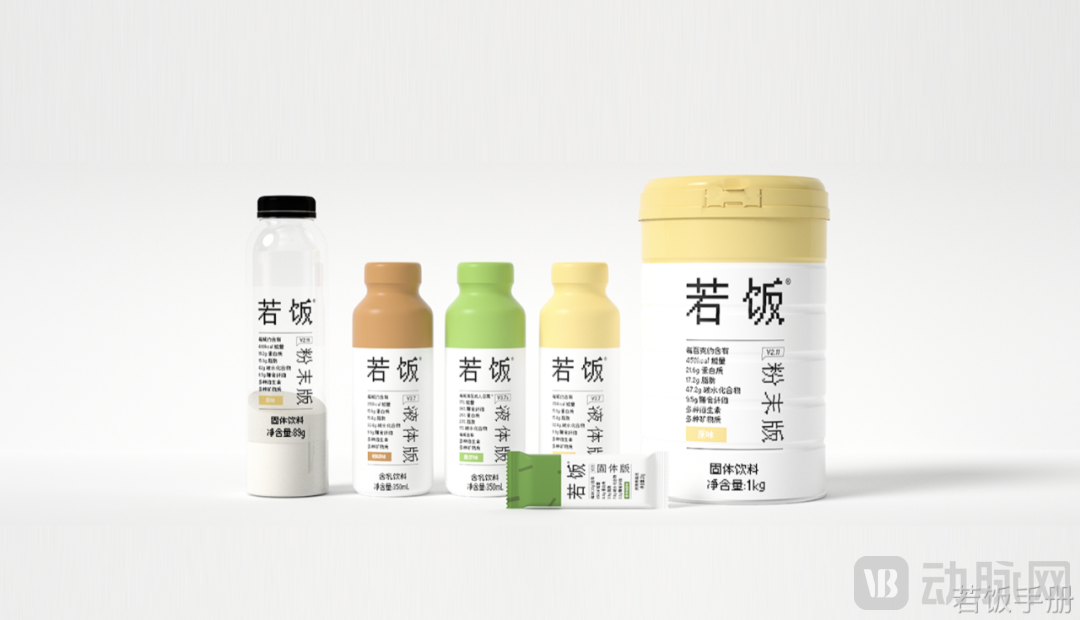
Ultimately, among the new products scheduled for launch in May 2023, Shao Wei found a balance. The upcoming Ruofan has optimized its texture and flavor profile, resulting in a smoother drinking experience while preserving its natural original taste. It does not contain various artificial flavors or additives merely to enrich the flavor. Currently, over 10,000 bottles of the new-generation Ruofan have been released for small-scale evaluation, with user feedback showing a high approval rate of99%. Additionally, Ruofan continues to maintain its “affordable and accessible” pricing, with each bottle costing around 20 yuan—lower than the price of a typical food-delivery meal.
Looking back on the eight-year journey of “Ruofan,” each generational update has been aimed at better meeting user needs. Shao Wei has stubbornly positioned Ruofan’s target audience as those who seek only “nutritional satiety,” abandoning the currently booming sectors of weight-loss and health-focused meal replacements.Yet it is precisely this steadfastness that has allowed “Ruofan” to remain pure and true to its original mission for the past eight years.