

National Key R&D Program Announced: Revolutionary Breakthrough in Cardiac Radiotherapy!
Recently, the Ministry of Science and Technology announced the list of approved projects under the Key Special Project on “Diagnostic and Therapeutic Equipment and Biomedical Materials” of the National Key R&D Program during the 14th Five-Year Plan period. Notably, the project led by Huake Pioneer, a developer of medical linear accelerators, titled “Research and Development of Technologies for Stereotactic Radio-quantitative Therapy Systems for Cardiac Arrhythmias and Prototype Fabrication,” was successfully selected for inclusion in the Key R&D Program. It is worth noting that, this isNational Key R&D Program Includes Cardiac Radiotherapy Technologies in Key Special Projects for the First Time。
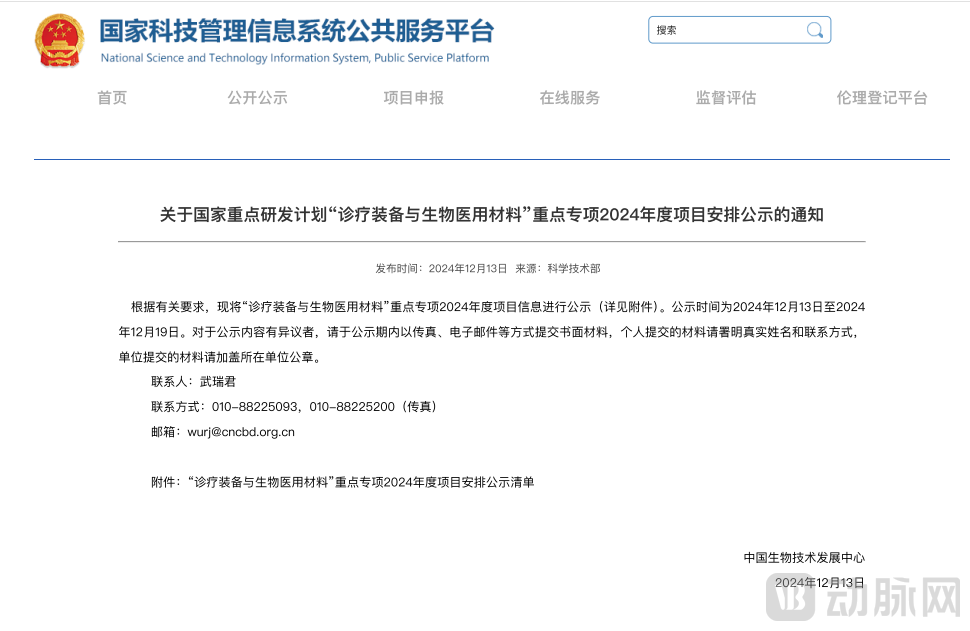

The National Key R&D Program is one of the five major categories of central government-funded science and technology programs (including special projects and funds), alongside the National Natural Science Foundation of China and the National Major Science and Technology Projects. It primarily provides funding for strategic, fundamental, and forward-looking major scientific issues, common key technologies and product development, as well as the application of major engineering equipment, all of which are critical to industrial core competitiveness, overall independent innovation capacity, and national security.
As a developer and manufacturer of high-end medical electron linear accelerators,Huake Pioneer focuses on technologies that are more technically challenging and advancedX-bandAccelerator DevelopmentMeanwhile, the innovative integration of a ring gantry with a robotic arm enables 4π global surface radiotherapy, further optimizing clinical application scenarios for radiation therapy. Currently, China’s first 4π intelligent robotic radiotherapy system developed domestically has passed type testing and is poised to enter the clinical trial phase.
The project included in the National Key R&D Program is led by Professor Tang Min from Fuwai Hospital, Chinese Academy of Medical Sciences, with Huake Pioneer as the lead institution. It involves a consortium of seven organizations, including Tsinghua University, Fudan University, the Chinese PLA General Hospital, and Fuwai Hospital, focusing on the application of stereotactic body radiation therapy (SBRT) in the field of cardiology.The goal is to develop the world’s first dedicated stereotactic radiotherapy system for cardiac arrhythmias, ultimately establish effective treatment protocols, promote the industrialization of this technology, and pioneer a novel therapeutic paradigm in the field of cardiac arrhythmia management.。
Arrhythmia is a major global public health concern, with ventricular arrhythmias potentially leading to cardiac insufficiency or even sudden cardiac death. In China, the number of hospitalized patients with arrhythmia exceeded 11 million in 2023, including over 1 million cases of ventricular arrhythmia. These patients typically require long-term pharmacological therapy or catheter ablation; however, clinical challenges include ineffectiveness of antiarrhythmic drugs or patient intolerance. As an invasive procedure, catheter ablation carries certain treatment risks and surgical complications, along with a high postoperative recurrence rate. Therefore, there is an urgent need for novel therapies with high efficacy and low risk in this disease area to address unmet patient needs.
In recent years, stereotactic radiotherapy has gradually expanded from the treatment of malignant tumors to the cardiovascular field. High-precision irradiation of cardiac lesions with X-rays generated by medical electron linear accelerators can achieve the therapeutic goal of lesion ablation.This innovationNon-invasiveTherapynot onlyEffectively alleviate patient suffering, and can also be treated on an outpatient basis, helping to reduce the average length of hospital stay and improve the efficiency of medical resource utilization。
Being selected as the lead institution for a National Key R&D Program project is not only strong proof of Huake Pioneer’s significant breakthrough in the field of cardiac radiotherapy,It also demonstrates the innovative achievements of the “Baiyang Cardiovascular Innovative Drugs and Medical Devices Incubation Base.”This base is a biomedical innovation cluster for industry-academia-research collaboration, established by Baiyang to focus on the diagnosis and treatment of cardiovascular diseases. Leveraging the research capabilities of the National Center for Cardiovascular Diseases, the clinical resource advantages of Fuwai Hospital, as well as Baiyang’s innovation incubation system and industrial resource strengths, it aims to promote the development and incubation of innovative cardiovascular pharmaceuticals and medical devices.
As a key enterprise incubated and invested in by Baiyang Pharmaceutical Group in the field of high-end medical devices, Huake Pioneer will also be supported by Baiyang's industrial resources,Focused on the research and development of dedicated radiotherapy equipment for the head and neck,ZAP Surgical, the World’s Leading Radiosurgical Robotics CompanyAchieve Synergy,FinallyDeveloping a Full-Scenario Radiotherapy Device Product Line Covering Body, Head, and Dedicated Cardiac ApplicationsCoverage。
In the future, Huake Pioneer will continue to focus on unmet clinical needs, leverage Baiyang’s extensive industrial resources, and advance the clinical application of high-end radiotherapy technologies across China and globally, thereby optimizing healthcare scenarios through technological innovation.