

Why Dairy Companies Are Rushing Into the FSMP Market: Strategic Shifts and Product Innovations
In the cohort of foods for special medical purposes (FSMP), we see the presence of many “major players” from the dairy industry. As of April 13, 2023, a total of 18 dairy companies had received approval56 FSMP Products. For example, in 2021, Feihe and Ausnutria’s lactose-free formula foods, “Beishuxiao” and “Zhishu,” received registration approval. In the same year, dairy companies such as Shengyuan, Yili, Yipin, Beingmate, and Mingyi also had their medical foods for special dietary purposes approved for registration.
Moreover, an increasing number of dairy companies have begun to establish a presence in the market for foods for special medical purposes (FSMP). In 2023, Ningxia Saishang Dairy launched a whole-milk protein powder; in 2022, Blue River Dairy introduced an extensively hydrolyzed sheep milk-based infant formula; and Herds Dairy had already officially initiated its “Construction Project for a Production Line of Sheep Milk-Based Formula for Special Medical Purposes” in early 2020.
Why Are Dairy Companies Rushing to Enter the FSMP Sector?
To answer this question, we need not only to examine the crossroads at which dairy companies currently stand but also to look ahead and explore what development opportunities remain for them in the FSMP (Foods for Special Medical Purposes) sector.
The Market Transitions from Incremental Competition to Stock Competition, is one of the important reasons for dairy companies to lay out special medical purpose food.
In fact, the market size of China’s dairy industry had already reached RMB 100 billion as early as 2005, and subsequently expanded rapidly, achieving a compound annual growth rate (CAGR) of 13.91% during the ten-year period from 2005 to 2015. However, following this phase of high-speed growth, the industry’s growth rate began to slow down starting in 2016 as the market gradually became saturated, entering a stage of competition within an existing stock.
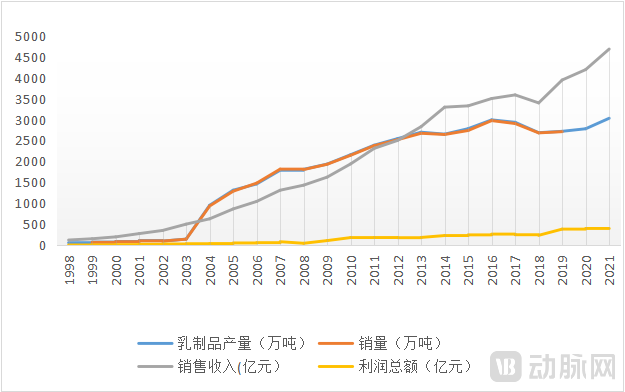
▲Development Status of China's Dairy Industry
Data Source: Compiled by the International Institute of Green Finance at Central University of Finance and Economics
At this stage, after gradually phasing out small and medium-sized regional dairy enterprises with outdated production capacity, inefficient management, and a lack of innovation, the surviving dairy companies rely on their existing technological advantages,Seeking Opportunities for Industrial Upgrading。
Wang Shili, Vice President of Ningxia Saishang GroupTell Orange Bureau: “After years of consolidation, China’s dairy industry has entered a stage of industrial upgrading, underpinned by a solid and comprehensive dairy supply chain. Leveraging natural pastures and advanced deep-processing technologies for milk, Saishang began optimizing and upgrading its existing business in 2019. As the first domestic manufacturer of whole-milk milk protein, the company has remained committed to ensuring product quality and driving R&D innovation.”
In a nutshell. Currently,Chinese Dairy Companies Are Accelerating Consolidation: It’s Time to Compete on Innovation. Dairy companies, in an effort to broaden the dimensions of competition, have turned their attention to research in basic nutrition and accelerated the development of specialized nutritional products.
So why have dairy companies specifically chosen FSMPs as their potential second growth engine for the future?
On one hand, driven by strong market demand and high technical barriers, foods for special medical purposes (FSMP) remain a blue-ocean market.
Taking the population with cow's milk protein allergy as an example, cow's milk protein allergy in infants and young children is a significant issue that requires foods for special medical purposes to maintain their nutritional balance, and the size of this population is not negligible.
In terms of symptoms, the severity of these allergic reactions varies due to individual differences. Severely affected infants require amino acid-based formulas, and after initial tolerance is established, they gradually transition to extensively hydrolyzed formulas and partially hydrolyzed formulas. Regarding incidence, the *2021 White Paper on Allergies in Chinese Infants and Toddlers* reports that 40.9% of children aged 0–2 years in China have experienced or are currently experiencing allergic diseases, with a physician-confirmed diagnosis rate of 19.8%.
However, as a sector with exceptionally high professional requirements, the industry for formula milk powder for special medical purposes still faces numerous barriers. Not all dairy enterprises possess the capability to capitalize on this trend. For some, research and development and production of such formula entail high entry thresholds, including the need for clinical trials to demonstrate the efficacy of foods for special medical purposes (FSMP). To date, only 18 dairy companies in China have obtained approval for their FSMP products, leaving the entire market largely untapped.
Furthermore, profit motivation is the most fundamental reason for dairy companies to enter the FSMP sector. According to industry insiders, the gross profit margin in the field of foods for special medical purposes (FSMP) can be compared to that of biopharmaceuticals, reaching 70%–80%. The current pricing position of FSMP products is comparable to that of high-end infant formula, with some even far exceeding it. For example, Nestlé’s Alfamino amino acid-based infant formula is priced at RMB 488 for a 400g can.
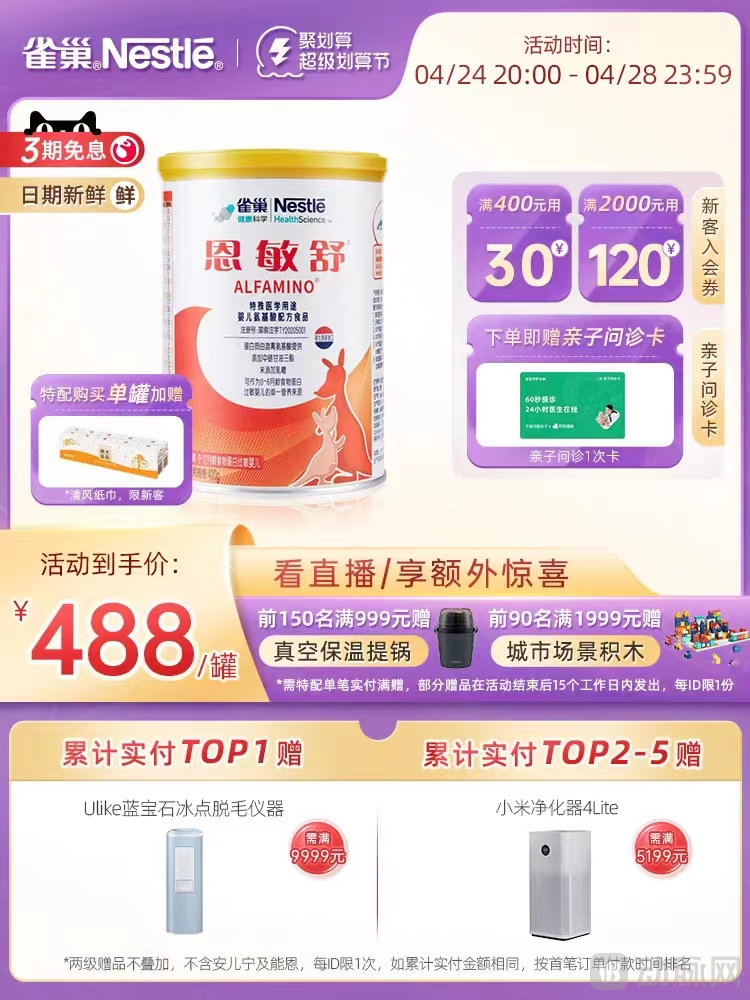
▲Image source: Nestlé Official Tmall Flagship Store
On the other hand,From the perspective of the complete dairy supply chain, dairy companies have inherent advantages in entering the FSMP industry.
At the upstream level, dairy farms provide high-quality protein sources. At the midstream level, dairy companies are involved in the storage and transportation of dairy products, which impose stringent requirements on shelf life, hygiene conditions, and storage environments. At the downstream level, dairy companies engage with various distributors and end consumers. Meanwhile, the pandemic has accelerated the growth of online trading markets, giving rise to digital transaction models such as WeChat Mini Programs and on-demand grocery delivery services.
Ye Mao, Partner at Peach Blossom CapitalTell Chengguo Bureau: “First, dairy products are rich in nutrients such as proteins, minerals, and vitamins, which align well with the positioning of foods for special medical purposes (FSMP). Second, dairy enterprises possess mature technologies and extensive experience in the production, extraction, and processing of dairy products, which can be leveraged for FSMP manufacturing. In contrast, other FSMP companies may need to make substantial investments in research and development, resulting in higher time and cost commitments. Finally, dairy companies generally have well-established sales channels and customer bases, allowing them to rapidly promote their products by utilizing existing distribution networks and brand advantages. Compared to other types of enterprises entering the FSMP sector, market channel access represents a natural advantage for dairy companies.”
For dairy companies, venturing into the special medical purpose food sector presents both a development opportunity and a challenge.
An industry insider stated, “For domestic dairy enterprises to enter the field of foods for special medical purposes (FSMP), they must first have strong R&D support.” Although FSMP are categorized under the food industry, their requirements across various aspects are generally higher than those for conventional foods, with R&D standards approaching those of pharmaceuticals.
Due to this specificity, foods for special medical purposes (FSMPs) are subject to stricter regulatory controls, higher R&D requirements, and longer registration review periods compared to ordinary foods. This necessitates that dairy enterprises integrating FSMPs into their business strategies must establish integrated R&D and production capabilities. Furthermore, FSMP formulations require clinical trial reports to substantiate the relationship between nutrients and diseases. Therefore,High-End Instrumentation and a Professional R&D Team, which forms the foundation for dairy companies to establish their presence in the FSMP sector.
In addition to imposing high requirements on the inherent capabilities of dairy enterprises, “Competition Between Chinese and Foreign Companies"is also a major challenge that cannot be overlooked."
Overall, the domestic market for foods for special medical purposes (FSMP) in China is nearly monopolized by foreign enterprises, a situation unlikely to be disrupted until domestic products develop core competitiveness. Meanwhile, statistics on the number of FSMP approvals granted to dairy companies reveal that foreign dairy giants such as Nestlé and Abbott have secured approvals for 32 FSMP products, whereas Chinese dairy companies represented by Shengyuan and Beingmate have obtained approvals for only 24 products, accounting for less than half of the total number approved.
The reasons may lie in two aspects: first, the timing of market entry; second, the logic behind market entry.
Let’s start with the timeline of market entry. Foods for Special Medical Purpose (FSMP) emerged abroad as early as 1957, and were classified as food in 1972. In contrast, China only introduced enteral nutrition formulations in the 1980s, classified FSMP as food in 2015, and saw the advent of true, practically meaningful FSMP products not until 2017.
At a time when foods for special medical purposes (FSMP) had not yet been formally defined in the Chinese market, most foreign enterprises had already established a strong presence in China for many years. Taking Nestlé as an example, Nestlé Health Science entered the Chinese market in 2012 and gradually built a comprehensive product portfolio in the country. In 2018, the Nestlé Group announced the completion of its new factory in Taizhou, Jiangsu Province, with an investment of RMB 1 billion. This facility established China’s first fully enclosed aseptic canning production line, filling a domestic gap in both industry and technology. In 2019, Nestlé further established a research and development (R&D) center in Taizhou, which successfully commenced operations. This center now stands alongside Nestlé’s three other R&D centers located in New York and Switzerland, sharing globally advanced manufacturing processes and formulations.
Consequently, foreign enterprises that entered the market early secured a first-mover advantage. According to statistics from Abbott’s China R&D Center (pre-2017), prior to the implementation of China’s regulatory framework for the registration of foods for special medical purposes (FSMPs), the market share was predominantly held by large multinational corporations.
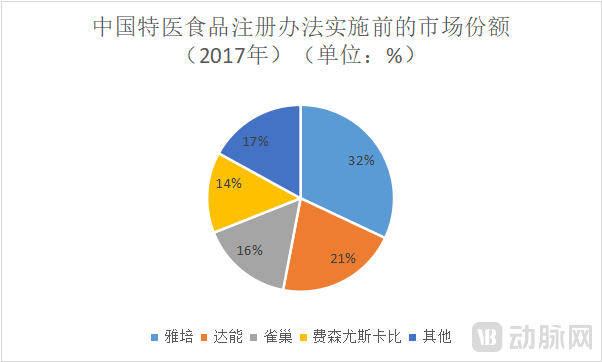
▲ Data source: Abbott China R&D Center
Industry insiders stated, “Foreign companies have been conducting research in related fields for decades, and their technological reserves are highly mature, giving them first-mover advantages and a strong voice. WhereasThe gap between domestic and foreign dairy companies in terms of time is essentially a gap in products, technology, talent, and even standards.”
Perhaps this is why major international brands such as Nestlé, Abbott, and Danone have entered the FSMP (Foods for Special Medical Purposes) sector, which features higher technical barriers and more stringent review and approval requirements. This includes products such as extensively hydrolyzed protein formulas, amino acid-based formulas, and even amino acid metabolism disorder formulas designed for niche populations with specific nutritional and health needs. In contrast, there are currently no representative domestically produced products available on the market in these FSMP categories.
Next is the market entry logic.Differences in dairy logic versus nutritional logic have determined the distinct strategic directions of domestic and international dairy companies in the FSMP (Food for Special Medical Purposes) sector.
From a product perspective, the types of foods for special medical purposes (FSMPs) currently approved for dairy companies include ten major categories, such as formulas for amino acid metabolism disorders, amino acid-based formulas, partially hydrolyzed milk protein formulas, and extensively hydrolyzed milk protein formulas.
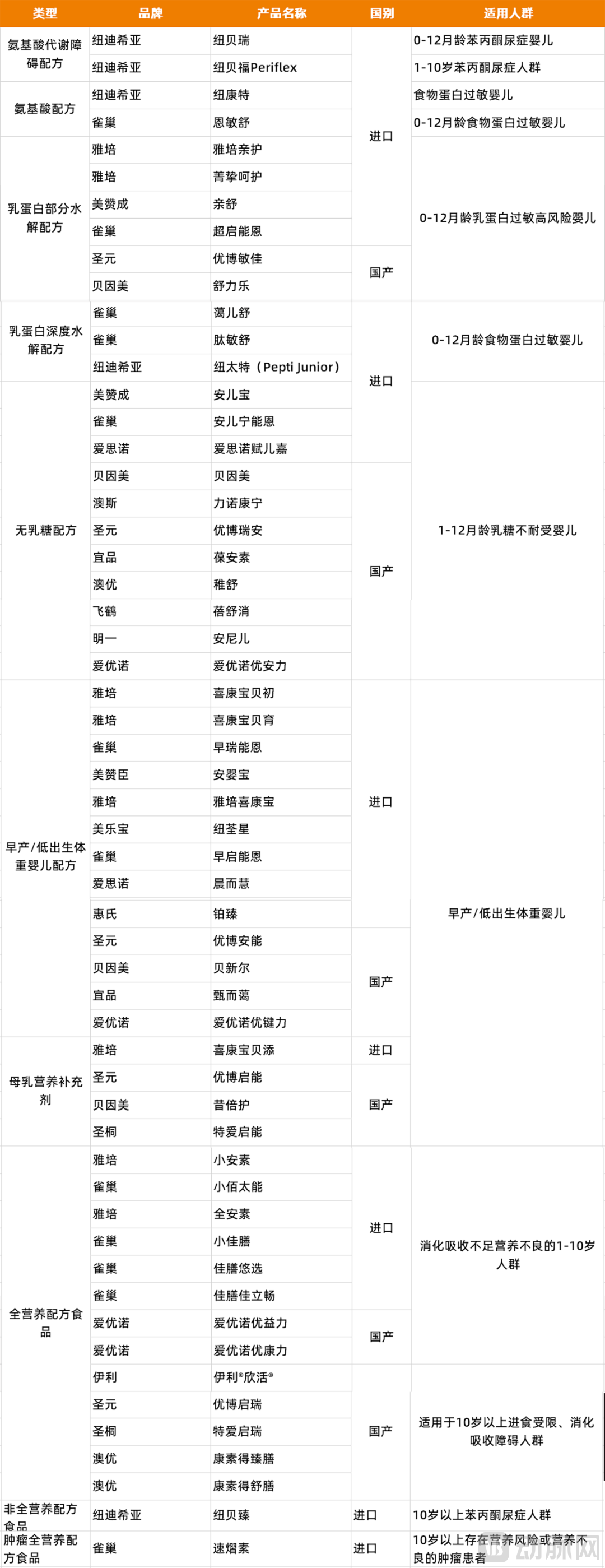
▲Source: State Administration for Market Regulation
As can be seen from the figure,High Concentration of Approved Products Among Domestic Dairy Companies, with Severe Homogenization. Most domestic dairy companies in the FSMP (Food for Special Medical Purpose) sector have chosen lactose-free formulas as their entry point, given their close association with infant formula products and relatively lower technical barriers, targeting infants aged 0–12 months with lactose intolerance. In contrast, for the treatment of rare genetic metabolic disorders such as phenylketonuria (PKU) and for oncology care, only Danone offers three products and Nestlé offers one.
This may be because most domestic dairy companies entering the FSMP sector aim to alleviate growth anxiety caused by the declining overall infant formula market. With their strategic focus remaining on infant formula, their expansion into the infant FSMP business largely follows existing logic, representing a horizontal extension across the full life cycle of infant conception, birth, and growth.
In contrast, major overseas dairy companies such as Nestlé and Danone adhere to a nutrition-and-health logic, having established a comprehensive portfolio of formula-based foods for special medical purposes (FSMPs) while also focusing on therapeutic areas such as oncology and rare diseases.
Currently, the market landscape for foods for special medical purposes has not yet fully taken shape. OldDomestic dairy giants Beingmate and Synutra are growing rapidly and are poised to become formidable competitors against foreign dairy companies.
As the first domestic dairy enterprise to engage in the research, development, and production of specialized formula milk powders, Synutra initiated its research into foods for special medical purposes (FSMP) in collaboration with France’s Lactalis Group as early as 2005. After more than a decade of development, Synutra has currently obtained registration for five FSMP products, making it the Chinese company with the largest number of registered FSMP categories. Similarly, Beingmate also made early strategic moves in the FSMP sector, securing registration No. “0001” for a domestically produced food for special medical purposes in 2018.
Among the currently registered FSMP products indicated for children under 10 years of age, Shengyuan and Beingmate have already covered multiple high-barrier FSMP categories, including partially hydrolyzed whey protein formulas, formulas for preterm/low-birth-weight infants, and human milk fortifiers.
On the other hand,Policies have been introduced to accelerate, to a certain extent, the large-scale market launch of domestically produced foods for special medical purposes.In October 2021, the State Administration for Market Regulation (SAMR) released the Draft for Comments of the Administrative Measures for the Registration of Foods for Special Medical Purposes, which clearly shortened the time required for on-site inspections by regulatory authorities, reducing the timeframe for clinical verification from 40 working days to 30 working days, thereby improving the efficiency of the review process.
Shortening the review timeline can, to some extent, accelerate the market launch of new R&D products, enabling companies to determine approval status more quickly and promptly arrange production and commercialization activities, thereby rapidly capturing market share.
However, fundamentally speaking, competition in the future FSMP market will become increasingly fierce,Strengthening Scientific Research Is Always the Foundation of a Company’s Competitiveness in the Market. Technological R&D is not something that can be achieved overnight; domestic dairy companies still need to lay a solid foundation for their own research and development capabilities.