

Dr. Haifeng Shi of Beijing Hospital's Cardiology Department: Creating Engaging and Accessible Medical Science Communication

Just finished a day’s work at 6:30 p.m.,Director Shi Haifeng, Department of Cardiology, Beijing HospitalRushed to the venue of the third session of “Jiaoxiangle” at the Boston Scientific Innovation Academy.
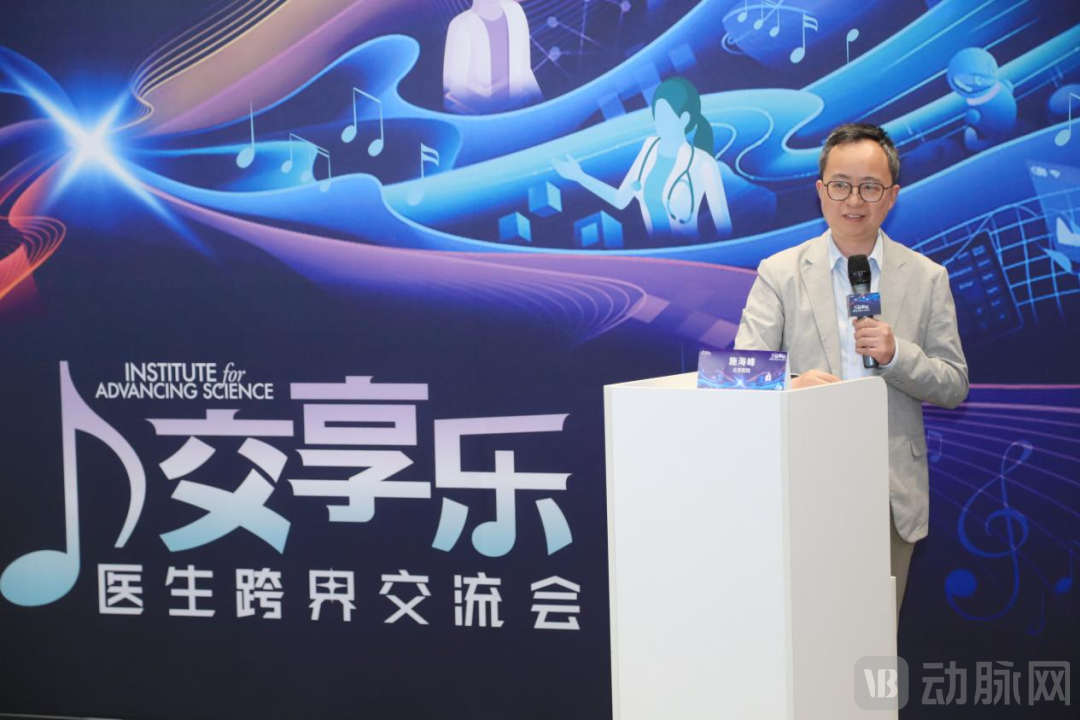
Before he had even finished greeting the guests present, he immediately prepared to share—Creating Medical Science Popularization Content That Is “Popular and Well-Received”. On-site, Shi Haifeng’s humor and wit had guests laughing frequently, a style that is also reflected in his short medical science popularization videos.
In May 2021, Shi Haifeng launched the Douyin account “Shi Haifeng, Department of Cardiology, Beijing Hospital” and posted his first popular science video on the platform. It was merely a simple self-introduction; unexpectedly, Shi Haifeng’s debut garnered30,000likes.
Shi Haifeng was also inspired by this, and over the next nearly two years, he uploaded161Popular science videos that systematically explain the health issues of greatest public concern in plain, accessible language. To date, he has garnered123,000Followers, Likes387,000。
Interestingly, even Shi Haifeng himself cannot clearly explain what sparked his journey into medical science communication. In 2020, the HeartRhythm Doctor Group, co-founded by Shi Haifeng, was exploring new avenues for brand promotion. Shi told Chengguo Bureau that the head of the brand promotion department approached him at the time and encouraged him to disseminate medical knowledge to the general public. “I’m not sure what criteria the brand promotion department used to select candidates; I was simply chosen as one of the first cohort of ‘seed’ influencers to cultivate, and thus began my work in medical science communication,” said Shi Haifeng.
Obviously, there is a certain inevitability to Shi Haifeng’s selection as a seed candidate.

Shi HaifengNaturally Talkative, Never Shy of the CameraWhen discussing his experience with medical science popularization, he spoke eloquently: “I enjoy the entire process.” On one hand, it is a matter of personality; compared to secluded academic work, he prefers communicating with patients. On the other hand, he regards science popularization as a second approach to healing and saving lives. When patients grasp the educational content provided, they gain a better understanding of their condition, which facilitates subsequent treatment.
In addition, Shi Haifeng believes that medical science popularization can enhance trust between doctors and patients, thereby increasing patient retention and improving adherence. “Medical science popularization brings nothing but benefits,” he commented.
It is evident that, whether in terms of personality or the level of endorsement for medical science popularization, Shi HaifengEngaging in medical science popularization was inevitable; the external force that came by chance merely gave him a gentle nudge, providing him with a favorable start.。
Creating medical science popularization content that is “welcomed and appreciated by the public” is no easy task, as most medical information tends to be obscure and difficult for patients to understand. Over time, this has led to a stereotypical perception among patients that “medical science popularization is hard to comprehend.” Shi Haifeng has also recognized this issue. After accumulating extensive practical experience, he has summarized four key principles for effective medical science communication.
The first key point isAdherenceSo-called persistence means maintaining a certain level of visibility in the public eye; medical bloggers cannot afford to be inconsistent. Due to the nature of short-form video content, audiences often have high expectations for update frequency. If medical bloggers fail to post regularly, viewers may perceive them as lacking professionalism and seriousness, leading to audience attrition.
The second key point isEstablishing Emotional Resonance with Patients. Upon reviewing the introduction on Shi Haifeng’s Douyin profile, one description reads, “A serious surgeon.” In reality, “preferring surgery over academia” is a persona that Shi Haifeng has crafted for his medical science popularization efforts. He explained, “To effectively communicate medical knowledge to the public, we need to find an emotional connection point. The connection I share with my audience lies in our shared sentiment toward academic pursuits.”
Once emotional resonance is established, the audience is more likely to trust the science communication content and be more willing to accept Shi Haifeng’s recommendations and treatment plans. A similar logic applies in outpatient settings: deeper communication between doctors and patients helps foster greater patient trust in physicians, thereby improving treatment adherence.
The third point isMastering the Art of Language. In his popular science videos, Shi Haifeng often uses metaphors to explain medical knowledge to the audience.
For example, in his public education on cardiology, he compares the heart to a house, with the coronary arteries serving as the plumbing system. If these pipes become blocked, it results in coronary heart disease, the most familiar form of cardiovascular illness. Meanwhile, the cardiac conduction system is akin to the electrical wiring of the house, with wires hidden within the walls (just as the conduction system runs through the myocardium). If the conduction system fails to transmit signals properly or sends erroneous signals, the heart cannot beat at a normal rhythm and rate. These conditions are collectively referred to as arrhythmias, among which atrial fibrillation is one type.
“Patients lack a medical background. During health education, we need to use analogies to make complex medical concepts more relatable, helping them better understand their condition,” explained Shi Haifeng.
The fourth key point is"Good at Storytelling". Stories can make explanations more vivid and engaging, more easily capturing the audience’s attention and interest, thereby enhancing the appeal and dissemination effectiveness of videos. Furthermore, by explaining medical knowledge through specific cases and scenarios, audiences can gain a deeper understanding of its implications. The narratives within real-life cases can also evoke an emotional response from viewers.
In Shi Haifeng’s view, the most challenging aspect of medical science popularization is having no ideas in mind. “With ideas and motivation, most challenges can be resolved with the support of technology.“He said.”

In addition to leveraging short videos on Douyin, Shi Haifeng has more ideas for medical science popularization. “Reality shows focusing on doctor-patient relationships may emerge in the future, whether featuring doctors or patients, atReality shows can authentically depict the consultation and treatment process..” Shi Haifeng envisioned.
By capturing authentic interactions between doctors and patients through camera footage, medical reality shows present the public with an accurate depiction of healthcare processes and clinical practice. On one hand, these shows vividly portray doctor-patient interactions through visual and auditory effects, making it easier for audiences to understand medical procedures. On the other hand, by emphasizing these interactions, such programs highlight communication and collaboration between both parties, which not only helps physicians improve their communication skills and build patient trust, but also empowers patients to master effective ways of communicating with their doctors.
In addition, Shi Haifeng also discussed medical science popularization.Need to rely on professional expertise, seeking suitable MCN agencies to assist in the production and promotion of medical science popularization content. In most cases, physicians are occupied with clinical duties and may lack sufficient time and energy to master the techniques of short-video production and marketing. MCN agencies can handle these tasks on their behalf, allowing physicians to focus more on their professional expertise.
Of course, whether working independently or as part of a team,Only medical science popularization that is truly “heartfelt” can win the audience’s favor and be considered “widely appreciated.”