

Embr Labs Files IPO Prospectus Amid $50M+ Funding and Over 100,000 Units Sold of Its Menopause Relief Wearable

Ghost Tree Partners
Venture Capital Firms
From “secondary screens on the wrist” to “health trackers,” wearable devices represented by smart bands have long become commonplace.
The compact wristband not only records exercise data but also monitors health metrics such as body temperature, heart rate, and blood oxygen saturation.
Beyond monitoring and protection, can smart wearable devices promote health by improving physical condition?
Wristband manufacturer Embr Labs has delivered an impressive performance. The company launched Embr Wave, a wristband designed to alleviate menopausal hot flashes, allowing users to experience precise cooling or warming sensations at the touch of a button.
On May 3, 2023, Embr Labs announced the completion of a $35 million financing round. Led by Ghost Tree Partners and Aon Insurance, this round of funding will be used by Embr Labs to promote expansion in retailers and sales regions, thereby advancing its consumer growth strategy.
Previously, Embr Labs had secured multiple rounds of financing, totaling $50.2 million (approximately RMB 350 million).
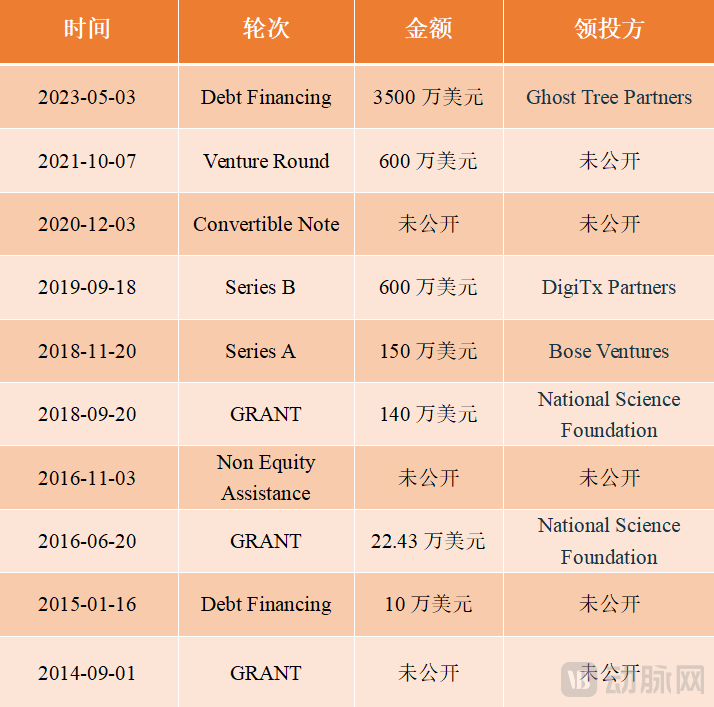
Embr Labs Funding History Data Source: Crunchbase
Many great inventions have originated from accidental discoveries in everyday life.
The story of Embr Labs’ founding dates back to the summer of 2013. At that time, Matt Smith, Sam Shames, and David Cohen-Tanugi, then materials science students at the Massachusetts Institute of Technology (MIT), realized that they had to rely on sweaters to stay warm while working in their laboratory’s overly air-conditioned environment.
“It’s hot outside, but the lab is cold. Why do we still rely on wall-mounted devices to regulate human thermal comfort? Isn’t there a better way? Why can’t we directly ‘heat’ and ‘cool’ ourselves? This would not only enhance our comfort but also help conserve energy,” said Sam Shames.
Inspired by this, the first prototype of Embr Wave was completed in 2014 and won first place in the annual product design competition hosted by the Department of Materials Science and Engineering at MIT. Subsequently, the team received a large volume of emails from around the world, with people inquiring about when they could purchase the product. This provided the team with the idea and motivation to establish a company.
Following market analysis, the team quickly realized that energy efficiency was only part of the equation; the product’s true value lay in helping individuals who experience discomfort due to heat.According to data released by the team, approximately 80 million people in the United States were experiencing discomfort due to temperature extremes at that time, with this figure reaching hundreds of millions globally.They stated that temperature regulation also holds the potential to address anxiety and sleep issues, suggesting their product could enter the wearable device market, which is valued at tens of billions of dollars.
But proving the efficacy of a technology is one thing; addressing customer needs and advancing product commercialization is another challenge altogether. Fortunately, after Embr Labs was founded in Boston in 2014, the team received extensive support from across the Institute. The MIT Martin Trust Center for Entrepreneurship, MIT’s summer accelerator DeltaV, and Intel Capital provided Embr Labs with initial seed funding and operational guidance.
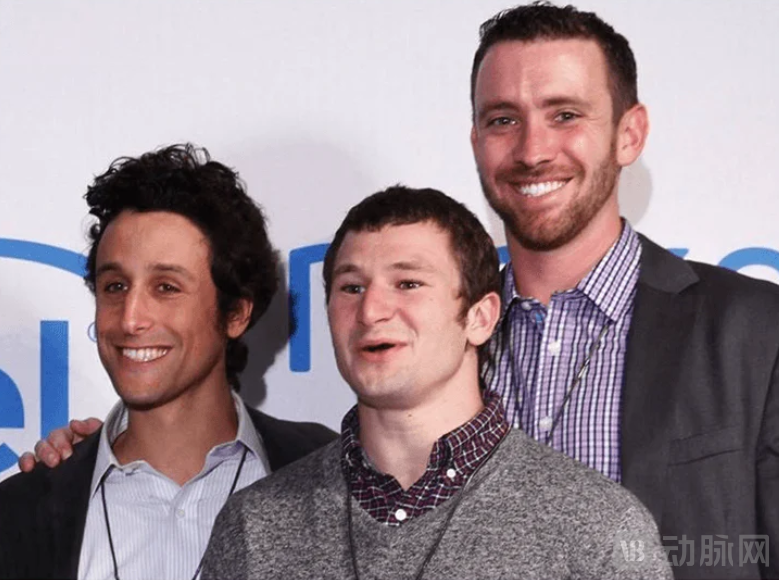
Founding team (from left to right: David Cohen-Tanugi, Sam Shames, and Matt Smith) Image source: Embr Labs official website
Do you feel too hot while sleeping and choose to stick your feet out from under the covers? Or do you splash cold water on your face for a refreshing and invigorating effect?
In fact, these actions do not alter core body temperature, which remains consistently around 37°C. Instead, they modify the perception of hot and cold by changing local skin temperature. This occurs because human skin contains two types of thermoreceptors: one sensitive to warmth and the other to cold. These thermoreceptors send signals to the brain, which processes the thermal stimuli into temperature sensations via the same neural pathways.
Therefore, if one feels discomfort due to warmth or cold, even a slight change in sensation in a localized area of the body can alter the overall perception of temperature and comfort. Embr Wave leverages this principle by using a component known as a “thermoelectric module” to heat or cool specific areas of the body, functioning like a “miniature air conditioner” or heater.
“Thermoelectric modules” are essentially heat exchangers, composed of materials that heat up or cool down when an electric current passes through them. The extent of temperature change varies with the magnitude of the current. Meanwhile, they emit intermittent temperature pulses to the human body, creating a localized physical sensation of cooling or heating, akin to continuously placing a cup of ice water or warm water on one’s hand over the course of several minutes.
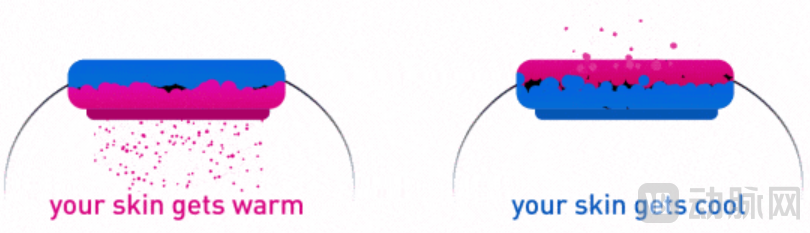
How Embr Wave Works. Image source: Embr Labs official website
After extensive research, Embr Labs discovered that the skin on the human wrist is particularly sensitive to temperature. Furthermore, wave-like heating and cooling cycles can sustain the sensation people experience when first entering a hot bath. Leveraging these insights, Embr Labs developed a wearable wristband that employs a unique periodic heating and cooling algorithm to maximize thermal sensations while minimizing energy consumption.
Embr Wave resembles an ordinary wristband. Once worn, users can press a button at any time to discreetly alleviate hot flashes or chills without drawing attention. Users can also customize their personalized temperature preferences via a mobile app. Powered by a lithium battery, Embr Wave provides approximately 15–50 heating or cooling cycles on a full charge, with an intermittent usage duration of up to 2–3 days.
However, the journey from product development to commercialization is not achieved overnight; it is often a long and arduous process.
The team raised the issue of personal temperature control in 2013, conducted prototype testing in 2015, and began product design in 2016. It was not until 2017 that Embr Labs launched its first wristband, Embr Wave, and offered it for pre-sale on Kickstarter.
To the surprise of the Embr Labs team, they secured over $600,000 in pre-sales, far exceeding their initial target of $100,000.
Embr Labs launched the upgraded wristband, Embr Wave 2, in 2021 and filed patents in the United States, China, and Japan.To date, sales of the Embr Labs wristband have surpassed 100,000 units.
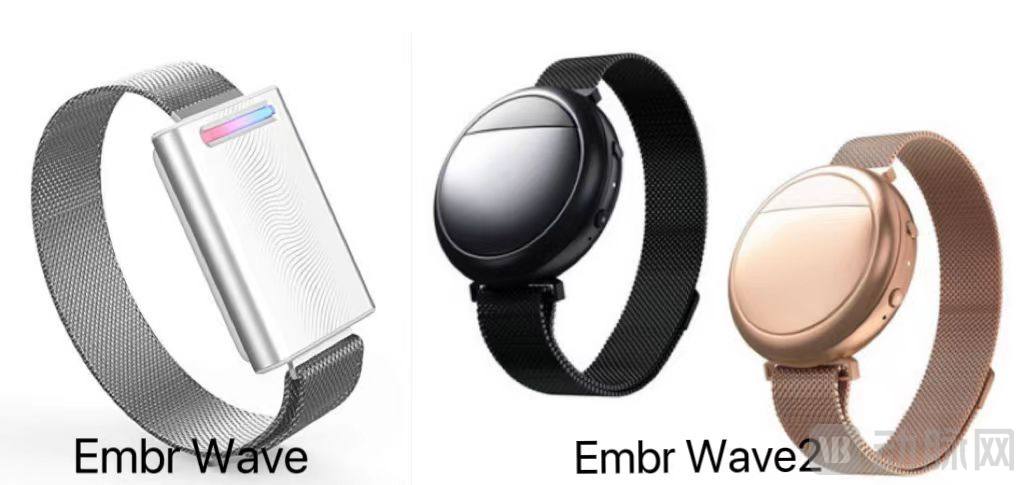
Embr Wave and Embr Wave2. Image source: Embr Labs official website
The vast majority of women in menopause experience hot flashes. Due to declining hormone levels, they frequently feel sudden waves of heat radiating from the chest to the neck and face. This symptom not only affects their daily activities but may also disrupt nighttime sleep.
In their battle against menopause, these women may opt for hormone therapy, physical cooling measures, or yoga practice. Yet, after trying numerous approaches, some still suffer from hot flashes and night sweats.
According to data from Embr Labs,Embr Wave's largest user base is menopausal womenEmbr Labs stated that, in addition to receiving widespread acclaim from users on social media, they have also been inundated with emails. In these messages, women experiencing menopause consistently reported that the Embr Wave significantly alleviated their menopausal symptoms.
In 2019, Embr Labs partnered with Johnson & Johnson to conduct a study on menopausal women.
Study results show that menopausal and perimenopausal women who used Embr Wave for one month experienced significant improvements in hot flashes and insomnia. While wearing Embr Wave, their perception and control of hot flashes improved by 168%, sleep onset latency (i.e., the time required to fall asleep) was reduced by 28%, and nighttime sleep duration was extended.
In addition to natural menopause, certain surgeries or treatments can also induce hormonal changes that lead to hot flashes. Examples include bilateral oophorectomy, treatments for breast cancer and gynecological tumors, and androgen deprivation therapy for prostate cancer in men. Embr Labs states that these individuals constitute its current customer base as well as its potential future user demographic.
Currently, Embr Labs has established partnerships with several prominent distributors and retailers, and the Embr Wave is available in most retail stores across the United States and the United Kingdom, including Costco, Sam’s Club, Walmart, FSA Store, HSA Store, Best Buy, and Target. Embr Labs also plans to launch its products through multiple new retailers in both the US and the UK by the end of the year.
2012 was hailed as “Year One of Smart Wearable Devices” with the debut of Google Glass. After more than a decade of development, smart wearable products have evolved into diverse form factors, including glasses, wristbands, watches, and ear-worn devices. Health-monitoring features such as heart rate, blood oxygen saturation, and sleep tracking were initially the standout attractions of smart wearables but now appear to have become standard offerings.
Today, the landscape of the smart wearables market has largely taken shape. Data released by International Data Corporation (IDC) shows that Apple has firmly held the top position in the global smart wearables market for the past three years. Samsung, Huawei, Xiaomi, and Imagine Marketing account for the vast majority of the remaining market share.
This makes it difficult for new companies to gain entry and establish a foothold in the smart wearable market. On one hand, major industry giants continue to dominate the top positions, squeezing the development space for startups. On the other hand, some companies face intense homogeneous competition as soon as they enter the market; lacking breakthrough advantages in their products, they are gradually eliminated from the competition.
Some products focus on price wars, attempting to open up sales channels with affordable prices of just a few dozen yuan, while Embr Wave is priced at $299 (Apple Watch starts at $349). With a product pricing that is not particularly low, how has Embr Labs managed to survive amidst fierce competition and secure over 300 million RMB in total financing?
The answer may lie in its innovative features and precise target audience positioning.
While other products continue to compete in the heavily homogenized market for health monitoring features, Embr Labs has carved out a unique niche by focusing on thermal regulation, offering a novel experience that refreshes users. More importantly, Embr Labs emphasizes promotion within vertical niche segments, starting with the relief of hot flashes and precisely targeting the large demographic of menopausal women. The label “a wristband for alleviating menopausal hot flashes” is compelling enough to attract many menopausal women, who not only retain a strong impression of the product but also proceed to make purchases.