

ExoThera Biosciences: A Rising Star from CAS Institute of Chemistry Files IPO Prospectus
ECHO BIOTECH
Exosome Technology and Diagnostic Product Developer
In 2016, left the Institute of Chemistry, Chinese Academy of Sciences.Dr. Zhao Libo, Co-founder and CTO of Beijing ECHO BIOTECH Co., Ltd. (hereinafter referred to as “ECHO BIOTECH”)He officially embarked on his full-time entrepreneurial journey. Since then, he has devoted all his time to the development and clinical translation of exosome technologies. Shuttling between the laboratory and conference rooms, he not only maintained a steady R&D pace but also participated comprehensively in the establishment and management of the company.
Yet he did not find it arduous. Since arriving in this untapped frontier, he has been filled with excitement and anticipation. “Judging from clinical value, technical feasibility, and the broader trends shaping the biotechnology industry, I believe the exosome field will give rise to a cohort of highly valuable high-tech enterprises.”This is a once-in-a-lifetime entrepreneurial opportunity, worthy of the efforts of my team and me..” Zhao Libo said.
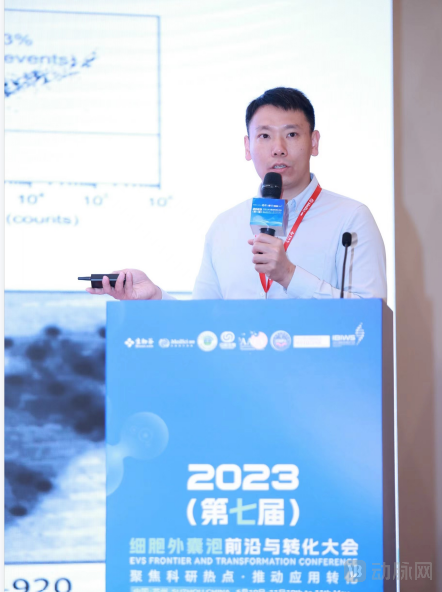
Photo: Zhao Libo, Co-founder and CTO of ECHO BIOTECH (Photo provided by the interviewee)
Recalling how he became involved with exosomes and the reasons for founding ECHO BIOTECH, Zhao Libo told VCBeat that it all started with anResearch Project Requirements. Around 2011, while still a postdoctoral fellow, he was working on a challenging research project, and exosomes, as a related field of this project, caught his attention.
“Exosomes play a significant role in many physiological and pathological processes. They can dynamically reflect the phenotype of parent cells in real time and serve as important mediators of intercellular material and signal communication, thus playing a crucial role in disease diagnosis and treatment,” said Zhao Libo. As understanding deepens, Zhao Libo has found that exosomes, as naturally evolved nanocarriers, offer advantages such as low toxicity and side effects, low immunogenicity, and good permeability. These features hold promise for overcoming some key bottlenecks in drug delivery. Combined with the unique biological functions of exosomes, he believesThis field has the potential to foster a cohort of innovative enterprises in the future.“Compared with other fields, we are not far from the world’s leading level this time,” he said.
So in 2012, he discussed this idea with a close friend, and in the following years, he continued his scientific research in the laboratory. The turning point came in 2016, when he graduated from the Base Class of Life Science and Technology at Wuhan University and successively joined gene sequencing companies such as Novogene and BGI Genomics, consistently working in bioinformatics-related fields.Kong GuanyiI also discussed this with our mutual friend, who expressed his intention to establish an exosome company.
It was through the introduction of a mutual friend that Zhao Libo and Kong Guanyi met for the first time, only to discover with surprise that they were alumni and shared an optimistic outlook on the future development of the exosome field. At that time, Kong Guanyi had already embarked on full-time entrepreneurship and was seeking suitable co-founders. “In terms of both industry insight and personal rapport, Mr. Kong and I areA Perfect Match“Therefore, I decided to resign and start my own business,” said Zhao Libo.
Bidding farewell to the laboratory, Zhao Libo embarked on a pioneering venture as he shifted his focus to the market.
The exosome boom is in full swing, capturing the attention of scholars, investors, and companies alike. Research articles on exosome-based drug delivery, diagnostics, and immunotherapy have been steadily appearing in top-tier journals such as Science, Nature, and Cell. The Journal of Extracellular Vesicles (JEV), a specialized journal in the exosome field, made a remarkable debut with its first impact factor. Primary market financing continues to surge, with pharmaceutical giants like Roche, Eli Lilly, and Takeda Pharmaceutical each investing hundreds of millions of dollars in a determined bid to secure a leading position.
But six years ago, exosomes existed in a completely different world. In 2017, when ECHO BIOTECH was just founded, exosomes were still little known within China’s industrial sector. “In the early stages, we were basically crossing the river by feeling the stones..” stated Zhao Libo. During that period, Zhao Libo and other team members first firmly established their entrepreneurial direction; while external parties remained skeptical about exosomes, the team chose to press forward unwaveringly. Secondly, the team acquired industry data related to exosomes from abroad, completed preliminary market research, and ultimately positioned ECHO BIOTECH as an innovative enterprise focused on engineered exosomes.
Currently, ECHO BIOTECHA complete production process and quality control system for pharmaceutical-grade exosomes has been established, and the construction of China’s first GMP pilot-scale workshop for engineered exosomes is nearing completion.. In 2023, ECHO BIOTECH announced the completion ofTens of millions in A++ round financing, this round of financing was jointly participated in by Zhongbo Juli and Yanrui Investment, with existing shareholder Baidu Ventures continuing to increase its support.
ECHO BIOTECH’s growth has been unexpectedly rapid, yet entirely logical.
In Zhao Libo’s view,Team Collaborationis a key factor enabling the company to achieve rapid and healthy growth. In the interview, he stated, “The backgrounds of team members should not be highly homogeneous. In the early stages of the company’s development, each of us had to be able to work independently.”
Therefore, in addition to Kong Guanyi and Zhao Libo, who are responsible for overall company coordination and technology, the founding team of ECHO BIOTECH also includes members handling government affairs and operations-related work.Fang Gaoshanand those responsible for business operationsLi Zhi. From technology to operations and then to business, the founding team of ECHO BIOTECH has clear divisions of labor. This has also greatly promoted the company's longer and farther development.
Take site selection as an example. Initially, ECHO BIOTECH was established in the Peking University Medical Industrial Park. “Mr. Fang first visited various local authorities to gather a list of candidate sites. He then outlined our company’s operational requirements, after which the team conducted a preliminary screening to identify several key locations for his on-site inspections,” Zhao Libo told VCBeat.
The decision to establish ECHO BIOTECH in the PKU Healthcare Industrial Park was driven by two key factors. First, the park provides essential infrastructure, helping early-stage micro-enterprises reduce operational costs. Second, its strategic location in Changping District, Beijing—known as the “Northern Star” of the capital—offers significant advantages. With the Life Science Park and Future Science City serving as its core hubs and showcases, the area has attracted a large pool of young talent in the medical field, which is crucial for startups seeking to recruit skilled professionals.
ECHO BIOTECH has relocated its new office to the China Resources Life Science Park in Daxing District, Beijing. This move was driven by staff growth, which necessitated larger office space, as well as business development needs, including the construction of a state-of-the-art GMP pilot plant for exosomes. “As before, Mr. Fang traveled extensively to conduct an initial screening of candidate sites. After comprehensively evaluating factors such as usable area, site structure, and supporting facilities, we ultimately decided to build the GMP facility in Daxing,” stated Zhao Libo.
In addition to site selection, ECHO BIOTECH’s first round of financing was also the result of team collaboration.
About two months after its establishment, ECHO BIOTECH obtainedLanfeng CapitalandEnran Venture Capitalangel round investment. Before other founding team members formally communicated with investors, Kong Guanyi had already engaged extensively with many investors and summarized his experiences. Therefore, other members only needed to interact with investment firms that had relatively clear investment intentions.High-Quality Communication, thereby securing the first round of financing with relative ease.
After all, during that period, exosomes were still regarded as a niche sector. Most domestic investors in China adopted a wait-and-see attitude toward the development of exosome technologies and were hesitant to invest. This round of financing thus served as the strongest testament to the team’s capabilities and their strategic planning.
To build a great enterprise, one of the core tasks is to continuously identify the most outstanding and professional individuals in the industry to handle specialized responsibilities, foster effective collaboration among these talented individuals, and ultimately form a strong and stable team. Since an individual’s capabilities have inherent limits, and their vision and perspective are finite, it is essential to respect and trust top-tier professional talent.
But for startups, how can they find such outstanding talent? Zhao Libo has already summarized a set of concepts and methods—Talent recruitment is a phased process of selection.
As Zhao Libo noted, during the early stages of a company’s establishment, limited initial accumulation and insufficient appeal to talent left firms with little room for selection. Therefore, at this stage, companies would, on one hand, appropriately adjust their talent selection criteria to attract suitable candidates; on the other hand, if they encountered particularly desirable candidates, they would proactively promote themselves to persuade these individuals to join.
As companies continue to evolve, their ideal candidate profiles have also shifted. Businesses are seeking more specialized talent, and accordingly, recruitment standards have become more stringent. “Taking R&D as an example, we hope candidates not only possess substantial professional expertise but also demonstrate an open and collaborative mindset, as well as strong psychological resilience,” said Zhao Libo.
As of now, the team size of ECHO BIOTECH has reachedMore than 120 people, and is primarily structured around the needs of its two major business segments. The first segment focuses on the research and development of innovative exosome-based drugs, offering CRO services such as the design and development of engineered exosome vectors and the development of preclinical candidate (PCC) engineered exosome therapeutics based on client requirements, as well as CDMO services for engineered exosomes. The second segment centers on translational medicine research services built upon fundamental exosome research, mainly involving scientific collaborations with clinical experts. In addition, ECHO BIOTECH has established finance, human resources, engineering, and sales teams to provide further support for the company’s development.
“During the talent recruitment process, the founding team is also gradually refining ECHO BIOTECH’s talent management model.”Talent management models also vary across different stages.“We also engage external agencies to provide training for our employees. This represents a new approach to organizational development aligned with changes in team size. As our business has expanded and the company has begun to generate revenue, we have also established our own sales team to seek out more collaboration opportunities,” said Zhao Libo. Overall, ECHO BIOTECH is gradually moving onto the right track, with its business operations exhibiting distinctive characteristics.
A clear pathway for the translation of scientific achievements into practical applications is evident in Zhao Libo’s career. Transitioning from a researcher to a corporate Chief Technology Officer (CTO), he took the initiative to capture and secure market share, collaborating with his team through a clear division of labor to jointly advance the clinical translation of engineered exosomes. “My primary responsibility at the company is R&D, which includes tracking the latest research advancements in the field, conducting feasibility studies for project initiation, planning and implementing R&D activities, as well as analyzing, troubleshooting, and resolving issues. These tasks are quite similar to my work at the research institute,” stated Zhao Libo.
Therefore, for Zhao Libo, entrepreneurship is both a practical application of his academic learning and a more challenging endeavor. He told VCBeat that there are three significant differences between scientific research and entrepreneurship.
The first location isServiceDifferent objectives,Generally speaking, scientific research aims at application value and translational value; therefore, the sources of research projects are quite diversified. In contrast, enterprises aim to achieve profitability by conducting research and development with commercial value. The second point isVarying degreesIn terms of exploratory and innovative nature, scientific research projects are more about venturing into uncharted territories, discovering novelties that others have not yet identified, and solving problems from 0 to 1. In contrast, enterprises focus on user needs, bringing high-quality and valuable products or services to the market through scaling from 1 to 100. The third point isDifferent Competitive LandscapeAs a scientist, one can switch research locations as needed, pursue two or even multiple research directions simultaneously, and even abandon unpromising lines of inquiry. In the corporate world, however, the risks associated with such pivots are entirely different from those in academic research projects; furthermore, once a company undergoes such a transition, investors tend to become more cautious in their actions.
The above are the reflections shared by Zhao Libo in the sixth year of his entrepreneurial journey. Through my conversations with him, I could sense in him certain qualities common to true scientist-entrepreneurs:Unwavering Conviction, Bold Risk-Taking, Clear Division of LaborIn the future, he and the entire team at ECHO BIOTECH will uphold the values of “altruism, continuous improvement, trust, accountability, enduring passion, and embracing change,” continuing to empower clinical research and accelerate clinical translation by providing systematic exosome research and translational solutions, with the aim of becoming a globally leading partner in exosome research and translation.