

Cognixion Secures FDA Breakthrough Device Designation for Non-Invasive BCI Platform Cognixion ONE™ Axon

Cognixion
Brain-Computer Interface Product Developer

Prime Movers Lab
Early-Stage Venture Capital Firms

Amazon Alexa Fund
Venture capital-style investment departments, corporate accelerators, and university scholarship programs
The first half of 2023 was a mixed bag for Elon Musk.
In April, Musk’s Starship conducted its historic maiden test flight. Although the spacecraft exploded approximately four minutes after launch, successfully lifting the combined Starship and Super Heavy rocket off the launch pad was already a significant achievement. Earlier in March, according to Reuters, the U.S. Food and Drug Administration (FDA) rejected the clinical trial application for the Link brain chip submitted by Neuralink, the brain-computer interface company founded by Musk.
While Neuralink has faced setbacks with the FDA, Cognixion, another developer of brain-computer interfaces (BCI), obtained the FDA’s Breakthrough Device Designation in May. This designation will streamline the development and validation process for its flagship product, the Cognixion ONE™ Axon (hereinafter referred to as “Axon”), and FDA reviewers will prioritize providing interactive feedback to Cognixion to accelerate Axon’s market entry.
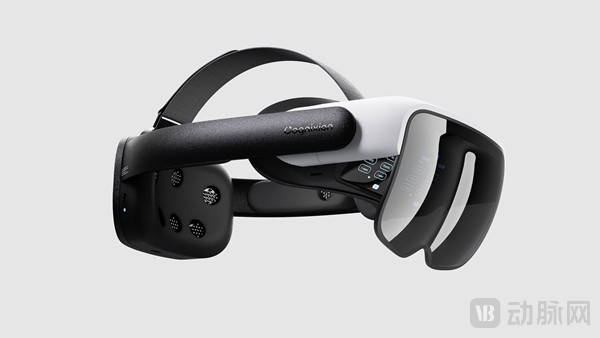
Cognixion ONE™Axon
Image source: Cognixion official website
Brain-Computer Interface (BCI), an interface that connects the brain with machines, establishes a direct signal transmission pathway between the brain and external devices, thereby enabling information exchange between the brain and these devices. The momentum for BCI technology began building in the 1970s, and since 2004, it has entered the stage of applied trials, with many theoretical achievements gradually being commercialized.
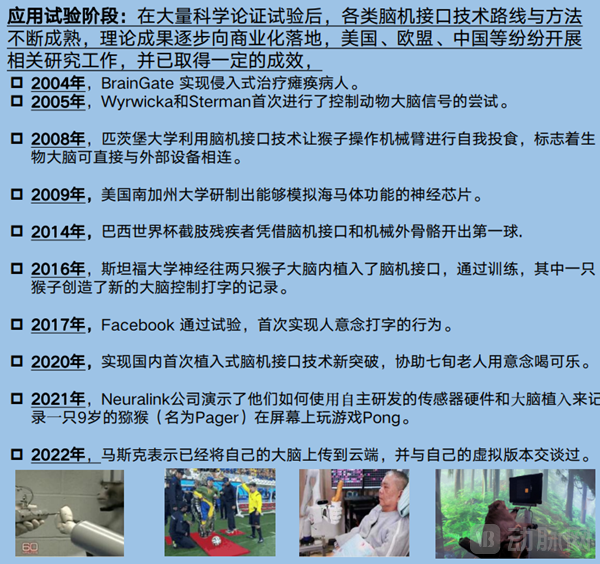
Brain-Computer Interface Technology Application Trial Phase
Source: VCBeat, “2022 Brain-Computer Interface Industry Research Report”
Cognixion was founded in the United States in 2017. According to data from Crunchbase’s official website, Cognixion has completed four rounds of funding within less than five years since its inception, raising a total of $14.8 million. This figure pales in comparison to Neuralink’s $205 million Series C funding round in 2021.

Cognixion's Funding History
Compiled and produced by VCBeat
According to VCBeat’s “2022 Brain-Computer Interface Industry Research Report,” the global market size for brain-computer interfaces reached USD 1.46 billion in 2020 and is projected to reach USD 3.6 billion by 2027, representing a compound annual growth rate of approximately 14%. In light of the nearly USD 4 billion market opportunity ahead, what unique advantages does Cognixion possess that have earned it favor with the U.S. Food and Drug Administration (FDA) and will enable it to meet future user and market expectations?
Weighing only 2.1%–2.3% of total body weight, the brain is the most complex object known in the universe. Its 10 billion neurons underpin a wide range of complex human activities, including perception, thinking, emotion, and action; the electrical signals generated by these activities are known as brainwaves.
Brainwaves can be categorized into alpha (α), beta (β), theta (θ), and delta (δ) waves of different frequencies, which can be measured using methods such as electroencephalography (EEG). Brain-computer interface (BCI) technology aims to establish a direct communication pathway between the human brain's neural activity and external devices, thereby enabling information exchange and functional integration between the nervous system and those devices.
The technical challenges of brain-computer interfaces (BCIs) lie in the interface electrodes for detecting cerebral electrical signals and the analytical algorithms. The key reason for the FDA’s rejection of Neuralink’s clinical trial application was that Neuralink’s interface is invasive, requiring craniotomy. In contrast, Axon employs a wearable, non-invasive brain-computer interface.
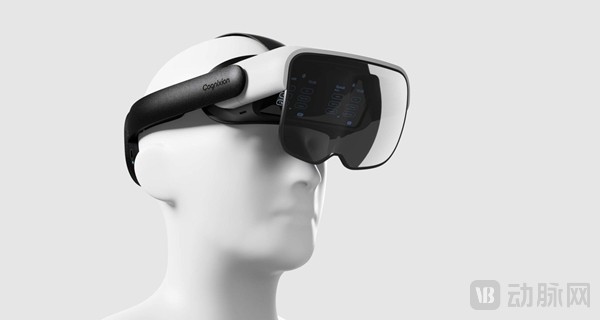
Axon Non-Invasive Brain-Computer Interface
Image source: Cognixion official website
Axon looks like ordinary AR glasses, but Axon does not need to be connected to any power source or external devices with wires.Axon detects brainwaves via a brain-computer interface (BCI) composed of six EEG sensor channels located in the visual cortex area (the back of the head). This interface leverages visual evoked potentials (VEPs) to detect the brain’s response to visual stimuli, and then employs AI algorithms to identify and analyze brain signals, thereby enabling real-time interaction with the external world for users with communication impairments.
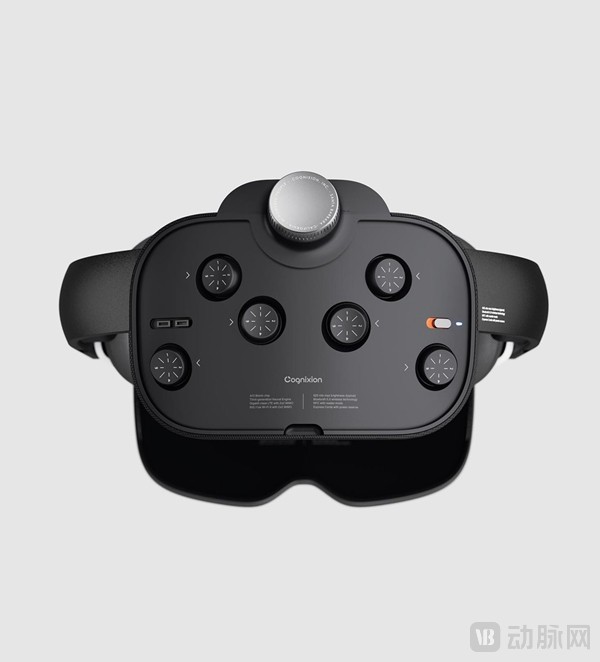
Axon Non-Invasive Brain-Computer Interface
Image source: Cognixion official website
Axon leverages Bluetooth Low Energy wireless technology—BLE8—to enable real-time, short-range, low-cost transmission of brain biosignal streams.Furthermore, these six interfaces are disposable consumables that can be replaced at any time. Both the interface positions and the mounting straps are adjustable, making the device suitable for users with any head shape. It can monitor the wearer’s electroencephalogram (EEG) signals without requiring additional hair shaving or the use of conductive gel.
Another technical innovation highlight of Axon lies in the AR interface at the front of the device.Axon is not an ordinary AR box; instead, it leverages the interactive design of AR interfaces to simplify and upgrade communication assistance solutions for brain-computer interfaces.
Axon’s AR interface features a bidirectional display, allowing both the user and the interlocutor to view the screen content simultaneously.Unlike traditional AR devices, Axon ensures that individuals with disabilities who have communication barriers can maintain eye contact with their conversation partners, as it does not obstruct the user’s eyes. Users also do not need to use any additional buttons; they can control the AR images in their field of view and complete the entire communication process through “eye-tracking feedback.”
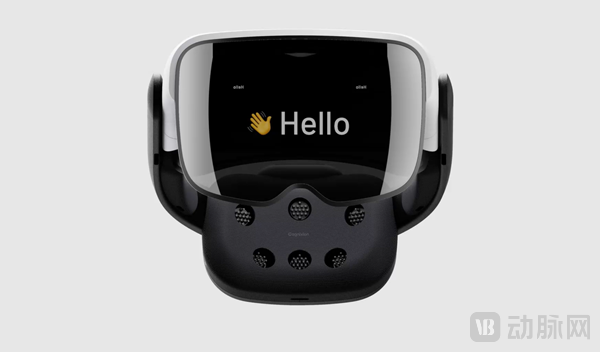
Cognixion ONE™Axon
Image source: Cognixion official website
Axon’s AR interface offers three context-predictive keyboard options: QWERTY (the standard English keyboard), ABC (alphabetical order keyboard), and Linotype. In a Cognixion use case, Minnell, a Canadian professor of Old English who lost language function after a stroke in late life, delivered his first post-stroke academic lecture on Old English using this device.
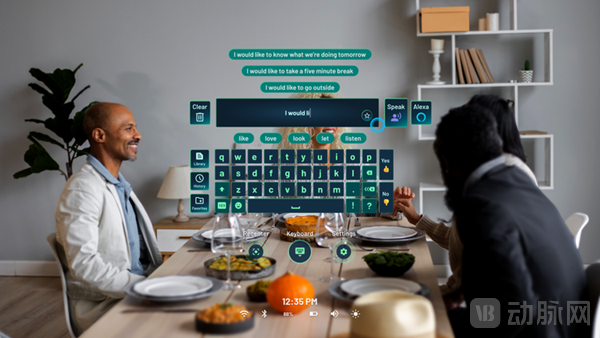
AxonAR Interactive Interface
Image source: Cognixion official website
According to the test video released by Cognixion, users wearing Axon can respond within 5–7 seconds after the interlocutor asks a question., and users can choose between voice output or converting speech to text displayed on the mirror surface, thereby addressing the diverse needs of patients with communication disorders.
As an investor in Cognixion, Amazon has licensed the deep integration of its Alexa voice assistant into the Axon system. Users can access smart home devices, music, games, and more through Alexa, while the built-in 4G LTE network caters to diverse usage scenarios.
According to Andreas Forsland, founder of Cognixion, the company now covers all U.S. insurance plans.Axon, an AI-powered AR device, helps individuals with severe motor impairments communicate and interact more effectively with the outside world. This includes those suffering from conditions such as amyotrophic lateral sclerosis (ALS), also known as Lou Gehrig's disease; motor neuron disease (MND); and severe motor impairments resulting from acquired conditions like trauma and cerebral palsy.
Cognixion previously launched an app called Speakprose on Apple’s App Store in 2019. Now updated to version 3.0, Speakprose is an augmentative and alternative communication (AAC) software designed with the same objective as Axon: to help individuals with speech and motor impairments communicate with the outside world more quickly and naturally.
Once Speakprose is downloaded and installed on an iPad, users can control the device through gaze and facial tracking without manual operation. With AI-powered predictive text, users can type to form sentences for asking questions or making comments, with keys arranged in groups based on usage frequency. Users may also choose to have the built-in speech synthesis read the sentence aloud, enabling real-time communication.
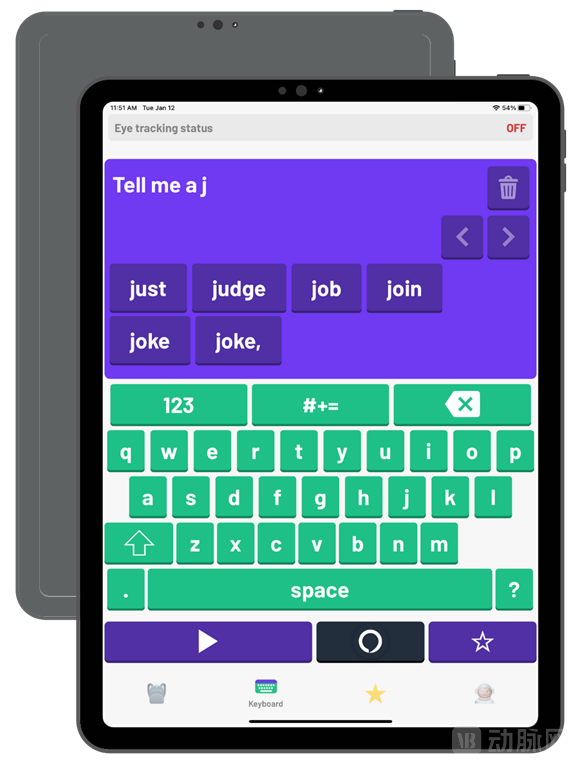
Speakprose3
Image source: Cognixion official website
Speakprose 3 also integrates the Alexa voice assistant. Software subscribers can interact with Alexa to control smart home devices and perform tasks such as independent shopping. The application will continue to leverage AI’s machine self-learning technology to expand its functionality in the future.Since its initial launch on the App Store in 2019, Speakprose has attracted nearly 1,000 users from over 70 countries to download and use the app.
For many people, the mere ability to say “yes” or “no” is enough to transform their lives. Therefore, compared with the anticipated “high price” of Axon following its future FDA approval and market launch, Speakprose 3 appears much more accessible.According to the Cognixion website, the monthly subscription for Speakprose 3 costs just $9.99, with a free first-month trial. Users who are satisfied after the trial can purchase a lifetime license for only $149.99.

Speakprose 3 Pricing Structure
Image source: Cognixion official website
Communication is one of humanity’s most precious abilities. Brain-computer interfaces can provide patients and individuals with disabilities who are unable to speak, write, or move with means to communicate with and control the external world.
McKinsey has predicted that the global brain-computer interface (BCI) industry will generate an economic value of $70 billion to $200 billion over the next 10 to 20 years. In response, governments, research institutions, and enterprises in China, the United States, the European Union, Japan, South Korea, and other countries have accelerated their strategic deployment in BCI technology to secure a leading position in the global landscape of brain science.
According to statistics from the PatSnap database, research achievements in the field of brain-computer interfaces (BCI) are currently concentrated mainly in the United States and China. In addition to Cognixion and Neuralink, Synchron, an endovascular BCI company backed by Bill Gates, announced this January that it had demonstrated the safety of its invasive brain-computer interface in FDA-approved clinical studies.
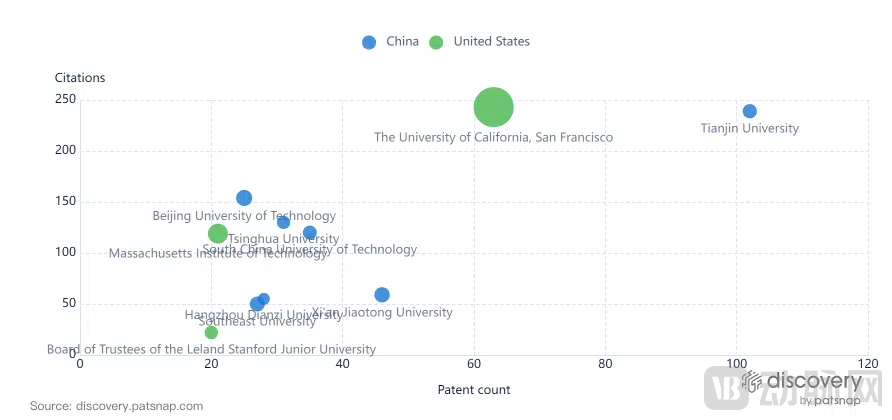
Research in the Field of Brain-Computer Interfaces (BCI)
Image source: PatSnap official website
Research on brain-computer interfaces (BCIs) in China began in the late 1990s. Although it started later than in the United States, China has now joined the ranks of international leaders. According to data from VBInsight, the industrial think tank of VCBeat, the landscape of BCI research entities in China is showing a trend toward diversification, with various research institutions established by universities and scientific research institutes accounting for a significant proportion.
At the 2018 World Robot Conference—BCI Brain-Control Category’s Brain-Controlled Typing Competition, the novel brain-computer interface (BCI) paradigm based on steady-state visual evoked potentials (SSVEP), developed by Tsinghua University, gained widespread international recognition and has since become one of the three major paradigms for non-invasive brain-computer interfaces.Furthermore, the world’s first interventional brain-computer interface (BCI) trial in non-human primates, led by Professor Duan Feng’s team at Nankai University, was successfully conducted in Beijing. The trial achieved invasive BCI-controlled robotic arm operation in a monkey’s brain.
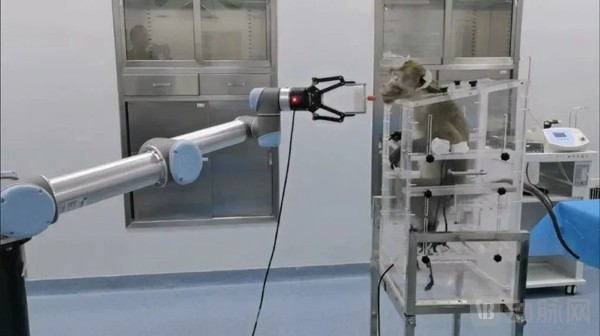
Trial Enables Animals to Actively Control Robotic Arms via Invasive Brain-Computer Interface
Source: Tianjin Release
In contrast to Neuralink’s invasive brain-computer interface, which involves skull trepanation and has resulted in the deaths of multiple test monkeys, Professor Duan Feng’s team at Nankai University has attached EEG sensors to the walls of cerebral blood vessels in monkeys via interventional surgery. This approach enables the acquisition of electroencephalographic (EEG) signals without craniotomy. Compared with both invasive and non-invasive brain-computer interfaces, this technology offers a balance between safety and recognition stability.
According to the report by VCBeat, BCI will become part of the next era of breakthrough technologies. In the field of brain-computer interface technology, the future development of BCIs, classified by the direction of information transmission, will gradually evolve from classic brain-computer interfaces to brain-computer interaction, and ultimately to the model of brain-computer intelligence.
The third Sunday of May is China’s National Day for Assisting the Disabled. Over the past nearly 50 years, brain-computer interfaces (BCIs) have evolved significantly, turning many scientific visions into reality and benefiting numerous patients with neurological disorders. Although many technical challenges remain to be overcome, it is certain that the pace of connecting the human brain with computers is accelerating.