

Medical Professionals Go All-In: Decoding the Six Hot Trends Behind the CMEF 2023 Surge

Nanovision
X-ray Detector and Static CT Product R&D Provider

Edge Medical
Developer of Robot-Assisted Minimally Invasive Surgical Systems

United Imaging
High-end Medical Device Developer

WeMed
Interventional Medical Device Provider

Neusoft
Comprehensive Solution Provider for Clinical Diagnosis and Treatment
This year, healthcare professionals have truly gone all out. Since the beginning of the year, various expos, exhibitions, and industry summits in the healthcare sector have been exceptionally popular, as if everyone is making up for the “forced lying flat” of the past three years. This was particularly evident at the recently concluded 87th China International Medical Equipment Fair (CMEF), where crowds surrounding booths and forming long queues were a common sight.
At this year’s CMEF, medical device manufacturers were particularly fond of drawing analogies with the automotive industry. They highlighted two key similarities: first, the vast market size with significant remaining potential; and second, the robust momentum of the Chinese market, which continues to demonstrate strong growth even as global expansion slows.
Taking GE HealthCare as an example, 50 global representatives traveled from around the world to Shanghai for this year’s CMEF, aiming to capture opportunities in China’s medical device market. Another industry giant, Philips, also unveiled several “Made in China” products making their debut or first exhibition at the event, underscoring its commitment and achievements in “Smart Innovation in China” and localization.
Interestingly, as domestic companies loudly champion “domestic substitution,” multinational medical device firms have also joined the fray, practically implementing “Innovated in China, Made in China.” Judging from the scene at CMEF, both domestic and foreign enterprises are eager to secure a share of the Chinese market.
As a bellwether for the industry, CMEF signals emerging development trends. At this year’s CMEF, six key areas—high-end imaging equipment, medical device management, endoscopy, surgical robots, medical AI, and the digital-intelligent transformation of medical devices—garnered particular attention and are poised to become major drivers of growth throughout the year.
Over the past few years, numerous Chinese medical imaging companies have not only captured significant market share in primary healthcare but also dedicated resources to the research and development of high-end imaging equipment. This year, they presented their achievements at the China Medical Equipment Fair (CMEF), making “world’s first” a frequently heard phrase on the exhibition floor.
For example, Neusoft's launch at CMEFThe Yaoshi Series CT is currently the fastest-rotating spiral CT globally, with a gantry rotation time of just 0.235 seconds per revolution.。
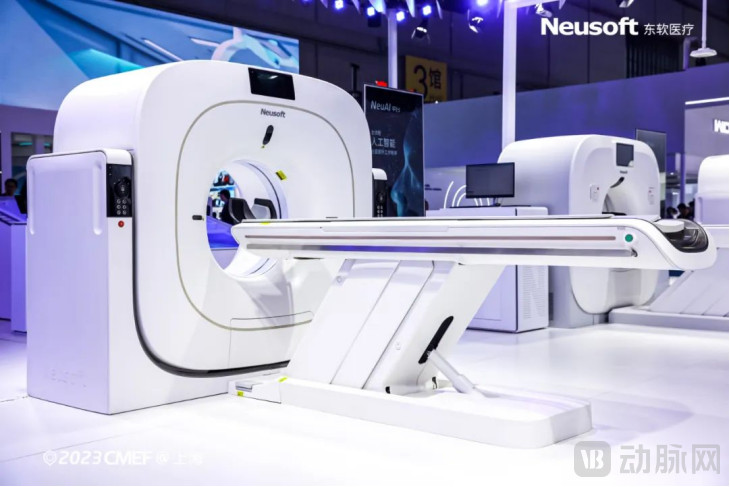
Neusoft Yaoshi Series CT
For a long time, the maximum rotation speed of CT gantries has struggled to break the 0.25-second barrier, limiting further improvements in the efficiency of applications such as cardiac scanning. Leveraging an aerospace-grade integrated lightweight structural design for its supersonic platform and variable-speed rotary drive system, the Yaoshi series CT surpasses the widely recognized rotational speed limit by more than 0.01 seconds, while maintaining a standard bore diameter (72 mm).
Unlike Neusoft, which focuses on spiral CT, Nanovision is determined to address existing clinical challenges with static CT. At this event, Nanovision broughtThe World’s First Whole-Body Medical Multi-Source Static CT — Compound Eye 24. The device employs a dual-ring structure composed of 64 photon-counting detector arrays and 24 scanning X-ray source arrays, achieving a voxel resolution 64 times superior to that of conventional spiral CT, along with multi-energy spectral imaging capabilities. Meanwhile, the Fuyanjing 24-static CT has achieved a scan slice thickness of 165 μm, approaching the expert-recognized 100 μm threshold for mesoscopic imaging. The product is expected to receive regulatory approval next year.
United Imaging and Kaiying Medical have also simultaneously launched the world’s first products. Among them, United Imaging has introducedThe World’s First 5.0T Whole-Body Human MRI: uMR Jupiter. Equipped with the uAIFI brain-inspired computing platform, this product significantly enhances system performance, scanning intelligence, imaging speed, and signal-to-noise ratio. Featuring an ultra-high-performance gradient of 120 mT/m and independent 8-channel RF volume transmission, it can track whole-brain nerve fiber bundles down to 1 millimeter, enabling early detection of minute lesions and achieving microscope-level high-definition whole-body imaging. Additionally, this product can be flexibly deployed in any existing 3.0T clinical site.
Kaiying Medical showcasedThe World's First Precision Tomographic Standing CT—Standing 128,It is an imaging method that can comprehensively and accurately assess information in weight-bearing or standing positions, compensating for the inability of traditional CT supine scans to fully evaluate the true condition of lesions, which leads to difficulties in clinical assessment, diagnosis, and treatment.
In addition to launching new equipment, Mingfeng Medical is also focusing on intelligent applications. For instance, its Tianji series 48-slice 96-layer all-around CT is equipped with a high-heat-capacity X-ray tube, the first domestically developed and independently innovated ShenGuang detector material, intelligent dynamic temperature control technology, and built-in ECG gating. It also features an advanced application platform comparable to that of 512-slice CT systems, offering sophisticated clinical applications such as coronary CTA, emphysema analysis, brain perfusion + CTA, liver perfusion + CTA, spectral analysis, and dual-energy metal artifact reduction, thereby meeting both clinical and research needs.
Fosun Medical Devices unveiled the all-new generation CereTom Elite mobile head and neck CT scanner, exclusively distributed by US-China Intermed. This device features an upgraded hardware imaging system, a more powerful mobile post-processing workstation, and an exclusive Pediatric Care Kit. It also incorporates enhanced advanced post-processing software, including superior noise reduction, metal artifact removal, and windmill artifact correction.
As an increasing number of domestic first-in-class innovations become global firsts, and as Chinese companies continue to break through technological barriers and capture market share, China’s medical imaging enterprises are poised to lead global industry development.。
Currently, the installed base of imaging equipment in China has reached a significant scale. Similar to automobiles, large-scale medical devices require routine maintenance and servicing. Consequently, industry leaders such as GE Healthcare, Neusoft Medical, and Mindray have established healthcare-specific “4S stores,” betting on the medical equipment management market and promoting these initiatives at the CMEF.
Among the offerings, GE Healthcare’s Ultrasound Premium Care, unveiled at CMEF, provides comprehensive coverage and one-stop centralized management for all GE Healthcare ultrasound systems across the entire hospital, thereby maximizing the operational efficiency of each unit. According to the company, Ultrasound Premium Care ensures the normal operation of ultrasound equipment while enabling it to deliver greater value throughout its full lifecycle. Based on service age, ultrasound devices are categorized into Flagship Devices (early stage, 0–3 years), Core Devices (mid-stage, 3–6 years), and Backup Devices (late stage, 6+ years), with tailored maintenance and clinical function expansion services provided for each lifecycle phase.
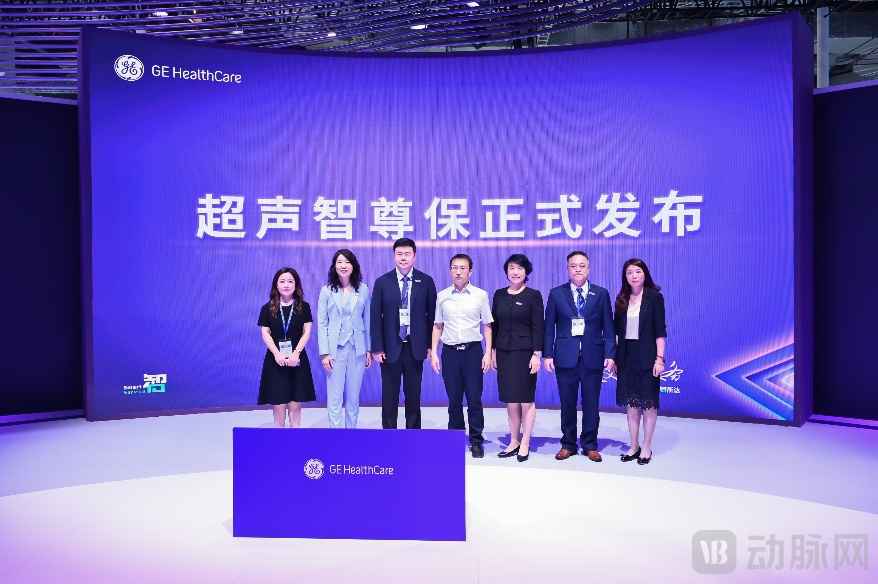
GE Healthcare Ultrasound Supreme Care
Neusoft Medical leverages an advanced combination of digital diagnostic and therapeutic equipment, informatized process platforms, and a suite of AI applications and services to build professional digital-intelligent clinical solutions. Neusoft Medical has developed a remote operations and maintenance platform that utilizes artificial intelligence and Internet of Things (IoT) technologies to remotely monitor equipment status and conduct comprehensive, real-time analysis of equipment performance. This provides support for the early detection, proactive prevention, timely handling, and continuous optimization of equipment failures. Through rapid and timely maintenance, the platform significantly reduces the probability of downtime, enhances equipment safety and reliability, helps hospitals minimize downtime to the greatest extent, and improves equipment utilization efficiency.
Mindray’s “RuiZhiLian Ecosystem” also drew significant attention at the CMEF. Focusing on the digitalization of medical devices, the RuiZhiLian Ecosystem integrates device data with clinical diagnosis and treatment execution. It encompasses intelligent hardware, Internet of Medical Things (IoMT), and data interoperability, while linking to smart applications such as clinical automation, intelligent decision support, and medical equipment management.
As the number of deployed medical devices continues to rise, hospitals must reevaluate these assets and seek value through effective management. After all, maximizing the value of each device also requires adopting the principle that “the best physicians prevent disease before it occurs.”
Endoscopy was a highlight at this year’s CMEF exhibition. Compared with previous years, a large number of domestic endoscope manufacturers participated, offering not only a wider variety of exhibits but also achieving technological breakthroughs.
In terms of exhibit categories, the CMEF venue featured confocal endoscopes launched by Jingwei Shida, ultrasound endoscopes displayed by Sonoscape Medical, 3D 4K fluorescence endoscopes from DPM, disposable endoscopes from InnoLife, and capsule endoscopes from Anhan Technology, among others.
Among them, the second-generation Beixi confocal micro-endoscope launched by Jingwei Shida provides clinicians with real-time, in vivo cellular-level images magnified 1,000 times, displaying morphological and functional information of cells. Meanwhile, during clinical diagnosis, treatment, and follow-up, the Beixi confocal micro-endoscope assists physicians in promptly detecting lesions and determining their nature. Since its market launch, the Beixi confocal micro-endoscope has been deployed in more than 50 Grade A tertiary hospitals across China.
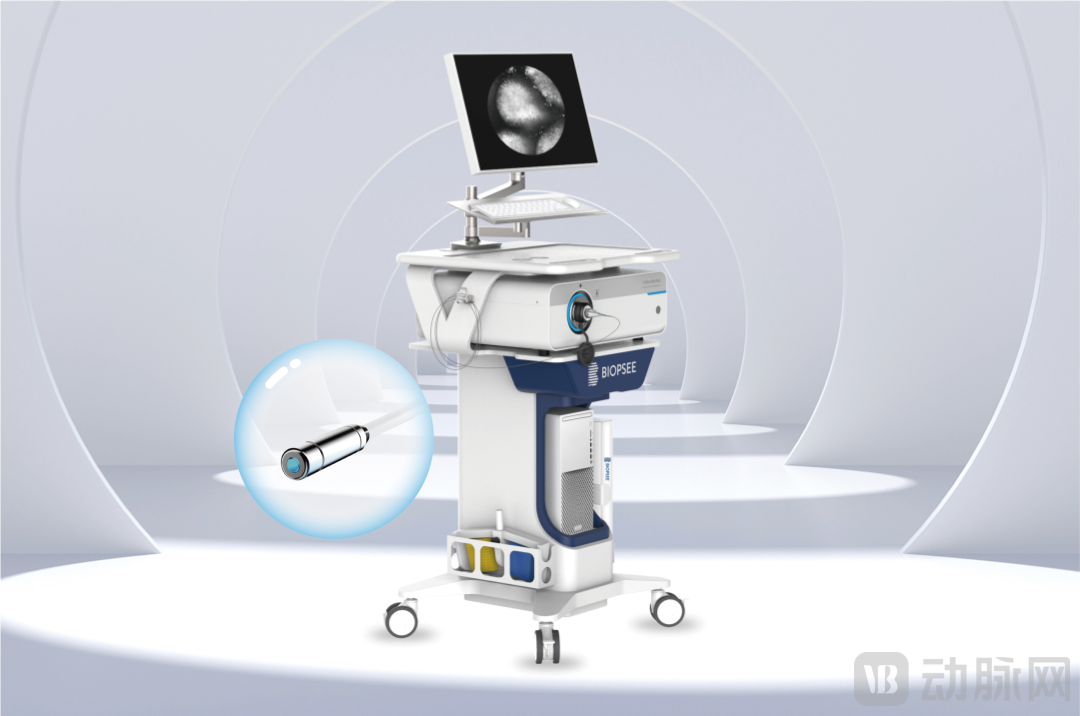
Jingwei Shida Beixi Confocal Microscopic Endoscope
Sonoscape not only showcased its endoscopic ultrasound systems but also introduced a brand-new 4K ultra-abdominal integrated solution. According to the company, the combination of Sonoscape’s laparoscopic ultrasound with its new 4K fluorescence ultra-high-definition endoscopic camera system overcomes the visual limitations of the naked eye during laparoscopic surgery. It enables real-time visualization of internal ducts and pathological changes, thereby enhancing the precision of minimally invasive procedures. This innovative solution offers clinical advantages in terms of greater precision and safety, and can be widely applied to various other minimally invasive surgical procedures.
Xinguangwei Medical also presented its rigid endoscopy solutions, including a 4K 3D ultra-high-definition endoscopic camera system, a 4K endoscopic fluorescence imaging system, an integrated medical 4K camera system, and compatible endoscopes. Its full range of ultra-high-definition imaging products is versatile across general clinical specialties, meeting diverse clinical needs from tertiary Grade A hospitals to county-level hospitals.
In addition to the aforementioned companies, DPM, OPMED, and Zhuowai Medical have achieved technological breakthroughs and introduced their flagship products. For instance, DPM has launched its globally pioneering Ruiyan Series 3D 4K Fluorescence Endoscopic Camera System, featuring the world’s first Zhen 8 CMOS technology. This system boasts ultra-high resolution and high-fidelity 3D imaging. By employing pixel fusion technology, it maximizes the restoration of fluorescence images without compromising white-light performance, thereby delivering high-quality images with super 4K precision.
Meanwhile, OPMED spared no expense in unveiling its Stellar endoscopic imaging platform at the CMEF. Integrating 4K, 3D, and fluorescence capabilities into a single system, the platform provides physicians with high-definition 4K, stereoscopic 3D, and fluorescent imaging.
Zhuowai Medical has launched a fully self-developed, all-in-one electronic laparoscope. Featuring an innovative, highly integrated all-in-one design, the device delivers 1080P high-definition video output when directly connected to a monitor. It offers focus-free operation, anti-fog performance, ease of use, and portability. In April 2023, the product was included in the “Recommended Catalog of Innovative Products in Shanghai (Second Batch, 2022),” jointly released by the Shanghai Municipal Commission of Economy and Informatization, the Shanghai Municipal Science and Technology Commission, and the Shanghai Science and Technology Innovation Office.
Not only are endoscopes breaking new ground, but endoscopic displays, serving as the surgeon’s “third eye,” are also undergoing continuous innovation. At the CMEF, Hisense Medical unveiled the Endosmart Smart Screen, a 4K endoscopic display co-created with Yujin Intelligence that integrates artificial intelligence technology. Leveraging AI-assisted diagnosis, this product enables real-time identification and classification during gastrointestinal endoscopy, truly facilitating precise digital diagnosis and treatment in digestive endoscopy.
Not long ago, news that Siemens Healthineers’ vascular interventional robot was withdrawing from the cardiology business sent shockwaves through the industry. The vascular interventional robot showcased at this CMEF appears to be a direct response to that announcement.
Among them, WeMed not only introduced the ETcath vascular interventional surgical robot but also hosted the “ETcath Interventional Robot Clinical Innovation Launch Event.” Compared with traditional vascular interventional surgical robots, ETcath boasts breakthrough technological advantages, including intelligent bionic propulsion of catheters and guidewires with high precision, intelligent haptic feedback for guidewires, multi-type catheter control, and rapid detachment of a 3-second sterile cassette.
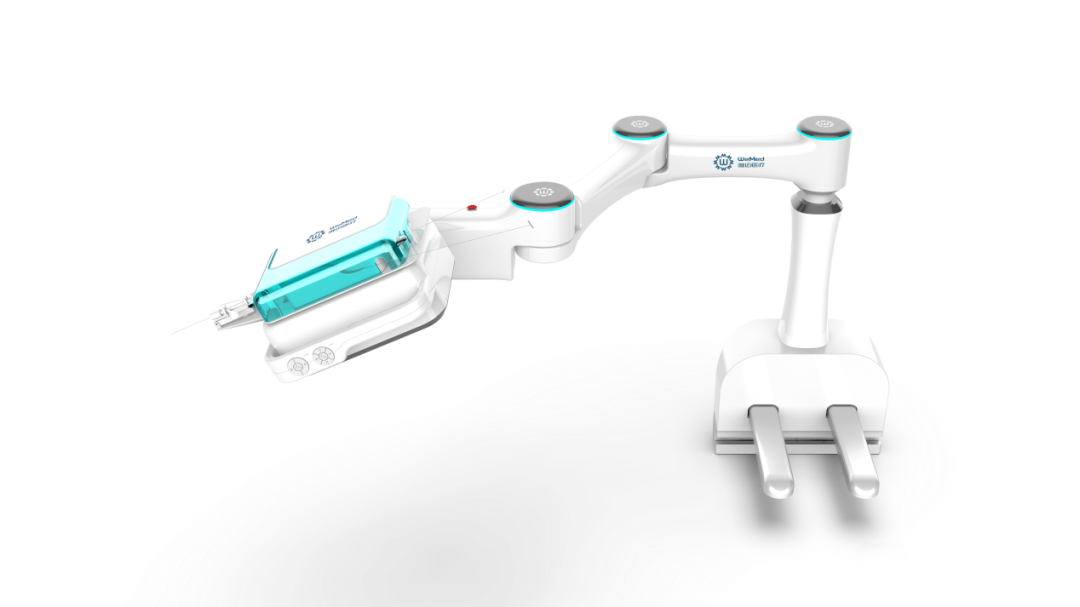
WeMed ETcath Vascular Interventional Surgical Robot
At the clinical innovation launch event, WeMed announced clinical results from over 200 cases, demonstrating that, according to the ACC/AHA classification criteria, the ETcath vascular interventional surgical robot achieved a clinical success rate of 100%, a technical success rate of 100%, 0% major adverse cardiovascular events (MACE), 0% device-related adverse events, and 0% serious adverse events. Additionally, radiation dose was reduced by more than 95%, stent measurement accuracy was excellent, and both the intelligent operation mode and force feedback demonstrated excellent clinical adaptability.
Not only vascular interventional surgical robots, but also laparoscopic surgical robots demonstrate significant clinical advantages. For instance, the MP1000 multi-port laparoscopic surgical robot launched by Edge Medical helps surgeons extend their capabilities in terms of manual dexterity, visual perception, and operational precision.
Specifically, the extension of the hand is achieved as the MP1000 restores the dexterity of manual manipulation inherent in open surgery, featuring wristed surgical instruments and automatic tremor filtration. The extension of the eye is provided by the MP1000 through immersive, vertigo-free instantaneous 3D imaging, an 80-degree field of view with active anti-fogging, and 10–15x magnified high-definition lossless images, thereby replicating the visual experience of open surgery. The extension of operation is realized through real-time synchronization of eye-brain-hand coordination, eliminating the need for assistants to hold the endoscope or provide retraction; with autonomous adjustment of lens position and angle, surgeons can perform the entire procedure while seated comfortably.
Unlike the aforementioned companies, MicroPort MedBot’s exhibition focus this time is on 5G and applications. At CMEF, MicroPort MedBot showcased its Toumai laparoscopic surgical robot, Honghu orthopedic surgical robot, and R-ONE vascular interventional robot. To date, the Toumai laparoscopic surgical robot has completed nearly 800 robot-assisted clinical validation surgeries across more than ten provinces and municipalities and in nearly 40 hospitals, covering highly difficult and complex procedures in the thoracic, abdominal, and pelvic cavities.
Previously, leveraging 5G technology, a general surgeon at Sir Run Run Shaw Hospital, Zhejiang University School of Medicine, successfully performed a cholecystectomy on a patient located 5,000 kilometers away using the Toumai laparoscopic surgical robot, thereby validating the value of integrating 5G with robotic technology. To date, there have been cases of remote surgeries conducted via 5G using both the Toumai laparoscopic surgical robot and the Honghu orthopedic surgical robot. It is anticipated that robotic surgeries based on 5G technology will gradually become more prevalent in the future.
This year, medical AI has followed two distinct paths. First, companies represented by United Imaging Intelligence, Infervision, and Shukun Technology have leveraged navigation technologies to extend into the treatment phase. Second, companies represented by Deepwise Healthcare and Yizhun Intelligent have remained committed to exploring medical imaging, further refining the imaging ecosystem.
At the Infervision booth, attendees gathered around to discuss the company’s newly launched AI-4D platform. This platform comprises a suite of reconstruction and structured reporting solutions designed to assist physicians in surgical planning.
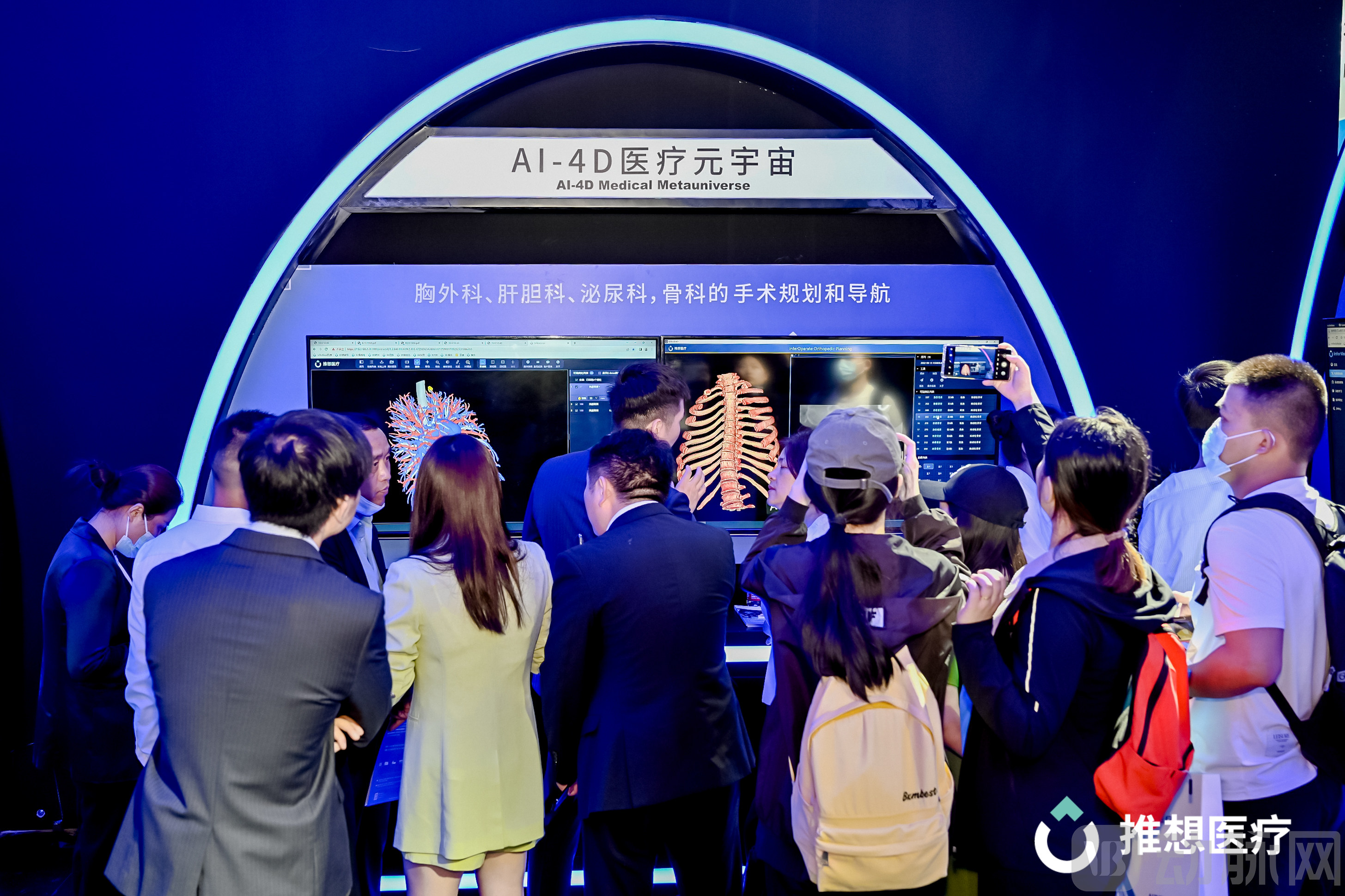
Infervision AI-4D Platform
Taking thoracic surgery applications as an example, the AI-4D chest reconstruction and structured solution can complete fully automatic segmentation of arteries and veins, detection and analysis, surgical margin planning, and 3D reconstruction visualization based on non-contrast CT data within five minutes. Based on non-contrast or contrast-enhanced CT, it can perform lobe and segment extraction and precise in-hospital reconstruction, automatically reconstructing segmental bronchi, arteries, and veins, which is particularly beneficial for segmentectomy and wedge resection surgeries. Intuitive 3D images play a significant role in assisting physicians with surgical planning.
Shukun Technology also unveiled new products. At the CMEF venue, Shukun Technology officially launched its Digital Human 2.0 platform and showcased its “Holistic Hospital Digital Intelligence Solution,” which covers the entire chain of “screening, diagnosis, treatment, management, and research.” According to the company, the Digital Human Platform 2.0 now encompasses more than 40 AI products across multiple imaging modalities, including CT, MR, DR, ultrasound, and DSA. It comprehensively addresses all stages of disease screening, diagnosis, and treatment, enabling high-precision navigational collaboration and accurate diagnosis and treatment throughout the entire disease management process.
Mao Xinsheng, Founder and Chairman of Shukun Technology, stated, “From image reconstruction to diagnostic screening, from treatment decision-making and surgery to clinical research and teaching, we cover the entire workflow of physicians.”
Unlike companies moving toward the treatment phase, Deepwise and Yizhun AI are deeply cultivating medical imaging and refining the imaging ecosystem.
For example, Deepwise Medical exhibited China’s first general-purpose intelligent imaging and big data platform, Deepwise MetAI. By integrating cutting-edge technologies such as computer vision, natural language processing (NLP), and deep learning, the platform structures data generated from daily radiology applications into valuable data assets. This enables seamless data flow among technologists, physicians, and department administrators, facilitating a one-stop digital and intelligent solution for image reconstruction, printing, diagnosis, consultation, teaching, and research.
Deepwise Medical also unveiled two new products on-site: the Ruaying AI-Assisted Diagnostic System for Breast MRI and the Ruaying Intelligent AI-Generated Structured Reporting Center. These two new offerings will enable the Deepwise MetAI Smart Imaging & Big Data General Platform to provide a more diverse AI product matrix with additional modalities in the diagnostic field, thereby enhancing quality and efficiency across various aspects, including consultation, treatment, assessment, decision-making, teaching, and scientific research.
In 2022, Yizhun Intelligence launched three intelligent solutions tailored to different application scenarios: "All-in-One Intelligence" – Intelligent Imaging Solution, "Pink Care AI" – Integrated Intelligent Screening, Diagnosis, and Treatment Solution for Breast Cancer, and "What You See Is What You Diagnose" – Real-time Dynamic Ultrasound Imaging Intelligent Analysis Platform.
At this CMEF, Yizhun Intelligence launched version 2.0 of its three intelligent solutions to address increasingly diversified medical needs. Among them, “Intelligent Omnipotence – Intelligent Imaging Solution 2.0” has been optimized and updated across the four original scenarios of quality control, diagnosis, scientific research, and education/training, while simultaneously enabling algorithm and data sharing across different scenarios. “What You See Is What You Diagnose – Real-time Dynamic Ultrasound Intelligent Analysis Platform 2.0” achieves automatic identification of scanning regions, covers multiple organs and anatomical sites, and encompasses a broader range of scenarios from assisted diagnosis and assisted treatment to education, training, and scientific research.
When the era of digital intelligence first arrived, most industry players were bewildered, unsure of how to integrate with digitalization. This CMEF has provided us with several application case studies.
For example, Haier Biomedical showcased six new scenario-based ecosystem industries, spanning smart hospitals, smart blood management, smart public health, long-distance aviation temperature control, life science services, and IoT-enabled ultra-low-temperature storage.
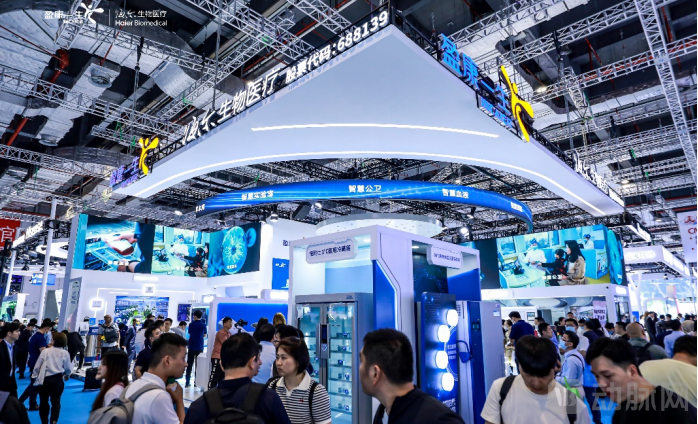
Among these, the new industrial ecosystem for smart hospital scenarios extends to hospital-wide medication management applications such as smart pharmacies, achieving automated medication dispensing and retrieval to enhance quality and efficiency. The new industrial ecosystem for smart blood management scenarios strengthens the layout of the blood safety sector, establishing a comprehensive blood safety ecosystem that covers blood stations, hospitals, plasma collection stations, and more. The new industrial ecosystem for smart public health scenarios accelerates the development of integrated solutions covering vaccination, child health management, maternal health management, and elderly health management.
Beyond hospital and public health settings, Kailian Medical also applies digitalization to patient care. As a pioneering enterprise in China that explores and implements intelligent micro-drug infusion devices and digital-intelligent diabetes management, Kailian Medical has made innovative strides in the digital management of its LePump insulin pump, showcased at the exhibition. Leveraging Bluetooth Low Energy (BLE) communication technology, the Kailian LePump insulin pump can interface with Continuous Glucose Monitoring (CGM) devices, functioning as a CGM-enhanced insulin pump and providing more refined management for patients undergoing Continuous Subcutaneous Insulin Infusion (CSII) therapy.
In addition to the aforementioned companies, Pulse Medical and Siemens Healthineers signed a strategic cooperation agreement on the first day of CMEF. By integrating its coronary functional analysis software, which calculates functional metrics from coronary CTA images, into Siemens Healthineers’ digital platform, the two parties will jointly facilitate precise diagnosis and treatment of heart-related diseases. The product involved in this collaboration is CT-QFR, an innovative medical device independently developed in China that performs functional analysis based on coronary CTA imaging. It enables one-stop, precise, non-invasive screening for coronary artery disease, providing clinicians with accurate diagnostic evidence to inform subsequent clinical decision-making.
Northxin Life presents precision interventional cardiovascular solutions, including China’s first approved domestic gold-standard FFR and China’s first independently innovated 60MHz high-speed IVUS.