

Sensydia Secures $8 Million Funding to Advance Its Non-Invasive Hemodynamic Monitoring Platform for Heart Failure and Pulmonary Hypertension

Sensydia
Non-invasive Cardiac Assessment Device Developer
Since the beginning of the 21st century, factors such as smoking, air pollution, inhalation of dust and chemical substances, and population aging have led to a significant increase in the incidence of heart failure, lung cancer, bronchial asthma, and chronic obstructive pulmonary disease (COPD), imposing a substantial disease burden on society and the public. With the gradual improvement in the development of respiratory and critical care medicine, the clinical demand for hemodynamic monitoring has been increasingly unleashed.
Hemodynamic monitoring quantitatively, dynamically, and continuously measures and analyzes the patterns of blood flow within the circulatory system, reflecting the functional status of the heart, blood vessels, blood, tissue oxygen supply and consumption, and organs. It is generally used for critically ill patients—such as those with myocardial infarction, heart failure, multiple organ failure, or undergoing major surgery in the perioperative period—who require close monitoring of changes in circulatory function, thereby providing clinical guidance.
Routine parameters such as blood pressure, heart rate, and electrocardiogram (ECG) are relatively simple to measure, whereas advanced hemodynamic parameters like central venous pressure (CVP), cardiac output (CO), pulmonary artery pressure (PAP), and pulmonary capillary wedge pressure (PCWP) are more challenging to assess. Currently, clinical hemodynamic monitoring methods are primarily categorized into invasive and non-invasive approaches.
Traditional invasive hemodynamic monitoring methods include the pulmonary artery catheter (PAC) and pulse indicator continuous cardiac output (PiCCO) monitoring; however, these techniques have numerous limitations in clinical practice, such as technical difficulty, high complication rates, and expensive consumables.
Although noninvasive hemodynamic monitoring is slightly less accurate than pulmonary artery catheterization (PAC), it offers advantages such as ease of operation, complete noninvasiveness, and real-time continuous monitoring, and has been widely adopted in the clinical diagnosis and management of related diseases in recent years.
Sensydia Corporation (hereinafter referred to as “Sensydia”) is a company developing non-invasive hemodynamic monitoring technologies. Its rapidly deployable, non-invasive cardiac function monitoring platform, CPS, provides clinical guidance for patients with heart failure and pulmonary hypertension. VCBeat has learned that on May 9, 2023, Sensydia secured $8 million in a new round of financing. The new funds will be used to expand the development and operations of its cardiac assessment platform, CPS, to accelerate commercialization.
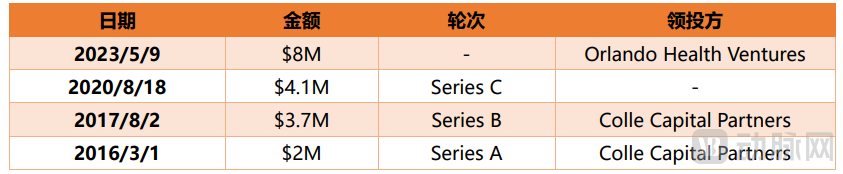
Sensydia Funding History Data Sources: Crunchbase, VCBeat
Currently, commonly used non-invasive hemodynamic monitoring methods in clinical practice include transesophageal echocardiography, transthoracic echocardiography, bioelectrical impedance analysis, and Doppler echocardiography. However, ultrasound examinations are generally performed only by professional physicians in medical institutions, and the results are highly operator-dependent, which represents the most significant limitation of ultrasound applications.
To this end, Sensydia has proposed a solution: the creation of CPS, an automated non-invasive hemodynamic monitoring platform. This platform streamlines the hemodynamic monitoring process, making the acquisition of advanced metrics such as pulmonary artery pressure as simple as routine blood pressure assessment.
In addition, CPS also hasPortable and lightweight, it is suitable for a wide range of scenarios including ICUs, emergency rooms, offices, and even telemedicine. With measurement times as short as a few minutes and low cost, its accuracy is consistent with the gold standard for cardiac output measurement (pulmonary artery catheter thermodilution).and other advantages.
Based on a decade of research and development, the CPS platform utilizes ultra-sensitive biosensors to capture the temporal, electrical, and spectral characteristics of heart sounds and electrocardiogram (ECG) signals, and then employs proprietary machine-learning-derived algorithms to extract validated hemodynamic measurements.
The CPS platform enables rapid, non-invasive measurement of certain cardiac parameters, such as ejection fraction (EF), cardiac output (CO), pulmonary artery pressure (PAP), and pulmonary artery occlusion pressure (PAOP).
Measuring cardiac function parameters using the CPS system requires only three steps:
Sensor Placement: Place the disposable sensor on the patient using the disposable color-coded application guide;
Launch the CPS Platform: The on-screen guide provides step-by-step instructions, making the system simple to operate and accessible to nearly anyone;
Key Acquisition: The CPS system automatically completes the subsequent tasks and then transmits real-time measurement results via Wi-Fi or Bluetooth to a tablet, a standard monitoring platform, and the cloud.
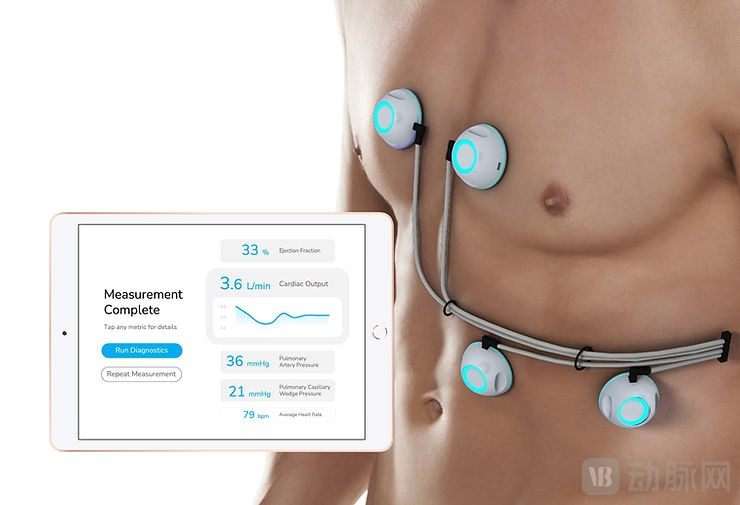
CPS System. Image source: Sensydia official website
In 2018, Sensydia received U.S. FDA approval for the non-invasive measurement of fractional flow (FF) via CPS. In 2022, CPS was granted Breakthrough Device designation by the U.S. FDA. Currently, Sensydia is conducting its fourth study with the University of Pittsburgh Medical Center (UPMC) to enhance the performance and practicality of the artificial intelligence algorithms within the CPS platform.
●Diagnosis of Heart Failure
Heart failure (HF) is the leading cause of hospitalization among patients aged 65 and older, imposing a substantial burden on modern healthcare. In the United States, approximately one-quarter of heart failure patients are readmitted within 30 days of discharge, and nearly half are readmitted within six months.
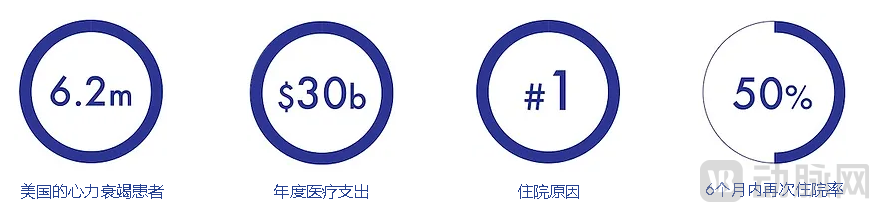
Current Status of Heart Failure in the U.S. Image source: Sensydia official website
Functionally, this disease is characterized by alterations in cardiac structure, which modify pressure and flow at various points throughout the cardiac cycle. Therefore, hemodynamic monitoring plays a central role in the diagnosis and management of heart failure.
For patients with heart failure, hemodynamic monitoring via the CPS platform enables improved disease management.
First,Detect Potential Cardiac Abnormalities, for instance, an elevated intracardiac pressure reading may indicate abnormal cardiac stress. Secondly, it canDifferentiating Types of Heart Failure, even when heart failure is known to be present, it remains challenging to determine the primary underlying pathology; the CPS platform can help differentiate between coexisting pulmonary disease and heart failure, acute coronary syndrome and chronic heart failure, as well as right ventricular failure and left ventricular failure.
In addition, it is also possible toOptimize pharmacotherapy regimens, predict disease exacerbations, and guide the treatment of acute decompensated heart failure (ADHF)etc.
●Diagnosis of Pulmonary Hypertension
Pulmonary hypertension occurs when blood pressure in the pulmonary arteries is abnormally high. Patients with pulmonary hypertension may experience symptoms such as shortness of breath, fatigue, dizziness, chest pain, swelling in the legs or ankles, and an abnormally rapid heart rate. Excessive pulmonary pressure can also lead to rapid deterioration of the right heart, resulting in right heart failure. Therefore, early diagnosis is crucial for targeted treatment and prevention of complications.
The diagnosis of pulmonary hypertension depends on pulmonary artery pressure readings. In healthy individuals, the systolic pulmonary artery pressure ranges from 15 to 30 mmHg, with a mean pressure of 15 mmHg. According to WHO criteria, pulmonary hypertension is diagnosed when the mean pulmonary artery pressure exceeds 25 mmHg at rest or exceeds 30 mmHg during exercise.
For patients with pulmonary hypertension, the CPS platform serves as a first-line screening and diagnostic tool, enablingPromptly diagnose abnormal pulmonary hypertension, differentiate between pre-capillary and post-capillary pulmonary hypertension, assess vasoreactivity, and provide optimal treatment strategies。
Sensydia was founded in 2015. Its management team members have previously held positions at various multinational corporations, including medical device giant Medtronic, pharmaceutical giant Eli Lilly, healthcare conglomerate Johnson & Johnson, and Novoste. The team integrates industry expertise from multidisciplinary fields such as medical technology, pharmaceutical engineering, clinical cardiology, biomedical engineering, and machine learning.
The Founder and Chief Medical Officer is Aman Mahajan. He holds an MBA and a Ph.D. in Physiology specializing in cardiac electrophysiology, serves as a physician and department chair at the University of Pittsburgh Medical Center (UPMC), and is a Diplomate of the American Board of Anesthesiology, the International Board of Heart Rhythm Examiners, and the National Board of Echocardiography.
Anthony Arnold has served as the Chief Executive Officer of Sensydia since 2019. A pioneer in the fields of bioelectronic medicine and surgery, Arnold has held positions at a range of medical technology companies, including Smith+Nephew, Medtronic, Boston Scientific, and SetPoint Medical, bringing over 20 years of experience in technology development and team leadership.
William A. Hawkins, an advisor to Sensydia, previously served as Chairman and CEO of Medtronic. In addition, he held senior executive positions at Ivac (a subsidiary of Eli Lilly), served as President of Ethicon Endo-Surgery within Johnson & Johnson Medical Devices, and was President and CEO of Novartis.
Sensydia team members bring expertise and team leadership experience across various medical specialties, facilitating precise corporate positioning and driving the global commercialization of its innovative technologies.

From left to right: Anthony Arnold, Aman Mahajan, William A. Hawkins
Image source: Sensydia official website
In 1970, the Swan-Ganz pulmonary artery catheter (PAC) was developed in the Edwards Lifesciences laboratory, emerging as an innovative approach to hemodynamic monitoring in critically ill patients. It had already been widely adopted in clinical practice by the 1970s and 1980s and remains the recognized gold standard for hemodynamic monitoring to this day.
After more than five decades of development, continuous product iteration and innovation have driven market expansion, while hemodynamic monitoring technology has been increasingly trending toward non-invasiveness, real-time capability, and precision. Currently, numerous companies have entered the non-invasive hemodynamic monitoring sector.
Representative overseas companies include Edwards Lifesciences in the United States, whose non-invasive product ClearSight has been launched; and CNSystems from Austria, whose non-invasive monitoring device CNAP holds multiple patented technologies. Meanwhile, GE Healthcare (US), ATYS Medical (France), and Analogic (US) have also conducted in-depth exploration in this field.
In China, there are relatively few companies in this sector; however, overall, the demand for and market size of non-invasive hemodynamic monitoring continue to grow, indicating an upward developmental trajectory.