

Future Trends in Medical Imaging Equipment: Innovation, Intelligence, and Global Expansion
Over the past decade, the global healthcare industry has undergone restructuring akin to tectonic plate movements, with innovative technological achievements emerging like volcanic eruptions. The innovative forces within the healthcare sector have been refined and consolidated, now poised for takeoff.
On the morning of May 5, the Visual Imaging Equipment Forum of the 2023 7th Future Healthcare Top 100 Conference, hosted by VCBeat and VBInsight (Eggshell Research Institute) and supported by Yinying Medical Fund, officially opened at the Zhangjiang Science Hall. Liu Shiyuan, Director of the Department of Radiology at Shanghai Changzheng Hospital and Chairman of the Chinese Society of Radiology; Dennis Wilkens, China Representative of Germany Trade & Invest; Chen Bingshu, Vice President of Infervision; Miao Miao, COO of Fosun Xingmai; Jiang Haochuan, General Manager of MinFound Medical Systems; Huang Kaixian, Founder and CEO of Dentifi; Xiong Shuirou, Partner at Yinying Medical Fund; Sun Zhaochang, Founder and Chairman of Kaiying Medical; Yang He, CEO of Vimai Medical; Wang Liwei, Chairman and CEO of Keya Medical Technology Co., Ltd.; and Zhang Daxing, Strategic Investment Director of Yimai Sunshine, delivered insightful speeches. The session was moderated by Yang Qi, Executive Director of Yinying Medical Fund.
Guests delivered speeches on topics such as innovation, development, and future trends in the visualization of the smart healthcare industry. VCBeat has compiled the guests’ insightful viewpoints.
Liu Shiyuan: Development Trends of Medical Imaging Equipment in the Industry and Their Driving Role in Radiology
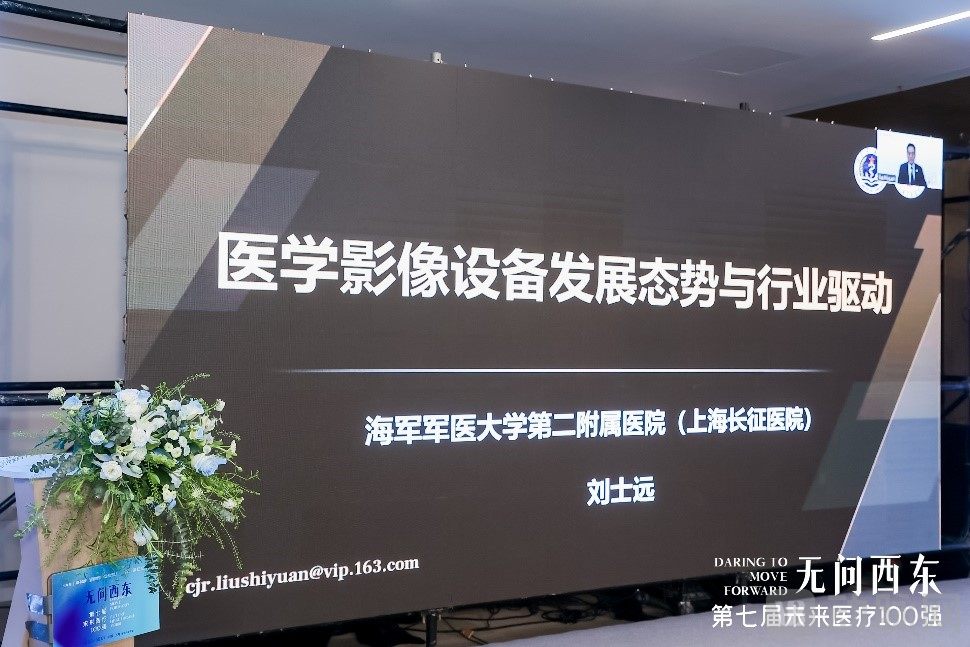
Liu Shiyuan | Director, Department of Diagnostic Radiology, Shanghai Changzheng Hospital; Chairman, Chinese Society of Radiology, Chinese Medical Association
Compared with the global market, China’s medical imaging market holds immense potential. Over the past decade, its growth rate has reached 12.4%, nearly half again as high as the global average; although estimates vary slightly among different consulting firms, some report figures as high as 14%. The projected growth rate for the next ten years is approximately 7.3%, which is also significantly higher than the global rate of 4%. By segment, CT has been the fastest-growing modality over the past eight years, with a growth rate of 21%—three times the global increase. This is followed by PET/CT at 18%, or 2.6 times the global rate. DSA and MRI have grown by approximately 13% and 8%, respectively, both more than double the global averages.
Medical imaging is not only the eyes of clinicians; its role permeates the entire healthcare process, encompassing screening, prevention, diagnosis, treatment, and rehabilitation. From early disease prevention to precise diagnosis, treatment decision-making, efficacy follow-up, and patient care, medical imaging plays an indispensable role.
Dennis Wilkens: Aging Population Drives the Development of Germany’s Medical Imaging Industry

Dennis Wilkens | Representative of Germany Trade & Invest in China
Dennis Wilkens, the China Representative of Germany Trade & Invest (GTAI), stated that GTAI is Germany’s economic development agency. The German healthcare market, with its substantial annual expenditure, is the largest in Europe. Meanwhile, hospital spending in Germany continues to rise year by year, and an aging population is driving the growth of the medical imaging industry. Currently, key development trends and markets in Germany’s healthcare sector include automation, intelligent digital systems, visualization, and micro-robotics.
Chen Bingshu: Emphasizing the Integration of Scientific Research and Medical Engineering, Demonstrating Value Through Research Strength

Chen Bingshu |Vice President, Infervision
Chen Bingshu, Vice President of Infervision, stated that Infervision is committed to leveraging AI technology to address the imbalance and insufficiency of medical resources. Currently, Infervision has established strategic collaborations with over 1,000 medical institutions worldwide, covering multiple disease areas including cancer, infectious diseases, cardiovascular diseases, cerebrovascular diseases, and trauma. Infervision places significant emphasis on the integration of research and development, boasting more than 360 approved or pending patents and over 290 SCI/core journal/conference papers. In terms of global expansion, Infervision has entered more than 20 countries, secured four major market access certifications, and been selected as a member of the WHO and ITU “Working Group on Standardization of Medical AI Products.”
Miao Miao: The Digitalization of Pathology with Gemini Is Unstoppable
 Miao Miao | Vice President of Operations, Fosun Xingmai
Miao Miao, Vice President of Operations at Fosun Xingmai, stated that the severe shortage of imaging and pathology physicians, along with the broader scarcity of medical resources in the pathology sector, represents the most significant challenge currently facing the imaging industry. Hospitals can enhance their specialized capabilities by leveraging existing resources, prioritizing patient needs, and focusing on the development of specialty disease centers. Fosun Xingmai facilitates qualitative leaps for hospitals in specific clinical scenarios through its AI ROSE all-in-one intelligent microscope. This integrated hardware-software solution reduces diagnosis time from the traditional 48 hours to just 5 minutes. Furthermore, Fosun Xingmai has established a multi-tiered diagnostic and treatment model connecting “primary healthcare institutions, regional imaging centers, tertiary hospitals, and nationally renowned experts.” Through its “15-30-24” health ecosystem, the company aims to deliver accessible and beneficial healthcare services to the general public.
Jiang Haochuan: Prioritizing Core Technologies to Realize Corporate Value
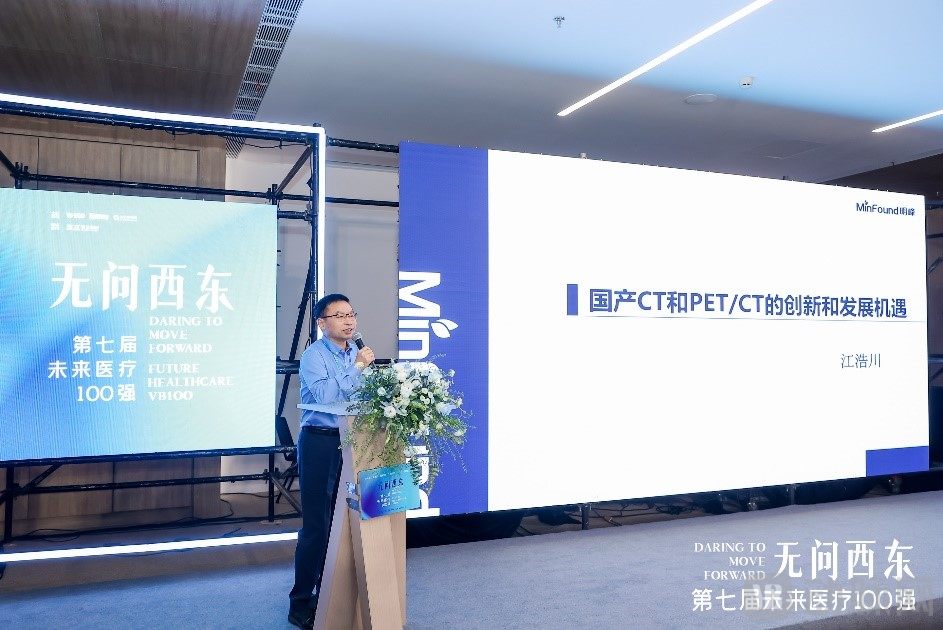
Jiang Haochuan | General Manager, Mingfeng Medical
Jiang Haochuan, General Manager of MinFound Medical Systems, elaborated on the three core technologies of CT. MinFound has achieved comprehensive coverage with its AI-CT product series. In February 2020, MinFound launched the world’s first cabin-style CT scanner, making a significant contribution to epidemic prevention and control. In terms of innovation, MinFound’s “Quantum Eye CT,” featuring the Shenguang detector, achieved the industry’s first integration of a 160-mm wide-body design with a curved geometry. Additionally, by applying China’s first electromagnetic direct-drive technology to CT systems, MinFound ensures high-speed gantry rotation at 300 rpm.
Huang Kaixian: Digitalization is the Main Thread of the Dental Industry
Huang Kaixian | Founder and CEO of Dentifi
Huang Kaixian, Founder and CEO of Dentifi, stated that digitalization is the central thread of the dental industry. Dentifi leverages data as a link to showcase its comprehensive layout across the entire dental value chain, encompassing products such as surgical microscopes, dental imaging plate scanners, oral CBCT systems, electronic periodontal probes, and intraoral scanners combined with 3D printing. Integrated with FeeLin’s advanced software suite, this dual-track approach empowers hard technology with soft capabilities, assisting dental clinics in building smart practices and hospitals. This enables interconnectivity among equipment, dentists, and patients, establishing a full-process digital intelligent management system.
Xiong Shuirou: High-End Imaging R&D—Opportunities and Challenges Coexist
Xiong Shuirou | Partner, Yueyin Medical Fund
Xiong Shuirou, a partner at Yueyin Medical Fund, noted that the domestic medical imaging equipment industry is continuously breaking through barriers and gradually achieving parity with international competitors. Government regulations on the AI medical imaging sector are progressively easing, and approval processes are being refined, presenting Chinese enterprises with the best opportunity to overtake rivals on the curve. From an investment perspective, high-end R&D in medical imaging presents both opportunities and challenges, but overall favors domestic substitution.
Roundtable with Industry Leaders: Technological Innovations and Investment Opportunities in Medical Imaging

Roundtable Discussion
The medical imaging equipment market is one of the segments within the medical device industry characterized by the highest technological barriers and the largest market size. Key environmental factors, such as population aging, soaring healthcare costs, and shifting consumer behaviors, are reshaping the characteristics of demand across the entire healthcare market. Today, we have invited six experts from the field of medical visualization and imaging equipment to discuss “Technological Innovation and Investment Opportunities in Medical Imaging.”
Miao Miao, Vice President of Operations at Fosun XingmaiCorporate technological innovation must always prioritize business operations and market share. Therefore, in the field of medical imaging, companies should not limit themselves to isolated forms such as general imaging, radiology, or single-disease applications like pulmonary nodule detection. To effectively reach end users, market recognition cannot be achieved solely by relying on cutting-edge, high-end technologies. Instead, the goal is to leverage AI technology in specific scenarios to solve highly practical problems for customers, thereby enhancing tangible capabilities and efficiency. Meanwhile, quantifiable metrics based on accessible, low-complexity technologies are needed to support market feedback on the company’s overall value.
Yang He, CEO of Vmai MedicalIn recent years, the most dynamic segment within the medical consumables market has been cardiovascular and cerebrovascular care, which is characterized by high activity. Opting for vertical innovation that extends into clinical practice allows companies to transcend previous technical barriers. In retrospect, this strategy has found a key anchor in Digital Subtraction Angiography (DSA). By leveraging DSA as a critical entry point for deeper clinical integration, advancements are being driven by behavioral science and AI-guided intelligence.
Zhang Daxing, Strategic Investment Director at Yimai YangguangThird-party imaging centers are often perceived by the general public, upon first hearing the term, as independent facilities located outside hospitals, featuring upscale decor and catering to high-end demands. Indeed, this reflects the prevailing business model adopted by most independent imaging centers currently. However, we assign it a different definition: hospital-affiliated, independent imaging centers. In this model, the relationship with hospitals is not one of buyer and seller, but rather a long-term strategic partnership, akin to a prolonged campaign. Much like healthcare itself, which does not offer opportunities for short-term windfall profits but instead yields results through sustained long-term efforts. Following our definition of third-party imaging centers, we have conducted extensive explorations in tier-3 and tier-4 cities, as well as in county-level People’s Hospitals and Traditional Chinese Medicine Hospitals. It is under these circumstances that we have been able to maintain our overall business volume at a relatively leading level within the industry.
Yang He, CEO of Weimai MedicalCollaboration can be viewed from two perspectives. First, from a technical standpoint, we have already established certain connections. We are observing increasingly frequent interactions and integration between software and hardware enterprises, as each leverages its respective strengths: software companies bring their technological expertise, while traditional hardware manufacturers possess inherent advantages in distribution channels and hospital access. This constitutes collaboration at the technical level. Second, from a commercial perspective, our domestic business is divided into two main segments: one focuses on conventional public hospital channels, while the other explores international partnership opportunities. In the post-pandemic era, new opportunities for global expansion have emerged.
Wang Liwei, Chairman and CEO of Keya MedicalKea Medical has consistently adhered to a vertical strategy because we have recognized that each domain requires specialized expertise, whether from professionals with medical backgrounds or those knowledgeable in artificial intelligence; the interdisciplinary gaps are substantial. Therefore, we are currently focusing on deepening our expertise in cardiology, thoroughly researching all cardiac-related aspects of an individual at this specific point, and ultimately advancing toward the broader goal of creating a digital twin heart. We remain committed to this path.
Sun Zhaochang, Founder and Chairman of Kaiying MedicalIt indicates that it is indeed difficult to achieve exclusivity or pricing power within the CT industry. Imaging examinations must accurately reflect physiological anatomy or the true clinical condition. Efforts in this field focus on enhancing overall system performance or developing innovations for specialized clinical applications to address specific challenges. While component-level innovation can resolve core technical issues, such advancements should be introduced at appropriate stages.
To promote the development of the medical imaging equipment industry and encourage independent innovation, the Chinese government continues to introduce policies supporting the advancement of high-end medical imaging equipment. Against the backdrop of national incentives for domestic products to replace imports, China is poised to enter a new phase of prosperity for domestically produced medical devices.