

GluBio: Pioneering Global First-in-Class Protein Degradation Therapies with Founders from Celgene, BMS, and J&J

GluBio
Molecular Glue Targeted Protein Degradation Drug Developer
Molecular glues and PROTAC-based targeted protein degradation (TPD) technologies have garnered significant attention from academia, industry, and the capital markets due to their broad scope of action, ability to target “undruggable” proteins, and potential to overcome drug resistance. Lenalidomide, a molecular glue drug approved in 2005, once became the world’s best-selling small-molecule drug and orphan drug, with sales reaching $12.8 billion in 2021. In 2019, ARV-110, the first PROTAC candidate targeting prostate cancer, entered Phase I clinical trials, sparking a surge in PROTAC drug development.
While molecular glue degraders demonstrate significant potential, their exceptionally high technical barriers have deterred many prospective entrants. On one hand, there are few biotech companies globally dedicated to molecular glue therapeutics; on the other, the number of molecular glue drugs that have advanced to clinical stages remains limited. Although PROTAC degraders present somewhat lower development barriers, they still face numerous challenges in target selection, candidate molecule optimization, and clinical differentiation design. Consequently, the market valuations of some listed biotech companies in the PROTAC space have been less than satisfactory.
Nevertheless, the challenges faced by molecular glues and PROTACs are an inevitable stage in the development and application of new technologies. Multinational corporations (MNCs) and investors remain optimistic about the protein degradation sector.In 2022, multiple industry giants led by Bristol Myers Squibb (BMS), Sanofi, and Pfizer continued to increase their investments in protein degradation technology, while numerous domestic and international biotech companies completed financing rounds.
Drawing on years of accumulated experience with targeted protein degradation (TPD) technology at multinational corporations (MNCs) and recognizing the vast untapped potential of the future TPD landscape, Dr. Gang Lu, a former Celgene/Bristol Myers Squibb (Celgene/BMS) scientist with over a decade of expertise in TPD drug research, co-founded GluBio Therapeutics Inc. (hereinafter referred to as “GluBio”) in March 2021 together with Dr. Liqiang Fu from Johnson & Johnson (J&J). GluBio is a novel drug development company focused on “First-in-class” molecular glues and PROTACs.
The head of GluBio’s multi-dimensional TPD platform brings extensive experience in the development of molecular glue and PROTAC therapeutics from Celgene/BMS and J&J. Since its founding over two years ago, the company has achieved world-class capabilities in the rational design of protein degraders, as well as in the strategic pipeline layout, development, optimization, and operation of its TPD platform. To date, GluBio has secured $20 million in seed funding, nearly $50 million in Series A financing, and $22 million in Series A+ financing, attracting investment from leading firms including Hillhouse Ventures, Qiming Venture Partners, Lilly Asia Ventures, K2VC, Legend Capital, Xianfeng Qiyun, and E Fund Capital.
Recently, VCBeat’s New Medicine channel conducted exclusive interviews with Dr. Gang Lu, Founder and CEO of GluBio, and Dr. Liqiang Fu, Co-founder, to gain in-depth insights into how they are building a world-class protein degradation drug R&D company led by Chinese scientists, as well as their confidence in the field of targeted protein degradation (TPD).
Like-Minded Entrepreneurial Partners
Dr. Lu Gang, Founder and CEO of GluBio, studied at Fudan University, the University of California, Los Angeles (UCLA), and Harvard Medical School. As early as 2014, he published a paper in Science as the first author, pioneeringly elucidating the mechanism of action of the molecular glue drug lenalidomide. After entering the industry, he joined Celgene, where he was responsible for pharmacological and preclinical research. He led his team in advancing four molecular glue drugs into clinical development, with the most advanced candidate reaching Phase III clinical trials.
Meanwhile, Dr. Lu Gang spearheaded the development of dozens of platforms for the discovery, validation, and pharmacological exploration of novel molecular glue targets, and cultivated a large cohort of top-tier scientists in molecular glue drug R&D. In 2020, Dr. Lu joined Neomorph, a molecular glue therapeutics company, as Vice President of Biology, where he assumed overall responsibility for the company’s pipeline strategy, platform development, and project advancement.
Celgene/BMS is a leading pharmaceutical company in the global protein degradation field. It has launched first-generation immunomodulatory drug (IMiD) molecular glue therapeutics, including thalidomide, lenalidomide, and pomalidomide. Meanwhile, it has advanced cereblon E3 ligase modulators (CELMoDs)—such as iberdomide (CC-220), mezigdomide (CC-92480), golcadomide (CC-99282), and eragidomide (CC-90009)—into clinical development, achieving promising clinical data.
Dr. Lu Gang has an unusual passion and insight into molecular glues, and he is very much looking forward to dedicating himself to and leading the startup venture.In 2020, Dr. Lu Gang was introduced to co-founder Dr. Fu Liqiang through an investor. Dr. Fu Liqiang previously worked at AbbVie and Johnson & Johnson (J&J), bringing years of experience and deep insights into PROTACs and molecular glues.
Guided by shared principles and vision, as well as years of accumulated experience, both individuals concur that targeted protein degradation (TPD) drugs are poised to usher in the next golden age of small-molecule drug development, following the era of kinase inhibitors. Furthermore, given the high technical and experiential barriers associated with molecular glues, this represents an ideal opportunity to embark on a new chapter.
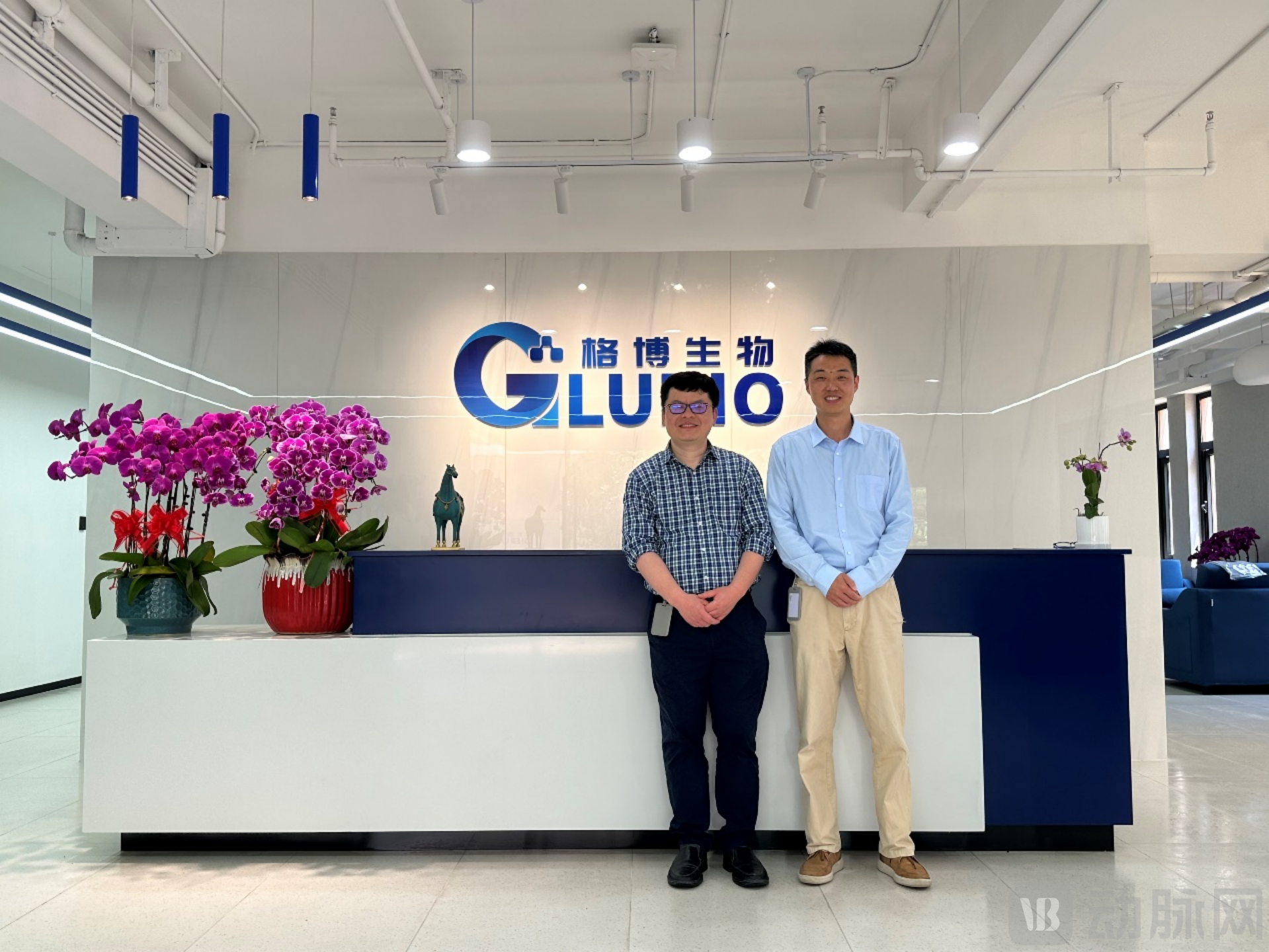
Dr. Lu Gang, Founder and CEO of GluBio, and Dr. Fu Liqiang, Co-founder. Source: Photo provided by the interviewee
In March 2021, the two founders launched their startup remotely, establishing Hangzhou GluBio, with the English name GluBio.
“Glu is an abbreviation for a chemical fragment in molecular glue structures, and it also readily evokes the English word ‘Glue.’ We believe that the close integration of biology and chemistry is an inexhaustible source for novel drug discovery. Our original aspiration was to establish an outstanding targeted protein degradation therapeutics company led by Chinese scientists, working with like-minded partners to develop truly innovative medicines that benefit patients worldwide,” said Dr. Lu Gang, expressing his vision for the company.
GluBio is steadily expanding its team, having established two major R&D centers in Shanghai’s Zhangjiang Pharma Valley and San Diego, California. 80% of its team members hold Ph.D. degrees, and its core members have previously worked at the world’s top 10 pharmaceutical companies.
Molecular Glues: Only the Tip of the Iceberg
Molecular glues and PROTACs are the primary research focuses of GluBio.
PROTACs consist of three components: a ligand targeting the protein of interest, a linker, and an E3 ubiquitin ligase binder. Research on these three modules is currently well-established in the market, enabling modular development that can theoretically be applied to any target. However, PROTAC molecules are relatively large, resulting in poor physicochemical properties and low oral bioavailability, which poses significant challenges to their overall druggability.
Molecular glues are more attractive in terms of druggability, as they have relatively smaller molecular weights, higher membrane permeability, better pharmacokinetic properties, and improved developability. The mechanism of action of molecular glues differs from that of PROTACs. Taking the CRBN E3 ligase as an example, when a molecular glue binds to CRBN, it enables CRBN to interact with new substrates (neosubstrates) that do not naturally exhibit affinity for it, thereby promoting the polyubiquitination of these neosubstrate proteins and ultimately leading to their degradation by the proteasome. In contrast to the mechanism of PROTACs, the degradation of neosubstrate proteins does not require any affinity between the molecular glue and the neosubstrate protein, which significantly increases the success rate of targeting “undruggable” targets, particularly the majority of transcription factors that lack drug-binding pockets.
“Molecular glues and PROTACs represent the primary focus for future small-molecule drug development; while traditional small-molecule drugs have significant limitations in terms of target coverage, molecular glues and PROTACs can theoretically degrade more than 85% of proteins.”The entry of more companies will accelerate the emergence of additional “blockbuster” novel protein degraders; a full-scale explosion in this sector will require more time.“Dr. Lu Gang stated.”
However, the development of molecular glues faces several challenges: the design of molecular glues is complex and cannot follow established methods as with PROTACs; the limitations of thalidomide-based drugs urgently need to be overcome, as most currently reported molecular glues still bear high structural similarity to thalidomide and its derivatives; and there is currently no sufficiently large library of molecular glue compounds available for diverse high-throughput screening.
Dr. Lu Gang also pointed out the barriers to molecular glues: “Rational design is difficult to achieve without five or six years of hands-on experience in the field of molecular glues.“Minor modifications to small-molecule inhibitors may only alter their physicochemical properties without affecting selectivity or activity, whereas molecular glues are different—even the change of a single atom can lead to significant effects. Therefore, without a technological platform and accumulated prior experience, development becomes exceedingly difficult.”
To date, more than 600 E3 ligases have been reported, yet only five—CRBN, DDB1, β-TrCP, DCAF15, and SIAH1—have been utilized for molecular glue-mediated protein degradation. The E3 ligase library still holds immense untapped potential. First-generation molecular glue drugs were largely discovered serendipitously. Following the approval of three marketed drugs, over ten molecular glue candidates worldwide have entered clinical development, although none has yet reached the New Drug Application (NDA) stage. However, granting greater patience and attention to molecular glues and PROTACs may signal the industry’s true maturation and sustainable long-term growth.
Dr. Lu Gang expressed strong confidence in the prospects of molecular glues: “I believe a breakout is inevitable sooner or later. The successful molecular glue drugs we see today are just the tip of the iceberg, and it is a massive one, with many more potential opportunities lying beneath. The field of molecular glues represents a vast blue ocean.”
How to Build a World-Class Protein Degradation R&D Platform?
There are still few companies in China focusing on protein degradation, and those with deep insights and understanding in the field of molecular glues are even rarer. Within just two years, GluBio has established a multi-dimensional protein degradation screening platform, an innovative target validation platform, a rational design platform for molecular glues, and a proprietary high-activity compound library, emerging as a highly competitive biotech company in the industry.
“We have devoted substantial effort and leveraged years of expertise to build a protein degradation platform with distinct GluBio characteristics. In particular, for molecular glues, it is essential to have a diverse and novel compound library to ensure the identification of reliable targets. Novartis and BMS each have dozens of such projects underway; if Chinese scientists do not act now, it will be too late,” said Dr. Lu Gang.
The diversity of the molecular library relies on rational drug design, such as extensive substitution and optimization of the core scaffold, as well as diverse modifications of tail fragments, thereby enabling compounds to degrade various proteins. GluBio’s ability to rapidly build a “highly functional” molecular library is closely tied to its strong team of medicinal chemists and drug designers.
“Although GluBio’s proprietary compound library is currently modest in size, comprising only a few thousand molecules, its exceptional diversity and novelty do not hinder our ability to identify optimal molecular glue targets. Furthermore, it enables us to establish reliable structure-activity relationships (SAR) and rapidly advance to the lead optimization (LO) stage. This capability is critical; as additional capital flows in, we can quickly replicate this model and workflow across a broader range of targets,” added Dr. Fu Liqiang, emphasizing the significance of rationally designing proprietary molecular libraries.
GluBio’s team can identify high-quality targets without relying on high-throughput screening, thanks to the technical advantages they have accumulated through years of hands-on experience in the field.In terms of target selection, the company has adopted a multi-layered strategy: selecting targets that have undergone certain clinical validation and require protein degraders to address resistance mechanisms; identifying targets where TPD methods can enhance potency and selectivity, thereby improving efficacy and the therapeutic window; and leveraging bioinformatics to predict and validate the strong association between “undruggable” targets and specific diseases, thus developing truly first-in-class therapeutics.
“A unique platform and well-positioned resources enable a phased, hierarchical approach that is more robust and prudent than rashly pursuing entirely new, unvalidated targets,” summarized Dr. Lu Gang.
Currently, GluBio’s proprietary molecular library and novel target discovery platform have improved the success rate and optimization efficiency of molecular glue drug discovery by combining high-throughput screening with multi-omics and structural biology, while leveraging rational design platforms such as machine learning and degron prediction.
GluBio has six pipeline candidates in development:GluBio’s molecular glue drug GLB-001, targeting hematologic malignancies, has received implicit FDA clearance for clinical trials and is poised to initiate patient enrollment. Leveraging extensive clinical development expertise and unique insights into its target, GLB-002, designed for multiple myeloma (MM) and non-Hodgkin lymphoma (NHL), has entered the preclinical stage, with an Investigational New Drug (IND) application planned for submission by the end of June this year. Both GLB-001 and GLB-002 demonstrate significantly improved selectivity and a wider therapeutic window compared to similar products already in clinical stages, positioning them with first-in-class or best-in-class potential. The third and fourth pipeline candidates, both first-in-class therapies targeting solid tumors, are also in development; notably, the third candidate, a PROTAC agent directed against various solid tumors, has had its Preclinical Candidate (PCC) selected, with an IND application expected by mid-next year.
As GluBio has grown and expanded, Dr. Lu Gang has gradually transitioned from his roles as a scientist and head of an MNC division to becoming a more comprehensive entrepreneur and corporate executive.“This has also been a learning process for me, and I quite enjoy managing and operating the company. In the beginning, I occasionally encountered bottlenecks, but once I grasped the essentials, things became much more manageable. I now find both R&D and corporate management to be highly engaging. More importantly, it is deeply meaningful and rewarding to lead our team in working collaboratively to advance truly innovative protein-degradation drugs through clinical development and to market, thereby benefiting a broad patient population. This represents the historical mission and responsibility of our generation of Chinese scientists.”