

TH Capital Participates in Future Healthcare 100 Summit: 'Health Investment' Enters a New Era in the Age of Life Sciences

From May 5 to 7, the 7th Future Healthcare Top 100 Conference, themed “Beyond East and West,” officially convened. Co-hosted by VCBeat, VB100, and Eggshell Research Institute, it stands as China’s largest and most information-rich ecosystem conference integrating industry and capital within the healthcare innovation sector. Centered on “connecting global wisdom, sharing cutting-edge technologies, inspiring the technological future, and focusing on venture capital interaction,” the conference sets the direction for innovation and investment in China’s healthcare sector.
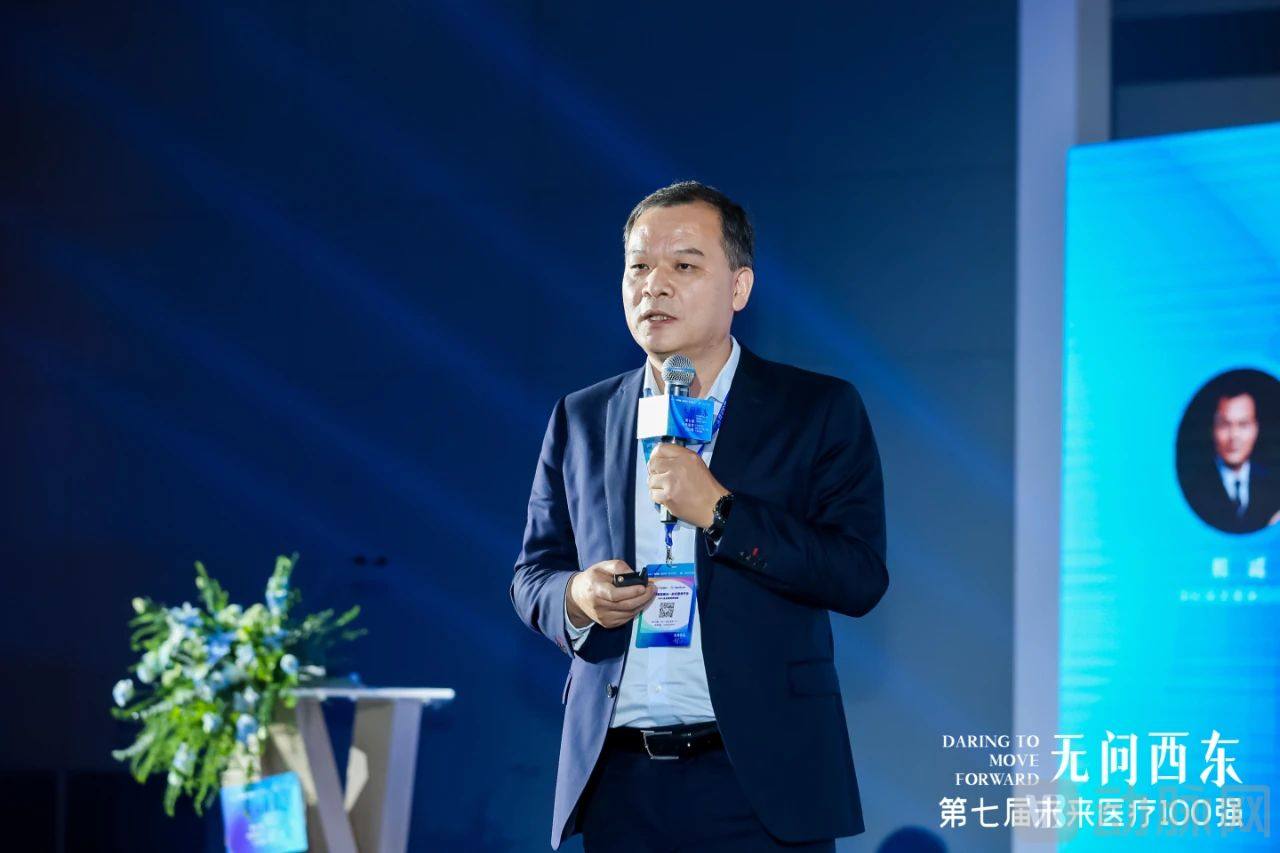
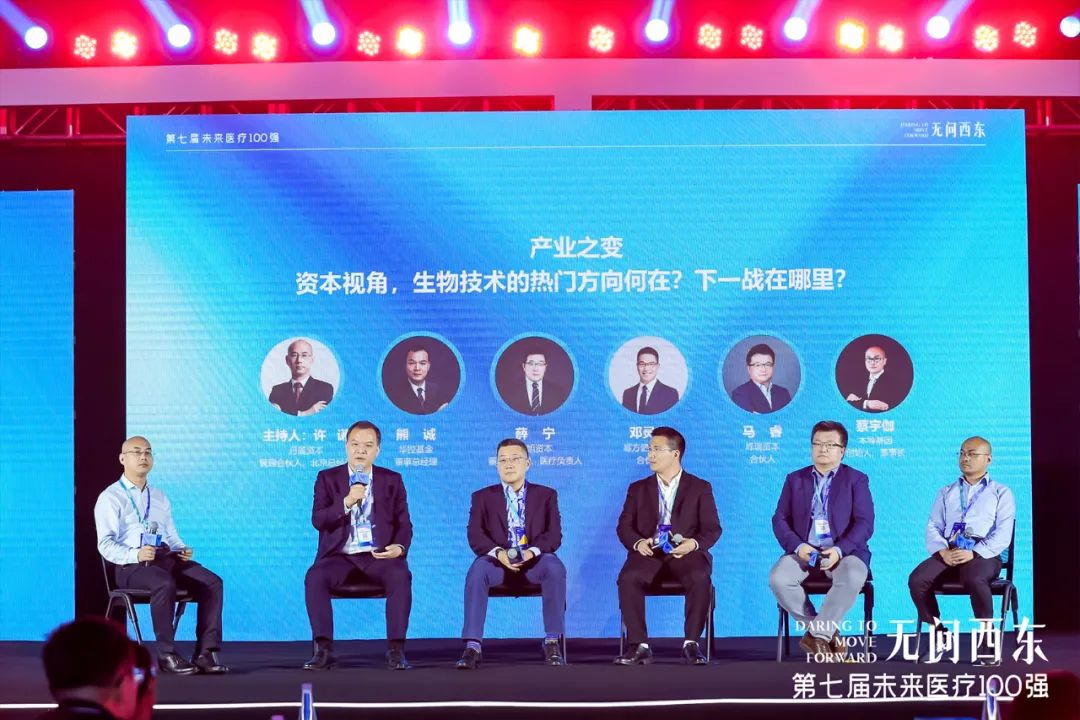
Xiong Cheng, Managing Director of Huakong Fund, was invited to attend the conference and deliver a keynote speech titled “In the Era of Life Sciences Technology, ‘Health Investment’ Is Gaining Momentum.” He also engaged in discussions with entrepreneur representatives from renowned investment institutions and innovative pharmaceutical companies on the topic: “From a Capital Perspective, What Are the Hotspots in Biotechnology, and Where Is the Next Frontier?”
The Era of Life Sciences Is Imminent as the Market Returns to Rationality
Over the past decade, the global healthcare industry has undergone significant transformation, a process accelerated by the COVID-19 pandemic since 2020.
After the bubble in the global biopharmaceutical industry from 2020 to the first half of 2021, the sector has clearly cooled down. Valuations in the secondary market have declined, and capital markets have shifted from excessive optimism back to rationality compared with index levels in 2019. Both globally and in China, Series A financing rounds continue to account for a high proportion of total deals, and it has become commonplace for many companies to fail to secure follow-on funding due to their inability to demonstrate their value.
Meanwhile, as mortality rates for cardiovascular disease and cancer patients continue to decline, the mortality rate for patients with neurological disorders has remained largely unchanged over the past 30 years. The annual mortality rate for major diseases has plateaued since 2018, indicating that medical technology development has reached a bottleneck.
Examining the state of healthcare development from a clinical perspective reveals that traditional pharmaceuticals have reached their ceiling. This is evident in the mid-to-late-stage pipelines dominated by small and large molecules, where the R&D return on investment for new drugs at large multinational pharmaceutical companies has continued to decline over the past five years. One of the primary factors contributing to this decreased return is the failure to obtain regulatory approval due to an inability to demonstrate significant clinical benefit or clear superiority over standard-of-care treatments in clinical trials.
The return of rational market judgment has also made the introduction of emerging biotechnologies increasingly urgent. Clinical medical technologies have achieved leapfrog development over the past few decades. Biotechnology is exhibiting trends characterized by “complex engineering of targets based on existing life science tools” and “multidisciplinary integration.” The cycle of high-throughput experimentation, multi-omics profiling, and protein/gene engineering implementation constitutes the flywheel driving the advancement of modern life sciences.
Health Investment Gains Momentum: Starting with the End in Mind to Secure Lasting Success
Humanity has long aspired to the grand goal of health: the public seeks to overcome disease and extend longevity; enterprises must continuously innovate their products to break through intense competition; and investment institutions need to seize opportunities and select high-quality targets to generate returns.
However, an examination of the current investment landscape in the healthcare industry reveals two “pathological” conditions: excessive optimism and excessive pessimism. When the economic situation is favorable,Entrepreneurs find it too easy to raise capital, with investors vying for pre-IPO projects.Investors are generally willing to allocate more resources to biotech companies, hoping they can leverage new technologies to develop innovative drugs and address challenges in disease treatment. However, when the overall economic climate deteriorates, many investors tend to withdraw from high-risk sectors or seek relatively lower-risk investment opportunities within the industry.
The root cause of this pathological investment landscape lies in the lack of smooth exit channels. Outstanding biotechnology companies must possess not only strong R&D capabilities but also robust commercialization abilities to secure a leading position in their respective niche markets. Meanwhile, top-tier investment institutions should adhere to the “Three Goods” standard when selecting portfolio companies: good projects, good prices, and favorable terms.
Ultimately, whether entrepreneurs or investors, only by adopting an “end-in-mind” approach and clearly defining their ultimate exit strategy can they emerge as the ultimate winners.
Healthcare Investment Strategy: Advancing Toward Disruptive Technologies of the Era
Current Investment Strategies in the Healthcare Industry: Different types of funds select investment targets based on varying stages of industrial development. Angel funds typically target outstanding startup teams in frontier technology sectors; venture capital (VC) and growth-stage funds focus on areas where technologies are maturing, such as bispecific antibodies, antibody-drug conjugates (ADCs), cell therapy, radiopharmaceuticals, drug-device combinations, and surgical robots; while private equity (PE) or buyout funds tend to invest in sectors with established industry leaders, such as small-molecule drugs, monoclonal antibodies, and in vitro diagnostics (IVD).
Huakong Fund, as a firm dedicated toin the field of technological innovationHard-tech investment firms are strategically positioning their biotechnology portfolios to target disruptive, era-defining innovative technologies.
Huakong, through analysisPopulation Curve, DiscoverySince 2020, China’s population aging has been intensifying. Consequently, the focus is on outstanding enterprises in the healthcare sector that possess high-value products and cutting-edge technology platforms. In the short term, Huakong remains firmly bullish on high-growth industries such as brain science, antibody-drug conjugates (ADCs), and bispecific antibodies. In the long term, it favors industries with significant growth potential, including gene editing, induced pluripotent stem cells (iPSCs), and synthetic biology.
As the biotechnology era gradually transitions into the life sciences and technology era, AI and other advanced technologies are increasingly integrated into the biological industry. Drug development is shifting from small molecules and antibodies toward living cells and organs, with more original scientific and technological innovations advancing toward clinical translation.
Huakong Fund will continue to support enterprises in achieving technological innovation and breakthroughs, jointly propel the biotechnology sector into its next stage of development, courageously assume responsibility for transforming the industrial landscape, and strive tirelessly to improve global health standards and human well-being.