

GE HealthCare Unveils Three Smart Service Solutions at CMEF 2023, Pioneering a New Era in Medical Equipment Services

GE Hangwei
Medical Device R&D and Manufacturer
As a critical productive asset for hospitals, second only to physicians, medical equipment significantly impacts hospital operational and management outcomes depending on the effectiveness of its management model. Particularly in today’s context of increasing equipment quantities and growing complexity in device types, identifying the optimal approach to equipment management within daily operations has become a major challenge facing hospitals.
Digitalized Operations of Medical Equipment: A Novel Solution in Recent YearsThe digitalized operation of medical equipment has emerged in recent years as a novel approach to addressing the aforementioned challenges. Its core concept involves leveraging digital platforms to centrally manage lifecycle information for all hospital equipment, enabling unified allocation for daily use based on equipment status and departmental needs. Currently, some enterprises have introduced artificial intelligence into data processing and decision-making processes to provide support, thereby further enhancing management efficiency and decision-making effectiveness.
GE Healthcare has consistently been at the forefront of the industry in the digital operation of medical devices. Today, it is striving to promote the integration of digitalization with medical device services, helping customer service break through traditional models and transition toward more precise and intelligent service paradigms.
At this year’s China Medical Equipment Fair (CMEF), GE Healthcare spared no effort in showcasing its achievements, unveiling three new innovative equipment services in one go. Zheng Jieming, Vice President of GE Healthcare China and General Manager of the Customer Services Business, stated at the launch event, “The release of these three new offerings is a concrete response to the needs of healthcare institutions at all levels for improving quality and efficiency, and a strong testament to our full-scale advancement of the ‘Boundless Innovation’ strategy.”
Chen Yan, Chief Operating Officer of GE Healthcare’s Global Customer Services business, also told VCBeat that China is GE Healthcare’s second-largest market, with its installed base of equipment in the country reaching 300,000 units to date. “China is a hybrid market that combines mature and developing segments. The intensifying aging population is driving greater essential demand for healthcare services,” she stated candidly. “GE Healthcare’s Customer Services business will continue to invest in identifying and addressing unmet customer needs, developing products and solutions better tailored to diverse healthcare scenarios. We aim to help tertiary hospitals improve diagnostic and treatment efficiency, assist primary care institutions in making effective use of advanced medical equipment, and support non-public healthcare providers in reducing costs, enhancing efficiency, and strengthening specialized clinical disciplines.”
When discussing the digital operation of medical devices, GE Healthcare likes to view medical devices as real people.
“To ensure the efficient operation of medical equipment, we need to care for the devices and monitor their status. Therefore, GE Healthcare has established a ‘Smart Service’ team that treats every piece of equipment with the same care afforded to patients,” said Zheng Jieming.
“Specifically, we employ specialized diagnostic methods to assess equipment status and identify risks before medical devices exhibit any issues. Secondly, once our staff detect potential problems with the equipment, they provide digital, remote technical support to assist physicians in pinpointing and attempting to resolve the issues. Finally, if remote guidance fails to mitigate the risks, GE Healthcare engineers guarantee a response to the hospital’s request within two hours. This entire process forms a closed-loop diagnostic system, with the ultimate goal of achieving the principle that ‘the finest physicians prevent disease before it arises.’”
The “Ultrasound Smart Premium Protection” launched at this CMEF is a prime example. According to GE Healthcare, this service provides comprehensive coverage and one-stop centralized management for all GE Healthcare ultrasound equipment across the entire hospital, thereby maximizing the operational efficiency of each ultrasound unit. Hospitals can flexibly enroll in the plan based on their existing equipment configuration, ensuring that all ultrasound devices receive professional-grade maintenance.
Specifically, GE Healthcare categorizes ultrasound equipment based on years of service into three main groups: flagship devices (early stage, 0–3 years), core devices (mid-stage, 3–6 years), and reserve devices (late stage, 6+ years). Tailored maintenance and clinical functionality expansion services are provided for each lifecycle stage to ensure precise and reliable image quality and enhanced diagnostic and therapeutic performance. This approach enables ultrasound equipment to serve as the cornerstone of imaging diagnosis, maximizing its value throughout its entire lifecycle.
Compared with the equipment services of public hospitals, GE Healthcare has moved faster in the non-public healthcare sector.
“Zhitongbao” Service Platform is GE Healthcare’s first digital, customized maintenance service tailored for non-public healthcare institutions. The version 3.0, launched at this CMEF, highlights two major innovations: hospital-wide, cross-brand equipment operations management and personalized clinical specialty imaging solutions.
Compared with previous versions, GE Healthcare’s “Zhitongbao 3.0” service achieves “Equipment Connectivity” on one hand, providing one-stop maintenance and servicing for cross-brand equipment across the entire hospital to help private hospitals reduce costs and improve efficiency; on the other hand, it establishes “Clinical Connectivity” for private hospitals, enabling customized expansion of clinical application functions for existing equipment. This empowers the development of specialized clinical departments in private hospitals, strengthens refined management capabilities, enhances medical service delivery, and facilitates high-quality, differentiated growth for private hospitals.
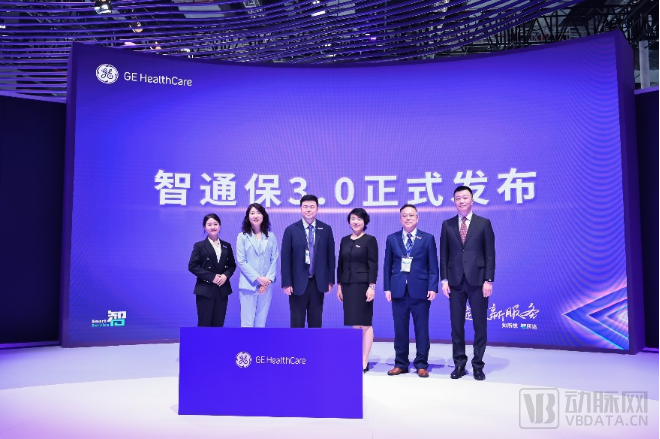
GE Healthcare’s Showcase of Digital-Physical Integration Innovations: Zhitongbao 3.0
In addition to ensuring the proper operation of medical equipment and enhancing its utility through configuration decisions, GE Healthcare has identified a third pathway to maximize equipment value—artificial intelligence.
Customers use the equipment for clinical purposes, specifically for diagnosing and treating patients. For many Grade 3A hospitals, the most direct way to enhance equipment value is to complete more imaging acquisitions and interpretations within the same amount of time. The Zhi Mo He (Smart Magic Box) is designed to meet this need.
In the Smart Magic Box 1.0 era, with only three components—Smart County, Smart Imaging, and Smart Ultrasound—the system was already capable of empowering county-level healthcare while enhancing scan quality for CT, MR, DR, and ultrasound. It assisted physicians in selecting optimal scanning protocols and provided diagnostic support, ultimately achieving end-to-end intelligence across the entire workflow from operation and scanning to diagnosis, thereby better benefiting patients.
Now iterated to version 2.0, the ZhiMo Box has further deepened its clinical integration, incorporating multi-modal imaging and more complex disease categories into its AI diagnostic scope. Acting as an invisible “general practitioner,” it provides auxiliary diagnosis for over 80% of single-disease conditions. Furthermore, the platform bridges AI-assisted clinical diagnosis and treatment for diverse diseases through a single interface, enriching clinical applications and enhancing diagnostic and therapeutic capabilities across varied medical scenarios. It helps tertiary healthcare institutions improve diagnostic and treatment efficiency, assists primary care facilities in leveraging advanced medical equipment, and supports non-public healthcare institutions in reducing costs, increasing efficiency, and strengthening specialized department development.
Another key value of the ZhiMo Box lies in talent retention. Currently, enhancing the speed and capability of precise screening, upgrading staff skills, and maintaining workforce stability are severe challenges faced by many healthcare institutions. By collaborating with digital technology ecosystem partners, the ZhiMo Box Family 2.0 continuously curates and provides multi-disease auxiliary diagnostic and therapeutic technologies. This not only significantly improves the work efficiency of physicians and technicians, bridging the hospital’s “talent gap,” but also leverages its inherent “expert capabilities” to help hospitals build superior diagnostic and treatment advantages, thereby “retaining” high-quality clinical capabilities within the institution.
The iteration and launch of the aforementioned intelligent service products are the result of GE Healthcare’s continuous deepening of its digital and intelligent layout in the equipment services sector. However, based on the current product portfolio, there remains substantial room for GE Healthcare to further explore digital and intelligent transformation opportunities within hospitals.
For GE Healthcare, untapped markets present both opportunities and challenges. Fortunately, the company’s extensive installed base of medical devices serves as a strategic advantage, enabling it to take the lead in the big data era by leveraging the value derived from data analytics.
Guided by this approach, GE Healthcare will continue to pursue the integration of digital and physical technologies, helping hospitals and physicians achieve optimal operational efficiency and clinical decision-making, comprehensively enhancing the experience for both customers and patients, and progressively delivering richer, higher-value digital solutions that empower equipment services. This will address critical challenges across diverse healthcare scenarios, ultimately advancing the modernization of public health and promoting high-quality development in healthcare.