

Establishment Labs: A Costa Rican Medical Tech Pioneer Driving Global Breast Aesthetics with Revenue Quadrupling in Five Years and Stock Surging Over 300%

Establishment Labs
High-Tech Medical Device Manufacturer
Plastic surgery, breast augmentation, liposuction... More and more people are choosing to undergo a “beauty project.”
The breasts are a key area of concern for women, and breast augmentation has long been a focal point in medical aesthetics. Data published by the International Society of Aesthetic Plastic Surgery (ISAPS) shows that breast augmentation was the second most performed plastic surgery procedure worldwide in 2021.
The primary methods for breast augmentation are autologous fat injection and prosthetic implantation. Since the introduction of the first-generation silicone implants in 1962, silicone implants have undergone four technological iterations. Today, silicone implants are the most widely used and technologically mature breast implants.
Establishment Labs, founded in 2004, is a company focused on the breast aesthetics and reconstruction market, with its main products being silicone breast implants.
On July 19, 2018, Establishment Labs listed on the Nasdaq (NASDAQ: ESTA) with an initial public offering price of $18 per share. As of May 19, 2023, ESTA’s closing share price was $69.35, representing a 385% increase from the IPO price, with a market capitalization of $1.7 billion.
Establishment Labs’ Founder and CEO, Juan José Chacón Quirós, did not choose the medical market by chance.
Chacón Quirós was born into a family of medical professionals; his father and brother are both plastic surgeons, his mother is a nurse, and his wife is also a physician. Influenced by his family background, he began his career in the healthcare industry. He initially handled business operations at a plastic surgery clinic and later served as a business manager responsible for sales at a medical device company in Latin America.
In 2004, Chacón Quirós founded Establishment Labs in his home country of Costa Rica. During the first four years after its establishment, Chacón Quirós sustained the company’s operations through self-funding and loans borrowed from family members. As he conducted in-depth market research, Chacón Quirós recognized the potential of the breast implant market, prompting him to expand operations and initiate the first round of financing. It was at this stage that Establishment Labs began operating as a formal corporation.
Chacón Quirós, who had a background in economics rather than technology, turned to Salvador Dada Santos, an engineer by training. Santos not only contributed his “engineering mindset” across all aspects of the business but also recruited the technical talent necessary for the company’s growth, including Chief Technology Officer Roberto De Mezerville.
From fundraising and product development to clinical trials, regulatory approval, commercial launch, and revenue expansion, Establishment Labs’ early journey appeared relatively smooth. In 2016, the company’s revenue grew by 106% year-over-year; in 2017, it increased by 75% year-over-year.
However, Establishment Labs was not content with this; it also sought to list on the U.S. securities market. In 2018, Establishment Labs successfully listed on the Nasdaq, becoming the first Costa Rican company to go public in the United States. Santos, Mezerville, and Chacón Quirós were present on the trading floor to witness this historic milestone for the company.
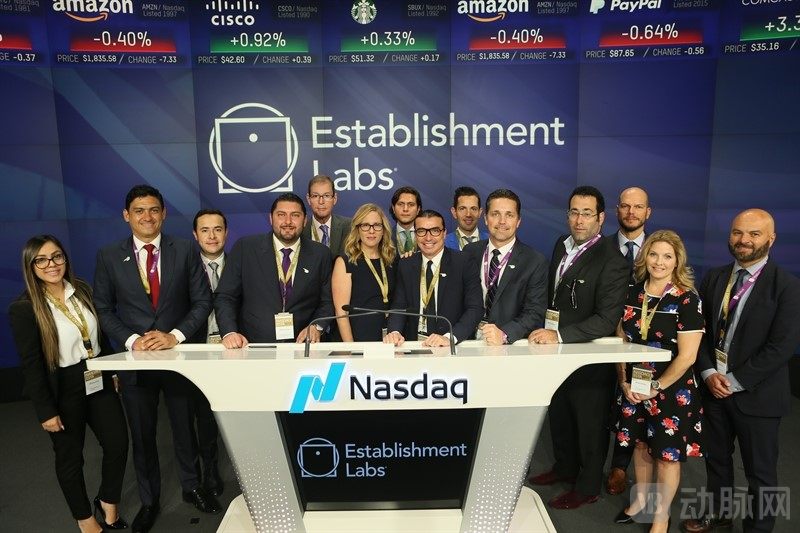
Establishment Labs Listed on Nasdaq | Image Source: Establishment Labs Official Website
According to ISAPS data, there were approximately 1.7 million breast augmentation procedures performed globally in 2021, a figure that continues to rise year by year. Additionally, the American Society of Plastic Surgeons reported that more than 130,000 breast reconstruction surgeries were conducted across the United States in 2020, with the breast reconstruction market projected to reach $647 million by 2026.
Despite the sustained global demand for breast augmentation surgery, product innovation in breast implants has been relatively limited since the 1990s. This stagnation can be largely attributed to a ban imposed by the U.S. Food and Drug Administration (FDA). In 1992, the FDA suspended the sale of silicone breast implants in the United States due to safety concerns; this ban was lifted in 2006.
This has provided Establishment Labs with an opportunity to enter the market. The company’s first breast implant completed its R&D in 2009 and received regulatory approval for launch in 2010. Since then, the company has continuously innovated, launching five generations of implants to date, including four series of Motiva Implants prostheses and the Motiva Flora tissue expanders.

Establishment Labs’ Main Products | Image Source: Establishment Labs Annual Report
Many traditional breast implants carry a relatively high risk of complications. Establishment Labs stated that in a ten-year prospective study, products from Sientra, Allergan, and Mentor all exhibited certain risks of rupture, capsular contracture, and reoperation. Currently, only these three companies have FDA approval to market breast implants.

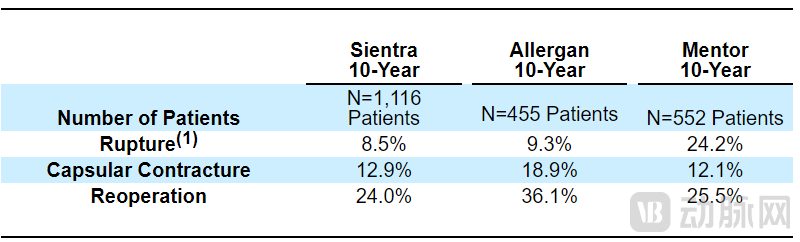
Complication Rates of Establishment Labs’ Competitors | Source: Establishment Labs Annual Report
Beyond hematoma, infection, patient constitution, and surgical technique, the high probability of complications is closely related to the material of the implant. Regarding capsular contracture, smooth-surface implants are easier to insert and more affordable, but they are prone to postoperative displacement and carry a higher risk of capsular contracture. Textured-surface implants are easier to stabilize and have a lower incidence of capsular contracture; however, they are more difficult to implant, may require larger incisions, and are more expensive.
Motiva Implants prostheses fall between the two extremes, utilizing patented SmoothSilk surface technology designed to enhance biocompatibility and reduce inflammatory and fibrotic responses.Data released by Establishment Labs shows that from the launch of its first implant, Motiva Implants, in 2010 to the end of December 2022, the company sold nearly 2.7 million breast implants. The rates of prosthesis rupture, capsular contracture, and reoperation due to adverse reactions were all below 0.1%.
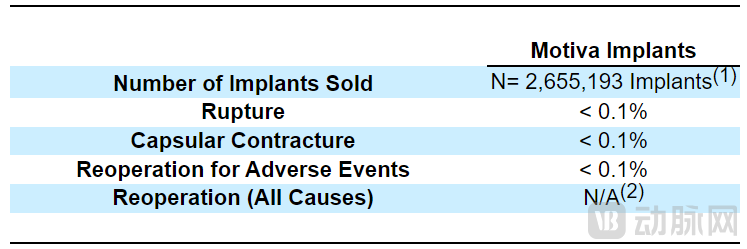
Complication Rates of Motiva Implants | Source: Establishment Labs Annual Report
In addition to the data released by Establishment Labs itself, articles published in Aesthetic Surgery also confirm the lower reoperation rate of Motiva Implants.A single-center study in the United Kingdom from 2013 to 2016 showed that among 5,813 patients who received Motiva Implants prostheses, the reoperation rate due to adverse events was 0.76%. In contrast, from 2010 to 2013, the reoperation rate for patients implanted with FDA-approved silicone prostheses was 8.43%.
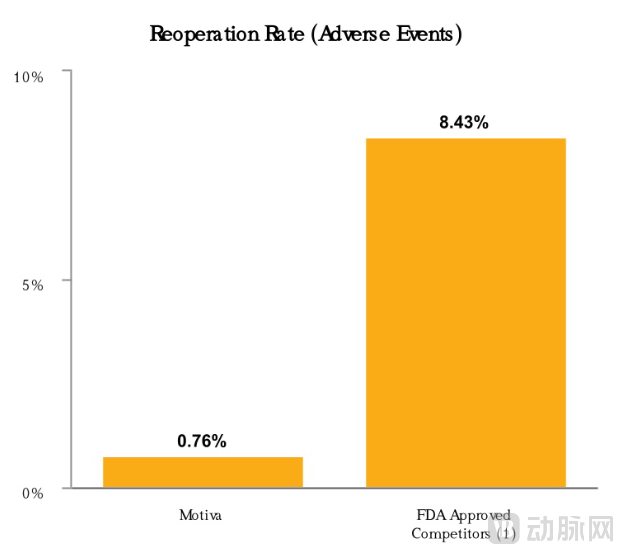
Reoperation Rates for Motiva Implants vs. Competitors | Source: Establishment Labs Annual Report
Furthermore, Motiva Implants holds multiple patented technologies; its silicone implants have a low risk of rupture and maintain a round shape when the patient is lying down, while forming a natural teardrop shape when standing.
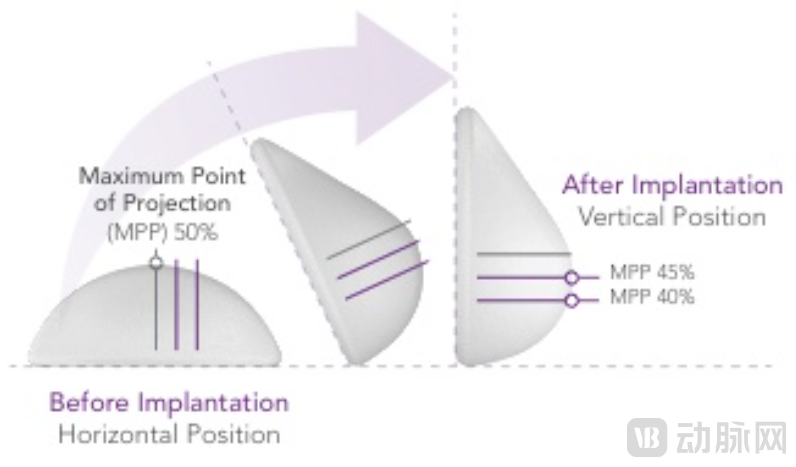
Motiva Implants’ Shape Change with Position. Image source: Establishment Labs Annual Report
Establishment Labs also offers a radio-frequency identification (RFID) microtransponder (Qid). As an optional feature, it is embedded within the silicone implant. After surgery, patients can use the device to access information such as the implant type and size, facilitating future warranty claims and replacements.Establishment Labs stated that Motiva Implants are currently the only breast implants on the international market utilizing Qid technology, and the company is considering selling these micro-transponders to other medical companies in the field in the future.
Most patients undergoing total mastectomy cannot receive immediate implant-based reconstruction; instead, they require the initial placement of tissue expanders in the breast defect area. A tissue expander is a balloon-like temporary prosthesis into which physicians periodically inject sterile saline. After 3–4 months, once the skin has stretched sufficiently to create adequate space for the permanent implant, the patient undergoes implant insertion surgery. However, the ports of most tissue expanders are made of metal, which constitutes a contraindication for MRI scanning.
Establishment Labs’ Motiva Flora tissue expander features a non-magnetic port, enabling patients with the implanted device to undergo MRI scans safely. Additionally, the Motiva Flora incorporates a radio-frequency identification (RFID) coil, allowing physicians to accurately locate the port using a port locator.Establishment Labs states that Motiva Flora is the first MRI-compatible tissue expander on the market and currently the only tissue expander with an integrated RFID port.
To date, Establishment Labs’ products have been commercialized in 85 countries/regions outside the United States.According to ISAPS data, the United States accounted for the largest share of global breast augmentation procedures in 2021 (23%). Establishment Labs is clearly unwilling to forfeit this substantial portion of the U.S. market, and securing FDA approval to enter the U.S. market has long been a key strategic priority for the company.
Establishment Labs obtained an Investigational Device Exemption (IDE) from the U.S. Food and Drug Administration (FDA) in 2018 and subsequently actively conducted clinical trials. The Motiva IDE clinical trial enrolled 827 patients across 32 centers in the United States, Germany, and Sweden, including 562 augmentation patients and 265 reconstruction patients, with all related surgeries completed by summer 2022.
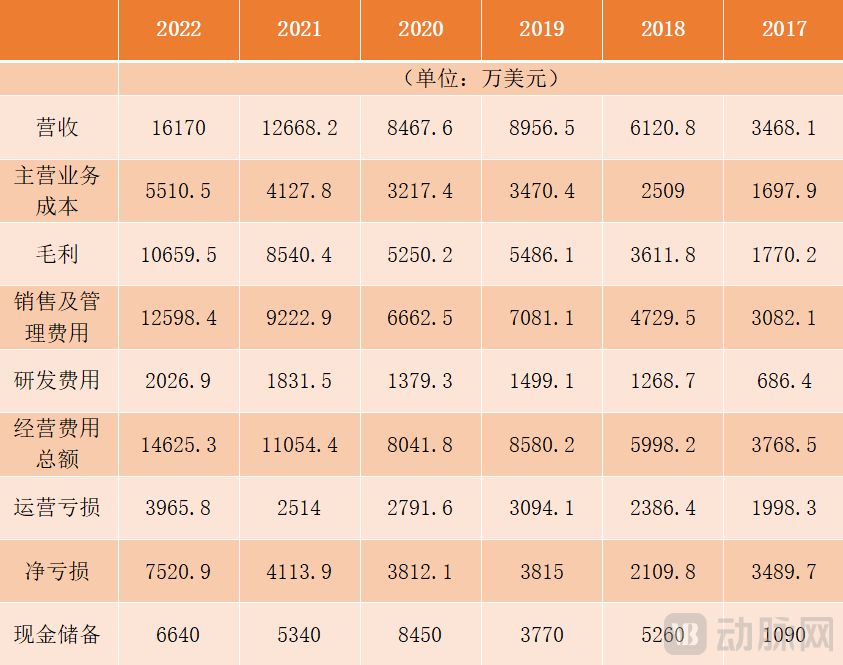
Key Financial Data of Establishment Labs | Source: Establishment Labs Annual Reports; Compiled by VCBeat
As can be seen from the published financial data, the ravages of COVID-19 had a significant impact on Establishment Labs’ business. In particular, in 2020, with numerous operating rooms closed worldwide, Establishment Labs experienced operational disruptions, resulting in a 5% decline in the company’s revenue for that year. However,With the exception of 2020, Establishment Labs’ revenue demonstrated a year-over-year upward trend, rising from USD 34.68 million in 2017 to USD 161 million in 2022, representing a 4.64-fold increase.
Establishment Labs stated that the primary driver of revenue growth was an increase in its global market share, particularly due to recent expansions in Latin America and the Asia-Pacific markets. This success is attributed not only to the recognition of its products by plastic surgeons and patients but also to the company’s efforts to expand direct sales across multiple regions.
However, such substantial growth inevitably comes at a cost, as Establishment Labs’ operating expenses have been rising year by year. In addition to continuously increasing R&D expenditures, selling, general and administrative (SG&A) expenses account for the majority of operating costs and remain persistently high. In 2022, the company’s SG&A expenses reached $126 million, representing 77.91% of its revenue. Although the gross margin has exceeded 60% for the past four years, Establishment Labs has not yet achieved profitability and remains in a phase of driving revenue growth through aggressive spending on sales.
Establishment Labs stated that it expects to continue incurring losses in the near term and will secure funding through equity financing, debt financing, and product sales to support its operations. As of December 31, 2022, Establishment Labs had cash reserves of $66.4 million, which it believes will be sufficient to meet its liquidity needs for at least the next year.
On April 27, 2023, Establishment Labs completed a secondary offering of 1.265 million ordinary shares, raising $90.4 million. This demonstrates the market’s confidence in this growing company and its optimistic outlook on the incremental growth potential within the breast implant industry.