

Tongxin Zhiyi and Roche Sign Agreement on Digital Technology Application in Perioperative Lung Cancer Care
Building the Pillars of Smart Healthcare, Advancing Toward an Innovative Future in Diagnostics
With the continuous advancement of artificial intelligence technologies, machine learning is being increasingly applied in real-world settings. In particular, integrating deep learning and causal inference models into traditional clinical diagnosis and treatment across various scenarios holds significant importance. These applications range from medical image recognition that assists physicians in analyzing or diagnosing medical images, to the formulation of personalized treatment plans based on individual patient differences, as well as the prediction of postoperative disease recurrence rates and prognosis assessment. Such approaches have gained widespread recognition among clinicians and are viewed with considerable promise for the future.
On May 18, Tongxin Zhiyi and Roche Pharmaceuticals held a signing ceremony at Roche’s Shanghai headquarters to formalize a collaboration agreement on the application of digital technologies in the perioperative management of lung cancer. Leveraging their respective technological strengths and resources, the two parties plan to cooperate on the end-to-end application of artificial intelligence (AI) technologies in the field of lung cancer, with a particular focus on the perioperative period. They anticipate that this partnership will bring new breakthroughs to the current digitalization of healthcare applications.
Tongxin Digital Technology Partners with Roche Pharmaceuticals
Empowering Full-Process Digitalization in the Perioperative Management of Lung Cancer
Currently, numerous studies and practices have demonstrated the significant developmental value of AI algorithms in real-world clinical medical exploration, primarily manifested in:
1. Diagnosis and Prediction:Leveraging machine learning technologies, artificial intelligence can analyze vast amounts of information, including medical records, imaging data, and physiological data, thereby improving diagnostic accuracy for diseases and predicting disease progression. Currently, AI has been applied in multiple fields such as oncology, cardiology, and neurology.
2. Intelligent Decision Support: Based on comprehensive data including the patient’s genetics, medical history, and clinical manifestations, artificial intelligence can generate personalized guidelines and assist physicians in formulating optimal treatment plans.
3. Genomics Research:Artificial intelligence can efficiently process genetic data and perform pattern recognition, thereby supporting genomics research. For example, it can uncover associations between different types of cancer or predict patients’ drug metabolism rates.
4. Medical Image Analysis:By leveraging technologies such as convolutional neural networks, artificial intelligence can rapidly and accurately identify various pathological features in medical images, thereby assisting physicians in diagnosis and analysis, including applications such as auxiliary breast cancer detection.
5. Safety Monitoring:Artificial intelligence can systematically monitor and provide early warnings for medication use and associated risks. For example, it can assist in identifying adverse drug reactions and infectious disease outbreaks, enabling timely intervention for patients.
Tongxin Zhiyi, leveraging its years of dedication to exploring needs and conducting applied research on AI technologies in the medical field, has independently developed a new generation of innovative AI algorithms based on “causal inference + deep learning.” The primary advantage of this technology lies in its ability to provide artificial intelligence products with greater interpretability and stability, tailored to different stages and needs across the entire disease diagnosis and treatment process. This enhances diagnostic and therapeutic outcomes, reduces surgical risks and the incidence of complications, and delivers more precise, safe, and effective treatment plans for patients. These objectives align closely with Roche’s corporate commitment to “acting in the best interests of patients first.” Consequently, Tongxin Zhiyi has established a partnership with Roche Pharmaceuticals, culminating in the signing of this agreement.
It is understood that,The digital signing and cooperation agreement project between Tongxin Zhiyi and Roche Pharmaceuticals is expected to achieve the following objectives:
1. In terms of prediction and diagnosis: Utilizing machine learning and deep learning algorithmic models to predict and diagnose data from lung cancer patients, thereby improving the early diagnosis rate and accuracy of lung cancer.
2. In the Formulation of Personalized Treatment Plans: Leveraging artificial intelligence technology to conduct comprehensive assessments and analyses of patients, including their medical history, imaging results, molecular biology tests, and other aspects, in order to develop personalized treatment plans, improve therapeutic efficacy, and reduce the incidence of complications.
3. In terms of perioperative monitoring and management: Utilizing artificial intelligence algorithms for perioperative monitoring and management of lung cancer patients, including surgical risk assessment, postoperative rehabilitation guidance and follow-up, as well as prediction and prevention of postoperative complications, to enhance the safety and efficacy of surgical treatment.
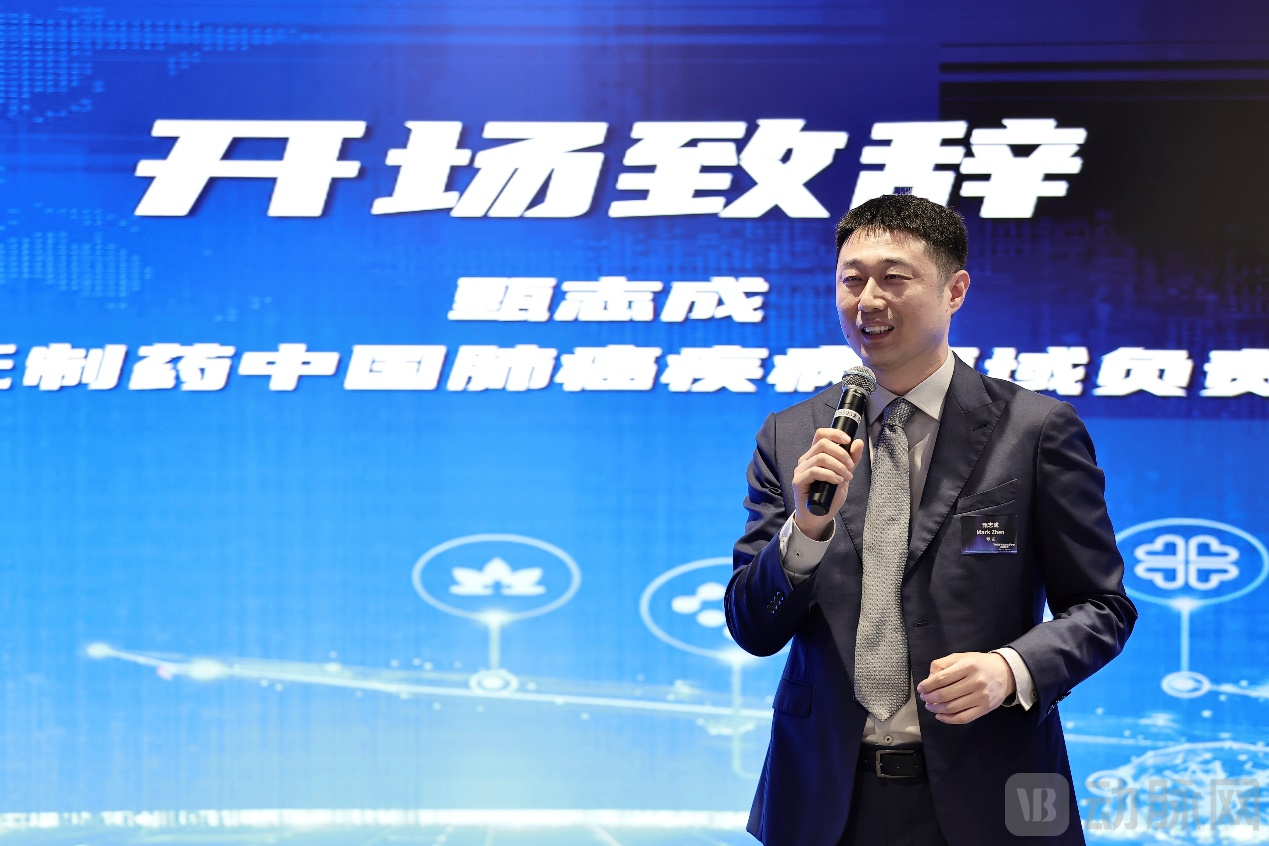 Zhen Zhicheng, Head of the Lung Cancer Disease Area at Roche Pharmaceuticals China, Delivers Remarks
Zhen Zhicheng, Head of the Lung Cancer Disease Area at Roche Pharmaceuticals China, stated in his opening remarks prior to the signing ceremony“In recent years, Roche has made rapid strides in the field of lung cancer treatment. From anti-angiogenic agents and targeted therapies for rare mutations such as ALK and ROS1, to immune checkpoint inhibitors targeting PD-L1, Roche currently boasts a comprehensive product portfolio in lung cancer. We are confident that by leveraging VCBeat’s expertise in digital health and AI technology, we can jointly develop models or products that address the practical clinical needs in the diagnosis and treatment of lung cancer. We wish this collaboration every success, ultimately benefiting a broad patient population.”
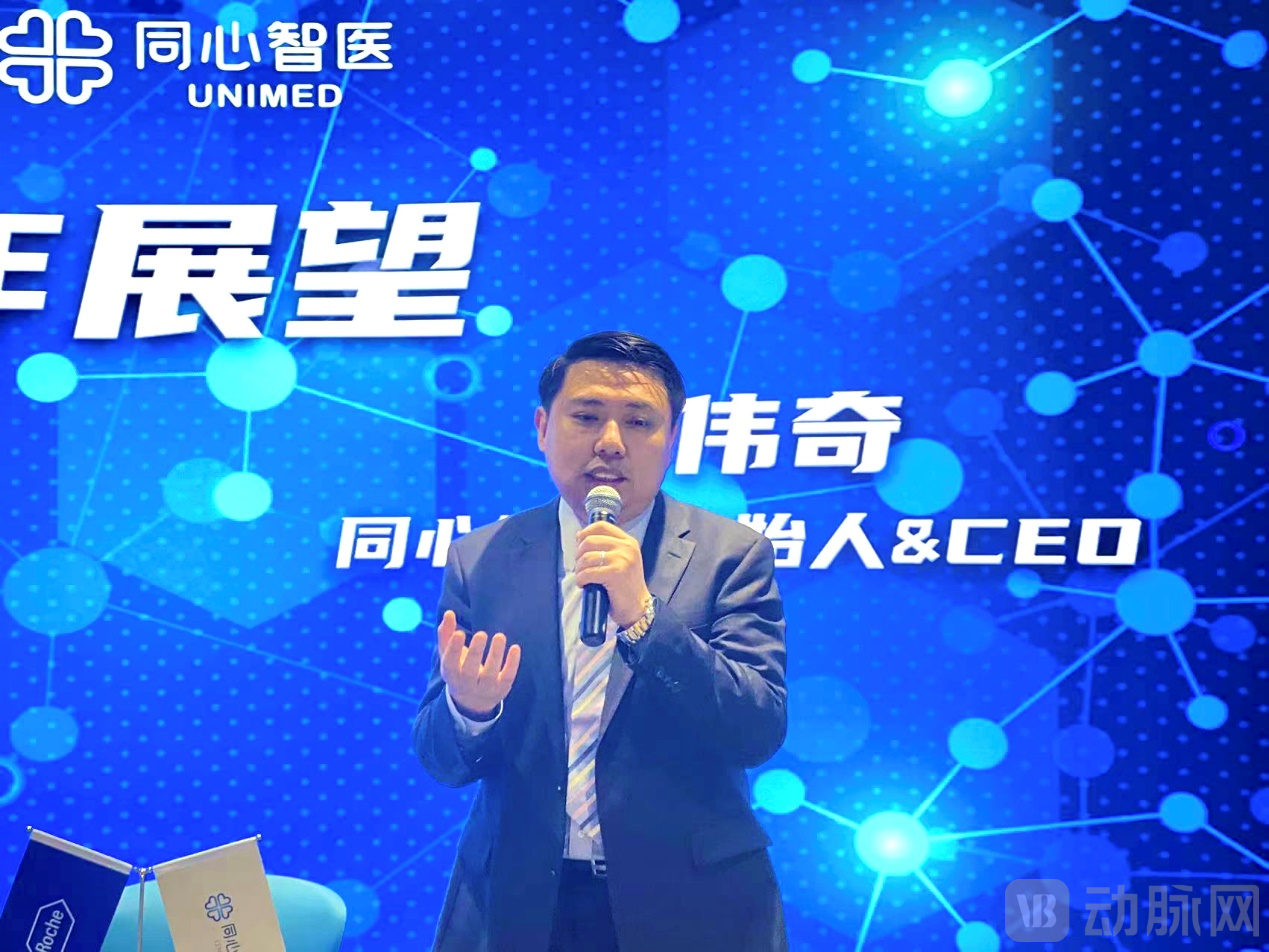 Tongxin Zhiyi CEO Liu Weiqi Delivers Address
Liu Weiqi, CEO of Tongxin Zhiyi, stated in his remarks prior to the signing ceremony:“We are honored to partner with Roche Pharmaceuticals on this project. We hope that, by leveraging Tongxin Zhiyi’s strengths in artificial intelligence, we can support the advancement of Roche’s lung cancer product portfolio. Our goal is to empower physicians to better manage complex clinical challenges, thereby enhancing diagnostic and therapeutic outcomes for patients. This support will be particularly valuable for early-career physicians and those practicing at primary care institutions. Throughout this collaboration, Tongxin Zhiyi is fully committed to assisting Roche in the development of its lung cancer-related products, and we look forward to jointly delivering tangible, implementable solutions.”
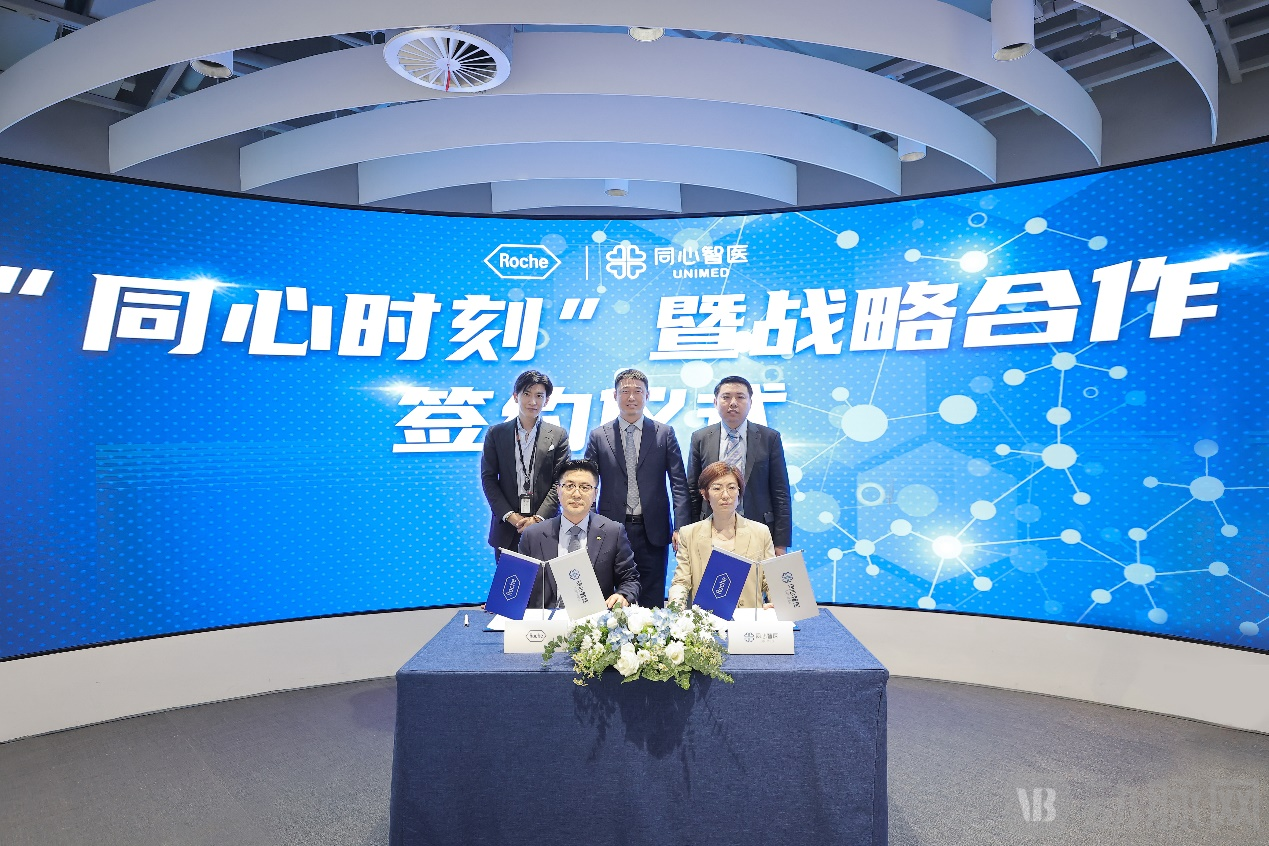 Witnessing the Signing Ceremony
Hou Huitao (first row, left), Head of the Lung Cancer Eco-Immunology Market at Roche Pharmaceuticals
Wang Xiaowei, Medical Director of the R&D Department at Tongxin Zhiyi (right, first row)
Guo Kun (second row, first from the left), Head of Communications Partnerships and Media Affairs at Roche Pharmaceuticals China
Zhen Zhicheng (center, second row), Head of the Lung Cancer Disease Area at Roche Pharmaceuticals China
Tongxin Zhiyi CEO Liu Weiqi (second row, right)
Following the opening remarks by leaders from both companies, Huitao Hou, Head of Lung Cancer Ecosystem and Immuno-Oncology Marketing at Roche Pharmaceuticals, and Xiaowei Wang, Medical Director of the R&D Department at Tongxin Zhiyi, conducted the on-site signing ceremony. The ceremony was witnessed by Zhicheng Zhen, Head of the Lung Cancer Disease Area at Roche China; Kun Guo, Head of Communications Partnerships and Media Affairs at Roche China; and Weiqi Liu, CEO of Tongxin Zhiyi.
Tongxin Zhiyi originated from the Institute for Green Healthcare at Tsinghua University. It is a high-tech enterprise in Tsinghua Science Park and a founding member of the Tsinghua Medical Innovation Alliance. The company maintains long-term, in-depth technical and clinical collaborations with the Department of Computer Science and Technology at Tsinghua University, the Center for Globalization Studies at the School of Economics and Management of Tsinghua University, Huazhong University of Science and Technology, the Institute of Automation of the Chinese Academy of Sciences, the Chinese Research Hospital Association, Harvard University, Johns Hopkins University, Beijing Tiantan Hospital, Peking Union Medical College Hospital, Peking University People’s Hospital, and the Chinese PLA General Hospital.
To date, Tongxin Zhiyi has completed five rounds of financing, attracting investment from leading industry institutions such as China Merchants Capital, CICC Capital, Legend Capital, Matrix Partners China, and Lenovo Star. The sustained attention from numerous investors has further accelerated Tongxin Zhiyi’s development and commercialization of a diverse pipeline of AI-powered intelligent medical device products, covering the full spectrum of clinical scenarios including early screening, disease diagnosis, assisted treatment, and prognosis assessment.
At this stage, Tongxin Zhiyi will maintain robust interactions with hospitals, physicians, medical institutions, and research organizations within its closed-loop intelligent diagnosis and treatment platform that integrates R&D, production, and clinical application. By doing so, it aims to deliver more precise, safe, and effective treatment solutions, thereby contributing to the long-term national goal of healthcare equalization.