

Oumeng Medical Diagnostics CEO Li Chuan: Safety and Innovation Are the Ironclad Rules in Medical Diagnostics
“Before deciding to switch careers, I had some expectations about the healthcare industry. However, upon actually entering the field, I realized that I had underestimated the challenges; the industry barriers are far higher than I had imagined.”
Li Chuan, the current CEO of EUROIMMUN Medical Diagnostics, recalls his transition from the semiconductor industry to the medical diagnostics sector in 2009. He stated that because diagnostic products are applied directly to the human body, they carry significant risks; therefore, the guiding principle for development in the healthcare industry is to prioritize prudence and avoid errors at all costs.
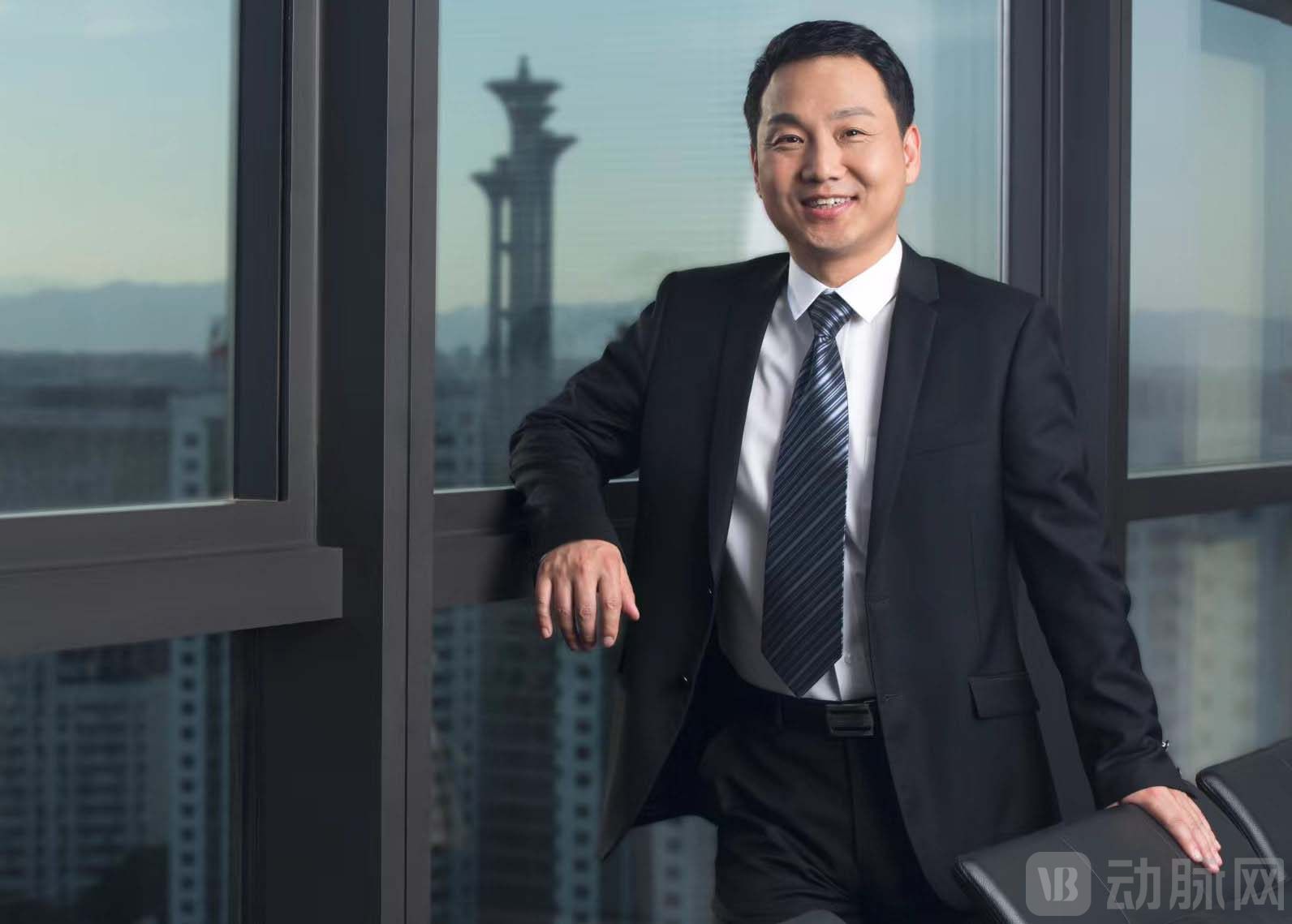
Li Chuan, CEO of Euroimmun Medical Diagnostics. Photo provided by the interviewee.
Challenges and Transformation: Steady Progress and the Driving Force of “Family Culture”
As Li Chuan first stepped into the healthcare industry, the initial challenge he faced was the unique nature of innovation within this sector.
“The unique attributes of the healthcare industry have given rise to innovation models that differ significantly from those in other sectors, with caution and safety serving as ironclad rules within the industry,” stated Li Chuan.
From a management perspective, the presence of an interdisciplinary talent pool is another prominent feature of the healthcare industry. “The talent required in the clinical diagnostics sector spans more than twenty specialized disciplines, covering every link from R&D and management to sales and regulatory affairs, which increases managerial complexity exponentially,” said Li Chuan.
Given the unique nature of R&D in the diagnostics industry, which requires interdisciplinary collaboration across physics, chemistry, optics, and electrical engineering, Li Chuan faces critical managerial challenges in facilitating smooth R&D progress and fostering interdepartmental cooperation. Meanwhile, the company’s operations are continually confronted with various challenges, as unpredictable new issues constantly emerge. Consequently, both business and execution strategies must be flexibly adjusted in response to market dynamics.
In response to these issues, Li Chuan’s answer is: to build the internal drive of a “family culture.”
What Is “Family Culture”? Li Chuan believes that companies should build a family-like atmosphere internally, grounded in the core management philosophy of “respecting and appreciating one’s employees.”
“At Euroimmun Medical Diagnostics, employees are not only colleagues but also comrades-in-arms and family members, with everyone being equal. This approach fosters emotional cohesion, uniting staff into a single entity, while also aligning behaviors to ensure that every department and individual has clear objectives. It cultivates a sense of responsibility and trust, motivating everyone to move forward proactively without the need for external pressure,” added Li Chuan.
When the company needs to make strategic decisions or roll out deployments, Li Chuan typically drafts a proposal on his own before convening the team for discussion. These discussions are often lively, sometimes even sparking intense debates between different groups. “The more heated the debate, the easier it is to identify potential risks,” he notes. By the time consensus is reached among all participants, the decision or deployment plan has fully matured.
In terms of corporate values and management, a detail mentioned by Li Chuan is also impressive. For commercial companies, the marketing department can be said to hold a dominant position. When some employees from the marketing department return to the company and say things like "I am supporting all of you" to colleagues in other departments—statements that are seriously at odds with Euroimmun's corporate culture—they would be directly dismissed according to company policy. This, in a sense, reflects Euroimmun's emphasis on and respect for individual employees.
The model of employee relations determines a company’s value system, which in turn shapes its organizational structure. Corporate organizational models range from strict management systems that clearly separate public and private interests to value-driven frameworks that prioritize “customer first.” How has the “family culture” management system, championed by Li Chuan as an internal driving force, performed over the past decade?
From 40 to 600: Without Accumulating Small Steps, One Cannot Reach a Thousand Miles
More than a decade ago, there was a fundamental lack of understanding regarding the diagnosis of autoimmune diseases among industry players, physicians, and patients alike. Pioneering this sector was exceptionally challenging, as venturing into it meant starting from scratch. Nevertheless, Li Chuan, an innate optimist, remained full of confidence: “Wherever there is backwardness, there lies opportunity. The more underdeveloped the field, the less public awareness exists, and the greater the difficulties and obstacles, the larger the opportunity.”
Autoimmune diseases are conditions in which the immune system reacts against self-antigens, leading to damage of the body’s own tissues, and they encompass a broad spectrum of disorders. Diseases such as autoimmune liver disease, autoimmune encephalitis, and idiopathic membranous nephropathy were once regarded as “idiopathic” “refractory conditions” or “rare diseases.” With advances in diagnostic technologies, these conditions have since been classified as “autoimmune diseases.”
According to data from The Lancet, the prevalence of common autoimmune diseases is on the rise. Between 2019 and 2020, 7.6%–9.4% of the global population was affected by various types of autoimmune diseases, with the number of patients in China reaching as high as 50 million. Autoimmune diseases have become the third most prevalent chronic condition, after cardiovascular diseases and cancer.
For a field that was little known at the time, the primary challenge was market education. At that time, Euroimmun, with only 40 employees, faced a dual lack of awareness: the industry had limited understanding of autoimmune diagnostics, and the diagnostics sector was largely unfamiliar with the Euroimmun brand. Li Chuan believed that promotion should follow a path from “telling them what it is” to “explaining why our approach is superior.”
To facilitate market education, Li Chuan implemented a multi-pronged strategy. First, at the corporate level, he mandated that all departments, particularly the marketing team, acquire a comprehensive understanding of autoimmune diseases and their diagnosis, thereby promoting awareness of autoimmune disease diagnostics during product promotion efforts.
At the societal level, Euroimmun Medical Diagnostics is also committed to significantly enhancing the application of professional technologies and promoting public awareness of disease-related knowledge. First, by providing laboratory testing knowledge and professional skills training for community health service personnel in pilot provinces and regions, it delivers professional knowledge and technical training to tens of thousands of healthcare workers annually. Second, in collaboration with hospitals across various regions, it organizes multiple public welfare free clinic events focusing on conditions such as encephalitis, Alzheimer’s disease, allergic disorders, and kidney diseases, thereby disseminating and popularizing health knowledge, facilitating comprehensive improvements in primary healthcare, and advancing the development of China’s health sector.
At the academic level, EUROIMMUN Medical Diagnostics has established a normalized and continuous learning and exchange platform for specialist colleagues, actively disseminating knowledge and advances in disease diagnosis and treatment, accelerating the promotion of excellent clinical experience, helping physicians access high-quality educational resources, and meeting the diverse needs of clinical medicine. Meanwhile, EUROIMMUN Medical Diagnostics has specially launched the “Monthly Forum” series of online academic seminars, focusing on four major specialties: laboratory medicine, rheumatology, neurology, and nephrology. These forums facilitate interdisciplinary integration and exchange on an irregular basis, fostering new ideas, sharing fresh perspectives, and expanding diagnostic and therapeutic approaches, thereby contributing to the advancement of healthcare in China. To date, the “Monthly Forum” series has successfully held more than 40 sessions, benefiting tens of thousands of experts and healthcare professionals.
As the standard-setter in the autoimmune diagnostics industry, Euroimmun Medical Diagnostics leverages a “dual-core” technology platform based on serological and molecular diagnostics. The Group operates 16 branches that form its sales and service network, with over 600 employees. Its products and services cover all 31 provinces, municipalities, and autonomous regions across China, as well as Asia-Pacific countries including South Korea, Singapore, and Thailand. Providing products, services, and laboratory solutions to more than 5,000 medical institutions and hospital laboratories in the Asia-Pacific region, Euroimmun safeguards the health of hundreds of millions of patients, establishing itself as an undisputed leader in autoimmune disease diagnostics.
Li Chuan admitted that he had experienced anxiety when the gap between reality and his goals was too wide. “Initially, I planned to build an entire ecosystem of products and services within three years. From the initial 40 employees to the current 600, I looked up and realized that ten years had passed without my noticing.”
Future: Rooted in China, Growing from Chinese Soil
Technological shifts and industry transformations are bound to send shockwaves across the entire sector. “In the face of such an industry-wide challenge, we have two paths forward: innovation and efficiency. Innovation means continuously launching new products and technologies to lead industry development, while efficiency entails steadily improving production efficiency rather than resting on our laurels or becoming complacent,” said Li Chuan.
To address the challenge of balancing innovation with efficiency, Li Chuan’s answer is to “take root in China,” a necessary strategy for achieving long-term growth in the domestic market.
As an international leader in the diagnosis of autoimmune diseases, Euroimmun has consistently made substantial investments in research and development. Taking anti-NMDA receptor encephalitis as an example, this condition carries a high mortality rate and was previously considered a disease of "unknown etiology," leading to frequent misdiagnosis prior to the discovery of the associated antibodies. It was only after Euroimmun successfully developed an assay for the detection of anti-NMDA receptor antibodies that the condition was confirmed as an autoimmune disorder. With a clearer understanding of the underlying autoimmune mechanisms, clinicians can administer timely, targeted therapy, enabling symptom relief and even cure for the majority of patients.
Along this path of R&D and innovation, Li Chuan began to build and nurture a local research team, actively conducting cutting-edge medical technology innovation research, exploring and identifying novel biomarkers to drive the latest advances in disease diagnosis.
Today, EUROIMMUN’s antibody testing products have achieved comprehensive coverage of common autoimmune diseases, supporting the diagnosis of nearly 100 conditions across more than ten clinical specialties, including rheumatology, gastroenterology, pulmonology, dermatology, endocrinology, cardiology, and neurology. Furthermore, in light of the current landscape of laboratory medicine promotion in China, EUROIMMUN is actively expanding its portfolio of direct-to-consumer (DTC) testing services.