

Beyond Semaglutide: Shukang's RPG Dietary Fiber Offers a Novel Approach to Glycemic Control and Weight Management
Must one fight against human nature to become healthy?
The blockbuster sales of the “miracle weight-loss drug” semaglutide speak volumes. Novo Nordisk’s 2022 annual report showed that full-year sales of semaglutide reached $11.812 billion, accounting for 47% of the company’s total revenue, a year-on-year increase of 56%. 2022 was merely the first full year of sales for the drug with dual indications for both glucose-lowering and weight loss.
In March 2023, data from the Phase IIIb PIONEER PLUS study on oral semaglutide (25 mg and 50 mg) for the treatment of adult patients with type 2 diabetes were released. From a therapeutic strategy perspective, after 52 weeks of treatment, these two doses reduced glycated hemoglobin (HbA1c) by 1.8% and 2.0%, respectively, while also demonstrating significant weight loss effects, with reductions of 6.7 kg and 8.0 kg, respectively.
Semaglutide is a glucagon-like peptide-1 (GLP-1) receptor agonist. GLP-1 promotes insulin secretion and inhibits glucagon secretion in a glucose-dependent manner, thereby lowering blood glucose levels. It also delays gastric emptying, which helps suppress appetite.
Recently, VCBeat learned that Shukang’s latest independently developed product—a specially modified viscous dietary fiber complex (Shukang Youjian RPG Dietary Fiber)—shares similar principles.
Shukang RPG technology, short for “R+ PolyGly,” refers to “Shukang Modified Polysaccharide.” It can undergo physical cross-linking reactions in the gastric environment, increasing the viscosity of gastric chyme to a specific level, thereby exertingDelays gastric emptying, increases gastric volume, and promotes the secretion of glucagon-like peptide-1 (GLP-1)thereby controlling postprandial blood glucose spikes and enhancing satiety.
Unlike medications such as semaglutide,The core ingredients of RPG are derived from natural sources, featuring a safe formulation with no significant side effects and highly flexible usage., can be taken with meals or added to food.
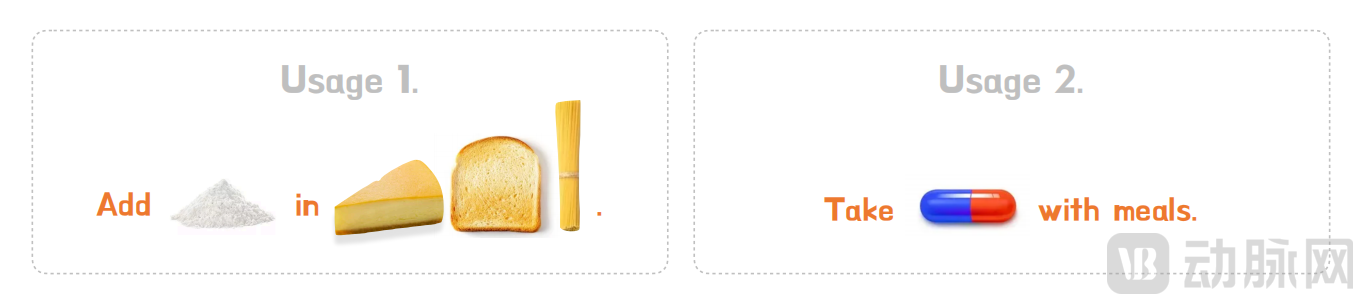
When RPG is used as a food additive, its concentration is low, ensuring no interference with the original food processing techniques and offering high applicability in food formulations. Furthermore, this technology is heat-resistant, making it suitable for incorporation into baked goods such as steamed buns, biscuits, solid beverages, and protein bars.
In the trial titled “Effects of RPG Dietary Fiber on Postprandial Glycemic Response and GI of Wheat-Based Baked Goods,” adding RPG to baked goods reduced the glycemic index (GI) by 30–46%, outperforming traditional methods such as using whole grains or adding fiber.
Concomitant intake of RPG dietary fiber with meals resulted in a significant reduction (P<0.05) in the 2-hour postprandial incremental area under the curve (iAUC) for blood glucose response, with an average decrease of approximately 20%. Additionally, the total area under the curve (AUC) for overall appetite suppression scores at 210 minutes postprandially showed a marked increase.
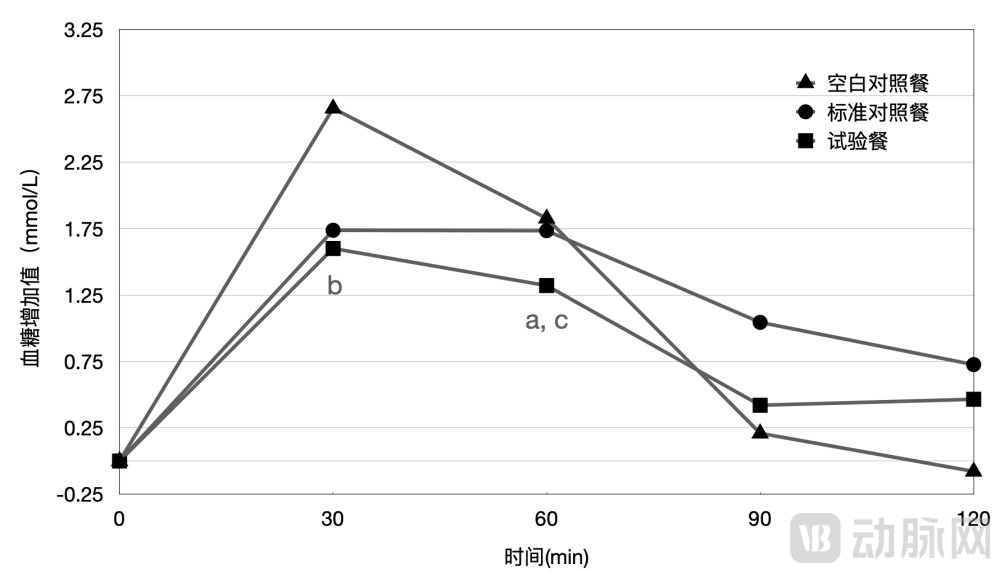 Postprandial 2-Hour Blood Glucose Increment Curves for Each Test Meal: RPG Dietary Fiber Preparation Demonstrates Significant Efficacy in Controlling Postprandial Glycemic Excursions
Overall, RPG can significantly reduce postprandial blood glucose excursions; its administration with meals helps enhance satiety, demonstrating broad application value in the fields of glycemic control and medical weight management.
Taking gestational diabetes mellitus (GDM) as an example, there are approximately 1 million patients annually. With a 40% coverage rate and a per-patient expenditure of around RMB 1,000 every three months, the market size for this niche segment of RPG-based foods for special medical purposes (FSMP) has reached hundreds of millions of yuan. Moreover, RPG is not limited to diabetic patients; it can also be formulated into dietary supplements to aid weight loss or incorporated as an ingredient into everyday food products. The cumulative market potential across these multiple segments exceeds RMB 1 billion.
To truly benefit this vast user base, Shukang has also implemented a rigorous segmentation of its promotion channels. For instance, its Foods for Special Medical Purposes (FSMP) adhere to a pathway of independent clinical research, registration and filing, and hospital-based application; meanwhile, in the areas of dietary supplements and food ingredients, it is actively signaling openness to collaboration, co-operating the brand with industry partners who recognize its value.
What was the R&D journey behind RPG, a “black tech” innovation wholly developed in-house by Shukang? The Shukang Nutritional Science R&D team shared detailed insights with VCBeat.
It all started with an accidental indicator test. To ensure comprehensive nutrition for hospitalized patients, most standard nutritional formulas are high in glycemic index (GI), which can cause significant fluctuations in blood glucose levels. However, through the collaboration between the Shukang Nutrition Science Team and West China Hospital of Sichuan University, they unexpectedly discovered that a medically complete nutritional formula independently developed by the team specifically for cancer patients had a negligible impact on patients' blood glucose levels.
For the Shukang Nutritional Science team, which places a high value on R&D potential, this matter certainly warranted thorough investigation. To fully elucidate the mechanism by which the formulation stabilizes blood glucose levels, the Shukang team conducted a series of multi-factor controlled experiments aimed at identifying its core ingredients and optimal ratio.
In addition to conducting trials, the team also performed extensive desk research and analysis of relevant academic studies both domestically and internationally. Surprisingly yet regrettably, they found no prior precedents for the application of this ingredient and formulation in the field of Foods for Special Medical Purpose (FSMP). The surprise stems from the fact that this represents an excellent market opportunity, with the potential to achieve a “First-in-Class” status upon success. The regret lies in the lack of comparable benchmarks both at home and abroad, meaning that the launch of this entirely new technology poses significant challenges to the R&D system and personnel capabilities.
Among these, one of the most significant challenges isHuman Clinical Trials. Validation in human populations necessitates orthogonal trials, which often require the establishment of a dozen to twenty experimental groups. All participants must undergo high-frequency blood sampling for GLP-1 level monitoring after taking RPG capsules, with up to 12 draws per person per day for over ten consecutive days, raising significant ethical concerns regarding humane treatment.
To enhance participant compliance, the Shukang Nutritional Science team developed a “one-and-done” solution—the WithinOne indwelling needle blood sampling method. Participants undergo only a single puncture and wear the indwelling needle continuously to complete blood draws. Meanwhile, this approach mitigates the high hemolysis rate typically associated with indwelling needle sampling, thereby ensuring the quality of experimental data. Such a practice is extremely rare in clinical settings; Shukang was virtually compelled to pioneer this unique sampling methodology.
However, after successfully obtaining blood samples, howPrecise Detection of GLP-1 IndicatorsThis also became a major challenge. Shukang discovered that no third-party testing agency or laboratory in China had conducted research on GLP-1 indicators in foods for special medical purposes (FSMP). Consequently, the team had to collaborate with large pharmaceutical companies to jointly develop testing protocols for these indicators. This further validates that Shukang is currently the only team conducting RPG technology research through a complete and rigorous product development and clinical validation pathway.
VCBeat has learned that, after three years of R&D exploration, Shukang’s RPG technology is currently undergoing robust clinical research at West China Hospital of Sichuan University. The final project report has been completed, related articles are being published, and a triple-layered solid barrier—comprising global patent protection, first-mover advantage, and continuous optimization—has been established worldwide.
Shukang believes that if injections and drug treatments can be avoided, improving health through lifestyle interventions is one of the most responsible approaches for individuals.
He Chengyuan, Head of Nutritional Science at ShukangFrankly speaking, the core issue in lifestyle intervention is cost. It is not a lack of methods, but rather the need to achieve maximum benefit at the lowest cost. If cost were disregarded, it would be easy to employ professional doctors, nurses, and dietitians to provide services on demand. However, from a cost perspective, this approach is impractical.
“From a nutritional perspective, how can this issue be addressed? Food-based interventions are the most straightforward, while digital therapeutics offer the lowest cost. Therefore, we aim to combine nutritionally optimized foods with digital therapeutics to provide every user with an AI assistant in the future. This assistant will deliver personalized nutritional plans based on users’ symptoms and individual dietary habits, thereby improving the efficiency of nutritional science interventions,” said He Chengyuan.
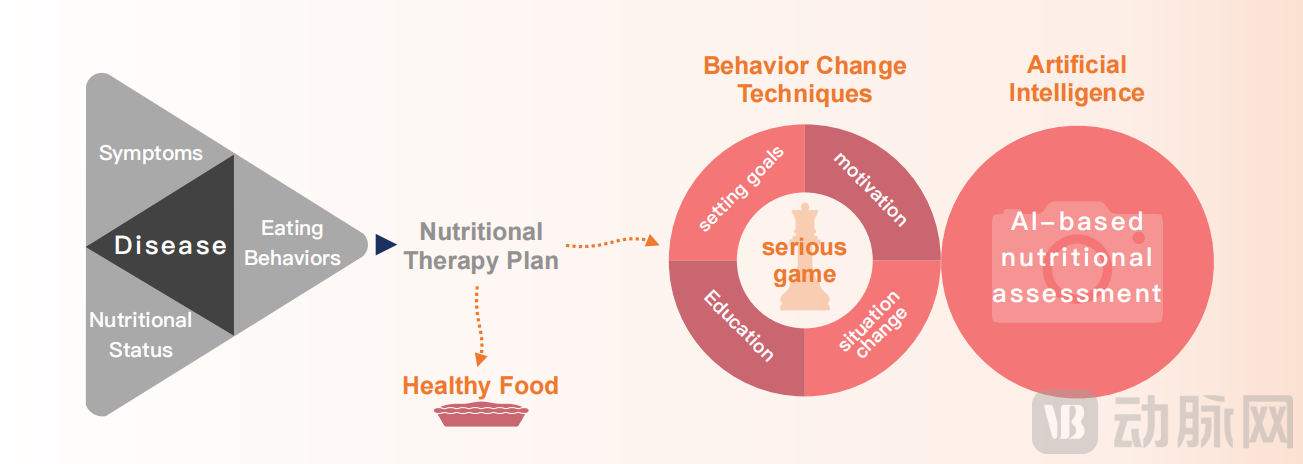 Shukang AI-Empowered Nutritional Science System
Currently, in the fields of digital therapeutics and AI empowerment, Shukang has obtained China’s first Class II medical device registration certificate from the NMPA for a digital therapeutic solution in sports rehabilitation. Additionally, it has implemented algorithms capable of identifying food weight through photo recognition, achieving an accuracy rate of over 80%. In the realm of nutritional science foods, beyond the continuous refinement of RPG technology, the company is also developing Amino Acid Limitation (AAL) formulations for tumor tissue, which demonstrate strong potential for synergy with PD-1 inhibitors and are thus highly promising.