

Cryo-EM: The Next Frontier in Scientific Instrumentation – Domestic Substitution on the Horizon Amid Surging Demand
Cryo-EM + Tsinghua University = CNS?
The formula “Cryo-EM + Tsinghua University = CNS” (Cell, Nature, Science—the three premier journals) is frequently seen online. This is a veiled jab at Shi Yigong, who, after purchasing cryo-electron microscopes from abroad, published a series of papers in top-tier journals.
Such claims stem more from jealousy. Equipment and humans complement each other; just as we acknowledge the assistance high-tech running shoes provide to athletes, we still direct our acclaim toward athletes like Usain Bolt rather than the shoes themselves.
Not only Shi Yigong, but also Sui Senfang, an academician of the Chinese Academy of Sciences and a pioneer in cryo-electron microscopy (cryo-EM) in China, has played a key role in establishing the Tsinghua University Cryo-EM Platform, which has become one of the most advanced cryo-EM facilities in the world. Sui Senfang has achieved a series of internationally influential scientific results and continues to work on the front lines of research despite being over seventy years old. In 2017, he was awarded the Lifetime Achievement Award in Cryo-Electron Microscopy in China in recognition of his contributions to the field.
This underscores the critical importance of the cryo-electron microscope (cryo-EM) as an instrument. Currently, only Thermo Fisher Scientific (USA), JEOL, and Hitachi are capable of manufacturing such equipment worldwide; domestic manufacturers in China have been unable to replicate it. Even in the segment of low-end scanning electron microscopes (SEM), Chinese-made products account for less than 10% of the market share. From another perspective, if foreign suppliers were to restrict access to this equipment, causing a “chokehold” situation, scientific research in related fields within China would come to a standstill.
Will the Academic Gap Widen Due to Scientific Instruments?
The answer is affirmative. Among the Nobel Prizes in natural sciences awarded up to 2017, 11% were granted for the invention of scientific instruments. Specifically, 72% of the Physics Prizes, 81% of the Chemistry Prizes, and 95% of the Physiology or Medicine Prizes were achieved with the aid of cutting-edge scientific instruments.
Returning to cryo-electron microscopy (cryo-EM) itself, it is one of the most prominent techniques in biology in recent years and a type of electron microscopy. In simple terms, it enables observation of samples after rapid freezing, thereby minimizing interference and achieving higher precision. As an important tool for studying protein structures, it has become an indispensable partner for researchers since its inception.
Proteins are the material basis of all life, and life activities are essentially manifestations of protein functions. To understand protein functions and thereby unravel the mysteries of life, it is essential to first elucidate protein structures; however, this is no easy task.
Proteins, as macromolecules, have diameters no greater than 100 nm, with interatomic distances not exceeding 1 nm. In contrast, the shortest wavelength of visible light is 380 nm. This means that neither the human eye nor conventional optical microscopes can resolve protein structures. Prior to the advent of cryo-electron microscopy (cryo-EM), researchers employed X-ray diffraction by irradiating molecular samples with X-rays to obtain diffraction patterns, which were then analyzed to determine the microscopic structures of macromolecules.
This approach has a prerequisite: the sample molecules must be able to crystallize, forming stable, ordered crystals. However, due to their excessively long molecular chains, protein macromolecules are highly prone to twisting and entanglement, making them difficult to crystallize. Consequently, electron microscopy, which enables imaging without the need for crystallization, was developed. Nevertheless, macromolecules are challenging to immobilize due to Brownian motion. To address this, scientists devised a method of cryo-fixation, using low-temperature freezing to immobilize macromolecules for imaging. The resulting images are then processed computationally to reconstruct three-dimensional (3D) models of the macromolecules.
Since the advent of cryo-electron microscopy (cryo-EM), this technique has been used to resolve the structures of more than 10,000 proteins. These achievements have significantly advanced the life sciences and facilitated the development of numerous vaccines and therapeutics. For instance, the rapid development of several COVID-19 vaccines introduced in recent years was made possible by researchers’ use of cryo-EM to elucidate the structure of the SARS-CoV-2 spike (S) protein, thereby enhancing the precision of vaccine design.
As cryo-electron microscopy technology continues to evolve, its applications in drug discovery and development will further expand.
Cryo-electron microscopy plays a crucial role in structure-based drug design. By providing three-dimensional structural information of targets, it enables drug developers to rapidly establish structure-activity relationships for compounds. The selection of targets and the resolution of their structures directly determine the success or failure of drug development.
Taking the classic GPCR protein family as an example, GPCRs (G protein-coupled receptors) are a broad category of membrane protein receptors. They are widely distributed in the human body, perform complex functions, and are implicated in the onset and progression of various diseases. Currently, more than 30% of FDA-approved drugs target GPCR proteins.
It is extremely difficult to resolve the structures of GPCR proteins using traditional X-ray diffraction methods, as GPCR proteins are prone to mutations during the crystallization process. In contrast, cryo-electron microscopy (cryo-EM) can be directly used to analyze membrane proteins that have been treated to achieve biochemical stability, thereby obtaining protein structures in or near their physiological states. Cryo-EM demonstrates superior capability in resolving the complex structures of membrane proteins, and a large number of high-resolution structures have already been successfully determined.
Cryo-electron microscopy is enabling the structural elucidation of an increasing number of targets that are difficult or even impossible to crystallize, such as larger and more dynamic proteins and protein complexes. Furthermore, the application of cryo-EM technology in the development of antibody therapies, small-molecule drugs, and diagnostics will continue to expand.
Not just in biology, the widespread application of cryo-electron microscopy is only just beginning.
As a research tool in structural biology, the ultimate goal of cryo-electron microscopy (cryo-EM) is to understand the essence of life and advance drug development. Beyond biology, cryo-EM is poised to demonstrate its value in many other fields, such as materials science. Currently, universities both in China and abroad are actively exploring its applications in other disciplines while meeting the needs of life sciences research.
As early as 2017, a research team at Stanford University utilized cryo-electron microscopy (cryo-EM) to observe battery materials, sparking a wave of cryo-EM applications in materials science research. Lithium dendrites pose the most significant safety hazard in lithium-ion batteries; however, the high reactivity and environmental sensitivity of lithium make elucidating the growth mechanism of lithium dendrites at the atomic level an extremely challenging endeavor.
Inspired by the use of cryo-electron microscopy (cryo-EM) to observe sensitive biological materials, the research team employed cryo-EM technology to obtain, for the first time, atomic-resolution structural images of lithium dendrites. This approach reconstructed the structure of lithium metal under mild conditions, demonstrating that cryo-EM can effectively perform high-resolution characterization of fragile and unstable battery materials while preserving their pristine state as found in real batteries.
A Stanford University research team has summarized recent advances in the application of cryo-electron microscopy (cryo-EM) in materials and nanoscience. They found that, with the continuous improvement of cryo-EM technology, long-standing unresolved issues in various fields—including batteries, polymers, metal–organic frameworks, perovskite solar cells, electrocatalysts, and quantum materials—can now be addressed using this technique.
As a low-dose excitation testing technique, cryo-electron microscopy (cryo-EM) holds significant application potential in the physical characterization and mechanistic studies of electron-beam- and heat-sensitive materials, such as perovskites, polymers, and quantum dots, particularly for elucidating their fine structures. With advancements in hardware and algorithms, this technology, which has ushered structural biochemistry into a new era, is poised to have even broader prospects in the future, potentially becoming a fundamental tool in materials science and nanotechnology research.
Despite the risk of supply chain bottlenecks, market demand continues to rise year by year.
According to the National Development and Reform Commission’s statistics on domestic procurement data for scientific instruments valued at over RMB 2 million from 2016 to 2019, the localization rate in the field of optical microscopes was 0%, while in the field of electron microscopes, it was merely 4.42%. For other scientific instruments, such as X-ray instruments (1.49%), mass spectrometry instruments (1.19%), and spectroscopy-chromatography instruments (0.24%), the localization rates were similarly low.
These data highlight a reality: the market for various high-end scientific instruments is essentially monopolized by foreign brands, posing a significant risk of being “strangled” by supply chain bottlenecks.
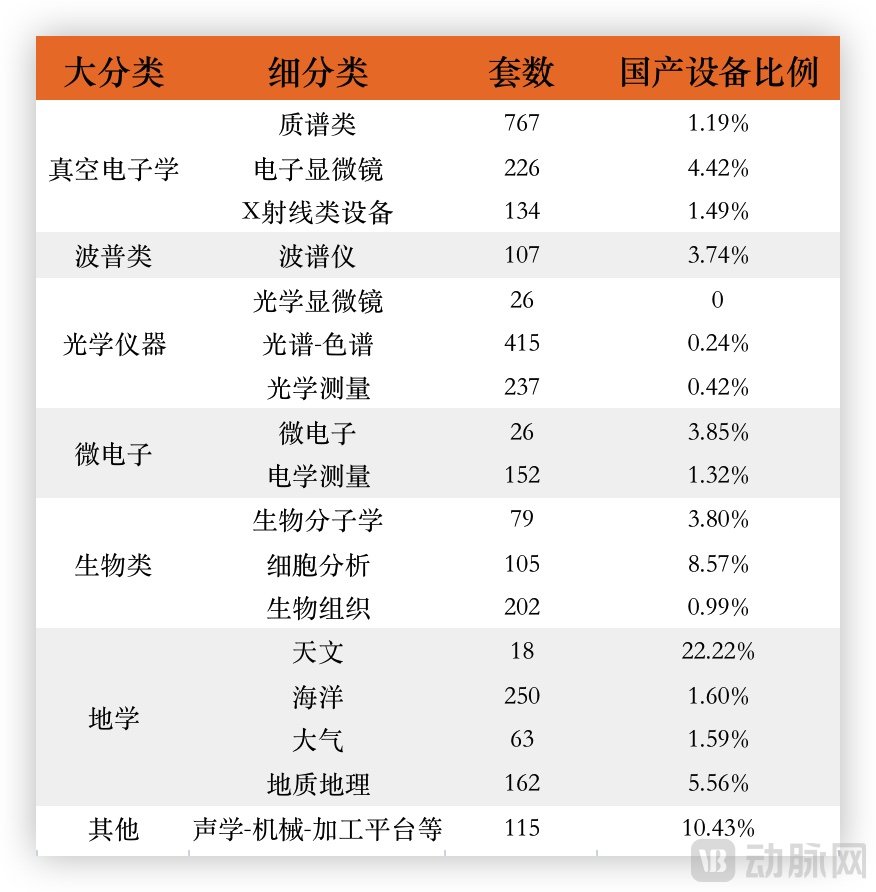
Statistics on the Procurement of Scientific Instruments Priced Above RMB 2 Million in China from 2016 to 2019, with Data Sourced from the National Development and Reform Commission
However, the demand is very real. As global exploration and research in life sciences and materials science continue to deepen, the demand for cryo-electron microscopy among numerous Chinese universities, research institutes, and the semiconductor industry is growing steadily.
A search of bid award data for cryo-electron microscopes (cryo-EM) on the China Government Procurement Network in recent years clearly shows that Thermo Fisher Scientific has an exceptionally high win rate, with its awarded products primarily consisting of 200 kV and 300 kV cryo-EM systems. In terms of the number of awards, demand for 300 kV instruments is more robust, as these models are the core platforms for structural analysis, whereas 200 kV systems are typically used for medium-resolution sample characterization and cryo-sample screening, serving as complementary tools to the 300 kV instruments.
From the perspective of purchasing entities, major universities and research institutions—including Fudan University, Henan University, Peking University Health Science Center, Shandong First Medical University, Zhejiang University, Huazhong University of Science and Technology, Wuhan University, the Chinese Center for Disease Control and Prevention (China CDC), the Institute of Physics of the Chinese Academy of Sciences, and the Institute of Chemistry of the Chinese Academy of Sciences—have been the primary purchasers. Thermo Fisher Scientific’s 300 kV Krios G4 and 200 kV Glacios were the most frequently awarded products in bids.
Not only does cryo-electron microscopy (cryo-EM) itself drive demand, but it also stimulates the market for related products and services. For instance, laboratory renovation projects, such as the Cryo-EM Platform Construction Project at Fudan University and the Cryo-EM Platform Project at Sichuan University, have each secured bid amounts exceeding RMB 10 million. Furthermore, since cryo-EM generates massive volumes of data, supporting data processing systems are also required; relevant projects at Fudan University, Southern University of Science and Technology, and Tsinghua University have each recorded bid amounts surpassing RMB 20 million.
Based solely on 2022 data, 17 cryo-electron microscopy (cryo-EM) systems were awarded in China, with Thermo Fisher Scientific once again securing all contracts, for a total bid amount exceeding RMB 700 million. In addition to Guangzhou Laboratory and Shandong First Medical University purchasing three and two units of 300 kV instruments, respectively, all other procuring entities acquired bundled packages comprising both 200 kV and 300 kV systems. Furthermore, there were bundled procurement arrangements such as the Biological Cryo-EM Platform at Huazhong University of Science and Technology, with a total contract value nearing RMB 130 million.
As early as the early 1990s, the U.S. Department of Commerce’s National Institute of Standards and Technology (NIST) published a report stating that while the total output value of the instrumentation industry accounted for only 4% of the total industrial output, its impact on the national economy reached 66%. Although modest in scale, the instrumentation industry exerts a disproportionate influence, leveraging small inputs to achieve significant outcomes. Scientific instruments serve as foundational tools for scientific research, represent a key vehicle for innovation in scientific and technological achievements, and provide crucial support for national economic development.
In such a critical field, domestic products need to break through as soon as possible.
For such a critical scientific instrument, domestic brands have virtually no say.
Scientific instruments represented by cryo-electron microscopy, known as the "eyes" of scientists and regarded as the crown jewel of high-end manufacturing, have long been monopolized by overseas brands.
According to a report by Science and Technology Daily, nearly 99% of the global market share for scientific electronic microscopes is held by five companies worldwide. In 2020, the global sales volume for such products was approximately USD 3.5 billion, with the domestic market in China accounting for around RMB 6 billion. Even the leading Chinese companies could only capture a 1%–2% share of this market. This level of revenue is not even sufficient to cover their research and development expenditures.
The R&D of scientific instruments is a marathon. Multinational corporations have been running for a long time, while domestic companies are still in the warm-up phase, making it extremely difficult to catch up.
Cryo-electron microscopy (cryo-EM) technology has undergone more than 40 years of development since its emergence in the 1980s. In China, applied research on cryo-EM began in 2009 when Tsinghua University acquired Asia’s first cryo-electron microscope. This was followed by the establishment of a Cryo-EM Center at Southern University of Science and Technology in 2018 with a total investment of RMB 393 million. Subsequently, 10 cryo-EM systems were procured domestically in 2021, and 17 in 2022. It has been just over a decade since many Chinese universities and research institutions started introducing high-end cryo-EM instruments for scientific research. Consequently, there is a scarcity of relevant expertise, and domestic manufacturing of such equipment remains out of reach.
Currently, the core components, complete instruments, ancillary equipment, analysis software, and electron microscopy databases for cryo-electron microscopy are almost entirely dependent on imports. Professionals in this field conduct their research on a “castle in the air” built upon imported equipment; once subjected to technological blockades, related work would be forced to stagnate.
From a technological development perspective, 300kV and 200kV products have higher technical barriers, while 100kV or 120kV products eliminate the need for high voltage. This allows the overall price of electron microscopes to be controlled at one-tenth that of 300kV products. Although their performance is slightly inferior, they can still meet most application requirements. Priced at six to seven million RMB, they are more accessible than high-end products that often cost sixty to seventy million RMB. Currently, domestic teams in China are already engaged in the research and development of such products.
From a market perspective, commercial cryo-electron microscopy (cryo-EM) service platforms are poised for significant growth. Much like the first complete human genome sequencing, which cost $3 billion two decades ago but now costs just $500, the field of electron microscopy is set to undergo a similar revolution in efficiency.
Although 95% of electron microscopes, including cryo-electron microscopes, are imported, some companies have begun working on the domestic production of their core components. For instance, Dabund Technology has independently developed a series of core components for electron microscopes in recent years, achieving localization for certain consumable parts such as liquid gallium ion sources, electron gun and ion gun accessories, and apertures. In extreme scenarios, even if the original manufacturers of imported electron microscopes already installed in China cease to provide spare parts, these domestically produced components can ensure the continued normal operation of such instruments. At the complete system level, there are companies like Jushu Technology, one of the few worldwide capable of independently designing and manufacturing entire high-end field-emission electron microscope systems, although their overall revenue scale remains relatively small.
It is not just electron microscopes; at the level of scientific instruments as a whole, China lags behind.
Among the top 20 global instrument manufacturers, eight are from the United States, five from Japan, three each from Germany and Switzerland, and one from the United Kingdom; no Chinese companies made the list. Instruments are tools for understanding the world, a major aid for scientists in uncovering its mysteries, and an important weapon for researchers in developing new products.
From the perspective of researchers, as long as funding permits, using imported instruments and equipment from brands recognized by peers is more hassle-free, naturally leaving little room for domestically produced instruments. Lack of usage leads to no feedback; without feedback, iterative improvement is impossible; without iteration, product competitiveness inevitably declines; declining competitiveness results in even fewer users, thus creating a vicious cycle.
Taking laboratory analytical instruments, a key segment of scientific instrumentation, as an example, the global market for laboratory analytical instruments is valued at approximately $70 billion, while China’s market accounts for only 7% of the global total, amounting to roughly RMB 40 billion. This market is fragmented across nearly 20 different categories of instruments, with even the largest segment—mass spectrometers—reaching only about RMB 10 billion in size. Domestic products must compete with established brands such as Thermo Fisher Scientific, Danaher, and Shimadzu. Consequently, companies focusing on just one type of product may find it difficult to achieve significant growth.
A large number of small-scale enterprises with weak foundations has been the common ecosystem for domestic instrument manufacturers. However, over the past decade or so, the industry has undergone changes: there has been an increase in private enterprises and startups founded by returnee talents, with a cohort of companies emerging as standouts. For instance, CIQTEK, headquartered in Hefei, specializes in quantum precision measurement instruments. It launched China’s first commercial pulsed electron paramagnetic resonance (EPR) spectrometer and boasts independent R&D capabilities along with a professional service support system. When an imported spectrometer at a Tsinghua University laboratory malfunctioned, returning it to the original manufacturer for repair would have been time-consuming and costly. The laboratory instead contacted CIQTEK, which resolved the issue within just four working days—saving nearly a month compared to the turnaround time for overseas factory repair.
Domestic enterprises must identify their competitive advantages, clarify market demands and their own capabilities, and compete with foreign brands through product quality and professional services.
Returning to cryo-electron microscopy (cryo-EM), like photolithography machines, foreign products have reached their current state after decades of technological accumulation. If we rush to compete in the high-end electron microscopy sector, given China’s existing technological base, the conditions are not yet mature. The research and development of cryo-EM equipment or technology involves multiple technical fields, including materials science, optics, biology, computational science, semiconductors, system integration, and advanced manufacturing. Moreover, cryo-EM has been a relatively niche field for a long period, resulting in insufficient attention and investment from China in related areas, which naturally leads to a shortage of relevant talent—an unavoidable issue.
Against this backdrop, focusing on specific core technologies may serve as a tactical choice for domestic players in related fields to reduce dependence and achieve breakthroughs. Currently, efforts can be concentrated on making incremental breakthroughs in image acquisition technology, image processing and structural analysis, as well as sample preparation techniques for cryogenic systems. By first advancing in these specific technical areas and accumulating expertise once these core technologies are mastered, the subsequent development of complete cryo-electron microscopy (cryo-EM) instruments will become significantly more efficient and effective.
History has proven that those who master the most advanced scientific instruments hold the initiative in technological development. The scientific instrument industry is characterized by extremely long R&D cycles and high technical barriers. To secure our future, it is imperative to break through these constraints.