Pregene Launches High-Throughput PCR Clinical Diagnostic Solution: Redefining Molecular Diagnostics and Expanding Access to Innovative Technology
Since its emergence in the mid-1980s, PCR technology has undergone more than 40 years of development and has become a pivotal technique in the field of molecular diagnostics. Evolving from qualitative to relative quantitative and then to absolute quantitative analysis, PCR technology has continuously advanced, with sustained improvements in sensitivity and accuracy. As the core technology driving the overall progress of molecular diagnostics, PCR has become an essential universal technique in nearly every laboratory, owing to its advantages such as high specificity, high sensitivity, ease of operation, rapid turnaround, and cost-effectiveness.
However,PCR has long faced a major challenge: the difficulty of performing multi-target detection in a single assay.As the number of targets increases, the entire reaction system becomes highly unstable, generating substantial amounts of non-specific products that interfere with the final detection results.The limited information throughput of detection also correspondingly constrains the clinical application scope of PCR.
To address this pain point, various technological platforms—such as gene chips, capillary electrophoresis, next-generation sequencing (NGS), and nucleic acid mass spectrometry—have continuously emerged. Although each has achieved improvements in throughput, they have, to varying degrees, compromised the original advantages of PCR. For instance, while NGS offers high information throughput and the ability to discover unknown variants, it also presents challenges such as operational complexity and high costs. Similarly, although gene chips increase the volume of detectable information through hybridization, they do so at the expense of sensitivity.
Dr. Shang Wu, Co-founder and General Manager of Nanjing Puji BiotechIt stated that molecular diagnostics is currently in a state of equilibrium, with PCR used for tests that do not require high throughput, while NGS or other methods are employed for complex testing.
In fact, while preserving the inherent advantages of PCR, increasing throughput—particularly information throughput—is a challenging endeavor, yet it is an inevitable path for the future development of molecular diagnostics toward solutions that are rapid, simple, and cost-effective.
Based on this line of thinking,Puji Biotech, with its globally pioneering high-throughput PCR technology, can overcome the limitation on the number of amplification sites in traditional PCR amplification, leveraging its high-dimensional signal readout and analysis capabilities.,Expanding and Innovating the Application Scenarios of Molecular Diagnostics in Clinical Practice, achieving 90% of the clinical applications of NGS platforms with the high efficiency and cost-effectiveness of PCR.
From Reagents to Instruments: Throughput Enhancement Achieves a Leap in PCR’s “High Speed, High Quality, and Cost Efficiency”
“Molecular diagnostics serves as the physician’s eyes; the greater the volume of information captured in a single test, the more accurately physicians can assess a patient’s condition,” stated Dr. Shang Wu. He noted that as research into tumors and other diseases deepens, there are increasingly higher demands for high-throughput diagnostic information.
Puji Bio has chosen to enter the market through reagents, leveraging innovative primer design combined with unique amplification enzymes and reagent components to efficiently suppress non-specific reactions. This approach addresses the core challenge limiting multiplex PCR detection, thereby achieving a substantial increase in multiplexing capacity.
Meanwhile, the team is also committed to increasing the number of detection signals at the instrument level. The number of signals depends on three factors: first, the number of fluorescence channels; second, the number of resolvable fluorescence intensity levels per channel; and third, the method of signal recognition.
Based on this, Puji Bio has pioneered the development of fluorescence encoding technology. Currently, Puji Bio has achieved signal differentiation for 10 distinct concentration gradients within a single fluorescence channel, enabling the detection of 80–100 signals in two-dimensional plots. With six-color fluorescence channels, it has realized the differentiation of thousands of signals, with a theoretical multiplexing capacity reaching up to hundreds of thousands.
Furthermore, in the process of building a high-throughput PCR platform, Puji Biotechnology has also developed a complete clinical solution ranging from front-end automated sample pre-processing, to high-throughput PCR amplification and detection, and finally to AI-powered software for result analysis. This solution can be independently implemented by hospitals, enabling a broader range of new clinical applications.
From reagents to instruments and further to automated analysis software, high-throughput PCR clinical diagnostic solutions offer advantages such as high information throughput, high sensitivity, cost-effectiveness, and ease of hospital adoption. These solutions truly enable PCR to address 90% of the clinical applications currently served by NGS platforms with superior efficiency and cost-performance ratio, achieving a leap forward in PCR’s “multi-parameter, rapid, high-quality, and economical” capabilities.
Focusing on Three Key Areas of Public Welfare to Further Decentralize Diagnostic Testing Tools
Based on high-throughput PCR clinical diagnostic solutions, Puji Biotechnology focuses onThree Major Fields: Oncology Diagnosis and Treatment, Pathogenic Microorganism Detection, and Screening for Reproductive Genetic DiseasesProceed with product-oriented development.
In the field of pathogenic microorganism detection, severe infections represent a key strategic focus for the company. Severe infections constitute an ideal application scenario for high-throughput PCR, as this approach enables multiplexed metagenomic testing while achieving the sensitivity of digital PCR, along with the advantages of rapidity and convenience. In the future, Puji Biology will also be committed to promoting the establishment of guidelines and consensus statements related to severe infections, thereby jointly advancing the development of this field.
In the field of oncology diagnosis and treatment, Puji Bio primarily focuses on early cancer screening and prognosis, which falls under the category of “preventive treatment.” This focus stems from the fact that no diseased tissue is available at this stage, necessitating the use of blood-based tests. Furthermore, since circulating tumor DNA (ctDNA) levels in blood are extremely low, there is a stringent requirement for high detection sensitivity. Meanwhile, sufficient informational content must be captured to achieve effective screening, often requiring multiple rounds of testing. Finally, large-scale early screening is highly sensitive to testing costs. In summary, this domain demands diagnostic tools with broad coverage, high sensitivity, and cost-effectiveness; high-throughput PCR can effectively meet these requirements.
In the field of reproductive health, NIPT is a key product focus for Puji Biotech. Dr. Shang Wu believes that although NIPT testing methods are already mature, its overall coverage rate in national newborn screening has never exceeded 30%. This is mainly because NIPT solutions rely primarily on sequencing. Due to cost and operational complexity, sequencing necessitates centralized testing, which in turn limits its coverage.
From this perspective, high-throughput PCR offers significant advantages over sequencing, enabling complex assays to be performed with simpler tools. This facilitates the further decentralization of diagnostic capabilities, making them more accessible to the general public.
This is also what Puji Biotech truly aims to achieve in the future: replacing traditional complex testing tools and genuinely empowering hospitals and clinical laboratories with its products.Meanwhile, we strive for excellence in product performance and automation to achieve higher efficiency and better cost-effectiveness.
“Leveraging technology to combat inequality and benefit the most disadvantaged,” ensuring that the economically most vulnerable populations can minimize the risk of birth defects and have access to precision medicine when diagnosed with cancer. Puji Biotechnology is driving the regulatory compliance and widespread adoption of genetic testing products through technological innovation, truly realizing its mission of “universal benefit” and reaching a broader population.
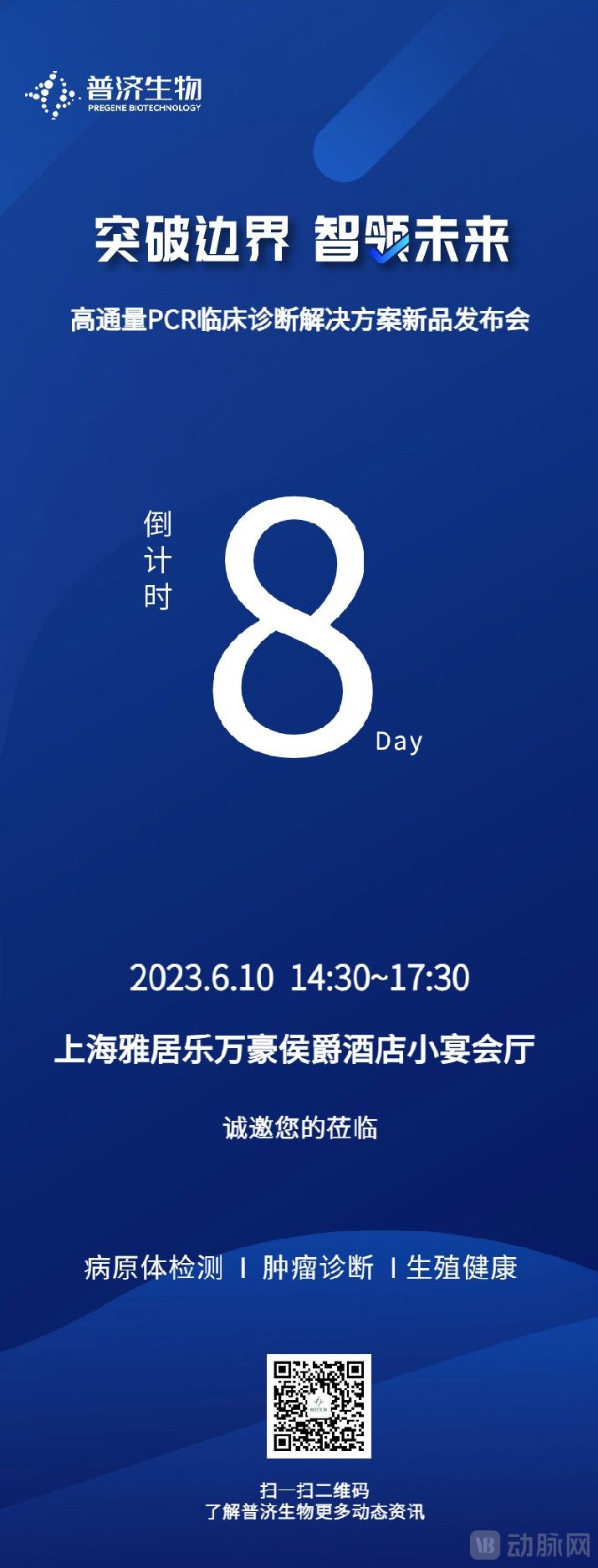
June 10,Pujee Bio to Host “New Product Launch for High-Throughput PCR Clinical Diagnostic Solutions” in Shanghai, aiming to showcase Puji Bio's global debut of a one-stop high-throughput PCR clinical diagnostic solution.The conference will also invite numerous experts and scholars in the field of clinical diagnostics to engage in in-depth discussions and exchanges on relevant diagnostic technologies, sharing the latest research findings and application experiences with professionals. We look forward to your presence!