

Shukun Technology Redefines Medical AI with Launch of Digital Human Platform 2.0

SHUKUN
Provider of Intelligent Products and Innovative Solutions
Spanning two CMEF editions, SHUKUN’s “Digital Human” has entered the 2.0 era.
In terms of components, the Digital Human Platform 2.0 now encompasses over 40 AI applications, covering a more comprehensive range of diseases; the modalities it can process have also expanded from CT and MRI in the past to include the full spectrum of medical imaging equipment, such as ultrasound and DSA.
However, technological transformations that can be termed epoch-making extend beyond mere quantitative leaps.
As isolated AI applications gradually coalesce into networked AI systems, clinical value emerges that individual applications cannot achieve. In this process, SHUKUN is leveraging its continuous independent innovation capabilities to drive the comprehensive digital and intelligent transformation of hospitals and various clinical departments.
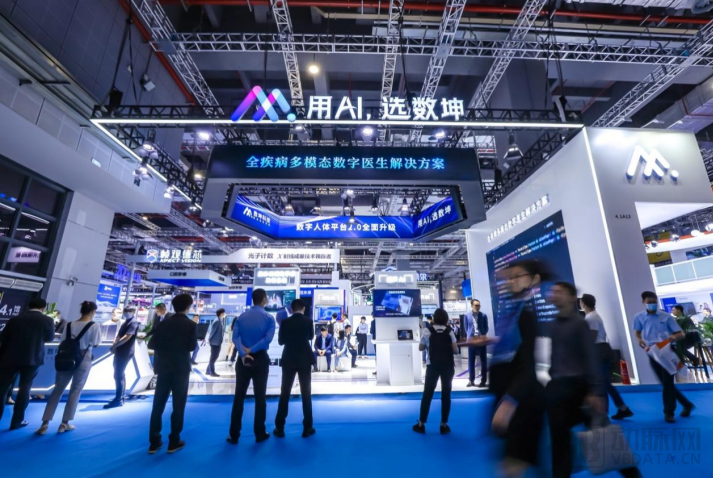
CMEF 2023 SHUKUN Exhibition Area
To understand the medical AI transformation led by SHUKUN, it is helpful to first review the company’s development over the past six years.
In June 2017, the AI markets for pulmonary nodules and diabetic retinopathy had already become fiercely competitive red oceans. SHUKUN, founded at that time, chose the more challenging track of coronary CTA. By capturing the “crown jewel” of AI+CT imaging, it addressed unmet clinical needs and rapidly built a strong reputation among hospitals.
Subsequently, SHUKUN continued to deepen its expertise in “imaging,” continuously integrating new disease types into its AI system. It has gradually achieved comprehensive coverage of major body regions—from the heart and brain to the thorax, abdomen, and musculoskeletal system—as well as common oncological conditions such as lung, liver, and breast cancer, alongside cardiovascular and cerebrovascular diseases, marking robust progress on its path of innovation.
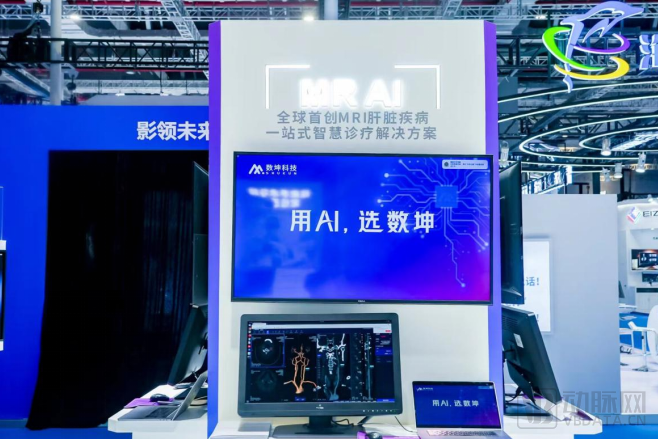
Precise diagnosis of various diseases also requires support from multiple modalities. In 2021, SHUKUN launched the world’s first AI product for liver MRI, expanding the application of AI from single-modality CT to multi-modality imaging. The Liver MRI AI not only intelligently recognizes 18 types of sequences and enables multi-sequence coordinated image interpretation for detecting minute lesions, interpreting LI-RADS features, and generating reports, but also facilitates intelligent follow-up by allowing coordinated viewing of the same anatomical locations across different sequences in prior and current scans. Additionally, it leverages 3D VR functionality to quantify total liver volume and segmental volumes, thereby assisting in surgical planning.
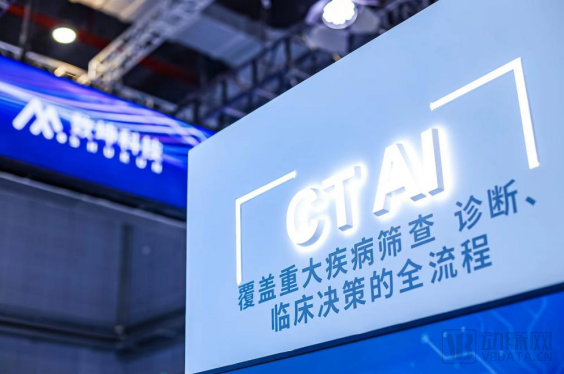
At this CMEF, SHUKUN further expanded its MR product portfolio by launching intelligent diagnostic and therapeutic solutions for Coronary MRA and CMR. Currently, SHUKUN has achieved dual-modality CT & MR joint diagnosis in both liver and cardiac diseases, establishing comprehensive coverage of the entire diagnostic and therapeutic pathway—from disease screening and AI-assisted lesion analysis and diagnosis to clinical decision support.
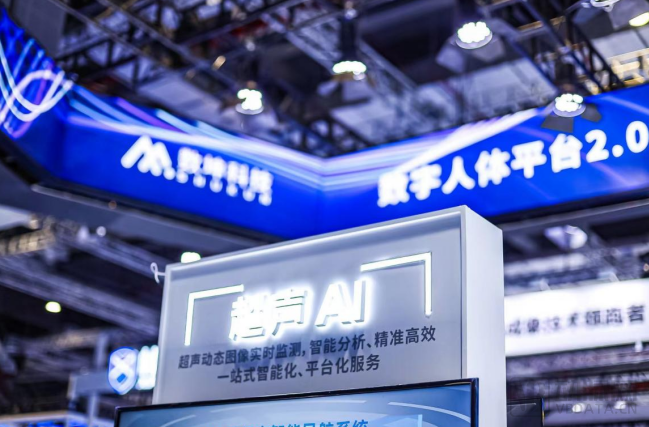
In medical and health management scenarios, there is a significant demand for digital and intelligent iteration of ultrasound equipment. At the CMEF, SHUKUN showcased its new AI product, the “Intelligent Navigation System for Breast Ultrasound,” which can real-time identify breast lesions, automatically extract features such as lesion margins and shape, complete BI-RADS classification, and generate structured reports with one click. This enhances physicians’ diagnostic confidence and improves examination efficiency per patient by approximately 30%. Additionally, the system integrates intelligent follow-up capabilities to dynamically assess breast lesions, delivering comprehensive, full-cycle healthcare management services.
Over the past six years, SHUKUN has continuously expanded the range of diseases and imaging modalities it covers. To date, the company has accumulated more than 40 AI applications, encompassing the majority of major common and chronic diseases, as well as multiple imaging modalities including CT, MR, DR, and ultrasound. Its in-depth understanding of complex diseases and multi-modal imaging, coupled with its robust digital capabilities, has laid a solid foundation for the development of SHUKUN’s Digital Human Platform.
Achieving coverage of multiple diseases and transitioning from single-modality to multi-modality approaches is merely the first step in the development of imaging AI. As technology continues to evolve, imaging AI will inevitably expand beyond imaging itself to encompass more departments and clinical scenarios, ultimately covering the entire workflow of physicians. This is also the core philosophy behind SHUKUN’s current “Digital Human Platform 2.0.”
In the field of “surgical AI,” SHUKUN has established a relatively mature presence, launching two products: the “Percutaneous Surgical Navigation and Positioning System” and the “Thoracic Surgery Decision Support System,” demonstrating the significant potential of artificial intelligence to empower clinical departments.
The percutaneous surgical navigation and positioning system supports multiple thoracic and abdominal sites. It enables fully automated, AI-assisted preoperative planning, rapidly generating personalized panoramic anatomical maps, automatically recommending single- or multi-needle puncture paths, and precisely simulating ablation models. During procedures, it provides real-time monitoring of patient respiration and position, issues real-time alerts for puncture risks, and offers real-time visualization of the puncture process. The system is compatible with various diagnostic and therapeutic approaches, including tissue biopsy, cold/hot ablation, and seed implantation.
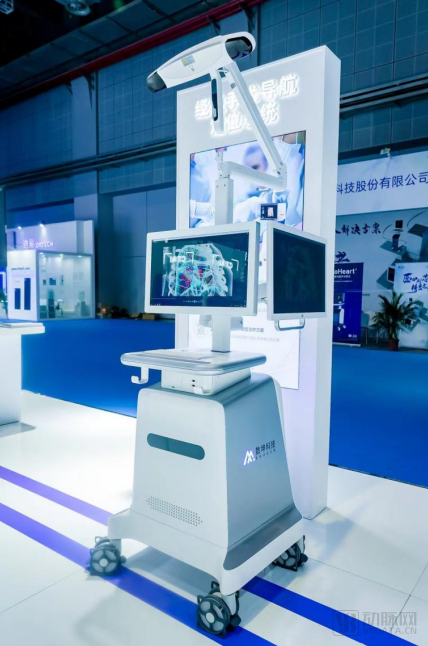
Thoracic Surgery-Assisted Decision Support System, powered by a proprietary intelligent anatomy engine, accurately and automatically reconstructs digital 3D lung models within three minutes. It enables a complete workflow including pulmonary nodule detection, vascular segmentation and classification, and pulmonary segment watershed segmentation, effectively addressing anatomical variations and providing subsegmental segmentation to support precise surgical planning at the segmental and subsegmental vascular levels.
The launch of Surgical AI signifies that SHUKUN has comprehensively expanded from image reconstruction and assisted screening and diagnosis into the realms of assisted treatment decision-making and surgical procedures, thereby delivering more comprehensive and systematic value to physicians.
Furthermore, the Digital Human Platform integrates SHUKUN’s core AI algorithms with traditional radiomics research capabilities, providing physicians with a “Research Brain” that intelligently guides the entire research process and serves as a powerful tool for generating research outcomes.
In recent years, SHUKUN has collaborated with over 50 hospitals, including Xuanwu Hospital, Beijing Friendship Hospital, Peking Union Medical College Hospital, West China Hospital, the General Hospital of Eastern Theater Command, Wuhan Central Hospital, and Renji Hospital, to produce more than 100 high-impact research papers. These efforts have encompassed extensive technical research and clinical validation across all anatomical regions (heart, brain, chest, abdomen, etc.), a wide range of major common and chronic diseases, and multimodal imaging technologies such as CT, MR, DR, ultrasound, and DSA. The resulting scientific achievements have been published in prestigious academic venues, including the Nature portfolio journal Nature Communications, the top international radiology journal Radiology, and the International Society for Magnetic Resonance in Medicine (ISMRM) annual meeting.
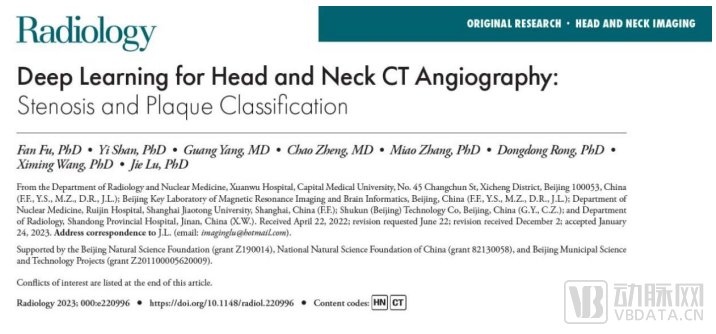
Research Collaboration Between SHUKUN and Professor Lu Jie’s Team at Xuanwu Hospital of Capital Medical University Published in Radiology
In March this year, the research paper “Deep learning for head and neck CT angiography: stenosis and plaque classification,” co-authored by SHUKUN and Professor Lu Jie’s team from Xuanwu Hospital of Capital Medical University, was published in Radiology (IF=29.146), a top-tier international journal in medical imaging. This marks the first global application of deep learning technology to assess stenosis severity and classify plaque types in head and neck CTA, leading the industry into a new phase of AI-assisted diagnosis in cerebrovascular care, beyond image reconstruction.
According to SHUKUN’s philosophy, mechanical and repetitive tasks can be optimized and upgraded through AI, enabling physicians to focus more on higher-value activities, such as the diagnosis and treatment of complex and challenging cases, as well as patient care.Therefore, all of SHUKUN’s innovations are centered on the needs of physicians and patients, representing not only a transformation in business models but also innovation at the granular level.
Taking SHUKUN’s “Scan to Report” feature as a reference, the traditional workflow typically involves radiologic technologists acquiring images, followed by radiologists performing post-processing for diagnosis, drafting an initial report, submitting it for review by an attending physician, and finally printing films for delivery to the patient. In contrast, SHUKUN’s pioneering “Scan to Report” function operates without manual intervention, enabling AI to fully automate the entire process—from image reconstruction to report generation—within minutes, thereby significantly alleviating the workload of radiologists.
For example, a Grade 3A hospital in Beijing added a Tongzhou campus, increasing its daily case volume from 20 to over 80. Empowered by SHUKUN’s coronary AI technology, the department reduced personnel input and improved examination efficiency, effectively meeting the hospital’s needs for quality improvement and efficiency enhancement.
In addition to designing AI from the clinical perspective of physicians, SHUKUN is also helping patients achieve a better healthcare experience.
For example, a single imaging examination typically targets only one organ. If a patient requests routine screenings for both the heart and lungs, medical institutions generally need to issue two separate examination orders and conduct the heart and lung screenings sequentially. This increases radiation exposure, time costs, and financial burden for the patient.
Leveraging the core AI capabilities of its “Digital Heart” and “Digital Chest” products, SHUKUN has innovatively launched an AI-powered “Combined Cardiopulmonary Screening” solution tailored for health checkup scenarios. This product is currently deployed in nearly 1,000 health examination institutions across China. According to health centers that have adopted this AI technology, the “Combined Cardiopulmonary Screening” solution enables a single low-dose CT scan to generate screening results for multiple conditions, including pulmonary nodule assessment, coronary artery calcium scoring, emphysema analysis, and pneumonia evaluation, thereby flagging risks for both coronary heart disease and lung cancer. Patients thus derive multiple benefits from a single scan.
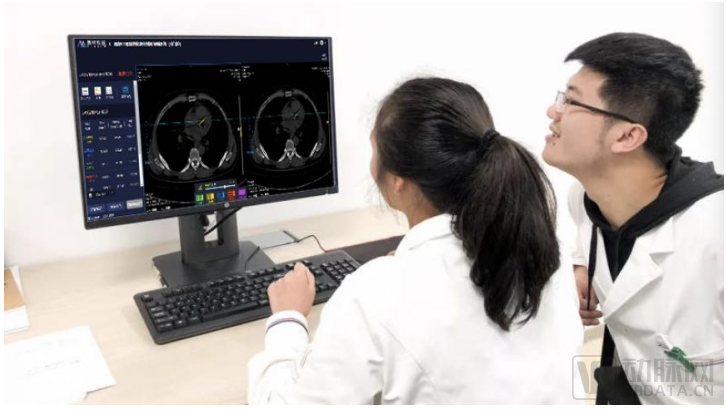
Guiyang Meizhao Health Checkup Center Adopts SHUKUN AI for Early Screening and Diagnosis of Pulmonary Nodules
Overall, SHUKUN has successfully advanced from its flagship coronary CTA product to the current “Digital Human Platform 2.0” by first closely addressing the multifaceted clinical needs of hospitals, physicians, and patients; second, by delivering AI-powered solutions that earn physicians’ trust; and third, by collaborating with clinicians to jointly explore innovations in clinical workflows.
Regarding SHUKUN’s achievements to date, Chairman Mao Xinsheng summarized: “SHUKUN has always adhered to original innovation, with numerous industry-first breakthroughs to its name—from coronary CTA and one-stop stroke solutions to liver MRI, as well as non-interventional CT-FFR and the Research Brain. In every clinical scenario we enter, we center on user needs, meticulously refining our technologies and innovating our products to enhance the efficiency of specialist physicians and empower primary-care doctors.”
As of this CMEF, SHUKUN has obtained seven NMPA Class III certifications, two U.S. FDA clearances, and four EU MDR CE certifications, making it the only medical AI high-tech enterprise globally to simultaneously hold NMPA Class III certifications and MDR CE certifications in the key areas of cardiology, neurology, and thoracic imaging.
Supported by dual pillars of market access and scientific validation, SHUKUN’s AI solutions have been deployed in nearly 3,000 healthcare institutions, achieving high user stickiness. With the launch of the Digital Human Platform 2.0, SHUKUN is expanding its reach into additional clinical scenarios, and the number of hospitals adopting its solutions is poised for further growth.
Although Digital Human Platform 2.0 has effectively expanded SHUKUN’s AI-enabled reach, enabling applications from single-modality to multi-modality and achieving comprehensive coverage of the screening, diagnosis, and treatment workflow, it represents only a small step forward relative to the overall complexity of clinical medical practice.
Therefore, SHUKUN does not regard the Digital Human Platform 2.0 as the ultimate form of its AI. According to Zheng Chao, CTO of SHUKUN, version 2.0 has woven a “network” that integrates AI applications, while in versions 3.0 and 4.0, the Digital Human will become more multidimensional, capable of discovering and supporting more applications that are currently unimaginable and out of reach.
SHUKUN Still Holds Many Cards. According to Zheng Chao, SHUKUN has integrated Generative AI into its Computer Vision (CV) modules. With the iteration of foundational AI technologies, SHUKUN may well achieve a renewed acceleration in its innovation capabilities.
At the next CMEF, while we cannot predict the exact form AI will take at that time, it is certain that AI integrated into more clinical scenarios will occupy a more prominent position at the exhibition, bringing even more excitement.