

Dina Yuansheng Secures Tens of Millions in Angel and Pre-A Financing to Advance Organ-Targeted Nucleic Acid Drug Delivery Platform
VCBeat learned at the earliest opportunity that, recently,Hangzhou Dina Yuansheng Biotechnology Co., Ltd. (hereinafter referred to as “Dina Yuansheng”) has successively completed angel and Pre-A financing rounds, each amounting to tens of millions of yuan. The angel round was led by Taiyu Investment, while the Pre-A round was led by Qiji Investment, with participation from Jiliuling Capital, Muren Investment, and others. Xinghan Capital served as the exclusive financial advisor for both rounds. It is reported that the funds raised in this round (Pre-A financing) will be primarily used to advance Dina Yuansheng’s pipeline of small nucleic acid drugs targeting specific organs.
Since its inception, this marks the first time that Dina Yuansheng has publicly disclosed detailed information regarding its financing and R&D progress. What are the “hardcore” stories behind this “tech-driven” enterprise? VCBeat New Medicine conducted an exclusive interview with Dr. Ding Baoquan, founder of Dina Yuansheng, as soon as the news broke.
In recent years, the global nucleic acid drug market has experienced explosive growth. To date, more than ten nucleic acid drugs have been approved for marketing worldwide. As nucleic acid drugs are expected to cover a broader range of indications, their potential market size is vast:The global market size for oligonucleotide drugs alone has grown from $10 million in 2016 to $3.25 billion in 2021, with a compound annual growth rate (CAGR) of 217.8%.In the future, the continuous market launch of nucleic acid drugs in clinical stages, particularly those targeting indications with large patient populations, will further drive rapid market growth, ushering in a nucleic acid drug market valued at hundreds of billions.
With the approval of multiple nucleic acid drugs overseas, the industry has gained a deeper understanding of the critical role that delivery systems play in ensuring the efficacy and safety of these therapeutics. Consequently, delivery platforms with precise targeting capabilities and low side effects have gradually become the Achilles' heel of the nucleic acid drug field.
Based on this, scientists and doctoral supervisors at the National Center for Nanoscience and Technology (hereinafter referred to as the “Nanoscience Center”)Researcher Ding BaoquanDeciding to Step Out of the Ivory Tower,Founded Dina Yuansheng in May 2022., to commercialize its research achievements in drug delivery accumulated over more than ten years at the National Center for Nanoscience and Technology,Constructed a targeted delivery vehicle based on self-assembled nucleic acid structures to achieve precise delivery of small nucleic acid drugs at the organ and cellular levels.
The conceptual foundations of nucleic acid nanotechnology were first elucidated in the 1980s by Professor Nadrian C. Seeman, Dr. Ding’s doctoral advisor, and began to attract widespread attention after 2000. Prior to Dr. Ding’s extensive application of this technology to drug delivery, it remained largely confined to basic research, with only a handful of international studies focusing on the use of self-assembled nucleic acid structures as drug carriers.
It was not until Dr. Ding elucidated the mechanisms underlying the interactions between self-assembled nucleic acid structures and biological interfaces, and developed customized nucleic acid nanocarriers, that the potential of this technology in drug delivery was demonstrated. Currently, Dr. Ding has conducted extensive research on the targeted delivery of nucleic acids, peptides, small-molecule drugs, and gene-editing systems, with experimental results consistently demonstrating effective targeted delivery.
In recent years, nucleic acid therapeutics have experienced rapid development, with the global COVID-19 pandemic in 2020 further bringing them into the public spotlight. As nucleic acid drugs rely on specialized delivery technologies to enter target cells and exert their effects, the industry has developed various non-viral delivery platforms. For small nucleic acid therapeutics, delivery methods include lipid nanoparticles (LNPs), GalNAc-conjugated delivery, exosomes, polymer matrices, and hydrogels; for mRNA therapeutics, delivery systems encompass LNPs, exosomes, and polymers.
However, current delivery technologies are primarily focused on liver targeting. Mainstream approaches, such as GalNAc conjugation or cationic lipid nanoparticles (LNPs), exhibit poor organ specificity and tend to cause toxin accumulation in the liver. In contrast, extrahepatic delivery technologies offer broader options for organ-specific targeting and can be applied to a wider range of indications. Consequently, the research, development, and clinical application of extrahepatic delivery systems will become one of the major future trends in this field.
The key to developing nucleic acid drug delivery systems is to promote the enrichment of nucleic acid drugs in target organs and cells. Delivery vectors need to overcome extracellular and intracellular barriers, exhibit good tolerance to nucleases, enhance cellular internalization, and facilitate endosomal escape after entering the cell to ensure effective drug release.
Dr. Ding earned his Ph.D. from the Department of Chemistry at New York University in the United States in September 2006. His supervisor, Professor Nadrian C. Seeman, is a pioneer in the field of nucleic acid self-assembly technology. After returning to China in 2010 to join the National Center for Nanoscience and Technology, Dr. Ding began exploring the application of this technology in drug delivery. He has published more than 100 papers in top international journals such as Nature Materials, Nature Biotechnology, Nature Communications, and Angewandte Chemie International Edition. His related work was selected as one of the “Top Ten Scientific Advances in China” in 2018 and as a “Pioneering Technology of Sci-Tech Innovation China” in 2020.
Unlike traditional drug delivery system companies, Dina Yuansheng’s nucleic acid nanocarriers can deliver various types of drugs, including small molecules, small nucleic acids, and long-chain nucleic acids. For biological macromolecules such as proteins and peptides, conjugation with nucleic acid molecules can be achieved through chemical modification, leveraging nucleic acid sequence hybridization to guide their precise, quantitative assembly onto the nucleic acid delivery system. Furthermore, nucleic acid nanocarriers exhibit exceptional structural flexibility; by exploiting the principle of complementary base pairing and diverse combinations of nucleic acid sequences, a variety of distinct nucleic acid nanostructures can be designed, endowing them with multiple specialized biological functions.
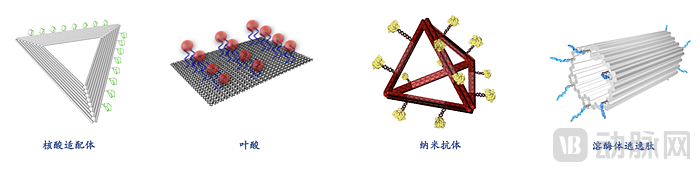
Precise Regulation of the Types, Quantities, and Spatial Arrangement Patterns of Targeting Elements
During his tenure at the National Center for Nanoscience and Technology, Dr. Ding implemented multiple optimizations of nucleic acid nanocarriers, investigating how variations in carrier size and shape influence biodistribution across different organs. By employing site-specific and quantitative surface modifications for targeted delivery, he achieved efficient transport of therapeutic agents to non-hepatic tissues, particularly the kidneys, lungs, and tumor sites. Furthermore, specifically modified carriers demonstrated robust capability in crossing the blood-brain barrier. The integration of customized activation mechanisms within the carrier architecture further enhanced drug release efficiency, highlighting significant potential for applications in non-hepatic drug delivery.
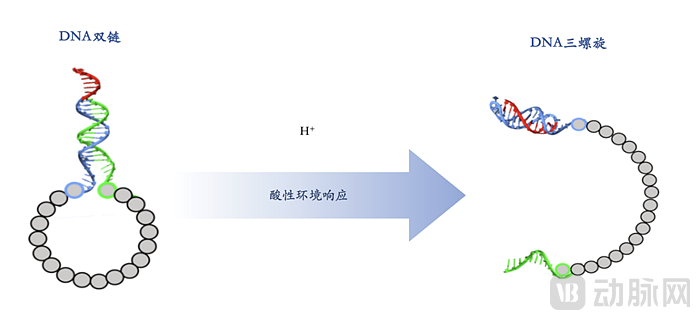
Design of a Carrier Opening Mechanism Responsive to Acidic Environments
Dr. Ding believes that Dina Yuansheng’s drug delivery system is a highly novel carrier platform. Currently, Dina Yuansheng has established a customized carrier design platform targeting various specific targets/organs, and large-scale preclinical animal studies evaluating the efficacy and safety of related projects are underway. In the future, the company will further optimize its delivery system to reduce the frequency of adverse reactions associated with the active pharmaceutical ingredient (API) and enhance therapeutic efficacy.
Throughout the process of continuously refining his technology, Dr. Ding has also been contemplating how to translate it into clinical practice. In recent years, as progress in his work has been disclosed, an increasing number of patients have approached Dr. Ding’s team, seeking to leverage this technology to improve their medical conditions. To this end, Dr. Ding plans to accelerate the industrialization and commercial implementation of the technology by leveraging capital and external resources, jointly addressing key challenges in the deployment process, including mass production, quality control, and patents.
Every scientist who successfully transitions from the laboratory to industry has a unique starting point, resource base, and set of opportunities. Yet, they all converge on several critical factors: technologically, their work must be closely aligned with market demands and possess original innovativeness; in terms of team building, they must fully trust the expertise of professionals across various domains, allowing specialists to focus on their respective areas of competence; and in terms of self-awareness, they need to distinguish between scientific research and entrepreneurship—maintaining both the lofty ideals of scientific exploration and the pragmatic groundedness required for business success.
The company has currently established multiple pipelines targeting oncology and infectious diseases, and has completed the large-scale manufacturing of vectors along with corresponding quality control. Following validation of efficacy and safety in animal studies, the company plans to submit an Investigational New Drug (IND) application by the end of 2024. Meanwhile, Hangzhou Dina Yuansheng Biotechnology Co., Ltd. is actively seeking collaborations with external pharmaceutical companies to promote the industrialization of this innovative technology.
Regarding this round of financing, Dr. Ding stated:We are honored to have gained the recognition and support of Qiji Investment, Jiliuling Capital, as well as our existing shareholders, Taiyu Investment and Muren Investment. Dina Yuansheng focuses on a programmable nucleic acid self-assembling nanocarrier platform, with the goal of achieving organ- and cell-targeted delivery of nucleic acid therapeutics. We have currently validated targeted delivery to organs such as the kidneys, lungs, and brain, and are advancing multiple pipelines targeting vaccines and solid tumors. The company will leverage this round of financing to increase R&D investment, continuing to strengthen efforts in carrier CMC development and the optimization and screening of preclinical candidate drugs. Meanwhile, we also extend our gratitude to our various partners for their support and assistance. We aim to leverage our decades of technological accumulation to build a globally leading intelligent nucleic acid nanocarrier platform for targeted drug delivery.
Ms. Zhang Li, Founding Managing Partner of Qiji Investment, stated:Hangzhou Dina Yuansheng Biotechnology Co., Ltd. has pioneered a new avenue for drug delivery based on its next-generation nucleic acid self-assembling nanocarrier platform. Built upon decades of scientific research achievements by Dr. Ding Baoquan, this highly extensible platform enables the delivery of small nucleic acids, small molecules, and macromolecules, achieving targeted delivery to specific organs and cells. Within just one year of its establishment, the company has demonstrated favorable safety profiles in animal studies and initiated collaborative projects with multiple enterprises. Qiji Investment recognizes the forward-looking nature of this platform technology and the team’s exceptional execution capabilities, leading to two consecutive rounds of investment. Furthermore, leveraging Qiji Investment’s profound industry insights and ecosystem resources, the company has introduced senior executives from the industry and recommended external collaboration opportunities, providing continuous empowerment to accelerate the rapid development of Hangzhou Dina Yuansheng.
Dr. Ji Tianrong, Founder & General Manager of Taiyu Investment, stated:The founder of Dina Yuansheng has conducted in-depth research on nucleic acid self-assembly and is among the earliest scientists internationally to explore its application in drug delivery. Leveraging a nucleic acid nanodelivery platform with fully independent intellectual property rights, the company is poised to enable extrahepatic targeted therapy for various therapeutics, including small molecules, small nucleic acids, and long-chain nucleic acids. Dina Yuansheng aims to bring greater benefits to the new drug R&D market and patients worldwide.
Qiji Investment is a professional investment firm specializing in early-stage investments in the healthcare and medical sector. The founding team has cultivated deep expertise in the medical and biotechnology fields for many years, boasting extensive experience in healthcare investment with top-tier domestic funds as well as comprehensive industry chain experience with leading global multinational pharmaceutical companies.
Qiji Investment primarily focuses on high-quality investment opportunities in frontier technology-driven sectors, including biopharmaceuticals, medical devices, and in vitro diagnostics. It targets niche segments with distinct competitive advantages, with a particular emphasis on the global healthcare market and patients’ unmet needs. Committed to empowering portfolio companies and creating synergistic value, Qiji Investment jointly advances medical innovation and creates value for society.

Taiyu Investment, established in 2014, is an independent venture capital firm under Tigermed. Taiyu Investment focuses on equity investments in the healthcare sector at early and growth stages. Its management team boasts profound industry backgrounds, extensive industry resources, and rich investment experience. To date, it has completed investments totaling RMB 2 billion across more than 100 projects, with a portfolio covering medical devices, biopharmaceuticals, CROs, and health supplements. By empowering its portfolio companies, Taiyu Investment creates value for the development of the healthcare industry in China and globally, contributing to public health.
References:
1. Bio Valley: Three Major Nanocarrier Systems for Delivering Nucleic Acid Drugs
2. PHARNEX: What Challenges Face the Booming Field of Nucleic Acid Drug Development?
3. Hello, Zhangjiang: On the Path to Developing Nucleic Acid Drugs into Market-Ready Therapeutics, Zhangjiang Entrants Await Their Moment
4. LeadLeo Research Institute: Increased Capital Market Investment Accelerates R&D of Extrahepatic Delivery Technologies for Nucleic Acid Drugs