

Getting Digital Therapeutics Right: The Key to Disrupting the Health Industry Model
As industrialization deepens, the scope, supply chain, and level of integration within the health industry have reached unprecedented levels. This development is not only essential for improving public well-being but also crucial for building a modern economic system. It is widely recognized as highly significant and, under specific conditions, has become an important driver of economic development in certain countries and regions. In light of this, China issued the Outline for Promoting High-Quality Development of the Health Industry (2019–2022) in 2019, achieving phased breakthroughs. How to further leverage the sound development of the health industry to drive high-quality socioeconomic development, while simultaneously reinforcing the high-quality development of the health industry itself, is undoubtedly a critical issue for the future.

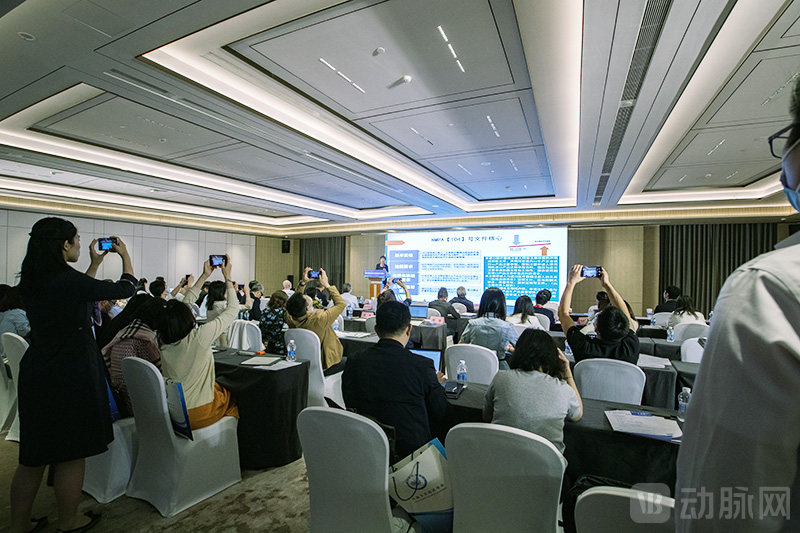
On May 24, the “Special Forum on the Health Industry Promoting High-Quality Economic and Social Development,” hosted by the Health Industry Branch of the Chinese Society of Health Economics, was held in Beijing. The conference was opened and moderated by Professor Zhang Zhenzhong, Honorary Director of the Health Development Research Center of the National Health Commission, Vice President and Secretary-General of the Chinese Society of Health Economics, and President of the Health Industry Branch. More than 100 representatives from sectors including health services, the pharmaceutical industry, large-scale industrial parks, health investment, and commercial insurance attended the event. VCBeat (WeChat ID: VCBeat) observed the entire forum and has compiled the key insights from experts into this article for industry reference.
In the health industry, the emerging digital health sector is a crucial component, and its rapid development in recent years has drawn particular attention from participating experts.Mao Qun’an, Director of the Department of Planning and Information, National Health Commissionstated that the development of the digital health industry is of great significance.
First, from the perspective of the health industry, developing this sector is a major strategic task in building a Healthy China. The implementation of policies such as the “Healthy China 2030” Planning Outline and the Action Plan for Promoting High-Quality Development of the Health Industry (2019–2022) clearly reflects this spirit.
Secondly, from the perspective of the digital economy, developing the digital economy is a strategic choice to seize the new opportunities presented by the latest round of scientific and technological revolution and industrial transformation. The digital economy is regarded as a major economic form following the agricultural and industrial economies. Its unprecedented speed of development, extensive reach, and profound impact are unparalleled in the history of human civilization, driving profound changes in production methods, lifestyles, and governance models.
Finally, developing the digital health industry is an inevitable requirement for the deep integration of the digital economy and the healthcare sector. Digital health has become the strategic intersection of "Healthy China" and "Digital China"; therefore, to develop the healthcare industry and advance the digital economy, it is imperative to vigorously promote the growth of the digital health industry.
Mao Qun’an stated that the digital health industry has received significant attention from the state in recent years, achieving remarkable development outcomes. These achievements are mainly reflected in several aspects: gradual clarification of policies for the digital health industry, continuous improvement of infrastructure supporting its development, vigorous promotion of “Internet + Medical Health,” ongoing exploration and development of the value of health and medical big data, and heightened emphasis on and strengthening of cybersecurity and data security.
Taking the development of infrastructure for the digital health industry as an example, under the systematic construction led by the Department of Planning and Information of the National Health Commission in recent years, China has preliminarily established a National Population Health Information Platform, achieving full connectivity across platforms at all levels. To date, China has released more than 220 standards for health informatization, established over 2,700 internet hospitals, connected more than 7,000 public hospitals at secondary level and above to regional population health informatization platforms, realized “one-card (code) access” for medical visits within regions in more than 260 cities, and seen over 2,200 tertiary hospitals achieve preliminary intra-hospital interoperability.
Nevertheless, China’s digital health industry also faces challenges characterized by rapid expansion in scale, yet unbalanced, inadequate, and non-standardized development. Mao Qunan believes that, against the backdrop of the digital economy entering a new stage marked by deepened application, regulated development, and inclusive sharing, China’s digital health industry must transform its traditional development model, accelerate efforts to address shortcomings and weaknesses, and embark on a path of high-quality development.
Specifically, key initiatives for advancing the digital health industry can be robustly implemented across the following five areas: improving policy and regulatory frameworks, including those for the health industry; effectively promoting the development of digital health infrastructure; further cultivating new business models in “Internet + Healthcare” services; continuously unlocking the emerging value of healthcare data as a critical factor of production; and strengthening cybersecurity and data protection safeguards.
In addition to the digital health sector, the medical device industry also plays a critically important role within the broader healthcare industry. Currently, China’s medical device industry is demonstrating robust growth, characterized by sustained high expansion in market scale, steady improvements in development quality, significant strides in innovative development, enhanced international competitiveness, and a stable rise in the comprehensive industry development index.
As a heavily regulated industry, the review and approval of medical devices play a decisive role in shaping the development trajectory of the entire sector.Professor Xu Wei, Former Deputy Director of the Center for Medical Device Evaluation, National Medical Products AdministrationThis article outlines China’s regulatory journey over the past two decades and the current status of its reforms. Driven by the need for innovative development in the medical device sector, China has been continuously reforming and optimizing its current medical device review and approval system in recent years.
These reform measures fully implement the Chinese government’s requirements for the “decentralization, regulation, and service” (Fang Guan Fu) reforms and the optimization of the business environment. Meanwhile, the reforms have encouraged innovation in medical device products, shortened product time-to-market, and further benefited public health. For the medical device industry, these changes have optimized resource allocation, promoted industrial consolidation, and enhanced competitiveness.
As a frontier field at the intersection of the digital health industry and the medical device industry, the concept of digital therapeutics (DTx) has garnered significant attention from the industry since its inception. Hainan was the first province in China to incorporate digital therapeutics into its provincial-level planning. As early as January last year, Hainan included “exploring pilot trials of digital therapeutics” as one of the key tasks in the “14th Five-Year Plan” for digital health development in Hainan Province.
Following the release of the Plan, Hainan Province immediately launched intensive industry research to gain a comprehensive understanding of the pain points and needs of digital health innovation enterprises. Through this research, Hainan gained insights into the current state of the industry and its challenges. Combining these findings with its own resource endowments and development goals, the province issued the Several Measures for Accelerating the Development of the Digital Therapeutics Industry in Hainan Province (also known as the “21 Articles on Digital Therapeutics”) in October, and promoted the implementation of related specific measures at an extraordinary pace.
The “Measures” echo the earlier “Plan,” directly addressing the pain points in the development of the digital therapeutics industry. By providing clear support and encouragement in areas such as research, clinical application, promotion, and reimbursement, it has become the first policy in China—and indeed globally—to offer comprehensive, full-cycle support for the digital therapeutics industry.
Leading this series of plansZhang Yuhui, Deputy Director of the Hainan Provincial Health CommissionIt was stated that the high-quality development of the health industry has three core implications: first, fully, accurately, and comprehensively implementing the new development philosophy; second, advancing supply-side structural reform in healthcare; and third, achieving quality, efficiency, and dynamic transformations in healthcare. Technological innovation driven by digital technologies is currently one of the most critical driving forces. Only by introducing this new variable can we potentially resolve the “impossible triangle of healthcare”—namely, the inability of a country or region’s healthcare system to simultaneously improve quality, increase accessibility, and reduce costs under given constraints.
In the history of health development, technological innovations have repeatedly spearheaded such breakthroughs, delivering “dimension-reducing” disruptions to prevailing traditional models and substantially improving human health—exemplified by the invention of penicillin and the use of X-rays in medical examinations. Amid the fourth industrial revolution, characterized by ubiquitous intelligence, pervasive sensing, and comprehensive connectivity, and driven by a digital economy, digital therapeutics—with advantages such as replicability, accumulability, lower costs, easier access, direct disease treatment, and the ability to effectively reduce overall healthcare expenditures through health management—may well bring about disruptive innovation to existing models in the future.
Zhang Yuhui believes that digital therapeutics hold significant strategic importance for the development of the health industry: First, with its array of advantages, it will become a strategic pillar for Healthy China, providing comprehensive solutions for coordinating medical and non-medical interventions affecting health, connecting in-hospital and out-of-hospital services, and “enhancing grassroots capabilities in disease prevention, treatment, and health management.” Second, it will resolve the “impossible triangle” in healthcare. Third, it will promote coordinated development and mutual enhancement of both the healthcare sector and industry. Fourth, it will significantly advance the modernization of healthcare governance. Fifth, it can effectively increase the proportion of contactless health services, thereby strengthening the resilience of the healthcare system. Sixth, it will offer Chinese insights and solutions for building a global community of health for all, among other benefits.
It is reported that Hainan is currently prioritizing the implementation of digital therapeutics, establishing demonstration projects for applications such as digital therapeutics for pediatric mental disorders and prevention of mother-to-child transmission of hepatitis B. The province is also selecting sites to build the first batch of digital therapeutics application and promotion bases. In terms of attracting enterprises to establish operations and foster industrial agglomeration, Hainan has achieved significant breakthroughs, securing signing agreements with dozens of well-known companies and building a nascent digital therapeutics health industry cluster from the ground up.
Leveraging digital therapeutics, Hainan is driving a series of transformative changes in health and wellness development. First, Hainan has included the “Pilot Program on Digital Therapeutics for Cognitive Rehabilitation in the Elderly” among its key public welfare initiatives, thereby promoting the digital transformation of public projects. Second, by soliciting and selecting innovative application scenarios and solutions for digital therapeutics—covering areas such as cognitive impairment in the elderly (with diabetes health management to be introduced subsequently)—Hainan is advancing reforms in specialized health programs. Meanwhile, through the establishment of demonstration zones for innovative applications of digital therapeutics, Hainan is fostering the transformation, upgrading, and modernization of its regional healthcare system.
Looking to the future, Zhang Yuhui stated that Hainan aims to leverage digital health technologies, including digital therapeutics, throughout the process of deepening healthcare reform and advancing the Healthy China initiative. This approach seeks to address the persistent pain points and challenges that have long constrained the development of healthcare, thereby supporting and accelerating the progress of healthcare reform and the Healthy China strategy. Additionally, Hainan hopes to capitalize on its advantages in integrated institutional innovation to accelerate the pace of innovation and application. The goal is to compress the complex cycle—typically requiring 10–15 years—that spans technological innovation, service translation, policy influence, and paradigm shifts into just 2–3 years. This acceleration is expected to spur a surge of innovation in the digital health economy and rapidly elevate health productivity, ultimately better safeguarding the health of the people.
Zhang Meng, Vice President of Viatris Inc., Standing Director of the Chinese Society for Health Economics, and Standing Director of the Health Industry BranchHe also acknowledged the potential of digital therapeutics (DTx) and shared global DTx practices, including those in the United States and Germany, as well as the current status of DTx approval in China. Furthermore, through the introduction of several prominent cases, the advantages of DTx in terms of clinical effectiveness and health economics were vividly demonstrated. Of course, he noted that while DTx offers unique advantages, it also faces corresponding challenges, requiring steady and pragmatic advancement by the industry.
Yang Chunzhi, Co-Chairman and General Manager of Hainan Eco-Software Park Group Co., Ltd.He shared his insights on the digitalization of healthcare with the audience. He stated that digital infrastructure will be the core of future healthcare digitalization, and proposed an innovative “trinity” model of “scenarios + funds + policies.” By aggregating platforms, tools, ecosystems, and resources, this approach aims to empower innovation in the health industry.
The moderator of this forum,Professor Zhang Zhenzhong, Vice President and Secretary-General of the Chinese Health Economics Association, and President of its Health Industry BranchHe spoke highly of this forum, stating that as a high-end think tank, the Health Industry Branch has always aimed to bring together experts in the health industry to jointly study and reflect on strategic issues and key policy research concerning the future development of China’s health industry, thereby providing valuable insights for the government and colleagues across various industrial sectors. Digital therapeutics have advanced significantly beyond the mere information connectivity traditionally provided by digital technologies, evolving into tangible, clinically applicable treatment methods—a milestone transformation.