

Shanghai Jiao Tong University-Linked MedTech Firm LePure Biosciences Files for IPO Amid $10B+ Healthcare Funding Surge

United Imaging
High-end Medical Device Developer
Recently, focused on single-use bioprocessing technologies and solutions,LePure BiotechOfficially Launching Its IPO Bid: Shanghai Jiao Tong University Set to Gain Another Listed Company in the Healthcare Sector. It is reported that this star enterprise, whose investor roster is filled with top-tier VC/PE firms, is backed by a female founder who graduated from Shanghai Jiao Tong University.Qin Sunxing。
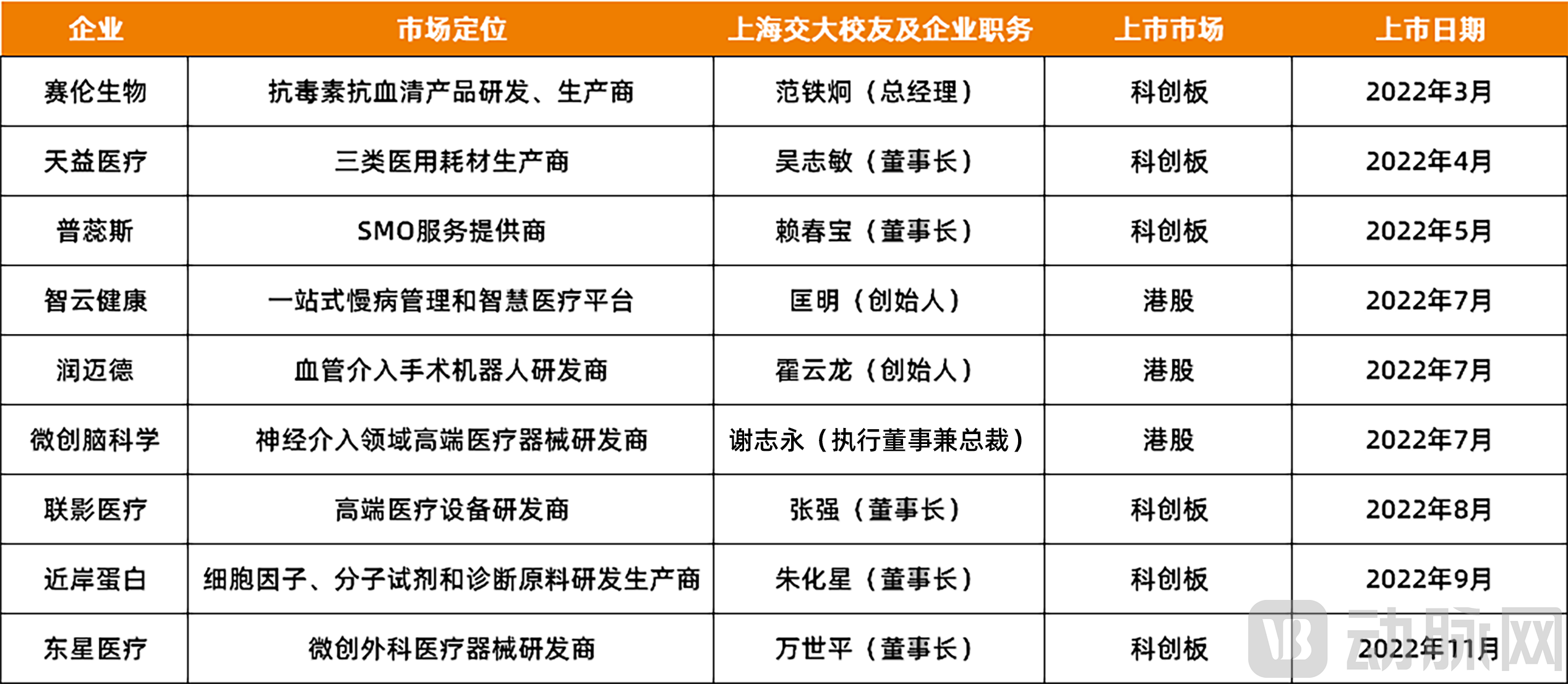
Figure 1. Nine Shanghai Jiao Tong University-affiliated healthcare companies that successfully went public in 2022
In fact, 2022 was a bumper year for Shanghai Jiao Tong University in the healthcare sector, with nine portfolio companies going public. The most notable event occurred in July, when the first vascular interventional surgical robotics company made its market debut.Runmaide, MicroPort’s “Fourth Child”MicroPort NeuroTech, China's Largest Digital Chronic Disease Management EnterpriseZhiyun HealthAll were launched successively within this month. A month later, the “King of Domestic Medical Imaging Equipment”United ImagingIt successfully listed on the STAR Market, becoming the largest IPO on the board that year.
In addition to the secondary market, healthcare enterprises affiliated with Shanghai Jiao Tong University have also demonstrated sustained outstanding performance in the primary market. According to incomplete statistics from the Artery Orange database, in the first five months of 2023 alone,19 Shanghai Jiao Tong University-affiliated healthcare companies have completed financing, with the total amount approaching RMB 10 billion.。
Precisely for this reason, many questions have arisen within the industry regarding Shanghai Jiao Tong University: How has a domestic university managed to incubate so many star enterprises in the healthcare sector and drive their continuous marketization? What does the underlying incubation system and industrial resource landscape look like? Furthermore, what are the future growth potentials for Shanghai Jiao Tong University in the healthcare segment? To address these questions, VCBeat took an in-depth look at Shanghai Jiao Tong University’s medical innovation ecosystem.
Which Directions Are Shanghai Jiao Tong University-Affiliated Medical Enterprises Targeting?
According to industry insiders, within the medical sector of Shanghai Jiao Tong University, two non-medical departments or institutes are of critical importance: one isAntai College of Economics and Management, the other isShanghai Advanced Institute of Finance. The reason these two institutes are mentioned separately is that, to some extent, they have pointed out the future industrial direction for medical entrepreneurs at Shanghai Jiao Tong University.
It is reported that a distinctive feature of the Antai College of Economics and Management is its industry research on frontier sectors in healthcare, conducted from economic and managerial perspectives with a focus on technology and market dynamics. Meanwhile, the Shanghai Advanced Institute of Finance (SAIF) has assembled a group of professionals specializing in the healthcare sector, who closely monitor the nuanced developments of the industry over the long term from a capital market perspective. It is precisely within this ecosystem that entrepreneurs affiliated with Shanghai Jiao Tong University have consistently emerged in recent years across popular healthcare segments.
By compiling data on Shanghai-based medical companies that have either gone public or completed financing rounds, VCBeat has found that,Its presence in the healthcare sector is primarily focused on medical devices.. This is certainly due to certain reasons. On the one hand, as a science and engineering university, Shanghai Jiao Tong University’s strengths lie in disciplines such as biomedical engineering, mechanical engineering, and materials science, providing a solid research foundation in medical devices. On the other hand, compared with pharmaceuticals, the R&D and regulatory approval cycles for medical devices are relatively shorter, the success rate of R&D is higher, they are closer to commercialization, and the barriers to imitation are higher, making them more attractive to university-based entrepreneurs.
For example, in the field of medical roboticsAs early as 1985, Shanghai Jiao Tong University established the Robotics Institute (its predecessor was the Robotics Laboratory founded in 1979), making it one of the earliest professional institutions in China engaged in robotics technology research and development. In 2017, the university further established the Medical Robotics Institute to conduct more specialized industrial research on medical robots.
According to publicly available information, Shanghai Jiao Tong University has so far cultivated two listed companies in the medical robotics sector, including the “first stock of vascular interventional surgical robots”RainMedand enterprises under the “MicroPort Group”Minimally Invasive Robotics, Meanwhile, domestically produced laparoscopic surgical robotsShuruiis also in the process of going public.
In addition, in the medical robotics sector, Shanghai Jiao Tong University has also gathered a group of high-quality enterprises, such asFourier Intelligence、Jingmai Medical、Huihe Medical、TMI Robot and Zhuodao MedicalIn addition, there are Professor Fan Xianqun’s orbital surgery robot, Professor Shen Guofang’s craniomaxillofacial osteotomy robot, Professor Zhang Chenping’s mandibular reconstruction surgery robot, Professor Wu Hao’s otologic surgery robot, and Professor Wang Kundong’s Allpen surgical robot. A medical robot army is gradually taking shape at Shanghai Jiao Tong University.
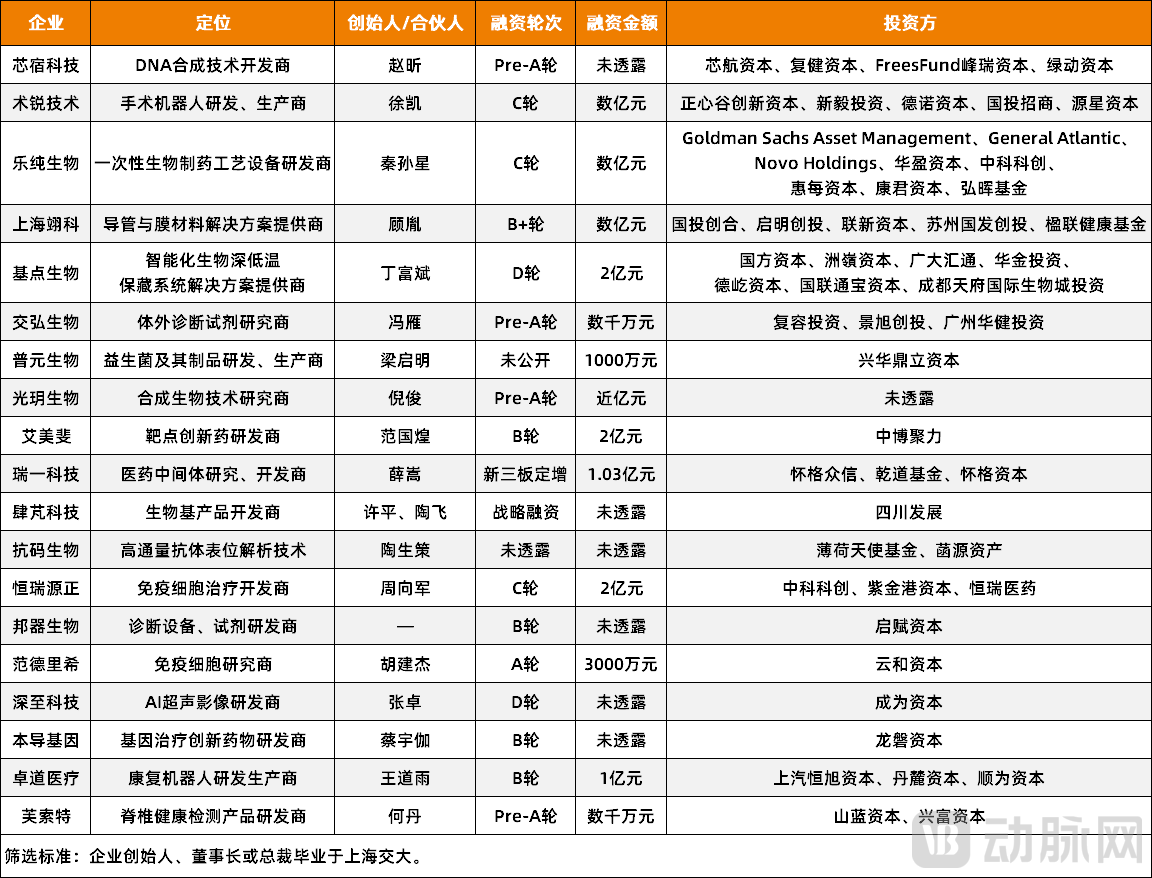
Figure 2. Shanghai Jiao Tong University-affiliated healthcare companies that completed financing in 2023 (Data source: VCBeat Orange Database)
In addition to medical robots, Shanghai Jiao Tong University has also been active in frontier sectors in recent years.Synthetic BiologyMaking a push. At the end of 2022, Luo Yu, who holds a Ph.D. in Biochemistry from Shanghai Jiao Tong University School of Medicine, foundedYikelai BiotechOfficially launching an IPO bid, and this year, four more synthetic biology companies affiliated with Shanghai Jiao Tong University have completed financing rounds, namelyXinsu Technology、Guangyue Biotech、Sipeng TechnologyandAnticode Bio。
In addition, in the highly anticipatedCell and Gene Therapy Sector, Shanghai Jiao Tong University also saw three enterprises complete financing this year, including one founded by Professor Zhou Xiangjun of Molecular Pharmacology at the School of Pharmacy, Shanghai Jiao Tong UniversityHengrui Yuanzheng, founded by Cai Yujia, a tenured associate professor at the Institute of Systems Biomedicine, Shanghai Jiao Tong University,BenDao Genomicsas well as founded by Hu Jianjie, an alumnus of Shanghai Jiao Tong UniversityFandrich。
Therefore, from a holistic perspective, as the healthcare industry continues to evolve, Shanghai Jiao Tong University has been continuously adjusting its strategic layout in the medical sector: on one hand, it is sustaining its efforts in the medical device field with a core focus on medical robots; on the other hand, it is constantly stepping out of its “comfort zone” and targeting some challenging frontier medical tracks, such as synthetic biology, brain science, and cell and gene therapy.
But regardless of the changes, two distinct characteristics have always been evident in the medical enterprises affiliated with Shanghai Jiao Tong University,First, focus on unmet clinical needs; second, have the courage to break through and experiment, consistently directing development efforts toward key technological areas where overseas giants currently hold a stranglehold.。
Surrounded by Half the Venture Capital Circle, Are SJTU-Linked Founders More Likely to Achieve “Financial Freedom”?
The industry has long had“Half of the venture capital circle are Shanghai Jiao Tong University alumni”This claim is by no means an exaggeration; among the partner ranks of numerous top-tier venture capital firms, you will always find alumni of Shanghai Jiao Tong University, such as the Global Executive Partner of Sequoia Capital.Shen Nanpeng, Managing Partner of SoftBank ChinaXue CunheandWarburg Pincus, Chairman of Legend CapitalZhu Linan, Managing Partner at Jinsha River VenturesZhu Xiaohu, Founding Partner of Wuyuan CapitalLiu QinandShi Jianming, Partner at IDG CapitalGuo Yihong, Partner at Lightspeed China PartnersZhu Jia, Founding Partner of Yunqi CapitalMao Chengyuand so on. In addition to their shared identity as investors, they also share a common title: alumni of Shanghai Jiao Tong University.
In fact, this cohort of Shanghai Jiao Tong University (SJTU) alumni, who occupy half of the venture capital and private equity sector, has been consistently supporting the development of their alma mater’s healthcare industry. For instance, in terms of financial donations, Shen Nanpeng donated RMB 50 million in 2016 to establish the “Medical Research Fund” at Shanghai Jiao Tong University; by 2019, the fund’s asset size had exceeded RMB 1.5 billion. Furthermore, these investors pay particular attention to projects founded by SJTU alumni during their investment processes, such as the company that completed a Series B+ financing round worth hundreds of millions of yuan earlier this year.Shanghai Yike, among its investors is the firm founded by Qu Liefeng, an alumnus of Shanghai Jiao Tong UniversityLianxin Capital. Cases like this are ubiquitous at Shanghai Jiao Tong University.
An investor affiliated with Shanghai Jiao Tong University told VCBeat, “As a SJTU alumnus,“Drink Water, Remember Its Source”“The core spirit has long been embedded in the minds of our cohort of investors, so we are very willing to invest in projects from Shanghai Jiao Tong University. Of course, professors at SJTU are also keen to engage with us. This is partly due to our alumni connections and partly because there are many past success cases to draw upon, fostering mutual trust between both parties.”
In fact, it is not only professors who have become targets of capital attention; students at Shanghai Jiao Tong University are also in the spotlight. According to a partner at a venture capital firm, some institutions have begun stationing representatives on campus at Shanghai Jiao Tong University for extended periods to promptly identify and secure promising projects. In addition to monitoring faculty members, these firms pay particular attention to students with interdisciplinary backgrounds.
So,Does this mean that medical entrepreneurs from Shanghai Jiao Tong University will find it easier to succeed?The answer is not absolute, as having numerous SJTU-affiliated funds, or attracting greater attention from market capital, is merely a necessary but not sufficient condition for the rapid development of SJTU-affiliated medical enterprises. After all, capital is market-oriented. Therefore, in terms of incubating and nurturing medical enterprises, Shanghai Jiao Tong University must have done some things right.
Start from the source.In 2005,Shanghai Second Medical University Officially Merged into Shanghai Jiao Tong University, Shanghai Jiao Tong University, originally strong in engineering, has further strengthened its clinical medicine programs. As a result, "integration of medicine and engineering" has become a strategic development focus for the university, leading to the establishment of dedicated“Medical-Engineering Interdisciplinary Fund”, with the aim of promoting research collaboration between more engineering professors and clinical medical experts.
According to relevant officials at Shanghai Jiao Tong University, the “Medical-Engineering Interdisciplinary Fund” receives annual investments exceeding RMB 100 million, funded by the university. However, securing approval for applications is not easy, as there are two mandatory criteria:First, the project must originate from frontline clinical needs; second, a "dual-PI system" is adopted, meaning each project has two principal investigators (PIs), one from engineering and one from clinicalBed. This effectively binds engineering and clinical medicine closely together in a disguised form.
However, at this stage, the project is still in its early phases. In this regard,Shanghai Jiao Tong University Has Established a Relatively Open Yet Compliant Incubation SystemSpecifically, “openness” is manifested in multiple aspects. For instance, during the project evaluation phase, Shanghai Jiao Tong University brings together stakeholders from the industry, investment sectors, and even medical regulatory agencies to conduct systematic assessments of projects based on market principles, with a focus on promoting the sustainable development of the industry.
Furthermore, “openness” is also reflected in the inclusive support for projects; once a project is recognized by the university, there is only one policy guideline, namelyAll obstacles hindering project progress can be resolved., and to accelerate project progress while minimizing unnecessary expenditure of funds and effort in the early stages, Shanghai Jiao Tong University demonstrates exceptionally high decision-making efficiency. Furthermore, whether it involves funding, incubation platforms, or even team building, the university spares no effort to meet all project needs.
Of course, in addition to being “open,” Shanghai Jiao Tong University also places particular emphasis on compliance. To this end, Shanghai Jiao Tong University has establishedAdvanced Industrial Technology Research Institute(hereinafter referred to as the Industrial Research Institute), and established a specialized project incubation team on a school-by-school basis. A professor from the School of Biomedical Engineering at Shanghai Jiao Tong University told VCBeat, “The establishment of the Industrial Research Institute is not intended to manage projects, but to serve them., but while providing services, they also prioritize compliance during the early incubation phase of projects. For instance, in terms of intellectual property, the Industrial Research Institute aims to ensure transparency and openness as much as possible. This is because any ambiguity in ownership rights could significantly hinder a project’s future development once it enters the market or pursues an initial public offering (IPO).
It features research into cutting-edge technologies, as well as a relatively open and compliant incubation system.Finally, leverage existing industrial resources to continuously amplify the project’s market value.. As previously mentioned, the SJTU-affiliated foundation has, to a certain extent, promoted the development of healthcare enterprises associated with Shanghai Jiao Tong University (SJTU). This is primarily reflected in two aspects: first, through direct investment; and second, by serving as an early-stage “market advisor” for projects. For instance, in project evaluations such as those mentioned earlier, some investors from the SJTU network participate. Additionally, at various project exchange events, these SJTU-affiliated investors share frontline industry insights and provide guidance on financing and entrepreneurship.
In addition to investment institutions, Shanghai Jiao Tong University is also actively collaborating with healthcare enterprises, such as by co-establishing laboratories in specific niche fields to foster innovative research while cultivating relevant talent. Furthermore, the university is strengthening market-oriented partnerships, leveraging the operational experience and channel resources of established companies to help startups affiliated with Shanghai Jiao Tong University accelerate their commercialization.
Overall,Shanghai Jiao Tong University has, in effect, established a robust incubation ecosystem, underpinned by diverse mechanisms and platforms that deliver targeted services., and relatively open. At the same time, there are certain standardized practices in place, such as leveraging funds to drive the integration of medicine and engineering, establishing market-oriented project evaluation mechanisms at an early stage, and maintaining a comprehensive and compliant system for intellectual property protection. When these elements converge, they create a synergistic force that propels project development.
Establishing the First University-Based Fund of Funds, Settling into “Grand Neo Bay,” SJTU’s Medical Footprint Continues to Expand
The IPO frenzy among Shanghai Jiao Tong University-affiliated healthcare companies continues, according to public data.Tianjing Biologics, Bodong Medical, Lepu Biopharma, Shurui Technology...and other medical enterprises affiliated with Shanghai Jiao Tong University are queuing up for IPOs. But this is only the beginning, as more possibilities are emerging on SJTU’s healthcare industry landscape.
November 2020,Shanghai Jiao Tong University Launches Special Pilot Reform for the Transformation of Scientific and Technological Achievements, explicitly stating the goal to complete the “sunshine” compliance and IPO filings for a batch of sci-tech innovation enterprises within the next two years, establish a large number of new sci-tech innovation enterprises, and cultivate a high-caliber team of one hundred technology transfer professionals. This initiative aims to fully stimulate the vitality of faculty and students in innovation, entrepreneurship, and creation, thereby forming mature, standardized, replicable, and scalable pathways and models for the commercialization of scientific and technological achievements.
December 2021,Shanghai Jiao Tong University Future Industry Fund of Funds Officially Established: The First Guide Fund of Funds Initiated by a University to Support the Transformation of Scientific and Technological Achievements and Alumni Entrepreneurship. It is reported that the initial size of the future fund of funds will reach RMB 1 billion. Leveraging Shanghai Jiao Tong University’s robust capabilities in transforming scientific and technological achievements and its extensive alumni entrepreneurship base, the fund of funds will exert its leverage and multiplier effects to attract joint participation from social capital, state-owned enterprises, financial institutions, and local governments. By adopting market-oriented approaches, it will prioritize support for seed-stage and growth-stage sci-tech innovation enterprises.
In March 2022, Shanghai Jiao Tong University initiated"Project Tiangong", aiming to increase the success rate of scientist-led startups and facilitate the development of a virtuous ecosystem featuring dynamic interaction among innovation, entrepreneurship, and venture capital within the Jiaotong University network. Meanwhile, the “Tiangong Home – Scientist Entrepreneurship Service Center” was officially unveiled, which will provide physical space support for scientists’ entrepreneurial ventures and build a bridge for communication between capital and scientists.
In February 2023, benchmarking against Silicon Valley's"Grand Zero Bay"The construction plan has been officially released. According to available data, the “Grand Neo Bay” will establish a sci-tech innovation base of approximately 1.2 million square meters over the next three years, bringing the total carrier space to 2 million square meters, while expanding the fund scale to exceed RMB 30 billion. As the core carrier of the “Grand Neo Bay,” it has already attracted more than 60 enterprises affiliated with Shanghai Jiao Tong University, with a combined valuation exceeding RMB 50 billion, predominantly comprising healthcare companies. Additionally, industry insiders have revealed that a significant number of other Shanghai Jiao Tong University-affiliated enterprises are expected to settle in the “Grand Neo Bay” in the future.
Thus, it is evident that Shanghai Jiao Tong University is continuously pushing boundaries in driving industrial innovation and development, while steadily refining its corresponding systems and channel resources. As a key strategic focus for the university, the healthcare sector is poised to unlock even greater potential in the future.
In recent years, as the healthcare industry has continued to deepen its development, there has been a growing emphasis on original innovative technologies. Consequently, an increasing number of university professors have been moving closer to the industrial sector. However, academia and the market operate within fundamentally different discursive systems, making effective collaboration among industry, academia, and research a persistent challenge for Chinese universities. This anxiety is particularly pronounced in the current context, where the translation of medical research into practical applications has become increasingly critical. In this regard, Shanghai Jiao Tong University, which has consistently remained at the forefront, may offer valuable insights and is certainly worth watching with anticipation.
· References:
1. “Shanghai Jiao Tong University Is Building an IPO Army” — Investment Circle;
2. “Last Month, Investors Frenziedly Snapped Up 11 Shanghai Stock Exchange-Listed Companies” – Rongzhong Finance;
3. “Looking Back at 2022 | A Wave of IPOs from the ‘SJTU Entrepreneurship Gang,’ with 22 Companies Going Public!” — Shanghai Jiao Tong University.