Chinese Neurotech Firm WarmX Challenges Musk's Neuralink with Visual BCI Breakthrough and $420M Series D Funding

Nanochap
Core Chip Developer in the Biomedical Field
Hot money floods in, Chinese-produced visual brain-computer interfaces start racing against Musk for time.
01
Brain-Computer Interface Race "Restoring Sight to the Blind"
MayDay 6, WarmNanochap300 MillionSeries D+ Financing, Investors IncludeLegend Capital, GF XindeAndCaitong Capital,Original ShareholdersFengnian CapitalContinue to invest. According to reports,The funds raised will be mainly used forClinical Trial Progress and Core Technology Iteration of Visual Brain-Computer Interface Productsetc.
Notably, among the new investors this time, Legend Capital is the capital platform under Lenovo Holdings.
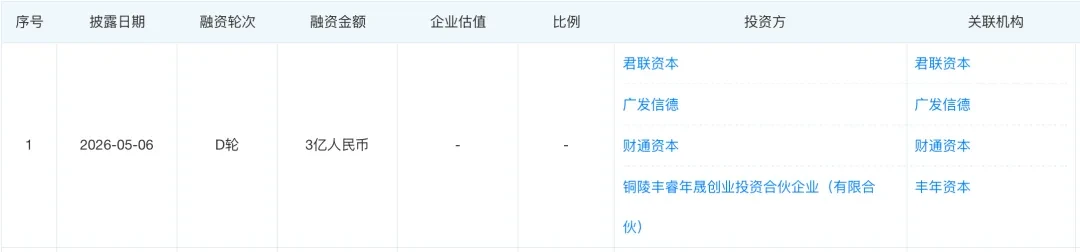
Source: Tianyancha
Legend Capital has an impressive track record in healthcare investments. It was involved in the recent IPOs of Jingfeng Medical and Tianxing Medical, and now it is extending its reach to the brain-computer interface sector.
WarmNanochap EstablishedYu 22014,Founder & CEOYang JiaweiWith over 10 years of experience in cutting-edge chip research and development, former Ph.D. at the Neuroengineering Research Center of the University of Melbourne,Years of research accumulation in the field of high-resolution artificial retinas。
Brain-Computer InterfaceThe oral care track has exploded in the capital market in recent years.Among the current global participants, Musk's Neuralink is the most renowned, with its current valuationHas approached one billion US dollars, itsThe Blindsight project is also one of the earliest classic cases that brought the ophthalmic potential of brain-computer interfaces to public attention.
As early as 2024,Blindsight (Blind Vision) has obtained the FDA Breakthrough Device Designation. According to Musk's official announcement in June last year,Neuralink Plans to Conduct the First Visual Implant Surgery in the Next 6 to 12 Months,At that time, even patients who are completely blind are expected to regain their sight through this technology.
According to "old shareholders”Introduction to Harvest Capital, NanochapNanochap has released two visual reconstruction brain-computer interface products: the retinal pathway brain-computer interface E-BCI and the visual cortex pathway brain-computer interface V-BCI.Retinal interface products have initiated human clinical trials, and visual cortex pathway brain-computer interface products will also enter prospective clinical trials this year.。
02
Complex Causes of Visual Impairment
Can visual brain-computer interfaces be implemented?
According to Fengnian Capital's disclosure, Nanochap has laid out dual routes for vision reconstruction. Among them,Retinal Pathway Visual Brain-Computer InterfaceThrough minimally invasive ophthalmic surgery, the flexible high-densityElectrode ArrayImplanted in the macular region of the retina, stimulating residual retinal ganglion cells to restore functional vision.
AndVisual Cortex Pathway, is to place the electrodesDirectly implanted into the visual cortex area of the brain, completely bypassing the optic nerve pathway, thus applicableFor patients with eyeball loss, optic nerve atrophy, or absence.But due to the involvement of intracranial implantation,Higher safety requirements, relatively more cautious clinical progress, but also more disruptive to clinical practices.
Except forApart from Nanochap, there is also a group of rising stars in China.This field is emerging.
MingSight Brain-Computerhas also released its self-developed implantable brain-computer interface visual reconstruction system and taken天使轮融资 of 150 million;Zhongke ForeseeDeveloped the first in ChinaWireless 100-Channel Visual Cortex Implant, Visual Reconstruction Brain-Computer Interface Granted U.S. Patent for "Color + Face" Recognition.