

Linkong Network Proposes a New Approach to Addressing Backlog Patient Demand in Large Hospitals with 'Cloud Ruijin' and 'Pregnancy Care Manager'
From May 25 to 28, the “27th China Hospital Information Network Conference (CHIMA 2023),” hosted by the Information Professional Committee of the Chinese Hospital Association, was held in Fuzhou.
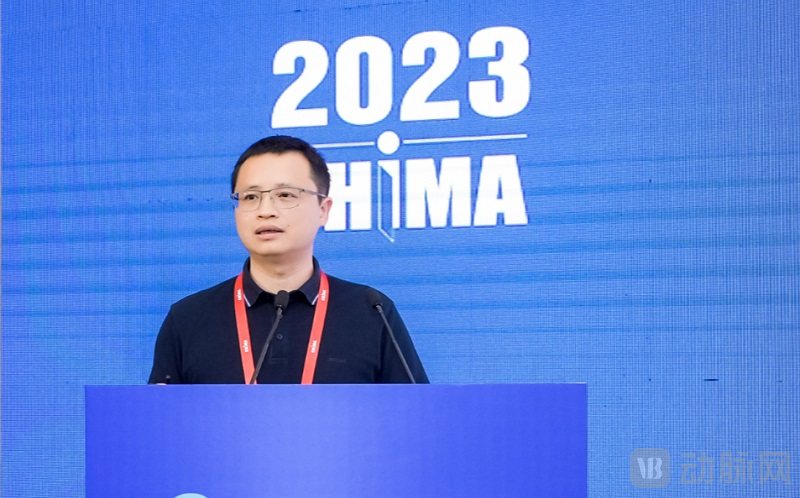
As the most influential and leading industry event in the healthcare IT sector, the themes discussed at the CHIMA conference often serve as a barometer for industry development. At this year’s conference, Kuang Hua, CEO of Liankong Network, was invited to attend and deliver a keynote speech titled “Reconstruction: From Space to Service.” This presentation can be viewed as the company’s reflection on the current digital and intelligent transformation of hospitals, following nearly eight years of operation and service to more than 700 medical institutions.
Due to the uneven distribution of medical resources across regions, tertiary hospitals are overcrowded. The daily patient volume at some tertiary hospitals has long exceeded the capacity limits originally planned at their establishment.
Zhou Guopeng from Peking University First Hospital noted that the hospital’s average daily outpatient volume exceeds 10,000 visits, far surpassing its initially planned capacity of 8,000 patient visits. This discrepancy has led to overcrowding in offline settings and competition for medical resources between out-of-town and local patients, as well as between first-time and follow-up visitors.
How Can We Better Address the Backlog of Healthcare Demand? Kuang Hua, CEO of Liankong Network, Points Out That Efforts Should Focus on Two Key Areas: Unlocking Physical Healthcare Space and Amplifying Medical Service Capacity.
In fact, hospitals have long been considering how to better meet patients’ healthcare needs. Due to constraints during the construction phase, offline and online clinical activities have often been planned and implemented separately, resulting in a fragmentation between the online and offline services provided by medical institutions. Clearly, simple digitalization cannot resolve the existing issues. The key to breaking this deadlock lies in centering on the hospital’s core resource—physician services—and achieving integrated planning for both online and offline channels to efficiently match the needs of patients and providers.
In light of this, Liankong Network proposed the “Digital-Intelligent Medical Care Space 1.0” solution in 2021, aiming to maximize the liberation of hospitals’ physical space. According to Kuang Hua, although healthcare institutions have alleviated pressure on manual service counters by deploying self-service kiosks, these devices still consume significant spatial resources. To truly free up physical space, it is essential to comprehensively achieve mobilization (enabling users to access services via smartphones), intelligence (genuinely understanding and meeting user needs), and online-offline integration (delivering unified services).
As exploration deepened, Liankong Network realized that merely releasing physical space in hospitals was insufficient; it was necessary to maximize the amplification of hospitals' medical service capabilities. In 2022, Liankong Network launched the Digital-Intelligent Medical Care Space 2.0 solution. Building upon improved spatial efficiency, this initiative began to focus on enhancing hospital service effectiveness. It shifted from focusing on individual medical visits to emphasizing comprehensive planning across the entire patient journey, and from organizational empowerment to constructing new medical organizations based on mobile internet technologies. Through the provision of its 2.0 solution, Liankong Network aims not only to improve spatial efficiency but, more importantly, to reconstruct the organizational methods and service models of hospital medical services, thereby maximizing the efficiency and effectiveness of healthcare delivery.
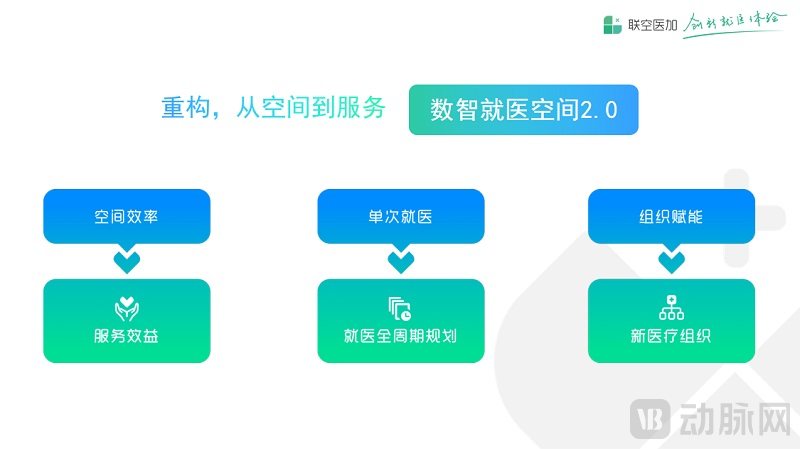
After more than half a year, the Liankong Medical AI-Driven Smart Healthcare Space 2.0 Solution has achieved substantial implementation. A large number of leading hospitals have adopted Liankong Network’s 2.0 solution.
It is reported that over 700 medical institutions have partnered with Liankong Network, with coverage spanning 23 provinces and municipalities across China. Meanwhile, Liankong Network is accelerating collaborations with the top 100 leading hospitals to further expand its nationwide footprint. Notably, in Shanghai, Liankong Network’s client penetration rate has exceeded 70%, positioning the company as a leader in driving the digital and intelligent transformation of healthcare institutions in the region.
Currently, numerous top-tier hospitals across China, including Ruijin Hospital Affiliated to Shanghai Jiao Tong University School of Medicine, Huashan Hospital Affiliated to Fudan University, Peking University First Hospital, Eye & ENT Hospital Affiliated to Fudan University, Fudan University Shanghai Cancer Center, and Shanghai First Maternity and Infant Health Care Hospital, have established partnerships with Liankong Network. Among these collaborations, the “Cloud Ruijin” project with Ruijin Hospital and the “Pregnancy Journey Manager” project with Shanghai First Maternity and Infant Health Care Hospital are highly representative initiatives within Liankong Yijia’s Digital Intelligence Medical Space 2.0 solution. They also symbolize Liankong Network’s landmark explorations in unlocking spatial potential and enhancing service efficiency.
Cloud Ruijin
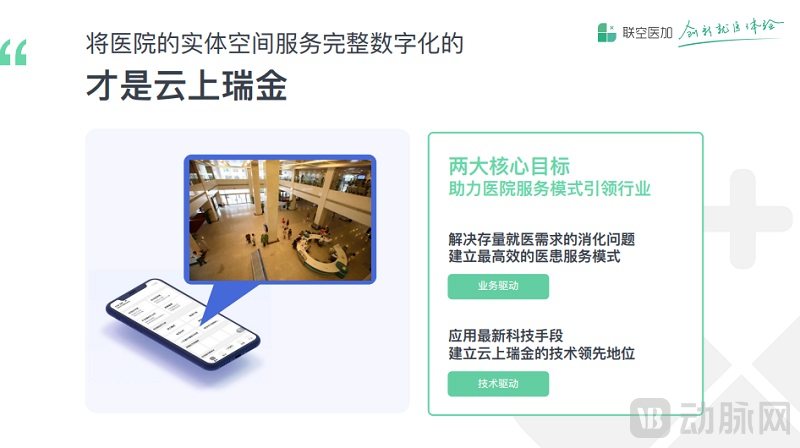
Ruijin Hospital, Shanghai Jiao Tong University School of Medicine, had a clear objective in building “Cloud Ruijin”: only by fully digitizing the hospital’s physical spaces could “Cloud Ruijin” be realized. The “Cloud Ruijin” project aims to address how to integrate medical resources and services across different locations, campuses, and online-offline channels to establish a genuine cloud-based healthcare ecosystem that meets existing patient demand and creates the most efficient doctor-patient service model, as well as how to leverage cutting-edge technologies to secure Cloud Ruijin’s technological leadership.
In response to the aforementioned requirements, Shanghai Liankong Network Technology Co., Ltd., leveraging its Digital-Intelligent Healthcare Space 2.0 solution, partnered with the team at Ruijin Hospital to jointly advance and achieve an effective match between hospital services and patient needs, thereby creating “Cloud Ruijin” and attaining optimal operational efficiency.
First, the integration of online and offline services at Ruijin Hospital has been achieved.Based on patient needs across the pre-consultation, intra-consultation, and post-consultation phases, Liankong Network helped Ruijin Hospital integrate cross-regional, cross-campus, online, and offline operations, thereby achieving the consolidation of medical services. Furthermore, by aggregating online and offline appointment slots and physician resources, it realized the integration of medical resources. The unified scheduling of physician resources has further enhanced the efficiency of healthcare delivery.
Secondly, an upgrade of the appointment system has been implemented.Liankong Network has comprehensively integrated Ruijin Hospital’s online and offline appointment resources, achieving precise alignment and efficient matching of these resources through intelligent recommendations and guidance. By developing features such as appointment recommendation and guidance, pre-consultation intelligent triage, precision appointment assistance, and waitlist appointments, the platform has effectively addressed patients’ previous difficulties in determining the appropriate department and securing appointments. Meanwhile, it has fully recommended and connected the hospital’s appointment resources to patients, thereby not only fully meeting patients’ healthcare needs but also vigorously activating the hospital’s medical service resources.
Third, the upgrade of task reminders.Liankong Network provides patients with one-stop, end-to-end guidance by integrating cloud-based triage services, offering every patient a “personal service concierge” online and lowering the barrier to use.
Finally, the upgrade of doctors’ business cards.By upgrading digital physician profiles, Liankong Network provides self-operation tools for physicians, departments, and disease-specific programs, further meeting the personalized operational needs of medical departments and physicians.
Pregnancy Care Manager
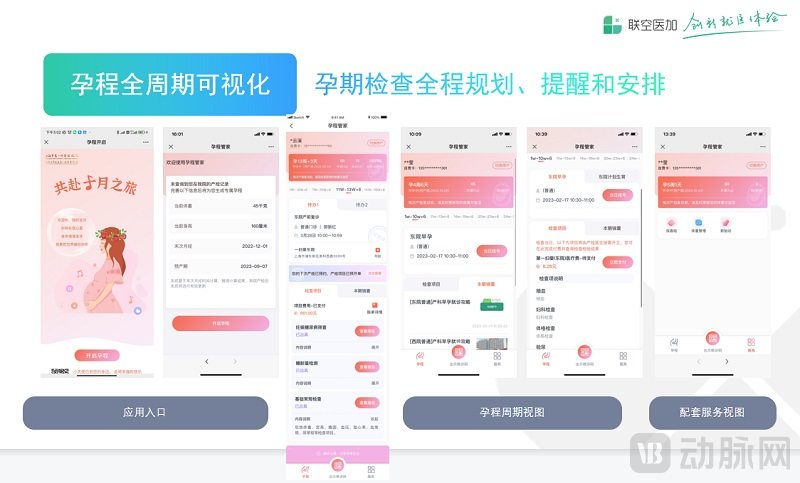
Pregnancy Journey Manager is a practical implementation of Liankong Network’s “disease-centric” intelligent planning product. It is reported that Liankong Network is also discussing full-cycle medical care planning for other disease categories with hospital departments. The decision to focus on pregnant and postpartum women for full-cycle medical care planning was driven by two considerations: first, the substantial size of this population; and second, its potential to effectively address the current challenges faced by pregnant and postpartum women.
Historically, first-time expectant mothers often experienced significant anxiety and uncertainty regarding the appropriate timing for hospital visits, frequently leading to unnecessary and repeated trips. By providing comprehensive, end-to-end care planning throughout pregnancy, the Pregnancy Care Manager not only alleviates maternal anxiety and rectifies the previous pattern of disordered healthcare-seeking behavior but also optimizes the allocation of medical resources through advance planning and scheduling of pregnancy-related services. This approach simultaneously enhances hospital operational efficiency and patient satisfaction.
Pregnancy Care Manager primarily provides services from the following perspectives—
First, it provides visualization across the entire pregnancy journey.Through comprehensive planning, reminders, and scheduling of prenatal check-ups, expectant mothers can have a clear understanding of their medical care plans. Behind this lies a reconfiguration of medical resources—it helps hospitals integrate online and offline healthcare service models, as well as coordinate services across different hospital campuses and physicians of varying seniority levels. By providing pre-planned services throughout the entire perinatal period, hospitals can maximize their operational efficiency and service effectiveness.
Secondly, it provides pregnancy journey sharing and self-management tools.By providing sharing tools and supporting features such as fetal movement counting and weight tracking, expectant mothers can stay informed about their physical changes at any time, thereby reducing anxiety.
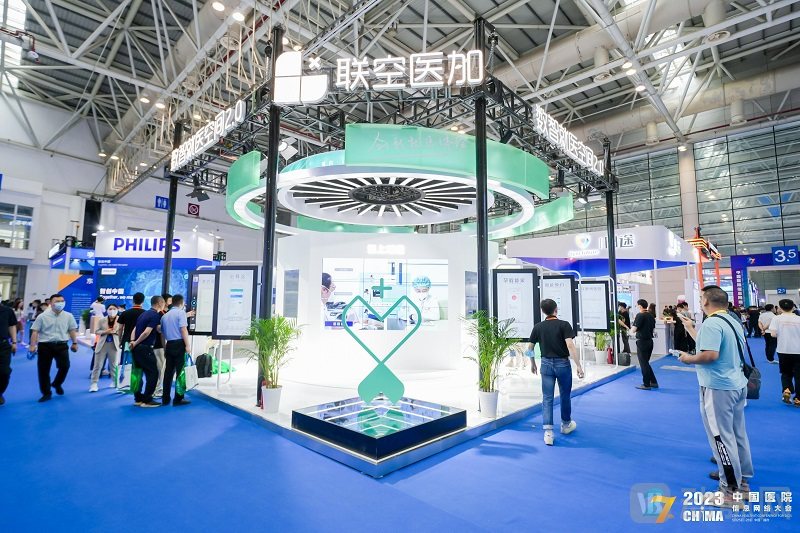
In addition to developing initiatives such as “Cloud Ruijin” and “Pregnancy Journey Manager,” Liankong Network’s full product portfolio is undergoing continuous updates and iterations. These advancements include the comprehensive implementation of cloud-based triage with diverse interactive options; the extensive application of digital twin technology for spatial guidance and resource optimization; an integrated online queuing and ticketing solution for virtual waiting rooms; and the facilitation of patient-involved multidisciplinary team (MDT) consultations.
Driven by user needs in healthcare institutions, Liankong Network is also continuously exploring product evolution based on service design. For instance, it has developed the “Golden Key” management platform to meet the demand for VIP concierge-style services for high-end clientele at maternal and child health hospitals; created the “One-Day Follow-up Visit” platform to address the needs of postoperative patients from other regions for pre-planned follow-up examinations, rapid consultations, and efficient testing; and during the pandemic, introduced “Contactless Outpatient Services + Medication Pickup Codes” to fulfill medication prescription and pickup needs for patients with chronic diseases.
Liankong Network’s ability to continuously empower healthcare institutions and meet customer needs stems from its substantial accumulated strengths. Currently, Liankong Network collaborates with over 700 healthcare institution clients, more than half of which are tertiary hospitals, including 23 of the top 100 hospitals nationwide. This extensive experience has enabled the company to consistently deliver superior product solutions. Furthermore, Liankong Network is steadily strengthening the application of innovative technologies. Its Digital Intelligence Space Service Middle Platform leverages digital twin and artificial intelligence technologies to create immersive digital-intelligent spaces, further enhancing the intelligence level of front-end applications and lowering the usage threshold for both medical professionals and patients.
Currently, under policy guidance, public hospitals are striving to shift away from the previous extensive growth model and achieve high-quality development. This requires hospitals to further improve service efficiency and enhance their capacity for patient treatment and intervention.
With each update and iteration, Liankong Network not only delves deeper into its exploration of digital intelligence but also helps further enhance the service capabilities of hospitals that adopt its solutions—
“Since we proposed restructuring the digital-intelligent healthcare space in 2022 to achieve a transformation ‘from space to service,’ we have placed greater emphasis on the allocation efficiency of medical resources and service effectiveness. Over the past year, regarding the healthcare space, while meeting the need for improved spatial efficiency in hospitals, we have further realized comprehensive planning and guidance throughout the entire patient journey. In terms of service effectiveness, we have, on one hand, implemented full-cycle disease management planning centered on patients, thereby enhancing the efficiency of diagnostic and treatment behaviors for both patients and physicians; on the other hand, we have expanded the reach of physicians’ services via the internet, thereby covering a broader population of patients.”
Kuang Hua added that Liankong Network would not halt its exploration of the digital-intelligent healthcare space. On the occasion of Liankong Network’s 8th anniversary, the company will also launch its new Digital-Intelligent Healthcare Space 3.0 solution to the public.
Building on the continuous iteration and implementation of the Digital Intelligence Medical Care Space 2.0 solution, which has benefited both doctors and patients, what new explorations will Liankong Network’s 3.0 solution bring? Let us wait and see.