

LIG Nanowise Files IPO Prospectus: Pioneering the World’s First Commercial Super-Resolution Optical Microscope Based on Microsphere Lens Technology in Collaboration with Nikon

LIG Nanowise
Developer of Optical Detection Tools
In the 18th century, the optical microscope invented by Dutch scientist Antonie van Leeuwenhoek led humanity from the macroscopic world into the microscopic realm. Two centuries later, scientific advancements have once again brought optical microscopy into the spotlight.
This is the new generation of super-resolution optical microscopy technology based on microsphere lenses, developed by the team of Academician Lin Li from the Royal Academy of Engineering in the UK.
According to Academician Li Lin, as an industry pioneer of this technology, his UK-founded company LIG Nanowise (www.lig-nanowise.com) has commercialized this scientific achievement,Developed the world’s first commercial nano-optical microscopes featuring super-resolution microsphere amplification lenses (SMAL™)—the Nanoro M and Nanoro B series.
Three founders from the University of Manchester in the United Kingdom,
Pioneer of Super-Resolution Microsphere Nano-Optical Microscopy Technology
Due to the diffraction limit of visible light, optical microscopes have a theoretical resolution limit of approximately 200 nanometers. However, Academician Li Lin’s team, which has been deeply engaged for many years in the field of super-resolution microsphere nano-optical systems, has overcome this theoretical limitation through technological innovation.
In 2011, Academician Li Lin’s team first published the principle of microsphere lens optical microscopy in Nature Communications, breaking the diffraction limit of visible light.Achieving a resolution of 50 nanometers in direct optical imaging.
In 2013, Academician Li Lin’s team published further research findings on microsphere lens imaging in the premier international optics journal Light: Science & Applications. By combining conventional optical microscopy with microsphere lenses, they directly observed 75-nm adenoviruses in liquid for the first time under white light illumination and without fluorescent particle labeling. This achievement provides an innovative solution for gaining deeper insights into the interactions among viruses, bacteria, cells, and drugs.
To promote the translation of scientific research achievements into practical applications, Academician Li Lin led her team in founding LIG Nanowise in 2014. The three co-founders of LIG Nanowise are all from the University of Manchester in the United Kingdom. Academician Li Lin has been awarded the Sir Frank Whittle Medal by the Royal Academy of Engineering and the Wolfson Research Merit Award by the Royal Society, among many other honors. In 2013, she was elected as a Fellow of the Royal Academy of Engineering.
Dr. Wei Guo, a co-founder and Research Fellow, is a co-author of papers published in Light: Science & Applications and Nature Communications. The other co-founder, Professor Zhu Liu, brings over 25 years of extensive experience in the fields of nanomaterials and laser engineering. Furthermore, LIG Nanowise has assembled a core R&D team with rich expertise in disciplines such as optoelectronic technology, microscopic optics, and software engineering.
As one of the earliest pioneers to propose microsphere nanoscopic optical microscopy, Academician Li Lin’s team has made substantial contributions to the integration and industrialization of this technology. LIG Nanowise has successively launched a range of super-resolution optical nanomicroscopy products, including the Nanoro M and Nanoro B series, the SMAL™ series of super-resolution objectives, and the LV-MOD.
Seeing is believing,
Innovative Objective Lens Breaking the Optical Diffraction Limit with Resolution Below 100 nm
Traditional optical microscopes utilize a combination of objective and eyepiece lenses to collect scattered light and reconstruct it into an image; however, due to the far-field diffraction limit, the resolution of typical commercial white-light microscopes generally ranges from 300 nm to 400 nm.
The super-resolution optical microscope based on microsphere lenses, Nanoro M, developed by Academician Li Lin’s team, breaks the theoretical diffraction limit of optical microscopy, enhancing the observation resolution to up to 50 nm. This breakthrough beyond the theoretical limit is attributed to the team’s development of the world’s first super-resolution microsphere amplifying lens—SMAL™ (Super-resolution Microsphere Amplifying Lens).
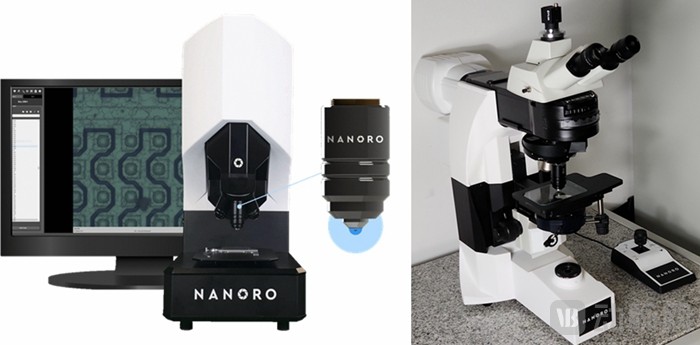
Nanoro M、SMAL™、Nanoro B
Image source: Provided by the interviewee
Microsphere lenses are the core optical components of SMAL™, primarily featuring two innovative imaging capabilities.
First, microspheres can focus light to form nanojets, illuminating the target like a "lamp." Second, microspheres can capture non-propagating evanescent waves. As a type of near-field surface wave, evanescent waves can only propagate along the surface of an object. SMAL™ microspheres can capture evanescent waves at the nanoscale and convert them into far-field propagating waves. These waves are then amplified, coupled with the microscope objective lens, further magnified, and finally projected onto the image sensor.
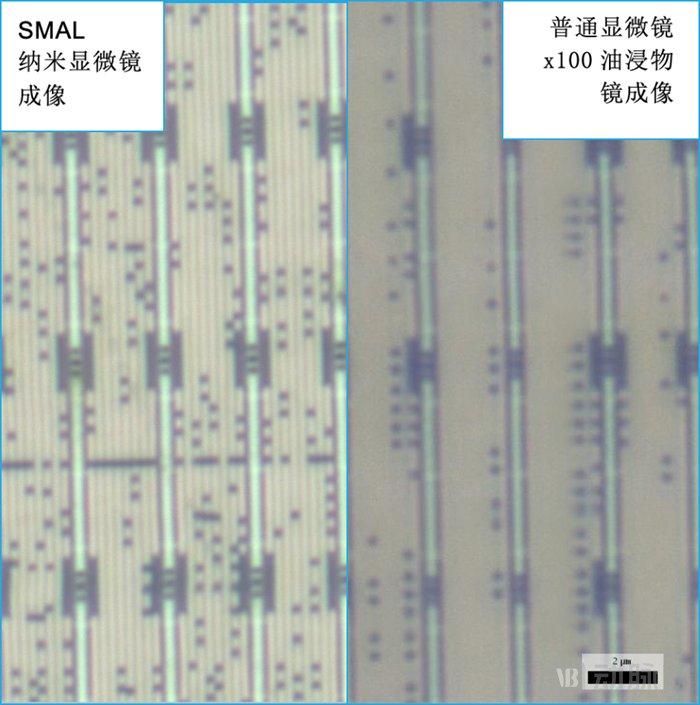
Imaging Contrast
Image source: LIG Nanowise official website
According to Academician Li Lin, certain specialized optical microscopes that utilize fluorescence for imaging can also observe nanoscale objects; however, their imaging results rely primarily on software computation rather than direct observation through the combination of objective and eyepiece lenses. In contrast, the combination of SMAL™ and Nanoro M can break through the optical diffraction limit, enabling super-resolution real-time imaging of live viruses and other specimens. Furthermore, compared with high-end super-resolution fluorescence microscopes and confocal microscopes, Nanoro M offers a more competitive price point.
In addition to integration with Nanoro M, SMAL™, as an assembled objective lens, is also compatible with any typical optical microscope, enabling accessory upgrades for all optical microscope users to achieve super-resolution imaging.For example, the Nikon LV 100 and Leica DM2500. Furthermore, Academician Li Lin’s team has also developed a range of optional dry and immersion SMAL™ objectives for users with diverse imaging requirements.
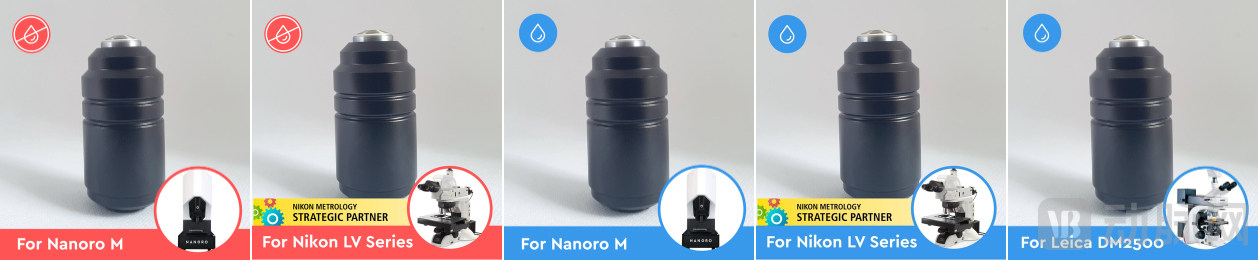
SMAL Series Objectives
Image source: LIG Nanowise official website
See the Big from the Small,
Integration of Nanoscale Super-Resolution Imaging and Large-Area Imaging
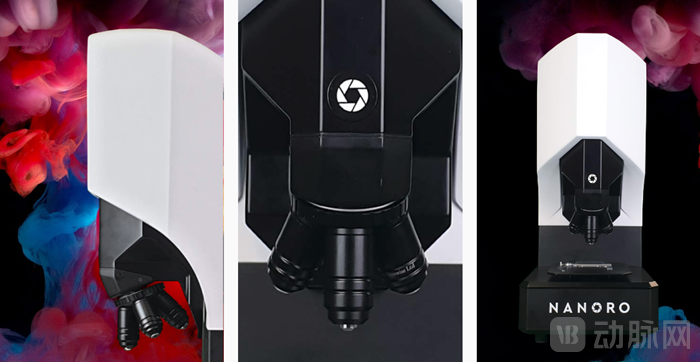
Nanoro M
Image source: LIG Nanowise official website
SMAL™, as the core technology of LIG Nanowise, when used in conjunction with its developed Nanoro M and Nanoro B optical microscopes, not only unleashes the full potential of these objectives but also systematically overcomes the technical limitations of nanoscale optical microscopy.
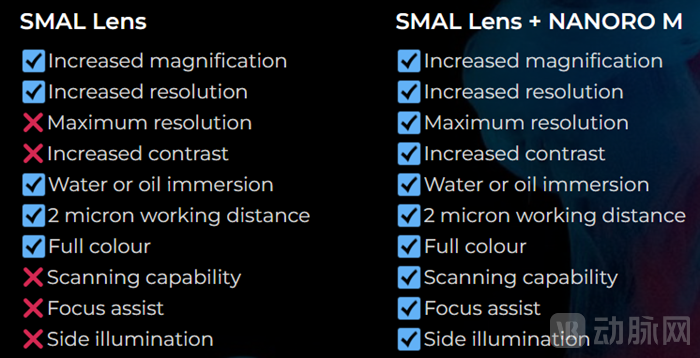
Functional Coverage Comparison
Image source: LIG Nanowise official website
The powerful synergy of SMAL™ with Nanoro M and Nanoro B overcomes two major imaging challenges facing current nanoscale microscopes: excessively low throughput and the difficulty in precisely controlling the microscope’s working distance during nanoscale imaging.
For example, tissue sections obtained via needle biopsy in cancer screening are often on the millimeter scale, whereas it takes an aggregation of thousands of cancer cells to reach a size of just a few millimeters. If traditional optical microscopes were used to scan and image each cell individually, it would incur substantial time and labor costs. Therefore, large-area imaging poses a significant challenge in the early sampling and observation of cancer cells.
In response, Academician Li Lin’s team has developed an innovative and highly efficient nanoscale precision scanning puzzle system.
The Nanoro M has a maximum scanning speed of 500 mm/s and a maximum accessible scanning area of 1,600 mm².Users can adjust the imaging resolution according to their needs, after which the Nanoro M will automatically, accurately, and rapidly perform nanoscale full-color wide-field scanning of objects on the stage, stitching each captured image into a large-area composite.
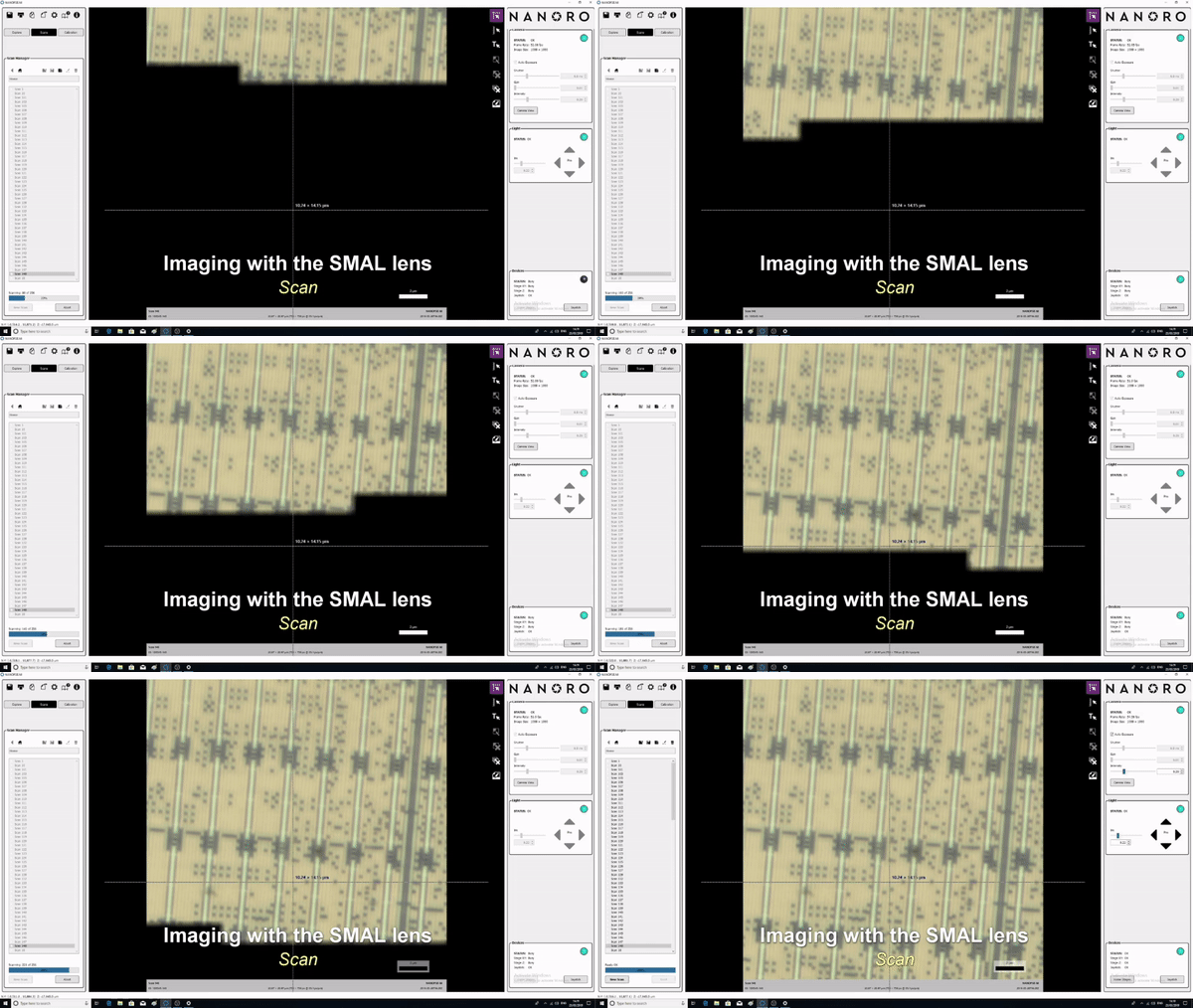
Custom Stitching Algorithm
Image source: LIG Nanowise official website
Traditional nanoscale pattern scanning platforms often suffer from inconsistent image quality and color variations after each scan, resulting in large-area stitched images that resemble roof tiles with clearly visible seams. Furthermore, imaging distortions arise due to the inherent limitations of lens-based imaging principles, posing significant challenges for user interpretation.
The Nanoro M software system integrates two key functions—automated color correction and perspective correction—to deliver higher-quality, wider-field, and more readable imaging results while ensuring high-resolution capture.
Anytime, Anywhere
Real-Time Super-Resolution Optical Microscopy Operable on a Desktop
As precision optical instruments, microscopes have stringent requirements for their operating environment. For instance, electron microscopes must be operated in a vacuum, imposing significant limitations on the types of specimens that can be observed; they cannot image living organisms, and non-conductive samples require prior coating to enable imaging. Furthermore, most commercially available electron microscopes produce black-and-white images.
The NANORO M does not require an optical workbench in a cleanroom or vacuum environment and can be used in everyday settings such as laboratory desks. Researchers and testing personnel no longer need to book time and wait in line at electron microscopy centers; instead, they can directly observe imaging results at the frontline of research and testing.
NANORO M also integrates the world’s first objective lens anti-collision system.
During the application of optical microscopy imaging, collisions between the objective lens and the stage often occur, damaging the precision microspherical lenses. Therefore, the NANORO M, integrated with an anti-collision system, can rapidly disengage upon intelligent sensor recognition before a collision occurs, thereby preventing damage to the microspherical lenses. Furthermore, the NANORO M’s stage incorporates a shock-absorbing design, which reduces the impact of noise and artifacts on imaging and enhances image clarity.
A Perfect Match,
Partnering with Nikon to Expand Application Scenarios for Microsphere Nanomicroscopy Technology
The microscope is like a kaleidoscope, allowing us to perceive the mysterious and splendid microscopic world. Each advancement in technological exploration not only expands the frontiers of human knowledge but also provides a powerful impetus for economic and social development.
The integrated device of microspheres and objective lenses is a crucial prerequisite for promoting the industrialization of microsphere nanoscopy technology.According to Academician Li Lin, super-resolution microsphere nanoscopy currently has two major application scenarios: biopharmaceuticals and semiconductor chip inspection. Furthermore, this technology can be extended to the observation of nanomaterials.
In terms of applications in the biopharmaceutical sector, there are also two major segments of business demand.
First is the direct observation of viruses. The diameter of viruses is typically within 100 nm, so the resolution of a typical optical microscope at 200 nm cannot meet the observational requirements.SMAL™ typically offers a resolution range of 50–150 nm and a magnification of 230–240×, enabling intuitive and clear visualization of viruses, thereby facilitating timely scientific research, medical diagnosis, and treatment.
Secondly, early screening and diagnosis of cancer. High-resolution imaging technology has become an important tool for studying cancer biology. Using the NANORO B for high-resolution real-time imaging, researchers can observe dynamic events such as cancer cell migration and metastasis, which are central to cancer development.NANORO B can also be applied in multiple fields, including rapid diagnosis of epidemics, early screening and diagnosis of chronic diseases, and general screening for common diseases.
Furthermore, microsphere nanomicroscopy is also emerging as a powerful tool in the field of semiconductor chip inspection. In 2021, Nikon officially announced its collaboration with LIG Nanowise, integrating SMAL™ with its optical microscopes to achieve super-resolution optical imaging. This partnership has propelled LIG Nanowise and its products into the global mainstream market. Additionally, LIG Nanowise’s semiconductor chip inspection technology has been practically applied at companies such as Samsung, Tongfu Microelectronics, and KLA.
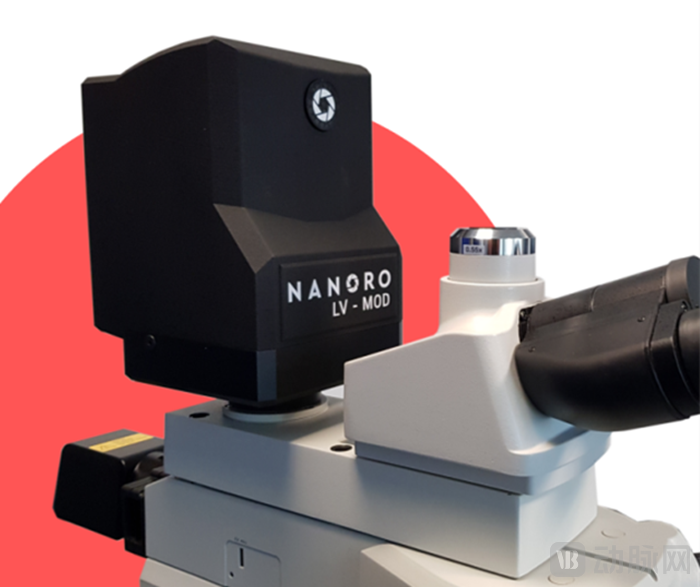
Nikon LV-MOD Super-Resolution Upgrade Optical Module
Image source: LIG Nanowise official website
High-end optical microscopes play an irreplaceable role in cutting-edge innovative fields such as biology and medicine. With the rapid development of China’s biotechnology in recent years, the market size for optical microscopes in China is expected to continue growing. According to data from Report Linker, the global optical microscope market was valued at approximately USD 3.9 billion in 2020, with China accounting for about one-tenth (9.91%) of the global total.
Academician Li Lin introduced to VCBeat,His team has recently developed an innovative optical microscope with clarity comparable to that of the most advanced optical microscopes internationally.
Currently, LIG Nanowise’s related products are primarily sold to the United States, South Korea, Russia, Japan, Europe, and other countries through distributors.Looking ahead, Academician Li Lin stated that the company will further deepen its presence in the Chinese market by introducing its leading technologies and products to China, thereby establishing a comprehensive domestic footprint encompassing production, manufacturing, and promotional distribution. To facilitate the local implementation and application of innovative technologies in China, Academician Li Lin’s team is actively seeking additional strategic partners.
“Looking up at the vastness of the universe and down at the abundance of all things, humanity’s exploration of the world has no end.” Academician Li Lin acknowledged that AI, as an enabling technology, has profoundly influenced the development of various industries. Although NANORO M already provides users with high-resolution, large-area nanoscale imaging, it still requires deep integration with AI technology for image recognition and automated analysis.