

KRAS 'Undruggable' Era Ends: Quanta Therapeutics Carves a Niche in a Field Dominated by Amgen and Novartis
Quanta Therapeutics
Small Molecule Cancer Drug Developer
RAS was the first human oncogene to be discovered and is also the most frequently mutated oncogene in human cancers. Mutations in the RAS gene can lead to the production of permanently activated RAS proteins, resulting in hyperactive intracellular signaling even in the absence of incoming signals. This excessive signaling affects cell growth and division, ultimately leading to cancer. Currently, protein activation caused by RAS mutations has been found in approximately one-fifth of human tumors.
KRAS is the most prevalent subtype within the RAS family. The 2-year follow-up results from the Phase I/II CodeBreaK100 study revealed that KRAS gene mutations account for approximately 85% of all RAS gene mutations. In human cancers, KRAS gene mutations are present in nearly 90% of pancreatic cancers, 30–40% of colorectal cancers, 17% of endometrial cancers, and 15–20% of lung cancers (predominantly non-small cell lung cancer). Furthermore, KRAS gene mutations have also been observed in various other cancer types, including cholangiocarcinoma, cervical cancer, bladder cancer, liver cancer, and breast cancer.
On May 29, 2021, the U.S. FDA announced the accelerated approval of Lumakras (sotorasib, AMG510), developed by Amgen, for the treatment of patients with non-small cell lung cancer (NSCLC) harboring KRAS G12C mutations. It took scientists a full 40 years to conquer this once “undruggable” target, from the initial identification of KRAS as an oncogene in human tumors to the market launch of the world’s first anticancer drug specifically targeting KRAS gene mutations. Since then, numerous domestic and international companies, including Novartis, Innovent Biologics, and Eli Lilly, have actively invested in the development of KRAS inhibitors and achieved certain successes.
Recently, Quanta Therapeutics (“Quanta”), a biopharmaceutical company focused on developing targeted therapies for KRAS-driven cancers, announced the completion of a $50.7 million Series D financing round. The round was led by Avidity Partners, with participation from existing investors. Reportedly, the proceeds will be used to support the development of Quanta’s oral KRAS inhibitor pipeline and accelerate the advancement of its two lead candidates into clinical trials. To date, Quanta has raised more than $140 million in total funding.
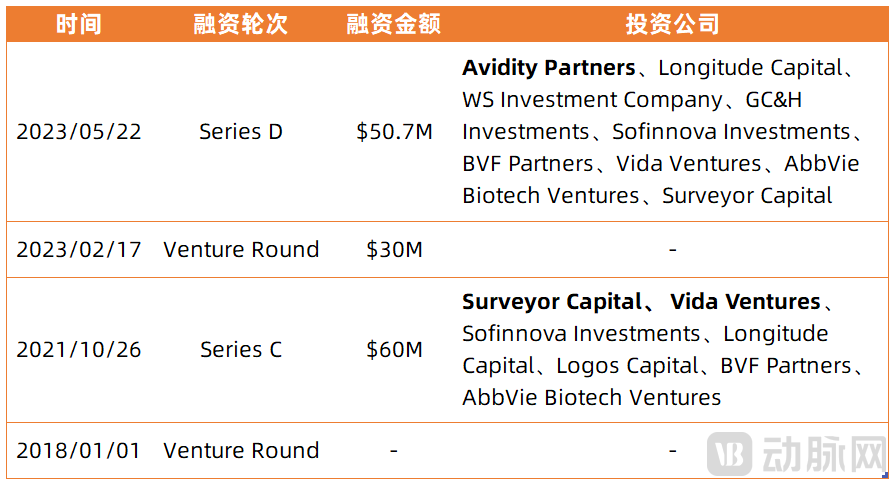
Quanta Therapeutics’ Historical Financing Rounds (Compiled from Public Information; **Lead Investors** in Bold)
The KRAS protein lacks obvious binding sites, making it difficult to synthesize compounds that can target and inhibit its activity. For a long time, the KRAS target has been challenging to address, becoming synonymous with "undruggable" targets in the field of oncology drug development. The main reasons can be summarized as follows:
(1)Direct inhibition of KRAS activity may affect normal human cells.KRAS has a broad range of functions, and its normal activity is required for many physiological cellular processes. Direct inhibition of KRAS may result in significant toxicity and severe adverse effects. Furthermore, due to the high homology between KRAS, NRAS, and HRAS, agents that inhibit KRAS activity may also suppress the activity of NRAS and HRAS.
(2)Drugs bind to KRAS with great difficulty.KRAS exhibits extremely strong binding affinity for GDP and GTP, with its affinity constant reaching the picomolar range (10-12) level, whereas the concentrations of GDP and GTP in normal cells are in the micromolar range (10-6) level. In other words, the normal intracellular concentration ratio of GDP to GTP is a million times higher than the concentration required for binding to KRAS. Therefore, it is extremely challenging to develop small-molecule drugs that can compete with GDP and GTP for binding to KRAS. Moreover, compared with ideal target proteins, KRAS lacks the “deep pocket” structures that traditional small-molecule drugs can bind to.
(3)High selectivity for drugs is required.Designing a drug that selectively inhibits the activity of mutant KRAS proteins without affecting other normal KRAS proteins requires high selectivity for the mutated KRAS, which presents another major challenge in drug design.
Due to the significant challenges in developing drugs targeting KRAS, no direct KRAS-targeted therapies have been approved for market entry. To overcome this hurdle, scientists have conducted extensive research and trials, proposing a novel strategy: targeting KRAS mutants.
Among KRAS mutation subtypes, the prevalence varies. Data from a retrospective study on expanding the scope of precision oncology through pharmacotherapy targeting KRAS mutants indicate that G12D mutations account for approximately 26%, G12V mutations for about 20.7%, and G12C mutations for roughly 13%. Furthermore, the incidence of specific KRAS mutation subtypes differs across cancer types. The proportion of G12D mutations is highest in pancreatic cancer and colorectal cancer, while the proportion of G12C mutations is highest in lung adenocarcinoma.
In recent years, breakthroughs in the development of covalent inhibitors targeting KRAS mutants have made it possible to target these mutants via allosteric sites, spurring the emergence of multiple small-molecule covalent inhibitors against KRAS mutations. Following the market launch of Lumakras, developed by Amgen, the U.S. Food and Drug Administration (FDA) announced in December last year the accelerated approval of Mirati Therapeutics’ KRAS G12C inhibitor, Krazati (adagrasib), for the treatment of patients with locally advanced or metastatic non-small cell lung cancer (NSCLC) harboring KRAS G12C mutations. This marks the second targeted therapy approved by the FDA that directly inhibits the activity of KRAS mutants.
An analysis of FDA approvals reveals that KRAS G12C inhibitors dominate the market. Currently, investigational drugs targeting KRAS G12C mutations constitute the largest segment within the KRAS inhibitor development landscape. Among these, Novartis’s JDQ443 is the most advanced, having entered Phase III clinical trials, while Innovent Biologics’ IBI351 (GFH925) has been included in the Center for Drug Evaluation’s (CDE) list of breakthrough therapy designations. In contrast, no inhibitors targeting KRAS G12D or KRAS G12V mutations have yet received marketing approval, and the number of investigational drugs for these variants remains relatively limited.
Although the approval and market launch of KRAS G12C inhibitors marked a breakthrough in targeting KRAS, they are only applicable to approximately 13% of KRAS-driven tumors and offer limited duration of clinical benefit. To provide effective treatment options for a broader patient population, Quanta Therapeutics has turned its focus to KRAS G12D and KRAS G12V mutants.
Quanta’s drug candidates include two distinct series of oral KRAS inhibitors (QTX3034 and QTX3046). In preclinical studies, these candidates have demonstrated efficacy, selectivity, and central nervous system penetration.
QTX3034: An Allosteric Multi-KRAS Inhibitor
In preclinical studies, QTX3034 demonstrated binding affinity for the GDP-bound KRAS G12D/V mutants. It inhibits GTP exchange by binding to KRAS, thereby locking it in the inactive, GDP-bound state. Furthermore, QTX3034 exhibited potent, durable, and dose-dependent inhibition of MAPK/KRAS signaling in cells expressing human mutant KRAS, and showed robust anti-proliferative activity against cancer cells driven by mutant KRAS.
QTX3046: A Non-Covalent KRAS G12D Inhibitor
QTX3046 selectively binds to KRAS G12D, preventing GTP exchange and allosterically blocking the active conformation. In preclinical studies, it demonstrated potent, durable, and dose-dependent inhibition of KRAS G12D-mediated MAPK signaling and induction of apoptotic markers, and showed selective inhibition of KRAS G12D-driven cell signaling and proliferation in isogenic cell lines.
Furthermore, both QTX3046 and QTX3034 demonstrated robust single-agent antitumor activity in preclinical xenograft models of colorectal, pancreatic, and lung cancers following oral administration, and exhibited favorable pharmacokinetics and initial safety profiles across several key parameters, including oral bioavailability and brain penetration.
Currently,Both pipelines are currently in the IND-enabling studies phase and, if progress remains on track, are expected to enter clinical trials in 2024.
Second Harmonic Generation (SHG) Platform: A Proprietary Small-Molecule Drug Discovery Platform
In addition to two oral KRAS inhibitors, Quanta has also developed a conformation-sensitive drug discovery platform capable of identifying allosteric small molecules to target previously undruggable KRAS mutations.
Quanta’s proprietary second harmonic generation (SHG) platform is a high-throughput optical technology capable of measuring subtle conformational changes in proteins within allosteric drug candidates. It enables direct allosteric modulation of the active RAS-RAF1 membrane signaling complex, selectively targeting a broad spectrum of RAS-driven tumors with kinase-independent synthetic lethality. The advent of the SHG platform has made function- and structure-based small-molecule drug discovery possible. Currently, the platform has achieved preclinical proof-of-concept and is in the preclinical research stage.
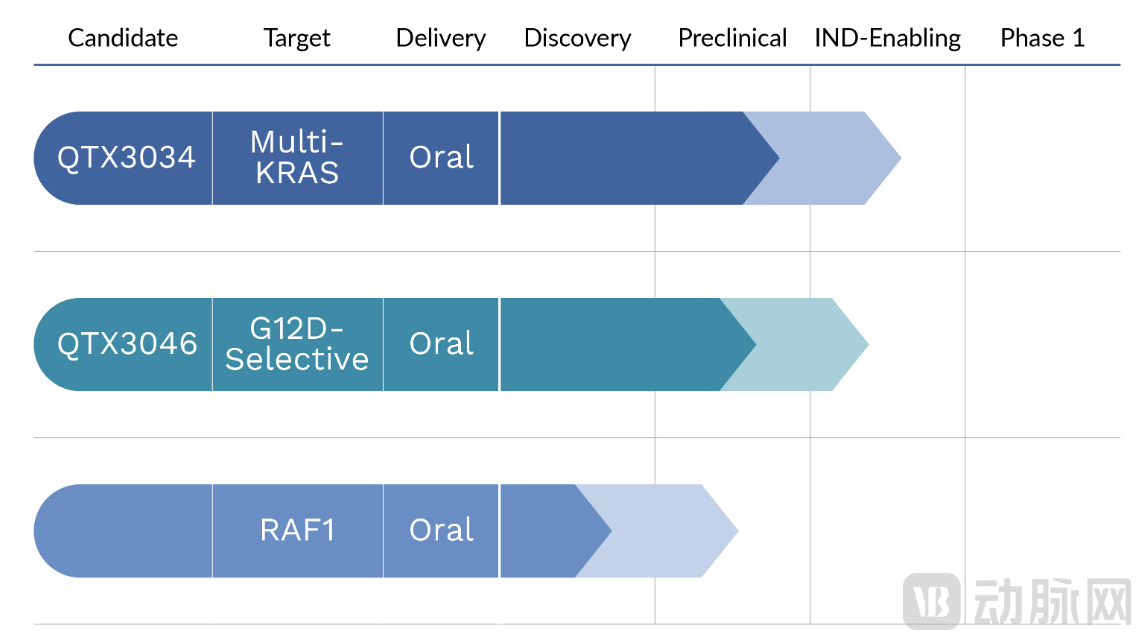
Overview of Quanta’s Pipeline in Development (Image source: Quanta)
Quanta Therapeutics is not the only company betting on KRAS G12D. It is understood that among the KRAS G12D inhibitors under development, Mirati’s MRTX1133 and Hengrui Medicine’s HRS-4642 have made relatively rapid progress, with both having entered clinical trial stages. Notably, Hengrui Medicine’s HRS-4642 is the first KRAS G12D inhibitor approved for clinical trials in China.
Furthermore, pharmaceutical companies such as Astellas, Jacobio, and Allist are also making strategic moves in the KRAS G12D field. Notably, ASP3082, for which Astellas submitted an investigational new drug (IND) application in China on May 22, is the world’s first KRAS G12D protein degrader to enter clinical development. It is worth mentioning that Jacobio has an extensive portfolio in KRAS inhibitors. In addition to developing KRAS G12C and KRAS G12D inhibitors, the company is also developing JAB-23400, a pan-KRAS inhibitor capable of effectively suppressing multiple types of KRAS mutations, with an IND application expected to be filed this year.
With continuous technological advancements and deepening research, the notion of KRAS being “undruggable” has become a thing of the past. An increasing number of companies have entered the competitive landscape of KRAS-targeted therapies, and market enthusiasm has continued to rise since the approval of the first KRAS inhibitor in 2021. Although KRAS G12C inhibitors currently demonstrate the most rapid progress and greatest momentum, it remains to be seen whether other types of agents will eventually surpass them in the future.
Reference Article:
1. Depth: The Past and Present of the KRAS Target, by Yiyu Yanran.
2、Hofmann MH, Gerlach D, Misale S, Petronczki M, Kraut N. Expanding the Reach of Precision Oncology by Drugging All KRAS Mutants. Cancer Discov. 2022;12(4):924-937.