

Initial Therapeutics Emerges from Stealth with $75M Series A to Target 'Undruggable' Proteins via Novel STOPS Platform

Initial Therapeutics
Biopharmaceutical Manufacturer
Drug targets refer to biological macromolecules within the body that can bind to drugs and interact with them. Most drug targets are proteins, belonging to five protein families: G protein-coupled receptors (GPCRs), ion channels, kinases, nuclear hormone receptors, and proteases. Among these, G protein-coupled receptors and protein kinases are the two major targets for FDA-approved drugs.
The term “undruggable” is often used to describe protein targets in drug development that are considered untargetable. “Undruggable” targets refer to therapeutically relevant targets that are “difficult to drug” or “not yet drugged” by conventional methods, characterized by features such as the lack of well-defined ligand-binding pockets, non-catalytic protein–protein interaction (PPI) interfaces, and a scarcity of protein crystal structure data. Typical “undruggable” targets include transcription factors, RAS family proteins, phosphatases, intrinsically disordered proteins, and other proteins involved in protein–protein interaction networks (PPIs).
In recent years, with continuous innovations in biotechnology, an increasing number of companies both in China and abroad have joined the race to develop drugs targeting “undruggable” targets. It is reported that pharmaceutical giants such as Roche, Novartis, and Innovent Biologics all have relevant pipelines under development. In addition to the strategic investments by established enterprises, numerous start-ups have also entered the competitive landscape of developing therapeutics against “undruggable” targets.
On May 1, Initial Therapeutics (“Initial”), a biotechnology company launched with backing from life sciences venture capital firm Apple Tree Partners (ATP), officially debuted and announced the completion of a $75 million Series A financing round. The company’s proprietary platform selectively inhibits protein synthesis through a novel mechanism of action to target “undruggable” targets.
“When therapeutic approaches do not involve mature proteins, the rules of drug discovery change, and the scope of ‘druggability’ expands significantly,” said Dr. Brian Paegel, co-founder of Initial Therapeutics.
Unlike other interventions targeting mature proteins (e.g., targeted protein stabilization and protein degradation), Initial Therapeutics’ small-molecule therapeutic approach prevents protein synthesis, thereby avoiding cellular adaptations to mature proteins and the need to structurally address docking challenges.
Ribosome-catalyzed protein biosynthesis is one of the most precise and critical life activities in cells. During peptide chain elongation, flexible, unfolded nascent polypeptide chains are at risk of misfolding and triggering protein aggregation. Abnormally folded nascent proteins may disrupt proteostasis and the intracellular environment through mechanisms such as cytotoxicity.
Breakthrough structural biology research from the Jamie Cate laboratory has revealed how small molecules can selectively influence protein synthesis during the translation phase by interacting with complexes that include the ribosome and the nascent peptide chain of the target protein. Currently, this work has been commercialized at Initial Therapeutics, where microfluidics technology from the Brian Paegel laboratory has enabled the expansion of customized ribosomal assays to ultra-large library screening.
Based on the above research, Initial Therapeutics designed and developed the STOPS platform.Initial Therapeutics has recognized that while some proteins may lack ligand-binding pockets, linear sequences are ubiquitous. Unlike other drug discovery models that focus on identifying the three-dimensional structures of proteins, the STOPS platform identifies key linear sequences to discover small-molecule drugs with high selectivity for specific targets. It then leverages the mRNA translation mechanism to guide these small-molecule drugs into the ribosome, selectively modulating the translation of disease-causing proteins within the ribosomal exit tunnel, thereby inhibiting the translation and production of pathogenic target proteins as early as possible in the disease process.
The STOPS platform modulates the cellular activity of known and well-validated targets without requiring prior characterization of the mature protein target’s structure or identification of drug-binding pockets within the mature protein. Consequently, it can target pathogenic proteins that are undruggable by other therapeutic modalities, thereby circumventing the laborious process of mapping protein three-dimensional structures. Furthermore, while inhibiting protein synthesis, the STOPS platform also prevents the formation of protein aggregates, reducing the risk of secondary diseases caused by the accumulation of misfolded proteins.
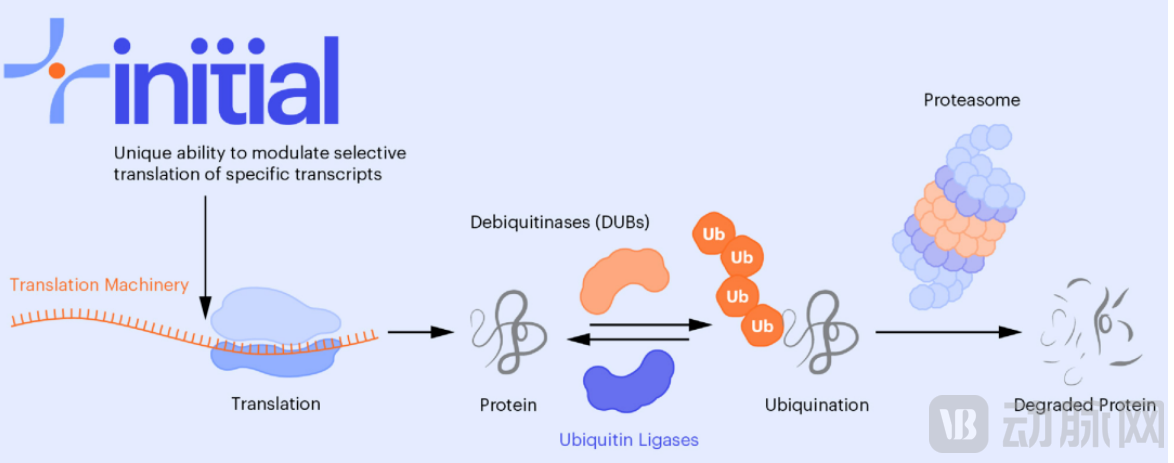
Mechanism of Action of the STOPS Platform (Image source: Initial)
Regarding why ATP chose to invest in and establish Initial, Spiros once mentioned: “This stemmed from conversations among Jamie, Kevan, Brian, and myself.”We discussed our respective work in the interdisciplinary fields of protein synthesis kinetics, ribosome profiling, and rapid chemistry, and shared ideas on how to collaborate to develop novel approaches for the selective regulation of protein translation. All participants agreed that this endeavor holds transformative potential.。”
Jamie Cate is a Professor of Chemistry, Biochemistry, Biophysics, and Structural Biology at the University of California, Berkeley, and the husband of Jennifer Doudna, the 2020 Nobel Laureate in Chemistry. The Cate Laboratory investigates the regulatory mechanisms of human protein translation and bacterial protein synthesis through cryo-electron microscopy, biophysical chemistry, genomics, molecular biology, and synthetic biology. Initial Therapeutics’ STOPS platform was developed based on the research outcomes from his laboratory.
Notably, in 2017, the Cates led a research team at the University of California, Berkeley, in collaboration with Pfizer, to discover a small-molecule compound capable of inhibiting ribosomal synthesis of specific proteins without affecting the production of others, and they investigated its selectivity and mechanism of action. It was through this collaboration that Cate recognized the potential of leveraging selective inhibition of protein synthesis mechanisms for drug development.
Through its collaboration with Pfizer, Cate gained not only research outcomes but also a strategic partner. Spiros Liras, then Vice President of Medicinal Chemistry at Pfizer, led teams in exploring cutting-edge drug discovery concepts and developing product pipelines in cardiovascular diseases, metabolic disorders, and neuroscience. Prior to joining ATP as a Venture Partner, Spiros held a position at Biogen, where he was responsible for establishing and leading the External Portfolio Innovation group within the R&D department.
Jamie Cate and Spiros Liras, together with two other professors from the University of California, Berkeley, Brian Paegel and Kevan Shokat, formed the founding team of Initial Therapeutics, creating a powerful combination of scientific research strength and industrial resources.The team has clearly defined roles: the professor leads the team by providing theoretical and technical support, while the investor is responsible for providing funding and operational guidance.
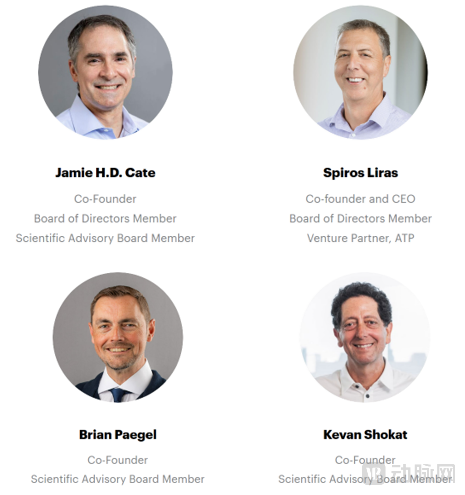
The Four Co-founders of Initial (Image source: Initial)
It is understood that Initial Therapeutics is concentrating its capital on building the STOPS platform and will focus on research into treatments for cancer and other serious diseases in the future. No information has yet been disclosed regarding the specific targets or candidate drugs it intends to pursue.