

China Achieves Breakthrough in Low-Cost Long-Read Sequencing: AnXuanGen Launches Fourth-Generation Nanopore Sequencing Platform

Axbio
Gene Sequencing and Diagnostic Equipment Developer
In January 2023, the prestigious international journal Nature Methods awarded “Method of the Year 2022” to long-read sequencing.This technology has gained unanimous recognition from the scientific community in 2022, owing to its value and advantages in genomics, transcriptomics, epigenomics, and pangenomics research, as well as significant methodological advances and widespread applications in recent years.
May 28, 2023The 20th China International Clinical Laboratory & Blood Transfusion Expo (CACLP)Opened at the Nanchang Greenland International Expo Center. On the morning of that day,“Smart Cost Reduction · Precision Sequencing: Symposium on Advances in Long-Read Sequencing Technology & Axbio New Product Launch”Successfully held,Axbio Officially Launches Its Fourth-Generation Nanopore Gene Sequencing Platform: AXP100-RS Gene Sequencer。
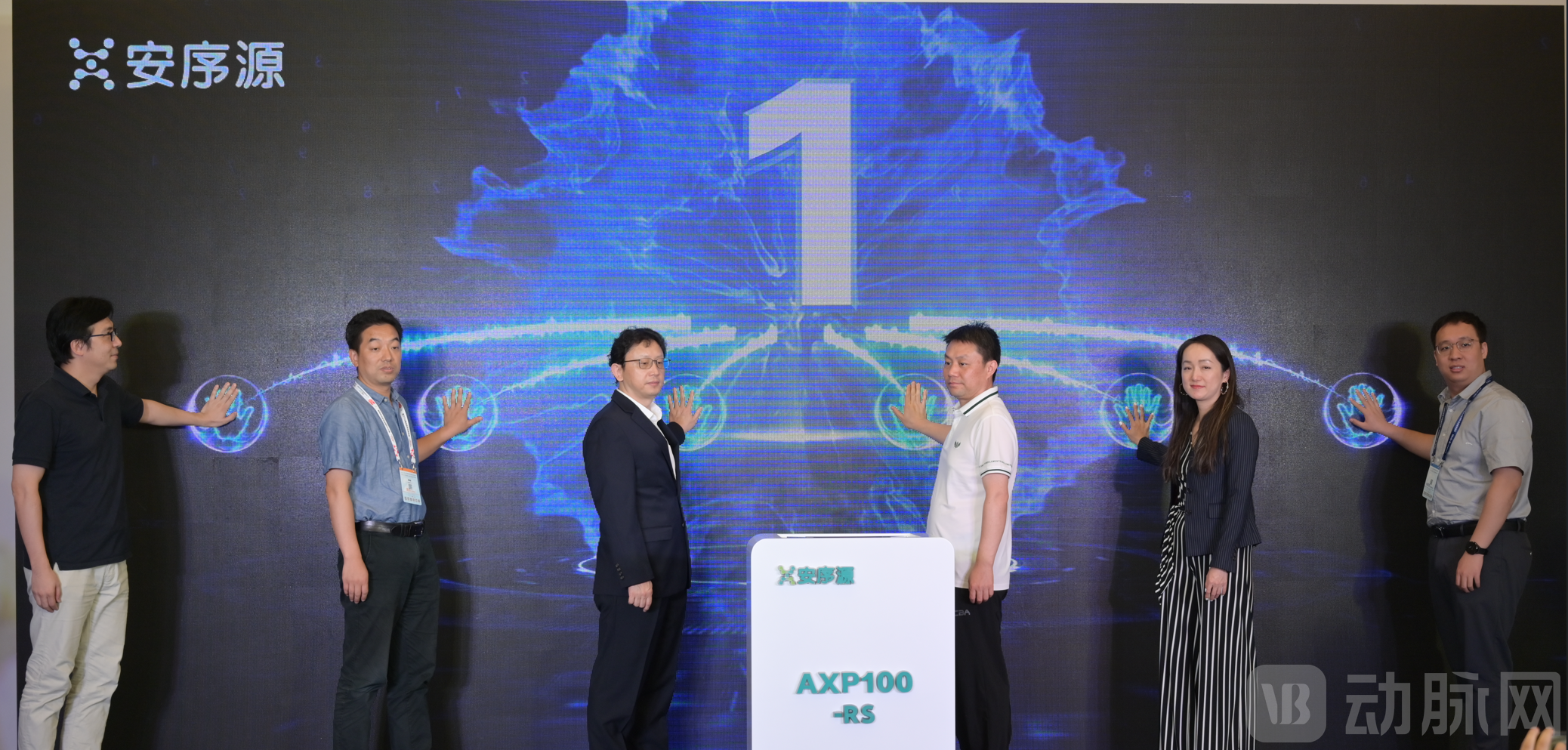 Axbio AXP100-RS Gene Sequencer Launch Ceremony (Image source: Axbio)
Dr. Hui Tian, Founder and CEO of Axbio; Ms. Junjun Tian, CSO of Axbio; and Haobo Tu, Product Director, attended the press conference. Also in attendance as invited industry guests were: Director Wan Cheng from the Product Research Department of Yikang Medicine; Professor Haijian Zhou, Researcher at the National Institute for Communicable Disease Control and Prevention, Chinese Center for Disease Control and Prevention; Professor Hong Shi from Kunming University of Science and Technology; and Dr. Hao Jin from Inner Mongolia Agricultural University.
 (Image source: Axbio)
Gene sequencing technology is one of the few innovative technologies in China that can currently compete on the international stage,The launch of Axbio’s fourth-generation nanopore gene sequencing platform marks the emergence in China of long-read gene sequencing technology featuring low-cost instrument deployment and low-cost per-unit data output, further enhancing the global competitiveness of China’s low-cost long-read gene sequencing technology.. For the industry, this sequencing platform will further enrich the landscape of the sequencing market, promote the iterative upgrading of sequencing technologies, and accelerate the deeper and broader development of sequencing applications.
Although first-generation sequencing technology, which emerged in the 1970s, offers high accuracy and has been widely used in experiments such as vector construction and gene knockout, it suffers from disadvantages in throughput, cost, read length, and speed. The subsequently developed next-generation sequencing (NGS) technology enables the simultaneous sequencing of millions to billions of DNA molecules, achieving large-scale, high-throughput sequencing; however, it still shows no significant improvement in read length and speed.
Driven by the interdisciplinary convergence of computer science, biology, and chemistry, third-generation sequencing technology (SMRT) has emerged. This technology achieves read lengths at the tens of kilobases (kb) scale, thereby addressing the short-read limitations of first- and second-generation sequencing platforms. However, products from various manufacturers still exhibit varying degrees of performance deficiencies in throughput, accuracy, and speed, meaning they are not yet fully aligned with the practical needs of scientific research and clinical applications.
Currently, both second- and third-generation sequencing technologies are based on optical signal detection, requiring expensive optical monitoring systems and relying on DNA polymerase to read base sequences, which significantly increases sequencing costs. Therefore,Developing “low-cost long-read sequencing” products while ensuring high throughput and high accuracy is an urgent development direction for the industry.。
As is well known,When technology and performance reach a certain level, “cost” always remains the decisive factor for widespread adoption. According to Albert Vilella’s statistics, the consumption range with instrument deployment costs under $100,000 and per-unit data output costs under $1 represents the current “no-man’s-land” in the sequencing field.
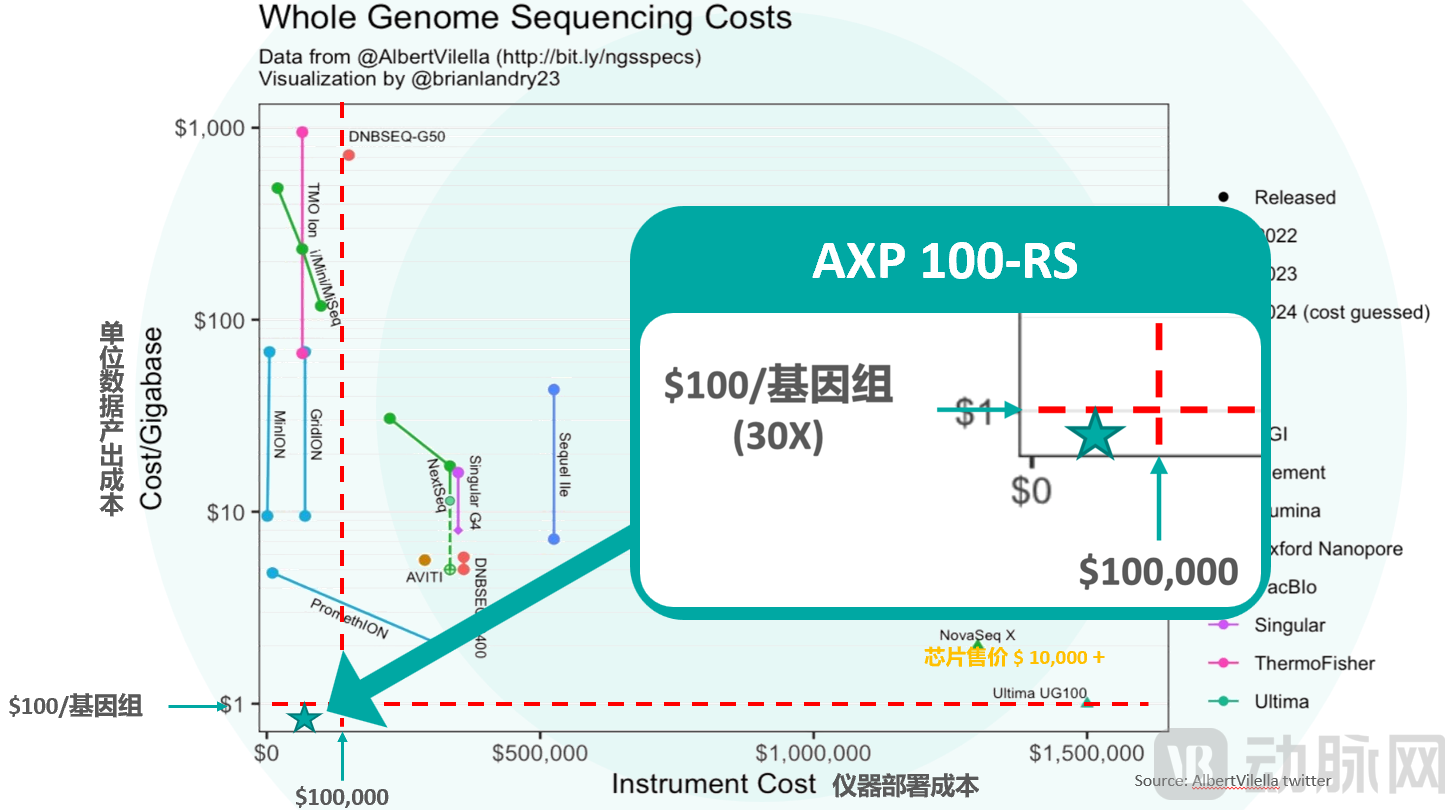 Overview of Global Gene Sequencing Product Prices (Image Source: Axbio)
High instrument deployment costs hinder the expansion of equipment at primary care levels, making large-scale adoption difficult and limiting usage to “centralized testing.” This, in turn, incurs hidden costs such as sample transportation and patients seeking medical care in different locations. Furthermore, high per-unit data production costs lead to elevated consumer prices in end-use scenarios, reducing affordability and limiting the addressable population. The resulting slow and limited data accumulation impedes technological upgrades and product iteration. Meanwhile, for sequencing companies, high fixed costs per run necessitate batch pooling to amortize expenses; however, the uncertainty associated with pooling timelines leaves these companies perpetually disadvantaged in their efforts to reduce turnaround times.
Everything began to undergo a revolutionary transformation with the advent of Axbio’s fourth-generation nanopore gene sequencing platform.
As expected by the industry,The AXP100-RS Gene Sequencer integrates the core advantages of low cost, long read lengths, high accuracy, compact size, and rapid detection, making it a unique “pentagonal warrior.”。
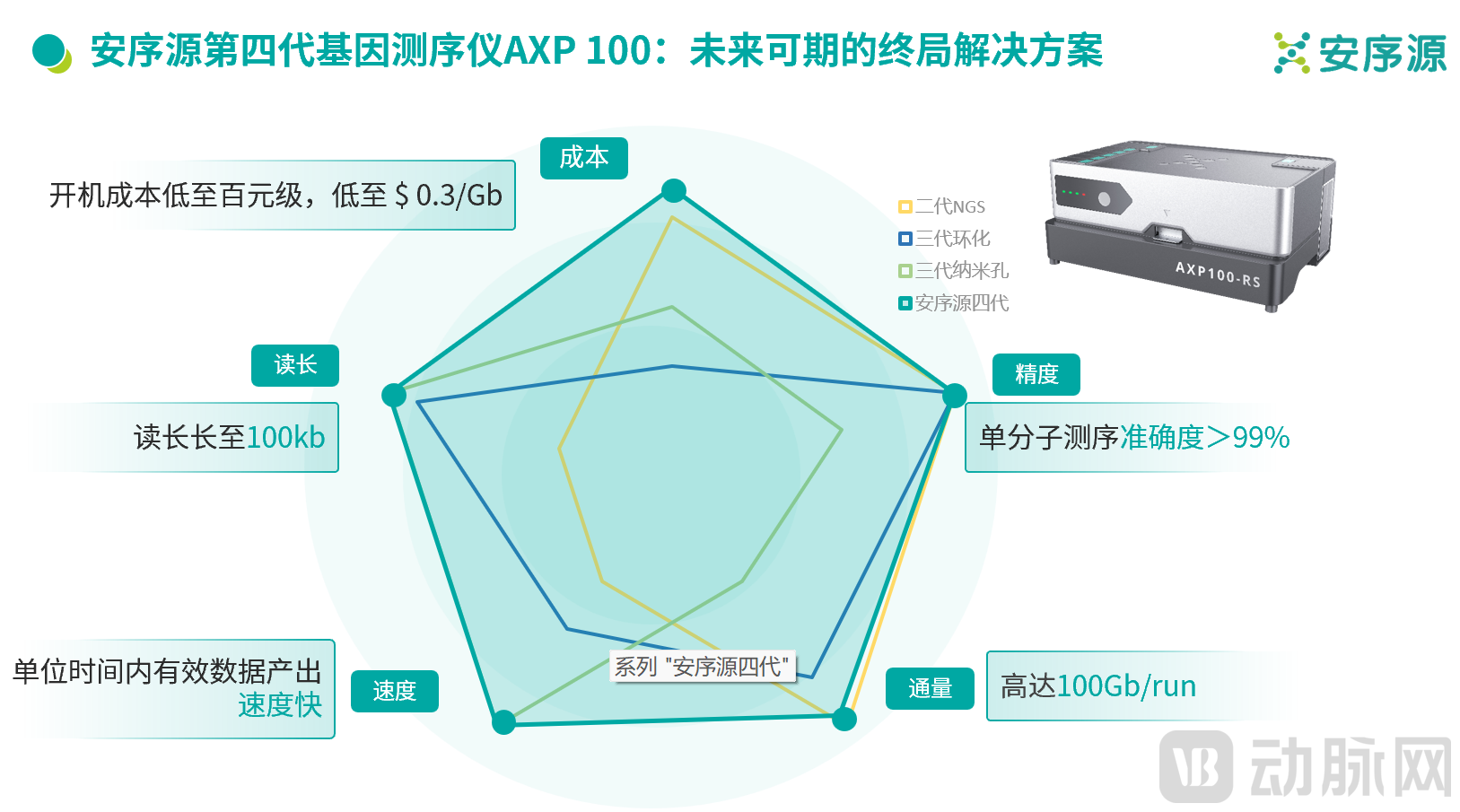
Overview of the Advantages of the AXP100-RS Gene Sequencer (Image Source: Axbio)
In the AXP100-RS gene sequencer, single nucleotide molecules labeled with electroactive molecular tags are captured by polymerase. Subsequently, during primer strand extension, nucleotides bearing corresponding "tag molecules" are incorporated sequentially. As these tag molecules pass through the nanopore one by one, they generate specific current signals; real-time characterization and determination of the base sequence are thus achieved by analyzing changes in these current signals.
By combining nanopore sequencing, circular consensus sequencing, and electrical signal detection technologies, the AXP100-RS gene sequencer achieves read lengths of up to 100 kb and a single-chip throughput of up to 100 Gb per run. Furthermore, it attains an accuracy of 99% through self-correction enabled by circular consensus sequencing.
Meanwhile, this sequencer has reduced sequencing costs by an order of magnitude, with the cost per Gb of data output significantly lower than that of conventional NGS products.Enables "on-demand testing" for samples, eliminating the hassle of batch accumulation. Moreover, the sequencer has a volume of only 0.013 m³3, weighing approximately 6.85 kg, its compact and lightweight design enables it to accommodate sequencing applications in a wider range of scenarios.
This sequencer excels in clinical diagnostic scenarios such as infectious disease prevention and control, reproductive defect prevention and control, and cancer research and diagnosis, as well as in scientific research areas including structural variation studies, tandem repeat region analysis, and monogenic disease research.
The AXP100-RS gene sequencer was the centerpiece of this launch ceremony, but it represents a broader integration with the product ecosystem of the fourth-generation nanopore gene sequencing platform, which covers the entire sequencing workflow.
From sample processing and nucleic acid extraction, to library preparation using the Xprep Kit 100, followed by long-read sequencing involving the AXP100-RS sequencer, XPU100 sequencing chip, and Xseq Kit 100 sequencing reagents, as well as the Xconsole 100 operation and data analysis system, Axbio provides comprehensive hardware and software support for its leading gene sequencing technology, ensuring stable sequencing performance.
Among them,The XPU100 Sequencing Chip: The Key Secret Behind the Fourth-Generation Nanopore Gene Sequencing Platform’s Ability to Achieve “Low-Cost” Sequencing。
Leveraging the founding team’s profound expertise in semiconductor chips, high-throughput gene sequencing, and molecular diagnostics, along with their extensive industrial management experience in the semiconductor and sequencing sectors, and driven by the dedicated efforts of a large, high-caliber R&D team, Axbio has developed core technologies encompassing large-scale integrated circuits, synthetic chemistry systems, biochemical systems, bio-semiconductor processes, electrochemistry and sequencing, integration of instrument architecture with microfluidic biochips, and data analytics with machine learning.
The XPU100 sequencing chip, a core component of the sequencer, inherits the advantages of Bio-CMOS chips, including high sensitivity in AC impedance detection, rapid sequencing speed, and flexible throughput. Meanwhile, it enhances anti-interference capability and integrated throughput. While ensuring a maximum data output of up to 100 Gb, the sequencing cost is significantly lower than $1 per Gb.
That is to say,Axbio has leveraged the world’s most advanced semiconductor technology to create the lowest-cost sequencing platform, making “on-demand sequencing” a reality for genetic testing.。
“Ten years of honing the sword finally yield its edge; in one decisive stroke, it splits bamboo with rainbow-like momentum.”
Currently, NGS is the predominant sequencing technology in the industry, while the influence of third-generation sequencing is gradually increasing. However, there remains room for improvement in terms of cost, read length, and accuracy.
Fourth-generation sequencing is attempting to address these issues; however, due to its exceptionally high technical barriers and interdisciplinary applications, it requires the convergence of top-tier talent from various fields to foster innovative collaboration. Consequently, there are currently few global players, and the technology remains in a nascent, pre-breakout stage.
As an innovative life sciences company integrating semiconductor technology, Axbio possesses inherent advantages in developing advanced, multi-disciplinary technological pathways.Over the past few years, Axbio has remained steadfast in its commitment to research and development. The company has established a comprehensive product portfolio that includes nanopore sequencers and supporting solutions, microarray chip analyzers and assay kits, and POCT testing products. Axbio has set up R&D centers in multiple locations across China and the United States, actively recruiting global talent from diverse professional fields and leveraging international industrial resources to advance its R&D initiatives.
Currently, the company has rapidly entered the industrialization and commercialization phase. Its GMP-compliant production base in Wuxi has been fully established and is now operational, while the company is also actively expanding its commercial partnerships. The launch of this sequencing platform marks Axbio’s entry into a new stage of development.
In the future, Axbio will continue to focus on product development. The company aims to leverage its robust platform foundation and advanced semiconductor technologies to expand its application matrix across multi-omics, diverse scenarios, and the full lifecycle, thereby driving commercialization efforts.